
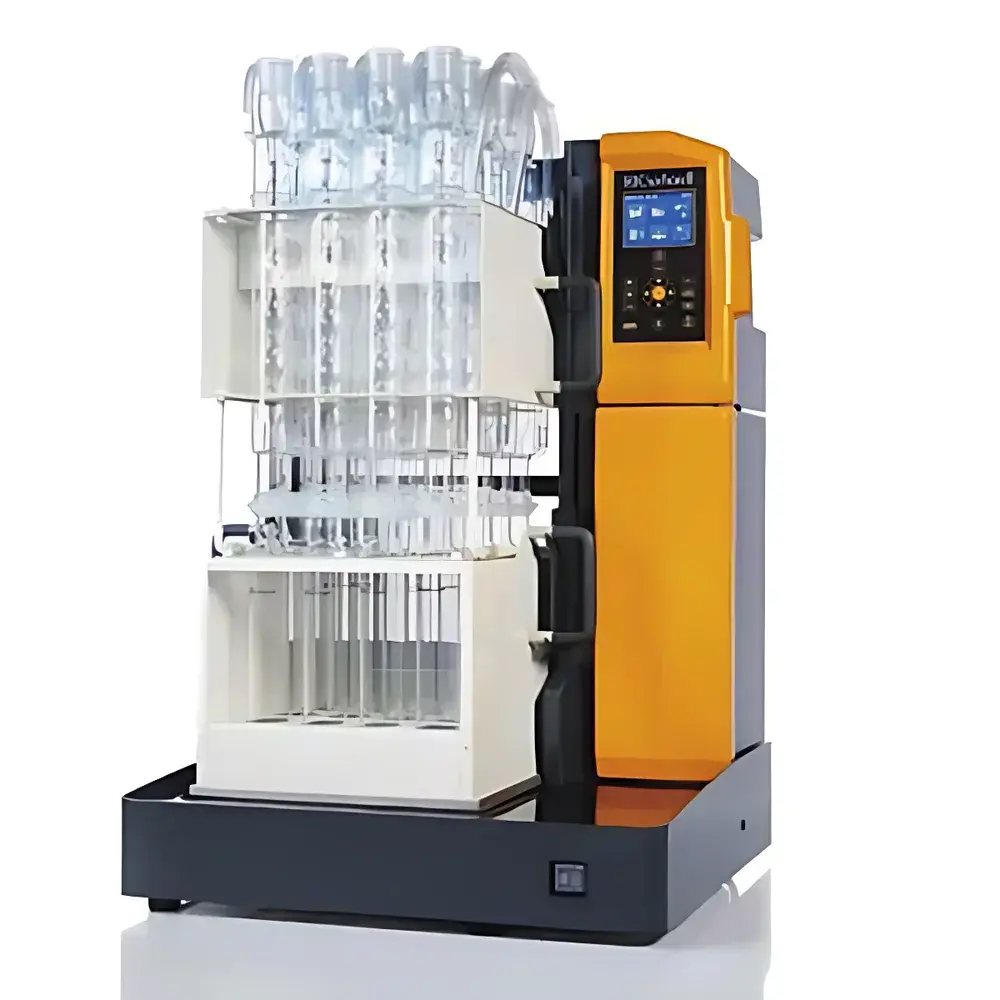
C. Gerhardt CSB-L 20s COD Digestion System
| Brand | C. Gerhardt |
|---|---|
| Origin | Germany |
| Manufacturer Type | Original Equipment Manufacturer (OEM) |
| Product Origin | Imported |
| Model | CSB-L 20s |
| Digestion Method | Reflux Digestion |
| Heating Module | Single Aluminum Block |
| Batch Capacity | 20 samples |
| Temperature Range | 0–430 °C |
| Temperature Accuracy | ±0.5 °C |
| Digestion Vessel Capacity | 300 mL |
| Timer Accuracy | ±0.00 min |
Overview
The C. Gerhardt CSB-L 20s COD Digestion System is a precision-engineered, benchtop reflux digestion instrument designed for standardized chemical oxygen demand (COD) determination in aqueous environmental matrices. It operates on the principle of closed-vessel, temperature-controlled acid digestion under reflux conditions—fully compliant with internationally recognized standard methods including ISO 6060, EPA 410.4, ASTM D1252 (Method B), HJ 828–2017 (China), GB/T 11914–1989 and GB/T 22597–2008. The system employs a high-thermal-mass aluminum heating block with uniform heat distribution across all 20 positions, enabling rapid thermal ramping (≤10 min to target temperature) and exceptional thermal stability during prolonged digestion cycles. Its architecture integrates fundamental requirements of method-defined protocols—such as precise temperature/time control, reproducible thermal profiles, and consistent reflux condensation—into a single robust platform suitable for routine compliance testing in accredited environmental laboratories.
Key Features
- Single high-capacity aluminum heating block with optimized thermal conductivity and minimal gradient deviation (<±0.8 °C across all 20 positions at 150 °C)
- Programmable multi-step digestion protocols: up to 99 user-defined methods, each supporting up to 40 discrete heating segments with independent temperature setpoints and dwell times
- Built-in library of 30 pre-validated digestion methods aligned with ISO, EPA, ASTM, and Chinese national standards (e.g., HJ 828, GB/T 14420)
- Continuously variable heating power control (0–100%) for fine-tuned energy delivery—critical for low-boiling-point reagent systems or sensitive matrix stabilization
- Detachable controller unit with full data logging capability, real-time status monitoring, and audit-trail-enabled operation
- Motorized lift mechanism for safe, ergonomic handling of the 20-position digestion rack—reducing operator strain and minimizing risk of thermal exposure or spillage
- Preheating function allows immediate initiation of digestion programs without waiting for block equilibration, improving laboratory throughput
- Access control via password-protected user accounts with role-based permissions (e.g., operator, supervisor, administrator) supporting GLP and ISO/IEC 17025 documentation integrity
Sample Compatibility & Compliance
The CSB-L 20s accommodates standard 300 mL borosilicate glass digestion tubes conforming to DIN EN ISO 10523 and ASTM D5128 specifications. Its design supports both open-reflux and sealed-tube configurations when used with compatible condenser assemblies. All operational parameters—including temperature ramp rates, hold durations, and cooling phases—are fully traceable and exportable in CSV format. The system meets functional requirements for ISO/IEC 17025:2017 Clause 7.2.2 (method validation), Clause 7.7 (result reporting), and supports 21 CFR Part 11-compliant electronic records when integrated with validated LIMS or ELN environments. It is routinely deployed in laboratories undergoing CNAS, UKAS, or DAkkS accreditation audits for wastewater, surface water, and industrial effluent analysis.
Software & Data Management
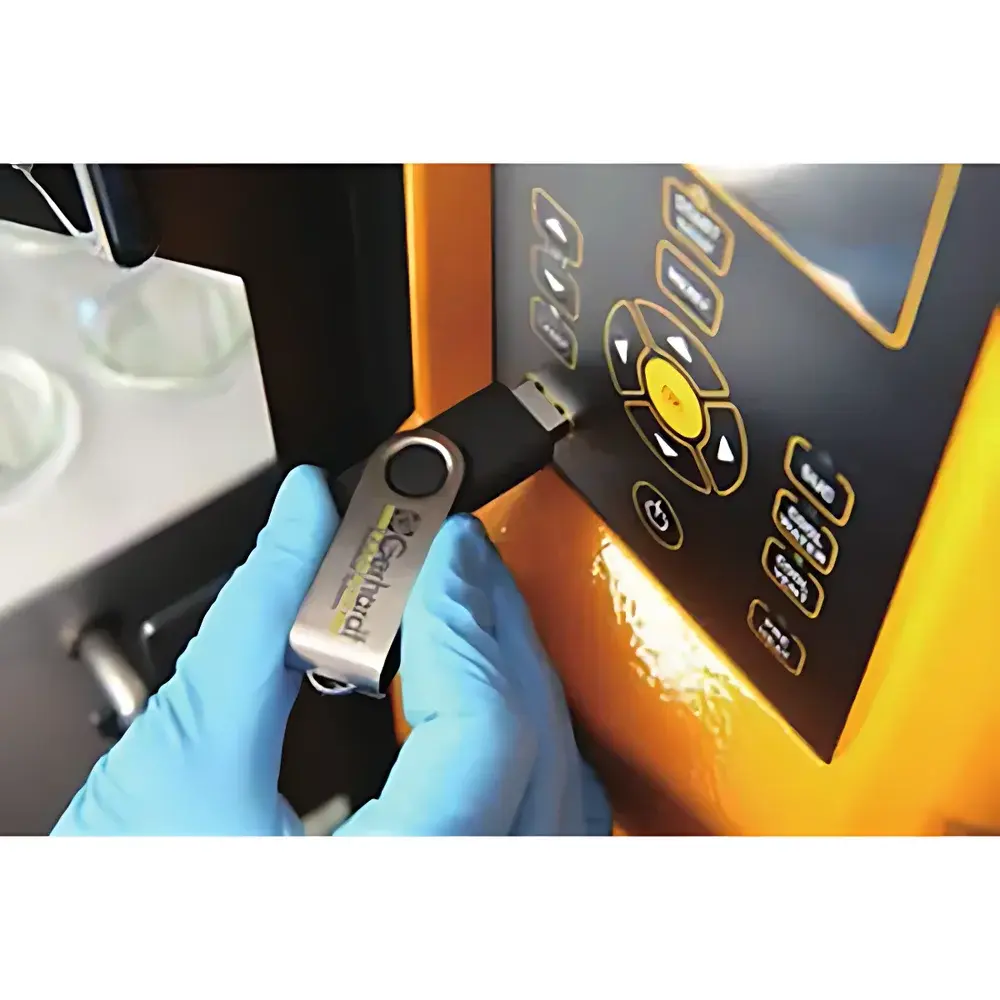
The embedded controller firmware provides intuitive touchscreen navigation, real-time graphing of block temperature vs. time, and automatic detection of program completion or fault conditions (e.g., overheating, lid-open event). All digestion events—including start/stop timestamps, active method ID, operator login, parameter deviations, and error logs—are stored locally with timestamped digital signatures. Data export is supported via USB interface in human-readable formats compatible with laboratory QA/QC workflows. Optional Ethernet connectivity enables remote monitoring and centralized fleet management in multi-instrument lab settings. Audit trail functionality satisfies GLP requirements for data integrity, including immutable record retention and change history tracking.
Applications
- Routine COD analysis in municipal wastewater treatment plants and industrial discharge monitoring
- Environmental compliance testing per regulatory frameworks including EU Water Framework Directive (WFD) Annex V, US Clean Water Act (CWA) NPDES permits, and China’s “Blue Sky & Clear Water” action plan
- Method development and validation studies requiring high inter-run reproducibility (RSD <1.2% for duplicate digestions at 150 °C/120 min)
- Research applications involving high-chloride or high-salinity samples where precise thermal control mitigates chloride interference during dichromate oxidation
- Teaching laboratories requiring safety-focused, repeatable digestion protocols for undergraduate environmental chemistry curricula
FAQ
What standards does the CSB-L 20s support for COD determination?
It is validated for ISO 6060, EPA 410.4, ASTM D1252 (Method B), HJ 828–2017, GB/T 11914–1989, and GB/T 22597–2008.
Can the digestion block accommodate alternative tube sizes?
No—the system is mechanically optimized for 300 mL round-bottom digestion tubes; adapters for other volumes are not supported.
Is the timer accuracy verified per ISO/IEC 17025 requirements?
Yes—timer calibration is traceable to national time standards, with documented uncertainty ≤0.005 min over 120 min intervals.
How is data integrity ensured during power interruption?
The controller retains active method state and elapsed time in non-volatile memory; digestion resumes automatically upon power restoration if within safe thermal limits.
Does the system require external cooling or ventilation?
A dedicated fume hood or local exhaust is mandatory during reflux operation due to acid vapor generation; ambient lab ventilation alone is insufficient.







