
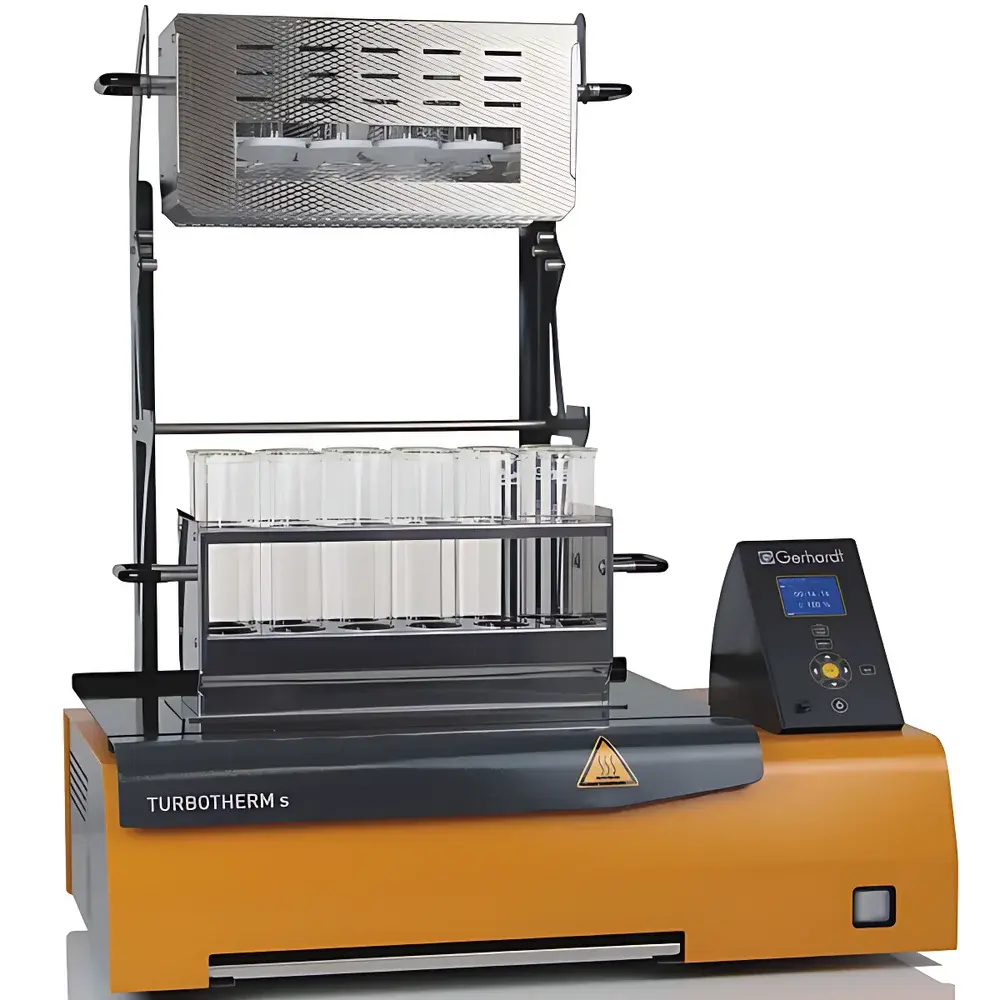
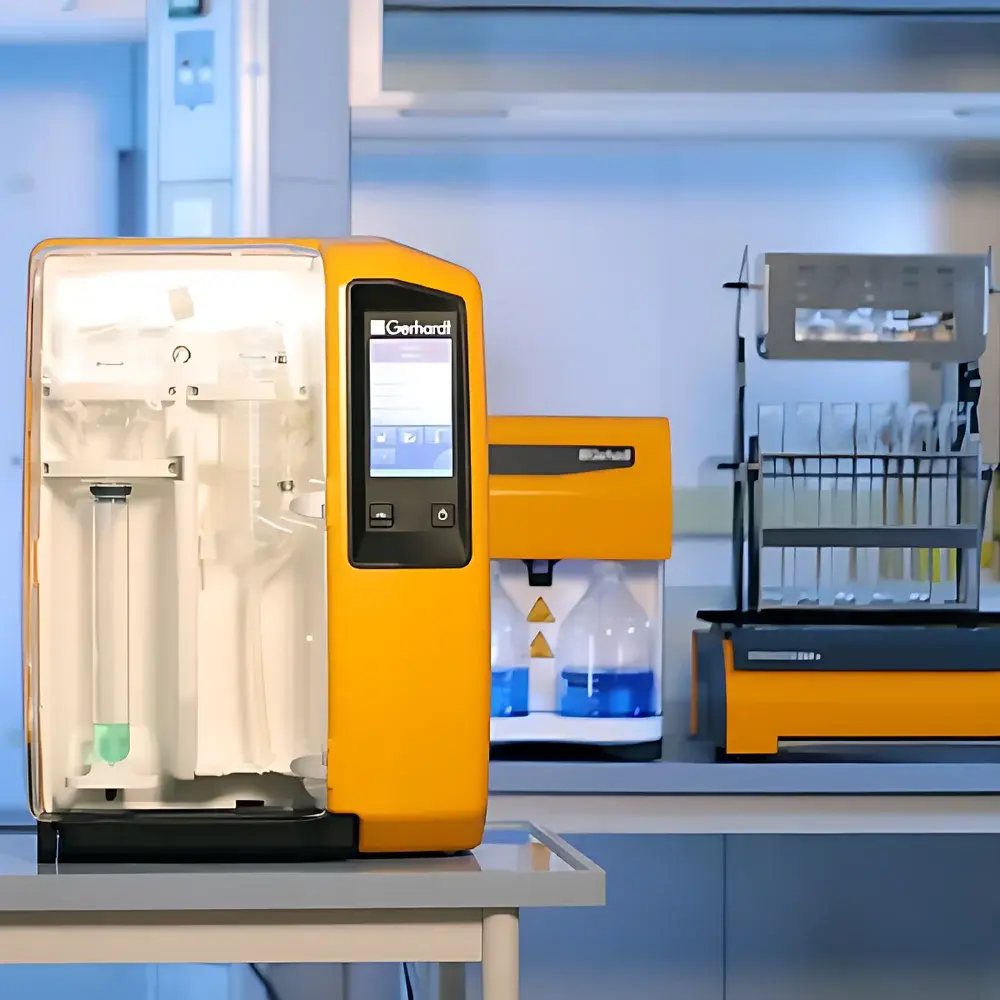
Gerhardt TTs125 Infrared Heating Digestion System
| Brand | Gerhardt |
|---|---|
| Origin | Germany |
| Manufacturer | C. Gerhardt GmbH & Co. KG |
| Type | Imported |
| Model | TTs125 |
| Max Temperature | 650 °C |
| Heating Element | Special Infrared Alloy |
Overview
The Gerhardt TTs125 Infrared Heating Digestion System is a high-performance, CE-compliant sample preparation instrument engineered for rapid, reproducible, and traceable wet digestion in modern analytical laboratories. Based on the TURBOTHERM® platform, it employs direct infrared radiation—rather than conventional conduction or convection heating—to deliver precise thermal energy to digestion vessels. This principle enables uniform volumetric heating of samples suspended in strong mineral acids (e.g., H₂SO₄, HNO₃, HClO₄), significantly accelerating decomposition kinetics while minimizing thermal gradient-induced charring or volatilization losses. Designed specifically for Kjeldahl nitrogen determination, heavy metal extraction (EPA Method 3050B/3051A), and acid digestion prior to ICP-OES/ICP-MS analysis, the TTs125 supports full compliance with ISO 17025 accreditation requirements through built-in audit trails, user-level access control, and electronic record retention.
Key Features
- Human-centered lateral console design with adjustable tilt-angle 7-inch color LCD touchscreen interface—optimized for ergonomics, visibility, and operator safety in fume hood environments.
- Robust infrared emitter array using proprietary alloy-based radiation elements: resistant to mechanical impact, chemically inert under acidic vapor exposure, and delivering >92% radiant efficiency across 600–650 °C operating range.
- Uniform heating chamber constructed from high-alloy stainless steel with optimized cavity geometry; achieves homogeneous temperature distribution (±3 °C at 400 °C) across all eight positions.
- Programmable digestion protocols: up to 99 stored methods, each supporting 40 sequential steps—including ramp rates, hold times, power modulation, and automatic cooling phases.
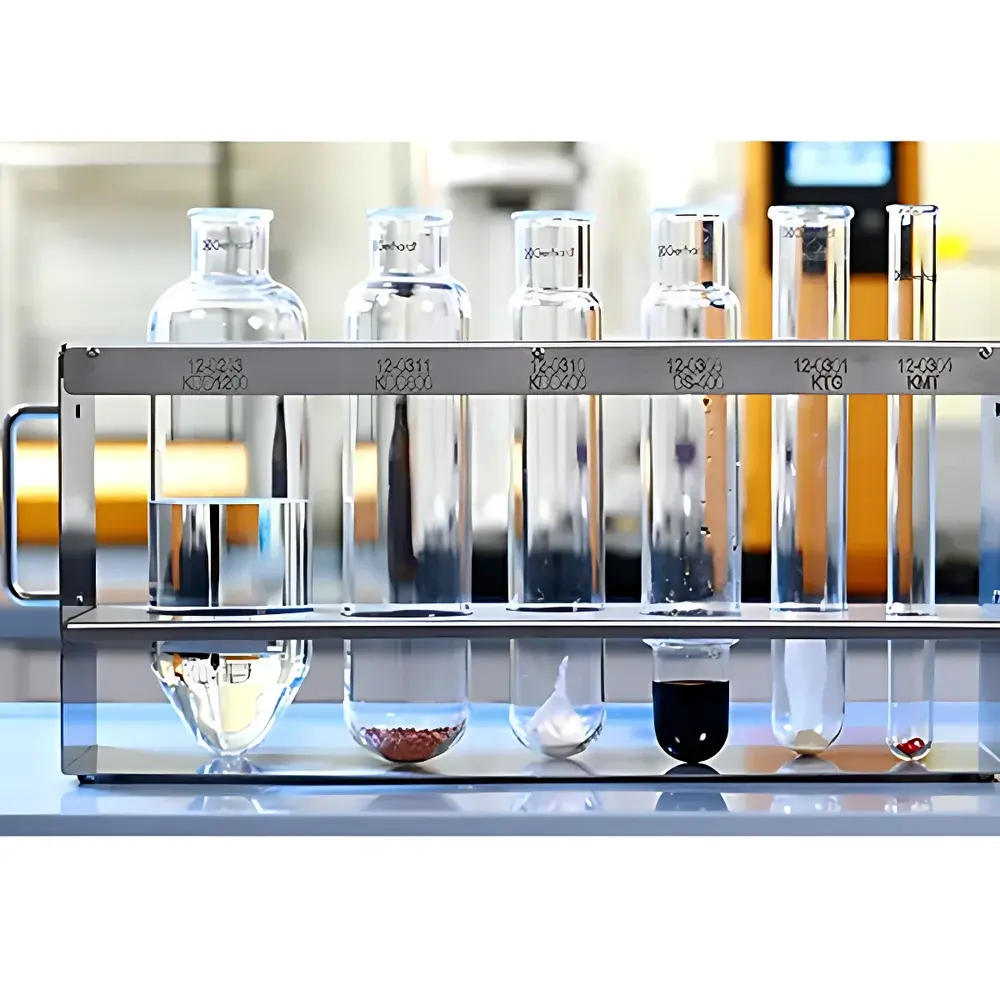
- Digestion vessel compatibility: accepts eight standardized Duran® borosilicate glass tubes (100 mL to 800 mL), calibrated to Class A tolerances per DIN EN ISO 4787.
- Integrated dual-layer accessory storage: retractable drip tray (dual-function: acid containment during digestion + water collection during chamber cleaning) and modular rack/drain hood mounting system—reducing footprint by up to 35% inside standard laboratory fume hoods.
- Seamless integration with Gerhardt TURBOSOG® scrubber (water-based SO₂/HF capture) or VACUSOG® dry-gas scrubbing unit—fully automated via RS-485 communication and configurable for continuous or batch-mode operation.
Sample Compatibility & Compliance
The TTs125 accommodates complex matrices requiring aggressive digestion conditions—including high-fat dairy products, sugary beverages, activated sludge, lignocellulosic biomass, coal ash, metallurgical residues, and pharmaceutical excipients. Its validated performance aligns with multiple international standards: AOAC 984.27 (Kjeldahl), ISO 5983-1/2 (crude protein), EPA 3050B (acid digestion of sediments), and ISO 11047 (determination of copper, zinc, lead in soils). All firmware operations comply with ISO/IEC 17025:2017 clause 7.7 (result reporting) and support GLP/GMP-aligned data integrity through password-protected user roles (administrator, technician, viewer), time-stamped event logs, and USB-exportable CSV/Excel-formatted run records.
Software & Data Management
The embedded control software provides real-time graphical monitoring of temperature profiles, power output, and step progression per vessel position. All operational parameters—including method ID, start/stop timestamps, operator login, ambient humidity, and error codes—are automatically archived in non-volatile memory with write-protection enabled. Data export occurs via front-panel USB-A port (USB 2.0 compliant) in formats compatible with LIMS integration (e.g., ASTM E1384, ASTM E2500). Optional Gerhardt LabLink™ software extends remote diagnostics, multi-instrument fleet management, and 21 CFR Part 11-compliant electronic signature functionality.
Applications
Primary use cases include: Kjeldahl total nitrogen quantification in foodstuffs and feedstuffs; aqua regia digestion of geological samples prior to ICP analysis; perchloric acid-assisted oxidation of organic-rich environmental solids; pre-digestion conditioning for microwave-assisted systems; and wet ashing protocols for polymer and composite material testing. Secondary applications encompass sulfated ash determination (USP ), residual catalyst recovery from petrochemical streams, and preparation of certified reference material (CRM) homogenates.
FAQ
What safety certifications does the TTs125 hold?
The system complies with IEC 61010-1 (Electrical Safety), IEC 61326-1 (EMC), and carries CE marking under the EU Machinery Directive 2006/42/EC and Low Voltage Directive 2014/35/EU.
Can the TTs125 be integrated into an automated Kjeldahl workflow?
Yes—it features digital I/O ports and Modbus RTU protocol support for synchronization with Gerhardt KjelMaster® distillation units and autosamplers.
Is routine calibration required for traceability?
While no user-performed calibration is needed, annual verification using NIST-traceable thermocouples (Type K, ±0.5 °C accuracy) is recommended per ISO/IEC 17025 internal audit protocols.
What maintenance intervals are advised?
Infrared emitters require no scheduled replacement; chamber cleaning is recommended after every 200 digestions or when visible residue accumulation occurs. The drip tray and drain hood should be inspected weekly for acid corrosion signs.
Does Gerhardt provide application-specific method development support?
Yes—customers receive complimentary method optimization consulting for new sample types, including acid selection guidance, ramp profile tuning, and blank minimization strategies using Gerhardt’s low-background Kjeldahl tablets.



