
German Royal Microbial Rapid Detection System RVLM
| [Brand | Royal Biotech GmbH |
|---|---|
| Origin | Germany |
| Model | RVLM |
| Compliance | ISO 16140:2003 validated |
| Sample Volume | 0.1–1.0 g or mL |
| Throughput | 8 independent channels |
| Detection Principle | Integrated enzymatic (β-glucuronidase), immunological (antigen capture), and microbial growth-based colorimetric assay |
| Sensitivity | ≥1 CFU (theoretical limit) |
| Specificity | ≥99.999% (theoretical limit) |
| Incubation Temperature Range | 30–44 °C (microbe-specific) |
| Readout Method | Optical colorimetric kinetics (qualitative/semi-quantitative visual |
| Software Compatibility | Windows XP/Vista/7 |
| Power Supply | AC adapter + replaceable laptop-grade Li-ion battery] |
Overview
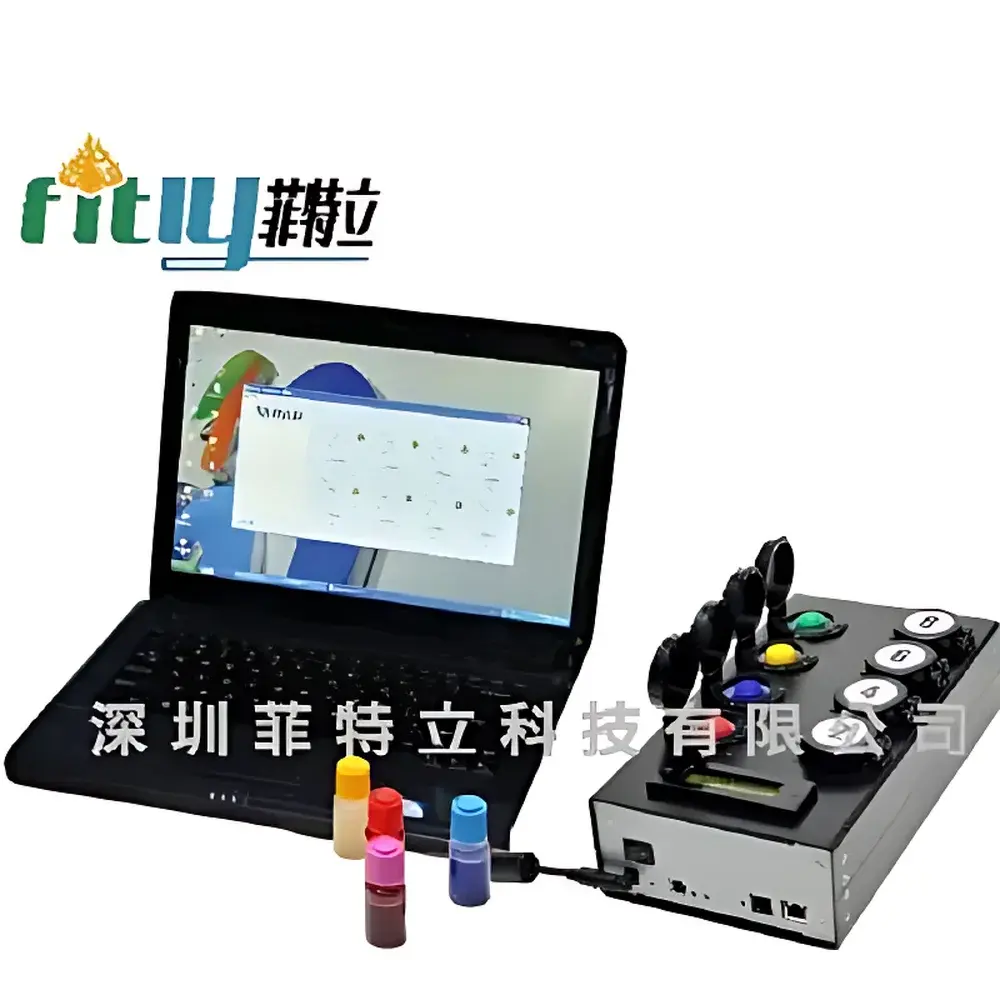
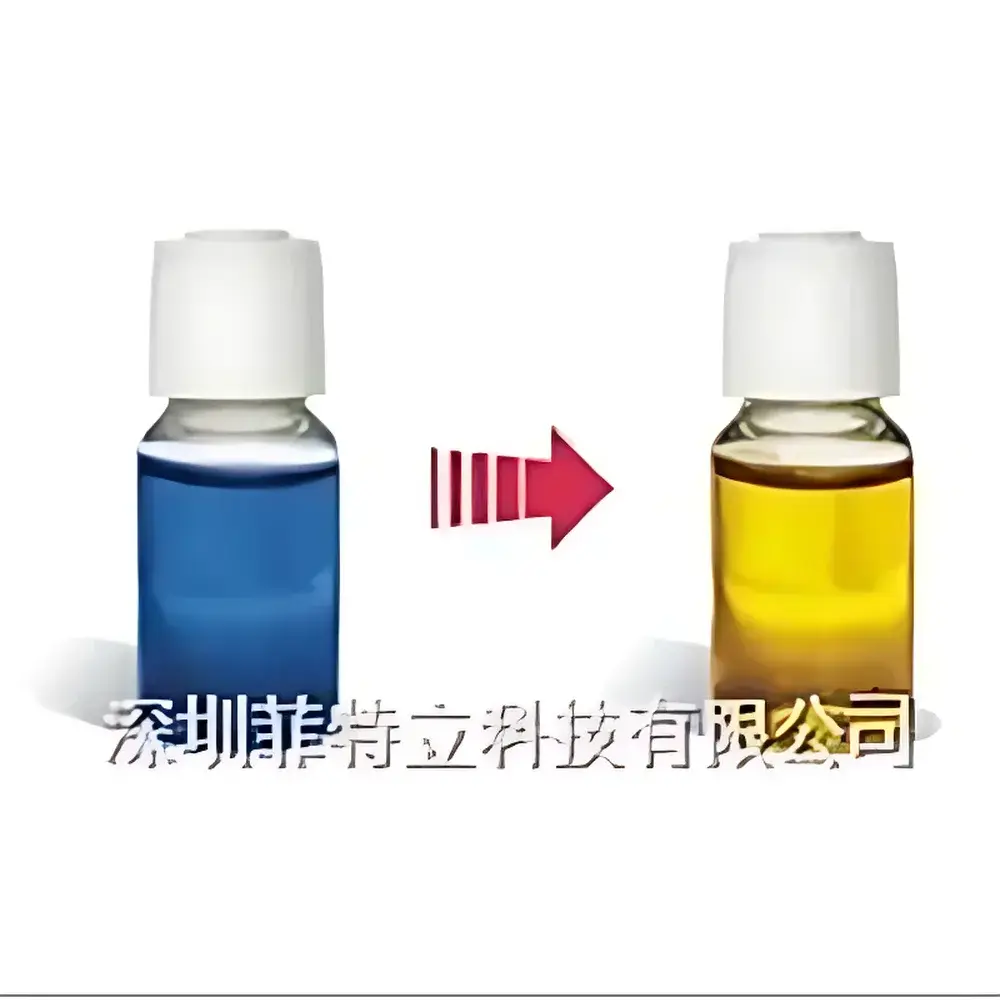
The Royal Biotech GmbH RVLM Microbial Rapid Detection System is an ISO 16140:2003-validated, multi-modal rapid microbiology platform engineered for high-fidelity, on-site quantification of viable microorganisms in complex matrices. Unlike single-principle assays (e.g., standalone PCR, ELISA, or colony enumeration), the RVLM system integrates four complementary detection modalities—microbial growth kinetics, enzymatic activity (e.g., β-glucuronidase for E. coli), immunochemical antigen recognition, and nucleic acid-targeted signal amplification—within a single-use, self-contained reaction vial. This hybrid architecture enables robust detection across diverse physiological states (aerobic, facultative anaerobic, and strict anaerobic species) while maintaining analytical rigor under non-sterile field conditions. The system operates on a kinetic colorimetric principle: microbial metabolism or target-specific biochemical reactions induce time-resolved chromogenic shifts, which are either interpreted visually against standardized reference charts or quantified precisely using the integrated optical reader.
Key Features
- Zero-Prep Sample Introduction: Accepts solid, liquid, surface-swabbed, semi-solid (e.g., pastes, slurries, pulp), and viscous samples without homogenization, dilution, filtration, or enrichment—direct addition of 0.1–1.0 g/mL into the pre-formulated vial suffices.
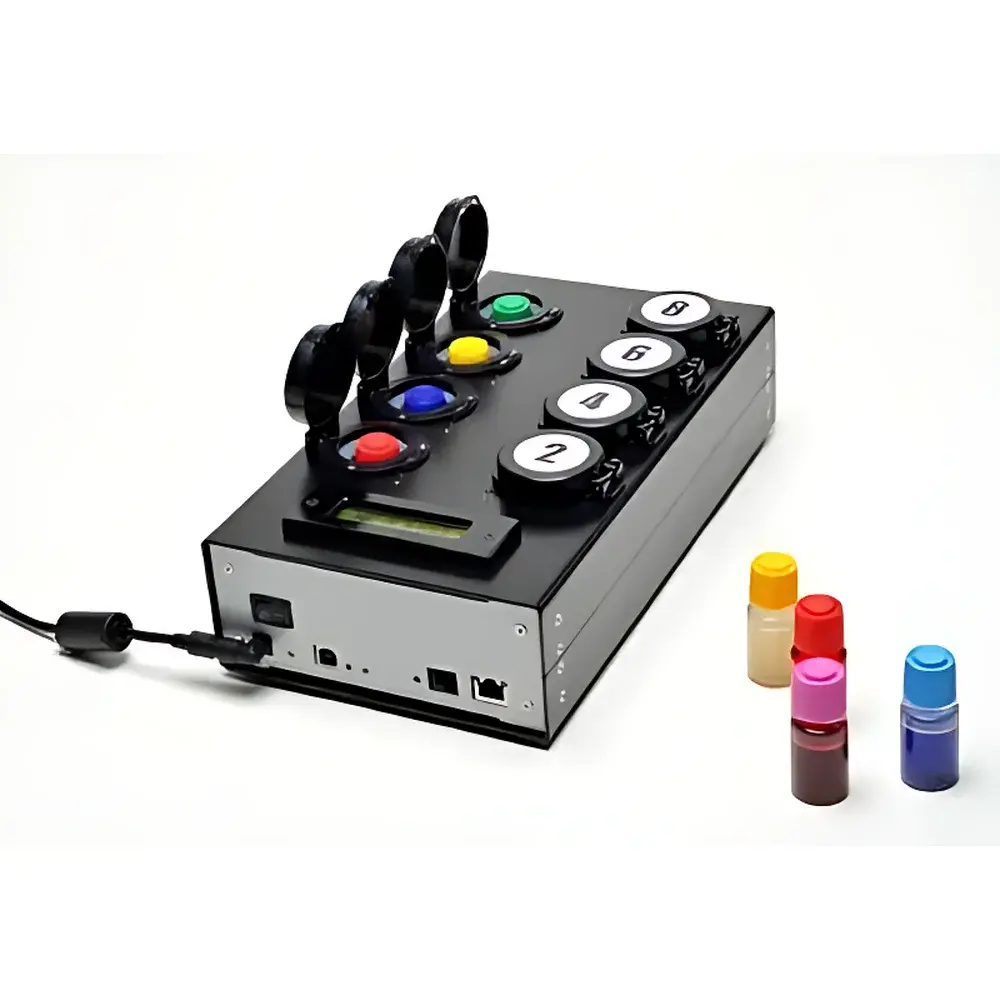
- Multi-Channel Parallel Analysis: Simultaneous incubation and optical monitoring of up to eight independent samples at user-defined, microbe-specific temperatures (30–44 °C), with real-time kinetic data acquisition.
- High-Fidelity Quantification: Achieves theoretical detection limits of ≥1 CFU per test and specificity ≥99.999%, validated per ISO 16140:2003 for alternative method verification in food and feed microbiology.
- Dual-Mode Readout: Supports both qualitative/semi-quantitative visual interpretation (via time- and temperature-referenced color transition charts) and fully quantitative analysis (via proprietary optical reader with kinetic curve fitting and CFU extrapolation).
- Integrated Biosafety Protocol: Each vial incorporates a mechanical sterilization actuator—pressing the cap post-assay releases a proprietary inactivating agent, enabling safe disposal per local biomedical waste regulations (equivalent to expired pharmaceuticals).
- Field-Deployable Architecture: Compact, battery-operated reader (with standard laptop-grade Li-ion module) connects directly to Windows-based PCs for report generation; no external incubator or shaker required beyond initial manual or mechanical mixing (20 s vortex or 2–3 min hand-shaking).
Sample Compatibility & Compliance
The RVLM system demonstrates broad matrix tolerance across regulatory-critical sample types: raw and processed foods (meat, dairy, produce), environmental swabs (food contact surfaces, HVAC systems), potable and wastewater, pharmaceutical excipients, cosmetic emulsions, and clinical stool specimens (for E. coli, Listeria monocytogenes, and Salmonella spp. as IVD-adjacent applications). It complies with HACCP-aligned workflows and supports GLP/GMP documentation requirements through audit-trail-capable software logging (operator ID, sample ID, timestamp, incubation parameters, raw kinetic data). While not FDA 21 CFR Part 11-certified out-of-the-box, its data export formats (CSV, PDF) facilitate integration into validated LIMS environments. All detection vials are manufactured under ISO 13485-compliant processes and carry CE marking for in vitro diagnostic use in the European Economic Area.
Software & Data Management
The RVLM Control Software (v3.x) runs natively on Windows XP, Vista, and Windows 7 platforms. It provides full traceability: users enter operator credentials, sample metadata (client, batch, location), and target organism prior to assay initiation. During analysis, the software captures time-stamped optical density curves for each of the eight channels, applies microbe-specific kinetic algorithms (pre-loaded per ISO 16140-validated protocols), and reports results as CFU/g or CFU/mL with confidence intervals derived from intra-assay variance modeling. Export functions support CSV for statistical analysis and PDF for regulatory submission. All data—including instrument diagnostics, calibration logs, and user actions—are stored locally with optional network backup. The software does not require internet connectivity during operation, ensuring data sovereignty in controlled laboratory or field settings.
Applications
Primary deployment domains include food safety laboratories (HACCP verification, shelf-life studies, supplier qualification), public health surveillance (CDC-linked outbreak response, water quality monitoring), pharmaceutical QC (raw material bioburden, environmental monitoring), cosmetic stability testing, and veterinary diagnostics. In field contexts, it serves military MRE screening, large-scale event catering validation, and rapid response to suspected contamination incidents. Its ability to detect Escherichia coli O157:H7, O104:H4, and other EHEC strains—alongside Salmonella spp., Listeria monocytogenes, Staphylococcus aureus, Pseudomonas aeruginosa, Clostridium perfringens, and sulfite-reducing clostridia—enables comprehensive pathogen profiling without cross-reactivity. Yeast, mold (including Aspergillus spp.), and total viable count assays further extend utility across fermentation control and spoilage assessment.
FAQ
Can the RVLM system detect non-viable (dead) microorganisms?
No. The assay detects only metabolically active or replication-competent cells, as signal generation depends on enzymatic activity, antigen expression, or growth-mediated pH/redox shifts.
Is anaerobic detection supported?
Yes. Dedicated vials for Clostridium perfringens and sulfite-reducing clostridia utilize oxygen-scavenging formulations and redox-sensitive chromogens optimized for strict anaerobic metabolism.
What is the role of the incubation temperature table?
The temperature/time/color reference chart defines microbe-specific assay parameters: optimal incubation temperature (e.g., 44 °C for E. coli, 37 °C for Listeria), onset color (e.g., red for coliforms), positive endpoint color (e.g., yellow), and maximum assay duration required to confirm absence at defined limits (e.g., ≤10⁶ CFU/g).
How is quantitative accuracy ensured across variable sample loads?
The system employs kinetic modeling rather than endpoint thresholds. By fitting the rate of color development to established growth/enzyme-kinetic models, it normalizes for inoculum size—yielding statistically robust CFU estimates even when sample mass deviates slightly from nominal (0.1–1.0 g/mL), consistent with ISO 7218:2017 sampling variance allowances.
Does the optical reader require periodic recalibration?
The reader performs automatic dark-current and white-reference compensation before each assay cycle. Annual factory calibration is recommended; no user-performed optical recalibration is necessary under normal operating conditions.





