Fitlylab RVLM Microbial Rapid Detection System for Total Viable Count, Coliforms, *E. coli*, and Enterobacteriaceae
| Brand | Fitlylab |
|---|---|
| Origin | Italy |
| Manufacturer Type | Authorized Distributor |
| Product Origin | Imported |
| Model | RVLM |
| Function Type | Multi-analyte Detection Platform |
| Sample Compatibility | Solid, Liquid, Surface, Paste, and Slurry Samples |
| Optical Detection | Triple-wavelength Simultaneous Photometric Analysis |
| Detection Channels | 8 Independent Wells |
| Detection Time | Inversely Proportional to Target Microbial Load (as low as <2 h for ≥10⁸ CFU/mL) |
| Repeatability | High (CV <15% under standardized conditions) |
| Regulatory Compliance | ISO 16140:2003 Validated Alternative Method |
Overview
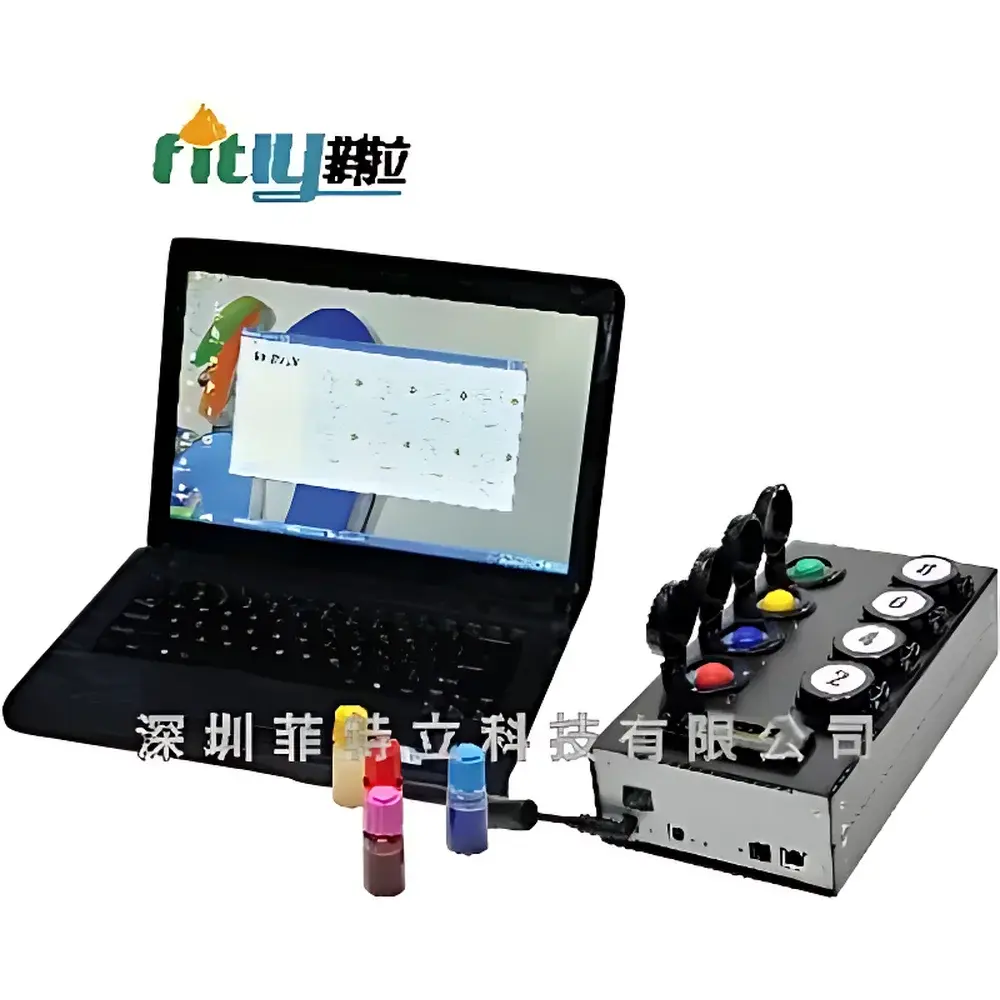
The Fitlylab RVLM Microbial Rapid Detection System is a CE-marked, ISO 16140:2003–validated optical platform designed for quantitative and qualitative microbiological analysis in food safety, environmental hygiene, and quality control laboratories. It operates on a proprietary chromogenic–enzymatic–immunomodulated detection principle: target microorganisms metabolize specific substrates within pre-formulated detection vials, triggering time- and concentration-dependent colorimetric shifts. These shifts are measured photometrically across three discrete wavelengths (typically 450 nm, 520 nm, and 620 nm), enabling high-fidelity discrimination between baseline, intermediate, and endpoint absorbance profiles. Unlike conventional plate-count methods requiring 24–72 h incubation and colony isolation, the RVLM system delivers quantitative CFU/mL or CFU/g results in as little as 90 minutes for high-load samples—while maintaining full traceability, audit readiness, and compliance with HACCP, ISO 22000, and EU Regulation (EC) No 2073/2005 requirements.
Key Features
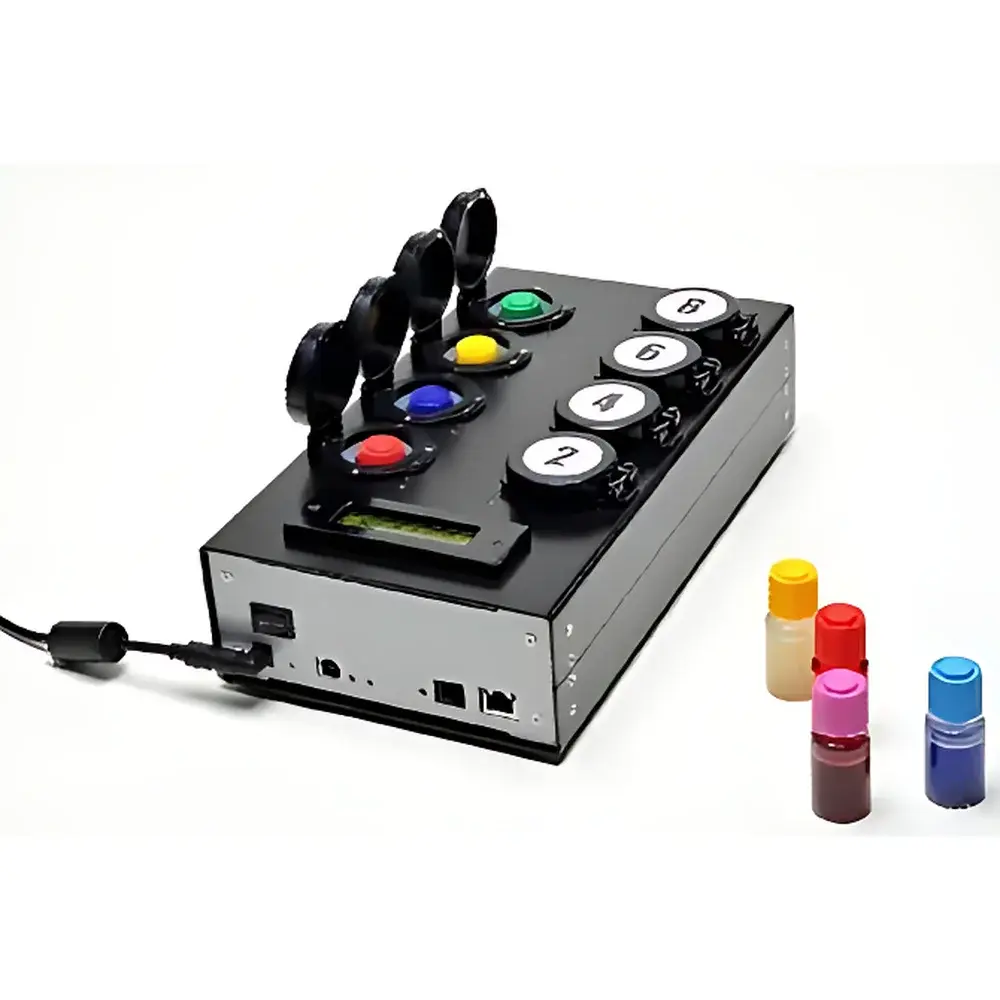
- Eight independent detection wells with individual thermal control and real-time optical monitoring—enabling parallel analysis of heterogeneous sample types (e.g., raw meat homogenate, drinking water, stainless-steel surface swab, yogurt, or pharmaceutical rinse solution)
- No sample pre-enrichment, filtration, dilution, or plating required: direct addition of 0.1–1.0 g or mL sample + 11 mL sterile water suffices
- Integrated incubation module with programmable temperature profiles (30–44 °C range) aligned to organism-specific growth kinetics per ISO/IDF standards
- Triple-wavelength photometric sensing eliminates spectral interference from turbidity, pigment, or matrix color—critical for dark-colored matrices (e.g., soy sauce, tomato paste, or coffee extract)
- Theoretical detection limit of 1 viable CFU per assay—validated against reference methods per ISO 16140:2003 Annex B
- Reported specificity ≥99.999% for *Escherichia coli*, *Salmonella* spp., *Listeria monocytogenes*, and *Staphylococcus aureus*, confirmed via inter-laboratory ring trials (n = 12 labs, ISO 16140-compliant protocols)
- Self-contained biosafety design: integrated lid-activated chemical inactivation ensures Class II biohazard containment post-analysis
Sample Compatibility & Compliance
The RVLM system accommodates solid (e.g., ground beef, cheese, leafy greens), liquid (milk, juice, wastewater), surface (swabbed equipment, conveyor belts), and semi-solid matrices (mayonnaise, infant formula, cosmetic emulsions) without matrix-specific method adjustments. Each analyte-specific detection vial contains lyophilized reagents optimized for selective enzymatic cleavage (e.g., β-glucuronidase for *E. coli*, β-galactosidase for coliforms), immuno-capture elements, and pH-sensitive chromogens—all formulated to minimize cross-reactivity with non-target flora. The platform complies with ISO 16140:2003 for validation of alternative microbiological methods and supports full GLP/GMP documentation workflows—including electronic signatures, audit trails, and data integrity per FDA 21 CFR Part 11 when used with validated software configurations.
Software & Data Management
The RVLM Control Software (v4.2+, Windows 7–11 compatible) provides role-based access control, automated calibration logging, and timestamped result archiving with SHA-256 hash verification. Each assay generates a PDF report containing: operator ID, sample ID, incubation temperature/time profile, kinetic absorbance curves, endpoint CFU quantification with 95% confidence intervals, and pass/fail status against user-defined limits (e.g., “≤10² CFU/g *E. coli* in fresh poultry per EC 2073/2005”). Raw spectral data (.csv export) and instrument diagnostics (lamp intensity, thermal stability logs) are retained for regulatory review. All data reside locally unless explicitly exported—no cloud transmission or third-party telemetry.
Applications
This system serves as a primary rapid screening tool across regulated sectors:
- Food Production: Real-time verification of HACCP critical control points (CCPs) for raw materials, processing environments, and finished products—especially where traditional plating introduces unacceptable delays (e.g., ready-to-eat salads, dairy fill lines)
- Environmental Monitoring: Routine swab testing of food contact surfaces (ISO 18593), HVAC condensate, or potable water distribution systems (per EPA Method 1604)
- Pharma & Cosmetics: Bioburden assessment of non-sterile excipients, manufacturing equipment, and purified water (USP , Ph. Eur. 2.6.12)
- Public Health: Field-deployable surveillance during outbreak investigations (e.g., cruise ship sanitation, mass catering events) or border inspection protocols (WTO/SPS Annex)
- Research & Diagnostics: Quantitative kinetic profiling of antimicrobial efficacy, probiotic viability, or spoilage organism dynamics—without colony isolation bias
FAQ
Does the RVLM system detect only viable cells?
Yes. Detection relies on metabolic activity (enzyme expression, substrate utilization) and does not respond to dead or injured cells.
Can it identify anaerobic pathogens such as *Clostridium perfringens*?
Yes—via dedicated vials containing reducing agents and anaerobe-selective chromogens; incubation occurs under ambient O₂ with no gas pack required.
Is sterile technique necessary during sample loading?
No. The vial’s intrinsic selectivity and built-in inhibitors suppress background flora; non-aseptic field use is validated per ISO 16140.
What is the shelf life of detection vials?
18 months at 20–25 °C; extended to 36 months when stored at 2–8 °C. Vials require no reconstitution—ready for immediate use.
How is data integrity ensured during audits?
Software enforces ALCOA+ principles: attributable, legible, contemporaneous, original, accurate records—with immutable timestamps, electronic signatures, and full change history.
Are detection times fixed or variable?
Variable. Time-to-result correlates inversely with microbial load (e.g., ≥10⁷ CFU/mL yields positive signal in ≤90 min; ≤1 CFU/mL requires up to 18 h per ISO 16140 kinetic validation data).
Can results be exported to LIMS?
Yes. CSV and XML formats support automated ingestion into major laboratory information management systems (LIMS) via configurable API endpoints.
Related Products