
Electrophysics ElectroViewer 7215P Handheld Near-Infrared Image Intensifier
| Brand | Electrophysics |
|---|---|
| Origin | USA |
| Model | 7215P |
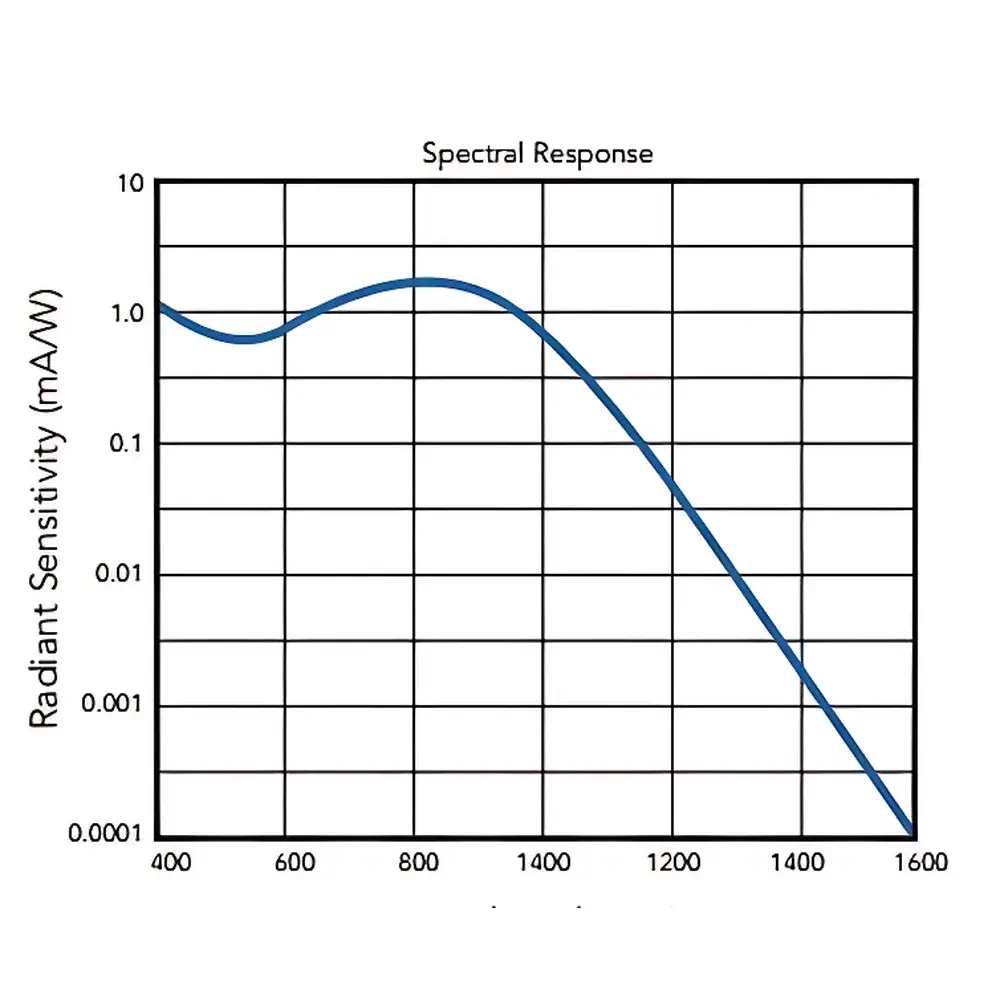
| Spectral Response Range | 400–1500 nm (peak at 550 nm) |
| Resolution | >80 lp/mm (center) |
| Minimum Focus Distance | 75 mm (3 in) |
| Field of View | 40° |
| Responsivity at 1060 nm | 0.45–0.85 mA/W |
| Output Interface | C-mount |
Overview
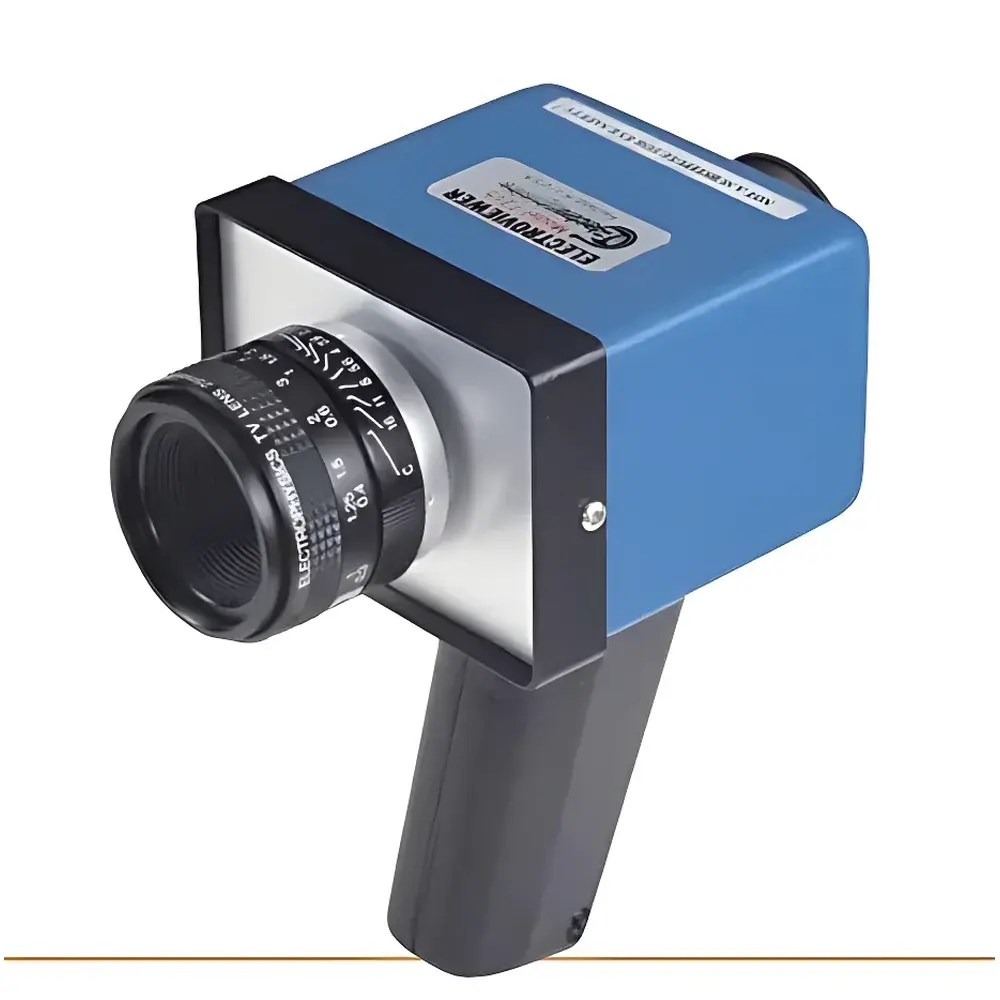
The Electrophysics ElectroViewer 7215P is a handheld, battery-powered near-infrared (NIR) image intensifier designed for real-time visualization of radiation in the 400–1500 nm spectral band. Unlike thermal imaging systems that detect mid- or long-wave infrared emissions (>3 µm), the 7215P operates on photoemission principles: incident photons strike an S-1 photocathode, generating electrons amplified through a microchannel plate (MCP) and converted into visible green phosphor emission (P20 phosphor, peak ~550 nm). This enables direct human observation of NIR sources—including laser beams (e.g., 1064 nm Nd:YAG), night vision signatures, semiconductor inspection features, and covert illumination—without requiring external display hardware. Its compact, ruggedized aluminum housing, shock-absorbing internal mounting, and ergonomic grip support both laboratory benchtop diagnostics and field-deployable applications such as optical alignment verification, fiber optic coupling validation, and non-destructive testing under ambient or low-light conditions.
Key Features
- High-sensitivity S-1 photocathode with extended NIR response up to 1500 nm and peak quantum efficiency near 550 nm
- Optical resolution exceeding 80 line pairs per millimeter (lp/mm) at image center, verified per ISO 12233 methodology
- Minimum working distance of 75 mm (3 inches), enabling close-range inspection of PCB traces, laser diode facets, or micro-optics
- Manually adjustable iris diaphragm for dynamic control of signal-to-noise ratio and depth of field
- C-mount lens interface supporting standard 1″ format optics; compatible with achromatic doublets, telecentric lenses, and macro objectives
- Integrated tripod thread (¼”-20 UNC) for stable positioning during quantitative imaging or documentation workflows
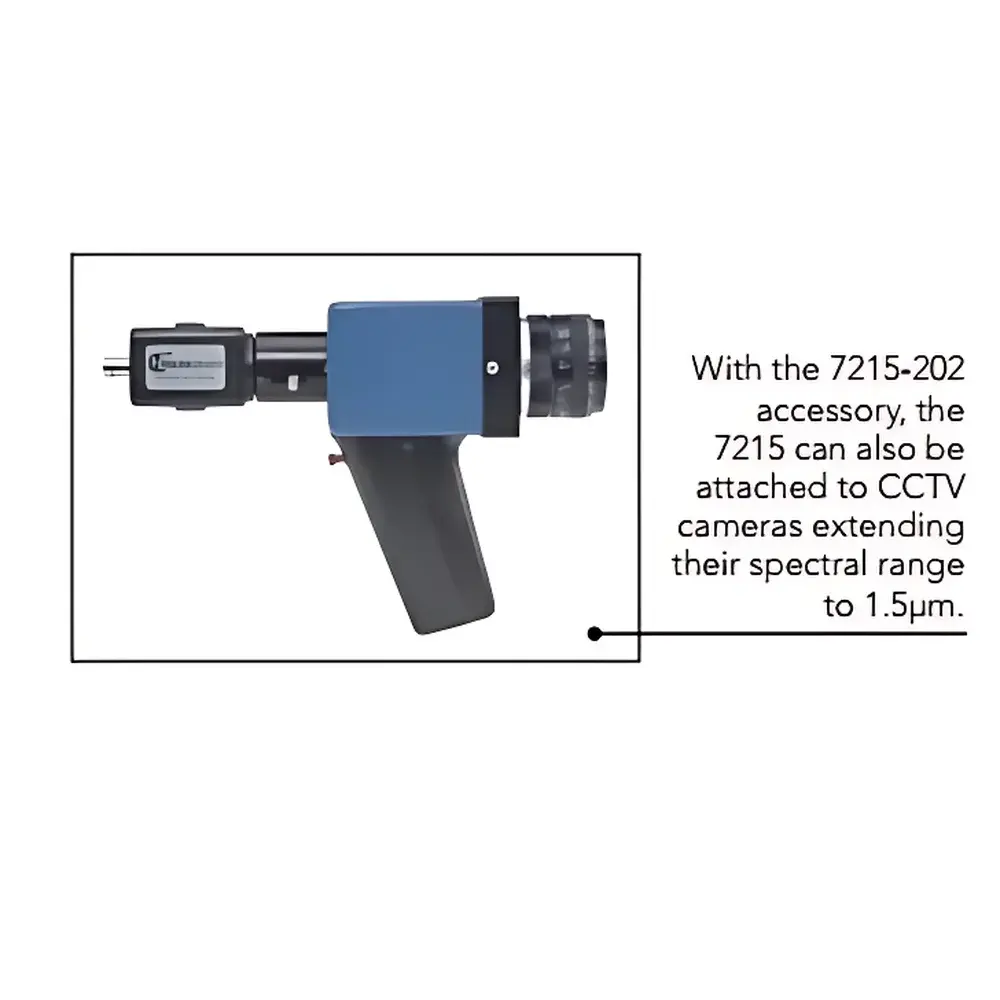
- Direct ocular viewing path plus video output capability via optional 7215-202 CCTV adapter lens for integration with CCD/CMOS cameras
Sample Compatibility & Compliance
The 7215P is engineered for non-contact, non-invasive observation of NIR-emitting or NIR-reflecting samples across industrial, academic, and defense sectors. It supports qualitative assessment of laser beam profiles (CW or pulsed), identification of silicon wafer defects via NIR transmission contrast, verification of IR LED functionality, and detection of counterfeit security markings. The device complies with IEC 61000-6-3 (EMC emission limits) and meets RoHS Directive 2011/65/EU material restrictions. While not certified for medical use under FDA 21 CFR Part 820 or ISO 13485, its optical performance characteristics align with common test protocols referenced in ASTM E2579 (Standard Guide for Infrared Thermography) and MIL-STD-810G (shock and vibration resistance).
Software & Data Management
As a purely analog, real-time intensifier—lacking embedded digitization or firmware—the 7215P does not require proprietary software or drivers. When interfaced with a CCTV camera via the 7215-202 adapter, it functions as a high-gain optical front-end compatible with standard machine vision platforms (e.g., LabVIEW Vision, HALCON, or OpenCV-based acquisition pipelines). Timestamped frame capture, gain calibration, and spatial uniformity correction can be implemented externally using compliant IEEE 1394 or USB3 Vision-compliant frame grabbers. Audit trails for observational records are maintained within the host imaging system; no onboard storage or GLP/GMP audit trail functionality is provided natively.
Applications
- Laser alignment and beam profiling for 780–1064 nm sources in photonics R&D labs
- Inspection of silicon-based photovoltaic cells and integrated circuits using NIR transmittance contrast
- Verification of IR illuminator coverage patterns in surveillance system deployment
- Educational demonstration of NIR physics concepts including photon energy thresholds and photocathode response curves
- Field inspection of fiber optic connectors for contamination or cleave quality under 850/1300 nm illumination
- Forensic analysis of altered documents where NIR reveals erased ink or substrate modifications
FAQ
Does the 7215P provide quantitative radiometric measurements?
No. It is an analog intensifier optimized for qualitative visualization—not calibrated photometry. Radiant flux or irradiance quantification requires traceable NIST-calibrated radiometers.
Can the 7215P detect thermal radiation from objects above 600°C?
It may visualize incandescence from hot objects emitting in the visible-to-NIR continuum (e.g., glowing metals), but it is not a thermal imager. True thermal imaging requires uncooled microbolometers or cooled MCT detectors sensitive beyond 2 µm.
Is the S-1 photocathode susceptible to damage from bright visible light?
Yes. Prolonged exposure to daylight or high-intensity visible sources can cause irreversible gain loss. Always use the supplied lens cap when not in active use.
What is the expected operational lifetime of the intensifier tube?
Under typical intermittent use (≤2 hrs/day), the MCP-photocathode assembly maintains >85% initial gain for ≥5,000 hours, consistent with MIL-C-47180B longevity specifications.
Is C-mount lens compatibility limited to specific focal lengths?
No. Any C-mount lens with back focal distance ≤17.526 mm and mechanical flange distance tolerance ±0.05 mm is mechanically and optically compatible. Performance optimization depends on matching lens f-number and field curvature to the intensifier’s input window geometry.



