
Batop TDS10XX Benchtop Terahertz Time-Domain Spectroscopy (THz-TDS) System
| Brand | Batop |
|---|---|
| Origin | Germany |
| Model | TDS10XX |
| Spectral Range | 0.05–4 THz (laser-dependent) |
| Spectral Resolution | 2 GHz (equivalent to ~0.025 cm⁻¹) |
| Imaging Resolution | 1280 × 1024 pixels |
| Field of View (TFOV) | 8° |
| Instantaneous Field of View (IFOV) | 0.18 mrad |
| Frame Rate | 15 fps |
| Beam Diameter | 22 mm (collimated), 1 mm @ 1 THz (focused) |
| Sample Size Support | up to 30 × 30 mm (collimated), ≥5 × 5 mm (focused) |
| Dynamic Range | >65–75 dB |
| Scan Range | 500–650 ps |
| THz Pulse Repetition Rate | 1–30 kHz (10 kHz default) |
| Bias Voltage for PCA Emitter | 10 V |
| Operating Mode | Free-space or fiber-coupled (1550 nm / 1060 nm options) |
| Environmental Compatibility | N₂-purged sample chamber |
Overview
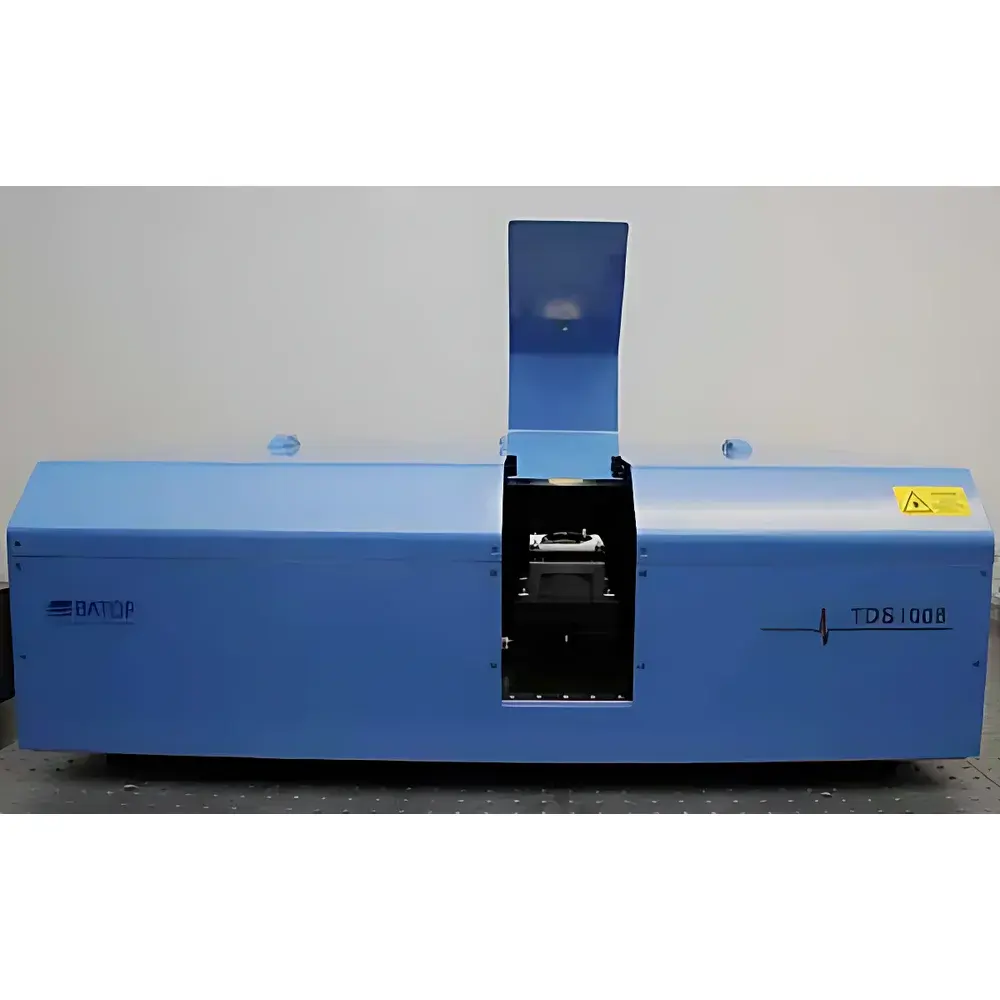
The Batop TDS10XX Benchtop Terahertz Time-Domain Spectroscopy (THz-TDS) System is a high-performance, modular platform engineered for precision broadband terahertz characterization in research and industrial quality control environments. Based on coherent time-domain detection using photoconductive antenna (PCA) technology, the system generates and detects pulsed THz radiation via ultrafast laser excitation of low-temperature-grown GaAs or InGaAs emitters and receivers. Unlike Fourier-transform infrared (FTIR) systems, THz-TDS directly measures the electric field waveform of the THz pulse in the time domain—enabling simultaneous extraction of amplitude and phase information without Kramers–Kronig transformation. This intrinsic capability supports quantitative determination of complex optical constants (n, κ), layer thicknesses, carrier dynamics, and crystallinity across non-conductive and semi-conductive materials—including pharmaceuticals, polymers, ceramics, composites, and semiconductor wafers.
Key Features
- Modular architecture supporting multiple laser wavelengths: 800 nm (TDS1008), 1040 nm (TDS1010), and 1560 nm (FC-TDS) configurations—each optimized for spectral coverage, dynamic range, and material penetration depth.
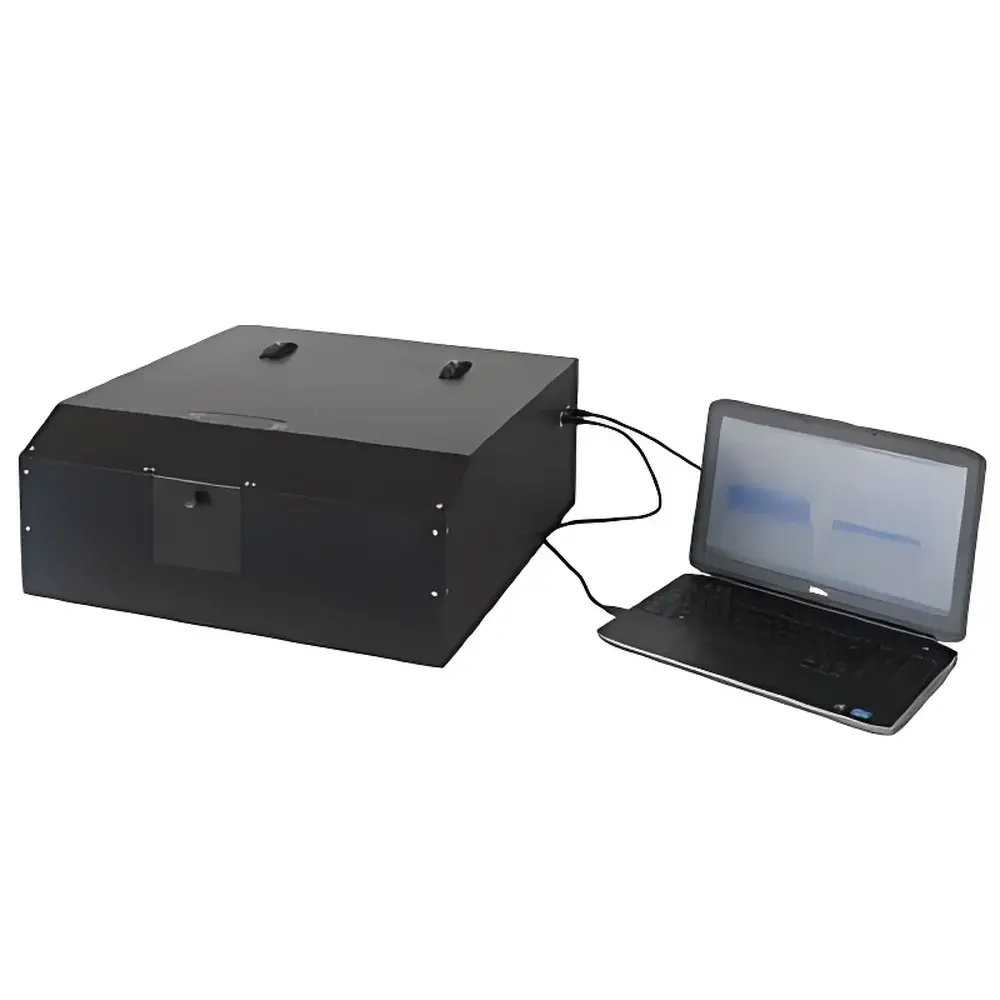
- N₂-purged transmission sample chamber to suppress atmospheric water vapor absorption lines below 2 THz, ensuring stable signal integrity during long-duration scans.
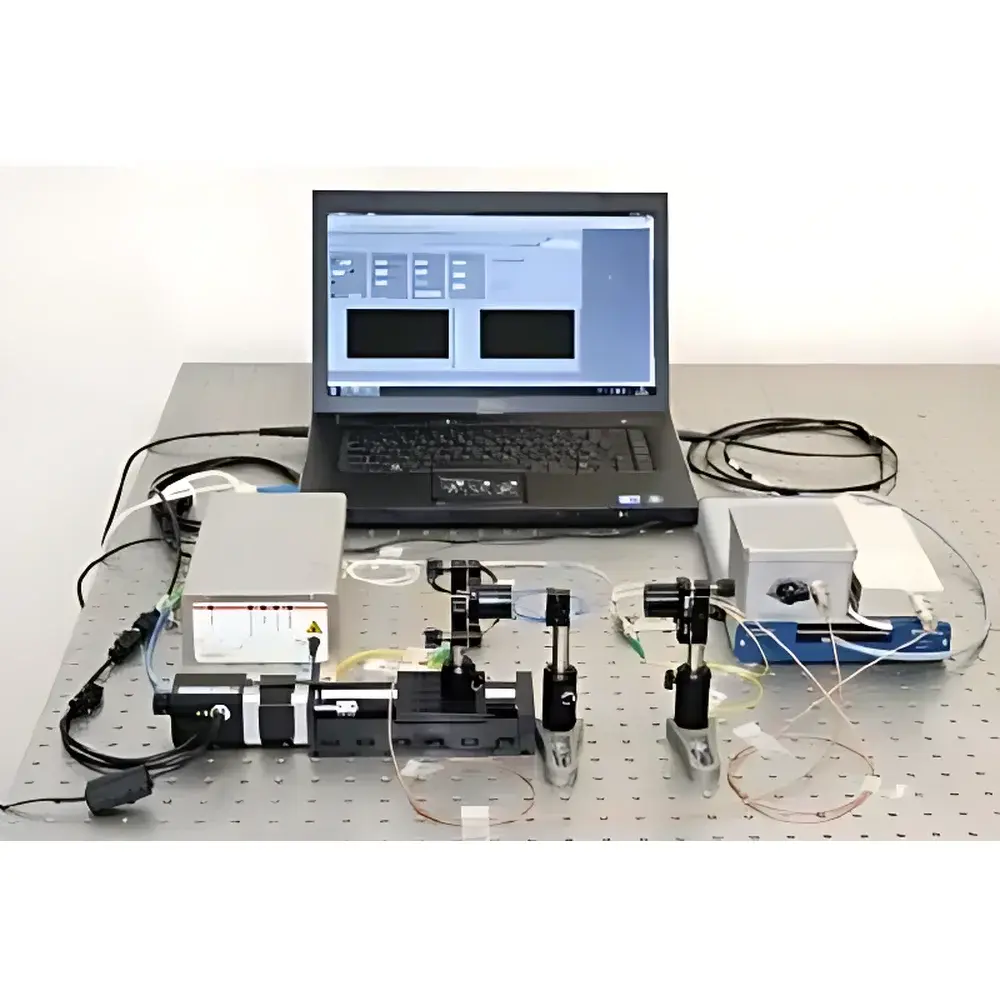
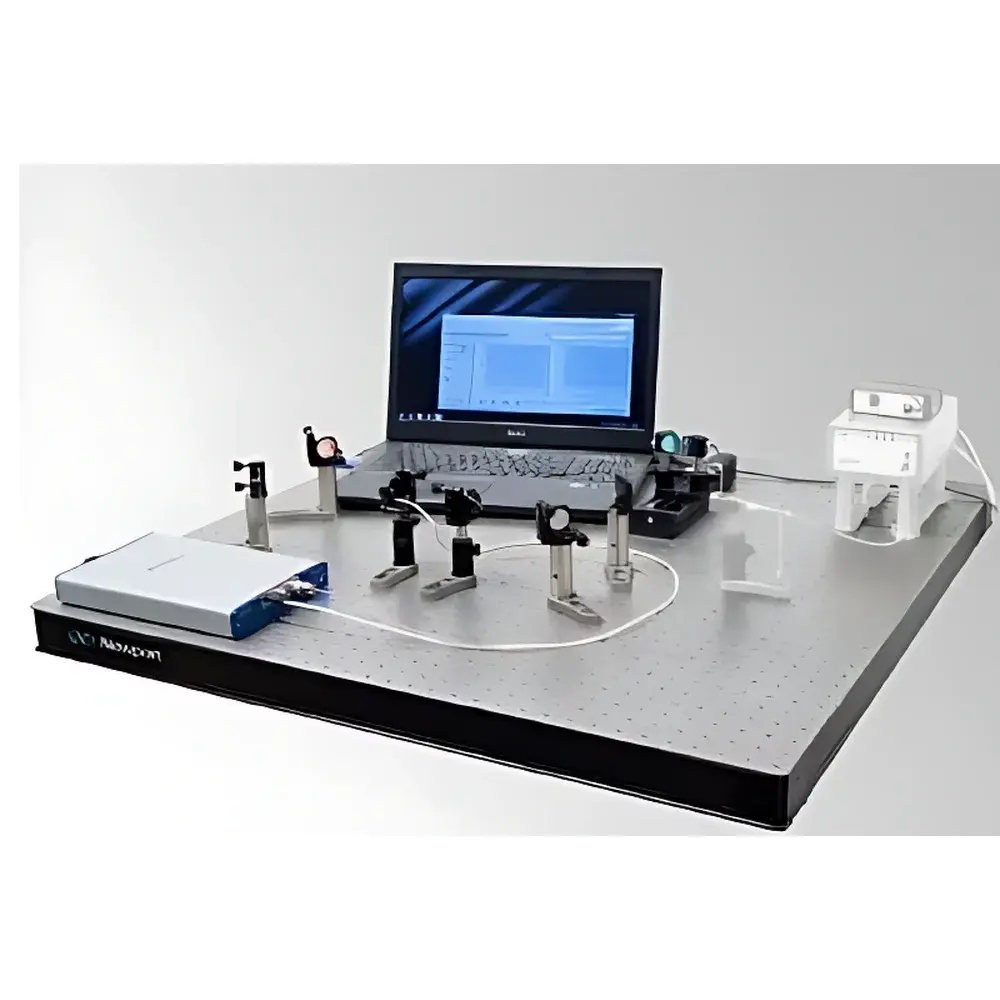
- Interchangeable beam delivery options: free-space collimated path (22 mm diameter), focused spot (≤1 mm at 1 THz), and fiber-coupled input/output ports compatible with standard single-mode telecom fibers (FC/APC).
- Integrated x-y-z motorized translation stage (optional) enabling automated 3D raster scanning for spatially resolved THz imaging, depth profiling, and tomographic reconstruction.
- Real-time acquisition firmware with dual-scan modes: rapid 0.5 s “fast scan” for qualitative screening and high-resolution 8–45 min “slow scan” for maximal dynamic range (>75 dB) and sub-GHz spectral resolution.
- Robust mechanical design compliant with ISO 14644-1 Class 5 cleanroom handling standards; vibration-isolated optical baseplate and temperature-stabilized detector housing ensure measurement reproducibility across multi-day experiments.
Sample Compatibility & Compliance
The TDS10XX accommodates solid, powder, and thin-film samples up to 30 × 30 mm in transmission geometry and ≥5 × 5 mm under focused illumination. Its non-ionizing, low-energy THz pulses (µW average power) enable safe analysis of biological tissues, hydrated biomolecules, and photosensitive organic crystals without thermal or photodamage. The system meets essential regulatory prerequisites for analytical instrumentation used in GMP-compliant laboratories: full audit trail support in T3DS software (including user login, parameter change logs, and raw data timestamping), electronic signature compatibility per FDA 21 CFR Part 11, and traceable calibration against NIST-traceable reference standards (e.g., silicon wafer thickness, polyethylene absorption peaks). It supports ASTM E2848–22 (Standard Guide for THz Spectroscopy of Solid Materials) and ISO/IEC 17025:2017 documentation requirements for accredited testing labs.
Software & Data Management
T3DS control and analysis suite provides end-to-end workflow management—from instrument initialization and parameter optimization to time-domain deconvolution, frequency-domain FFT processing, complex refractive index inversion, and 3D volumetric rendering. All raw time traces are stored in HDF5 format with embedded metadata (laser power, delay stage position, ambient humidity, detector bias), ensuring FAIR (Findable, Accessible, Interoperable, Reusable) data principles. Batch processing scripts (Python API included) allow automated generation of absorption coefficient maps, dispersion curves, and multivariate classification models (PCA, PLS-DA). Export modules support ASTM E131-compliant spectral file formats (.spa, .jdx), MATLAB (.mat), and CSV for integration into LIMS or ELN platforms.
Applications
- Pharmaceutical solid-state analysis: polymorph identification, hydrate/anhydrate differentiation, tablet coating thickness mapping, and real-time monitoring of lyophilization kinetics.
- Security and defense: concealed object detection in mail screening, explosive residue identification via spectral fingerprinting (e.g., RDX, PETN), and non-destructive inspection of composite aircraft panels.
- Materials science: carrier lifetime quantification in perovskite solar cells, interfacial phonon coupling in 2D heterostructures, and porosity assessment in aerogels and MOFs.
- Art conservation: stratigraphic analysis of paint layers, detection of underdrawings beneath varnish, and moisture content mapping in parchment manuscripts.
- Electronics QA: dielectric constant mapping of PCB substrates, delamination detection in flip-chip packages, and gate oxide thickness verification in SiC power devices.
FAQ
What laser sources are compatible with the TDS10XX platform?
The system integrates with femtosecond oscillators emitting at 800 nm (Ti:Sapphire), 1040 nm (Yb-fiber), or 1550 nm (Er-fiber), each enabling distinct trade-offs between bandwidth, SNR, and atmospheric transmission.
Can the TDS10XX perform reflection-mode measurements?
Yes—via optional off-axis parabolic mirror alignment and angle-resolved detector positioning; reflection geometry supports surface conductivity mapping and buried interface analysis.
Is nitrogen purging mandatory for all measurements?
Purging is recommended for measurements below 1.5 THz or when operating in ambient humidity >40% RH; above 2 THz or in climate-controlled labs (<30% RH), un-purged operation yields comparable performance.
How is calibration traceability maintained?
Each system ships with a certified reference set (Si wafer, PE film, air gap standard) and calibration certificate issued by Batop’s DAkkS-accredited metrology lab (D-K-19279-01-00), valid for 12 months.
Does the TDS10XX support third-party automation interfaces?
Yes—TCP/IP and RS-232 command protocols are documented in the SDK; LabVIEW, Python, and MATLAB drivers are provided for seamless integration into automated test benches or robotic sample handlers.




