
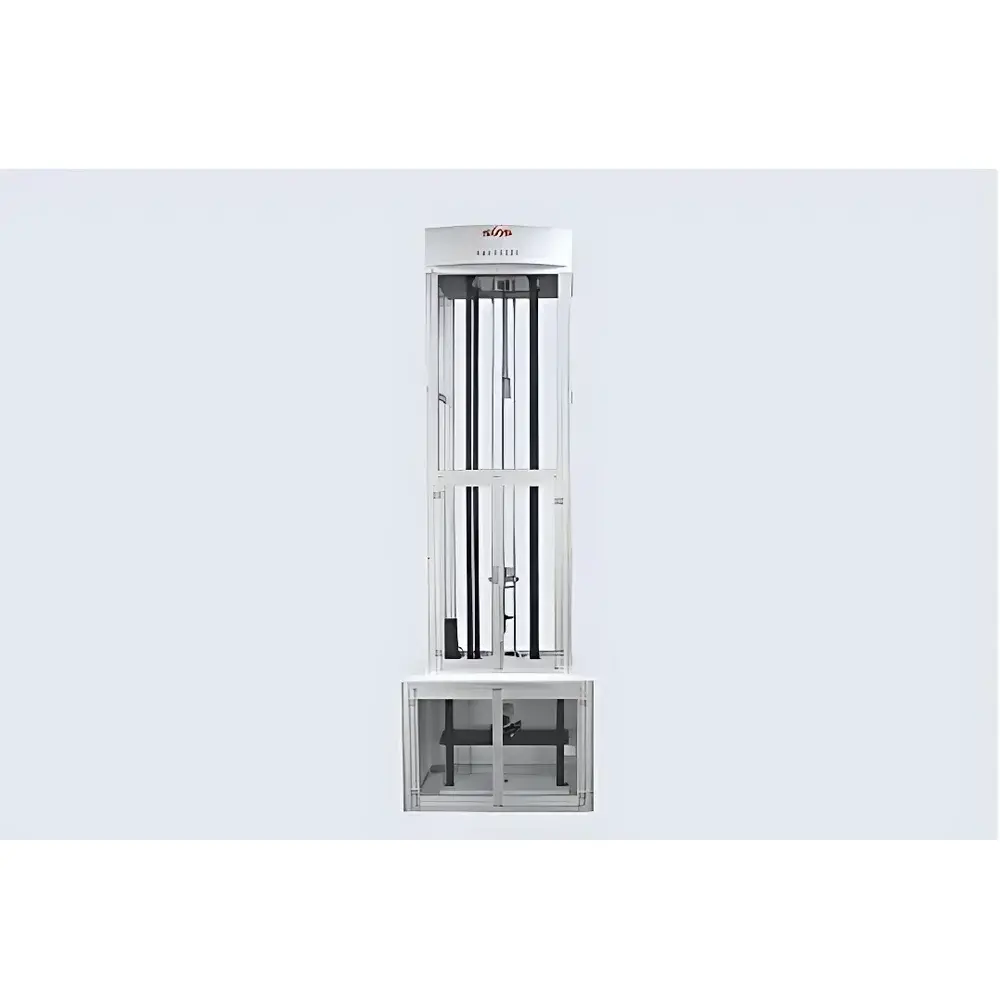
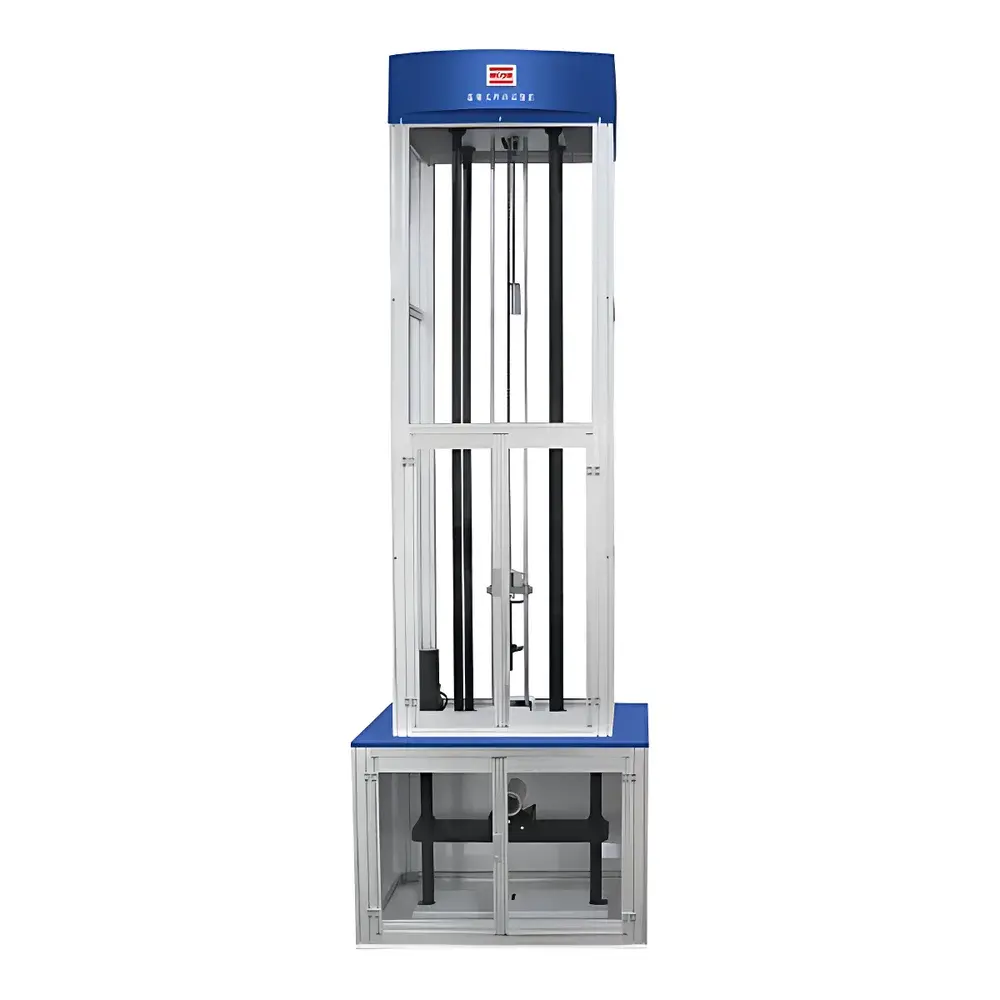
SUNS DTM1000 Series Plastic Drop-Weight Impact Tester
| Brand | SUNS |
|---|---|
| Origin | Shenzhen, China |
| Manufacturer Type | Direct Manufacturer |
| Product Category | Domestic |
| Model | DTM1000 Series |
| Instrument Type | Drop-Weight Impact Tester |
| Nominal Impact Energy | 300 J |
| Maximum Lift Height | 2000 mm |
| Maximum Specimen Pipe Diameter | Φ630 mm |
| Hammer Tip Radii Options | D25 (SR50) and D90 (SR50) |
| Frame Material | Enclosed Anodized Aluminum Alloy Structure |
| Guidance System | Precision Ground Stainless Steel Rods |
| Control System | Fully Automated with Imported Sensors and PLC |
| Compliance Standards | GB/T 14152–2001, GB/T 10002.1–2006, GB 6112–1985, GB/T 5836.1–2006, GB/T 16800–2008 |
Overview
The SUNS DTM1000 Series Plastic Drop-Weight Impact Tester is an engineered solution for standardized and non-standardized assessment of external impact resistance in thermoplastic piping systems. Based on the principle of gravitational potential energy conversion—where a precisely guided hammer is elevated to a defined height and released to strike a conditioned specimen—the instrument delivers repeatable, traceable impact energy (up to 300 J) under controlled boundary conditions. Designed specifically for pipe-shaped specimens per national Chinese standards (e.g., GB/T 14152–2001), it operates within a fully enclosed, rigid aluminum alloy frame that eliminates operator exposure to fragment ejection hazards while maintaining structural integrity across repeated high-energy cycles. The system integrates precision mechanical guidance via polished stainless steel rods, minimizing lateral deviation and drag-induced energy loss—critical for achieving measurement reproducibility required in QC laboratories and R&D environments.
Key Features
- Fully enclosed anodized aluminum alloy structural frame—eliminates risk of specimen fragmentation ejection and improves long-term dimensional stability versus traditional sheet-metal enclosures.
- Automatic hammer arrest mechanism activated immediately after first impact—prevents secondary rebound or oscillation, ensuring single-event energy delivery and compliance with standard-defined “first-hit-only” test protocols.
- High-accuracy automatic zero-positioning system for specimen alignment—uses imported optical sensors and servo-controlled vertical adjustment to position pipe centerlines within ±0.3 mm tolerance relative to hammer trajectory axis.
- Dual hammer tip configuration support (D25/SR50 and D90/SR50)—enables method-specific testing per GB/T 14152 (clockwise rotation method) and GB 6112 (flat-anvil or curved-anvil configurations).
- Maximum specimen capacity of Φ630 mm pipe diameter—covers full range of municipal water supply, building drainage, and industrial conduit applications without manual reconfiguration.
- PLC-based control interface with password-protected parameter locking—supports audit-ready operation logs and prevents unauthorized modification of lift height, hammer mass, or release timing.
Sample Compatibility & Compliance
The DTM1000 accommodates rigid and semi-rigid thermoplastic pipes—including PVC-U, PE, PP-R, and ABS—under ambient and conditioned (e.g., 0 °C or 23 °C) states per standard thermal equilibration requirements. Its mechanical design conforms to the geometric and procedural constraints specified in GB/T 14152–2001 (time-clockwise rotation method), GB/T 10002.1–2006 (PVC-U water supply pipes), GB 6112–1985 (general thermoplastic pipe impact testing), GB/T 5836.1–2006 (building drainage PVC-U), and GB/T 16800–2008 (foamed-core PVC-U). While not certified to ISO 179 or ASTM D746/D1790, its energy calibration methodology (via verified drop height and certified hammer mass) is traceable to national metrological standards, supporting internal validation against international reference methods. Optional documentation packages include calibration certificates compliant with ISO/IEC 17025–accredited procedures upon request.
Software & Data Management
The DTM1000 operates via an embedded industrial PLC with real-time event logging (impact timestamp, lift height, hammer mass, pass/fail status, operator ID). All operational data are exportable in CSV format for integration into LIMS or QA databases. The system supports GLP-compliant audit trails: each test record includes immutable metadata (date/time, firmware version, sensor calibration expiry, user login session ID). Though no proprietary PC software is bundled, the device provides RS-232 and Ethernet interfaces for third-party SCADA or MES integration. For regulated environments, optional 21 CFR Part 11–compliant electronic signature modules and encrypted database archiving are available as add-on configurations.
Applications
- Quality control of extruded thermoplastic pipes in manufacturing plants—verifying batch-to-batch consistency against specification limits.
- R&D evaluation of polymer formulation changes (e.g., impact modifiers, filler content, plasticizer ratios) on low-temperature toughness.
- Validation of pipe wall thickness optimization studies—correlating impact failure mode (crack initiation vs. full fracture) with structural geometry.
- Third-party certification testing for CCC, CE-marked products requiring documented impact performance evidence.
- Non-standard impact assessment—including custom drop heights, atypical hammer geometries, or multi-layer composite pipe structures—via factory-supported engineering modifications.
FAQ
What standards does the DTM1000 directly support?
It is configured and validated for GB/T 14152–2001, GB/T 10002.1–2006, GB 6112–1985, GB/T 5836.1–2006, and GB/T 16800–2008. Custom firmware mapping for ISO 179–1 or ASTM D746 is available upon technical review.
Is calibration traceable to national standards?
Yes—hammer mass is certified by provincial metrology institutes; lift height is measured using laser interferometry during factory acceptance testing. Calibration certificates follow JJF 1059.1–2012 uncertainty evaluation guidelines.
Can the system be integrated into an existing lab network?
Standard RS-232 and optional Ethernet (Modbus TCP) interfaces enable connection to LIMS, MES, or centralized test management platforms.
Does the enclosure meet IP rating requirements?
The sealed aluminum frame achieves IP54 ingress protection—dust-resistant and splash-proof—suitable for typical industrial laboratory environments.
What maintenance intervals are recommended?
Biannual verification of hammer alignment, guide rod lubrication, and sensor zero-point drift; annual recalibration of height encoder and load cell (if equipped with optional force measurement module).



