
Tianhong TH-830 Fixed Source VOCs Online Monitoring System for Aromatic Hydrocarbons (BTEX & Styrene)
| Brand | Tianhong |
|---|---|
| Origin | Hubei, China |
| Manufacturer Type | Authorized Distributor |
| Country of Origin | China |
| Model | TH-830 |
| Pricing | Upon Request |
Overview
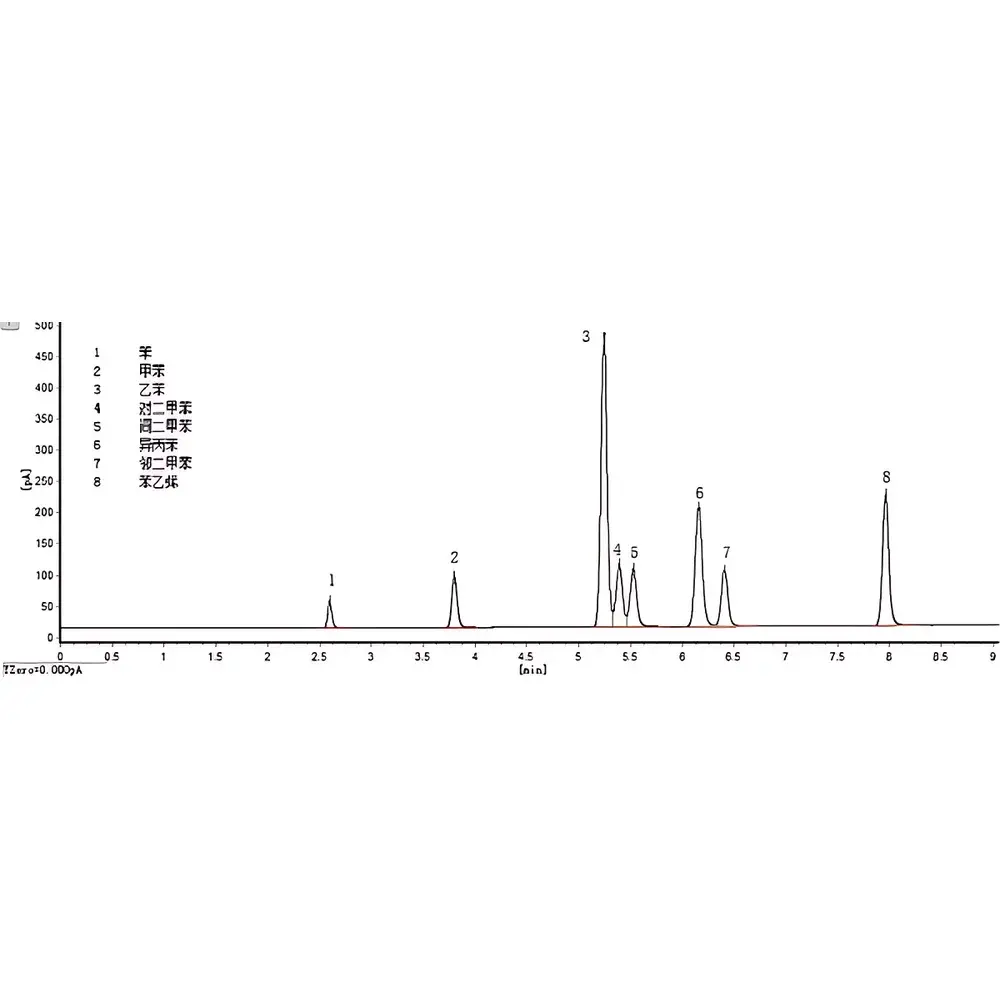
The Tianhong TH-830 Fixed Source VOCs Online Monitoring System is a certified continuous emission monitoring system (CEMS) engineered for real-time, quantitative analysis of aromatic hydrocarbons—including benzene, toluene, ethylbenzene, xylenes (o-, m-, p-), styrene, and cumene—at industrial exhaust stacks and fence-line locations. It operates on the principle of gas chromatography coupled with flame ionization detection (GC-FID), employing a dual-column configuration with center-cutting and back-flush switching to achieve selective separation and interference-free quantification of target BTEX+ compounds in complex hydrocarbon matrices. The system maintains the entire sample pathway—including sampling probe, heated transfer line, and analytical loop—at 180 °C to prevent condensation, adsorption, or carryover, ensuring high-fidelity measurement integrity across varying stack temperatures and humidity conditions. Designed for unattended 7×24 operation in harsh industrial environments, the TH-830 meets fundamental performance requirements aligned with EPA Method 25A, EN 15267-3, and China’s HJ 1013–2018 standard for VOCs CEMS.
Key Features
- Patented center-cut and back-flush GC configuration enabling direct, interference-resolved quantification of six priority aromatics without pre-concentration or cryogenic trapping
- Heated sample path (180 °C) from probe tip to detector, eliminating condensation artifacts and memory effects in high-boiling or polar matrix streams
- FID detector with auto-ignition control, linear dynamic range ≥107, and low detection limits (sub-ppbv for benzene under optimized conditions)
- Electronic Pressure Control (EPC) for carrier gas (N2 or He), hydrogen, and synthetic air—precision ±0.01 psi, repeatability <0.5% RSD over 72 h
- Integrated system diagnostics: power-loss recovery with cold-start sequence, carrier gas failure shutdown, flame-out detection, and real-time valve position monitoring
- Modular architecture with field-replaceable GC columns, FID jet, and EPC modules—designed for >12 months mean time between maintenance (MTBM)
Sample Compatibility & Compliance
The TH-830 is validated for use with flue gases from thermal processes where oxygen content ranges from 3–15% (dry basis) and moisture content ≤15% v/v. It accommodates particulate loadings up to 50 mg/m³ via integrated sintered metal filtration and heated cyclonic separation. All wetted components comply with ASTM A269 TP316L stainless steel specifications. The system supports compliance reporting per China’s HJ 75–2017 (CEMS technical specification), HJ 76–2017 (quality assurance procedures), and is configurable for audit-ready data logging aligned with GLP/GMP principles. Optional analog/digital I/O enables integration into DCS/SCADA platforms meeting IEC 61511 functional safety requirements for Level 1 SIL applications.
Software & Data Management
The embedded Linux-based firmware runs Tianhong’s CEMS-OS v4.2, providing ISO/IEC 17025-aligned data handling: automatic calibration verification every 24 h, multi-point span checks with certified standard gases (NIST-traceable), and full audit trail with user-level access control (admin/operator/viewer). Raw chromatograms, peak integration logs, and system event timestamps are stored locally (≥12 months) and exportable via FTP/SFTP or Modbus TCP. Remote diagnostics and firmware updates are supported over TLS 1.2-secured Ethernet or 4G LTE. Data output complies with HJ 212–2017 communication protocol and includes optional FDA 21 CFR Part 11-compliant electronic signature modules for regulated facilities.
Applications
- Continuous monitoring of benzene and alkylbenzenes at refinery catalytic cracker and reformer stack outlets
- Real-time fence-line monitoring for aromatic emissions from automotive coating lines and coil coating facilities
- Compliance verification for VOC abatement systems (e.g., RTO, carbon adsorption) in flexographic and gravure printing plants
- Source apportionment support in ambient air quality networks where speciated aromatic profiles inform receptor modeling
- Process optimization feedback in petrochemical units where xylene isomer ratios correlate with catalyst deactivation
FAQ
What regulatory standards does the TH-830 meet for fixed-source VOC monitoring?
It conforms to HJ 1013–2018 (China’s technical specification for aromatic VOC CEMS), HJ 75/76–2017 (performance testing and QA/QC protocols), and supports method validation per EPA Method 25A and EN 15267-3.
Can the system quantify individual xylene isomers separately?
Yes—the dual-column GC configuration with center-cut switching resolves o-, m-, and p-xylene as distinct peaks with baseline separation under standard operating conditions.
Is the TH-830 compatible with existing plant DCS networks?
It provides native 4–20 mA analog outputs, Modbus RTU/TCP, and optional Profibus DP interfaces for seamless integration into legacy and modern control systems.
What is the recommended calibration frequency for routine compliance reporting?
Daily zero/span verification using certified gas standards is required per HJ 76–2017; full multi-point calibration is performed weekly or after maintenance events.
Does the system include data validation and uncertainty estimation features?
Yes—CEMS-OS v4.2 calculates measurement uncertainty per GUM (JCGM 100:2008) using propagation-of-error models based on calibration gas uncertainty, retention time stability, and FID response variability.







