
EDC HIM6000 Ambient Air Quality Monitoring System
| Brand | EDC |
|---|---|
| Origin | USA |
| Model | HIM6000 |
| Sensor Capacity | Up to 12 simultaneous channels (PM, gas, meteorological) |
| Compliance | EPA Reference/Equivalent Methods, EU Directive 2008/50/EC |
| Power Options | Rechargeable 12V NiMH battery, solar-compatible |
| Communication | Wi-Fi 2.4/5 GHz, LTE/GSM, 900 MHz RF, Ethernet |
| Data Storage | Internal 1-year buffered logging |
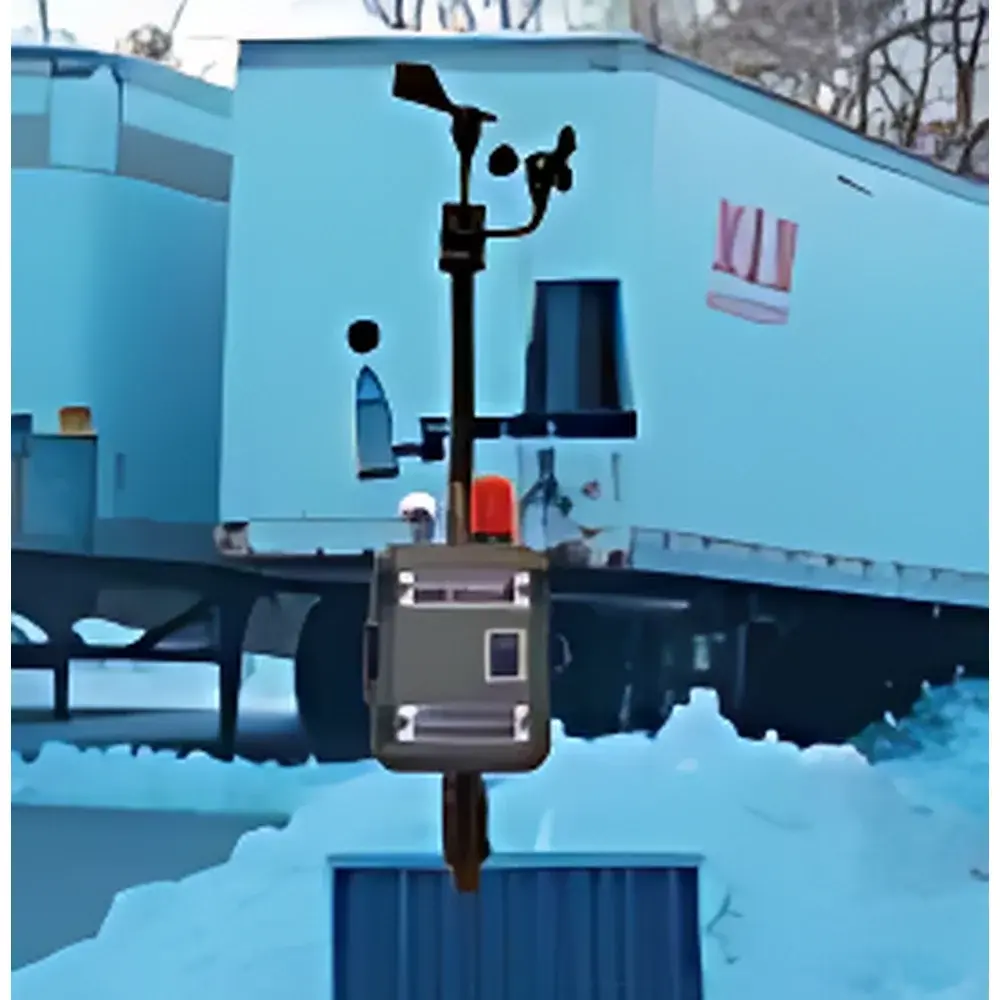
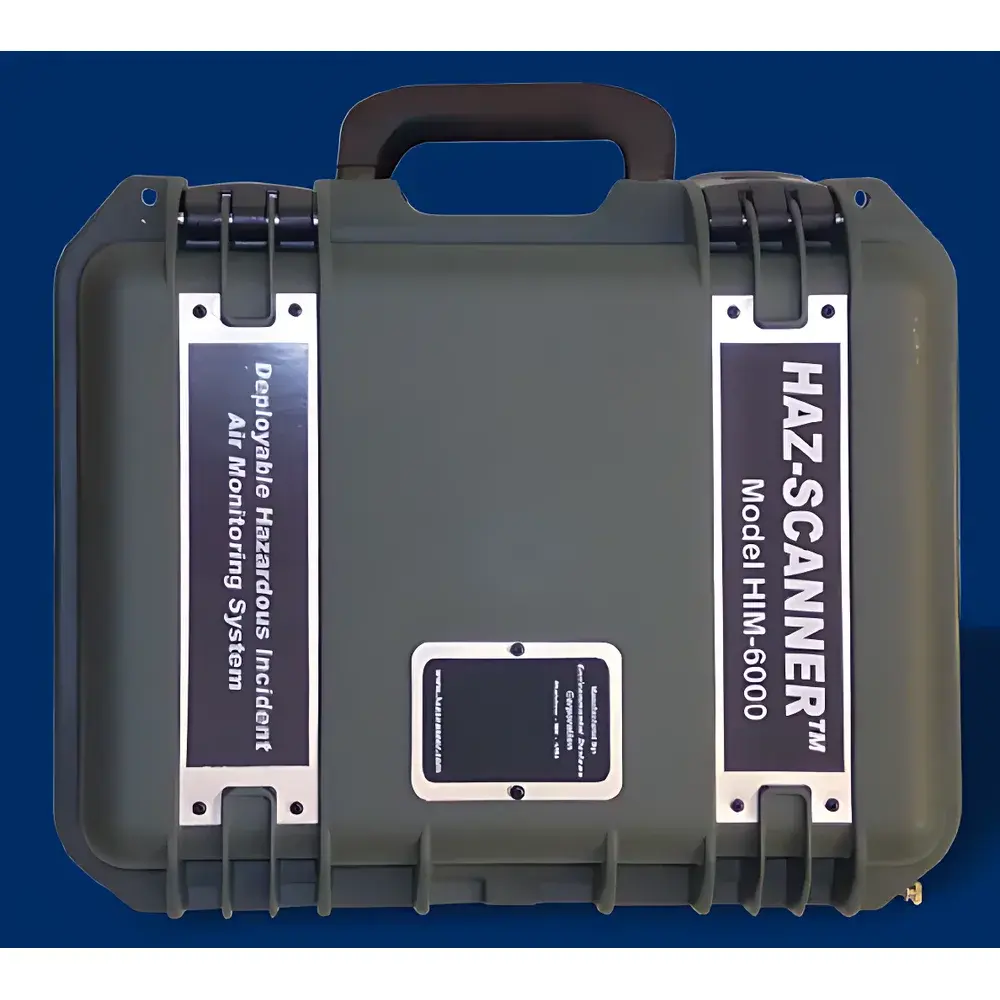
| Deployment | Portable tripod-mountable, field-rugged enclosure |
| PM Measurement | Simultaneous PM₁.₀, PM₂.₅, PM₁₀, and/or TSP (dual-channel configurable) |
| Gas Detection Range | ppb–% vol (application-specific sensor calibration per OSHA, NIOSH, or EPA protocols) |
| Environmental Operating Range | −20 °C to +60 °C |
| Enclosure Rating | IP65 |
Overview
The EDC HIM6000 Ambient Air Quality Monitoring System is a modular, field-deployable environmental instrumentation platform engineered for regulatory-grade measurement of gaseous pollutants, respirable particulate matter, and meteorological parameters. Based on proven electrochemical, metal oxide semiconductor (MOS), photoionization (PID), and laser scattering (for PM) detection principles, the HIM6000 supports method-compliant monitoring aligned with U.S. EPA Federal Reference Methods (FRMs) and Federal Equivalent Methods (FEMs), as well as European Union Air Quality Directive 2008/50/EC requirements. Its architecture enables true parallel acquisition across up to twelve independently configurable sensor channels—allowing simultaneous quantification of PM₂.₅ and PM₁₀ using dual optical particle counters, co-located gas analytes (e.g., NO₂, O₃, SO₂, CO, VOCs), and ambient conditions (temperature, RH, wind speed/direction, barometric pressure). Designed for long-term unattended operation in diverse environments—from urban background stations to industrial fence-line and emergency response deployments—the system integrates robust power management, secure over-the-air firmware updates, and audit-ready data handling.
Key Features
- Modular sensor architecture supporting up to 12 concurrent measurement channels: 2 dedicated particulate mass channels (selectable PM₁.₀/PM₂.₅/PM₁₀/TSP), up to 8 gas sensors, and 4 meteorological inputs.
- Dual PM channel capability with real-time size-fractionated mass concentration output (µg/m³), traceable to NIST-traceable calibrations and EPA-approved optical scattering algorithms.
- Configurable detection sensitivity tiers: high-sensitivity (ppb-level) mode for ambient air compliance monitoring; low-sensitivity (ppm-level) mode optimized for occupational exposure assessment per OSHA PELs and ACGIH TLVs.
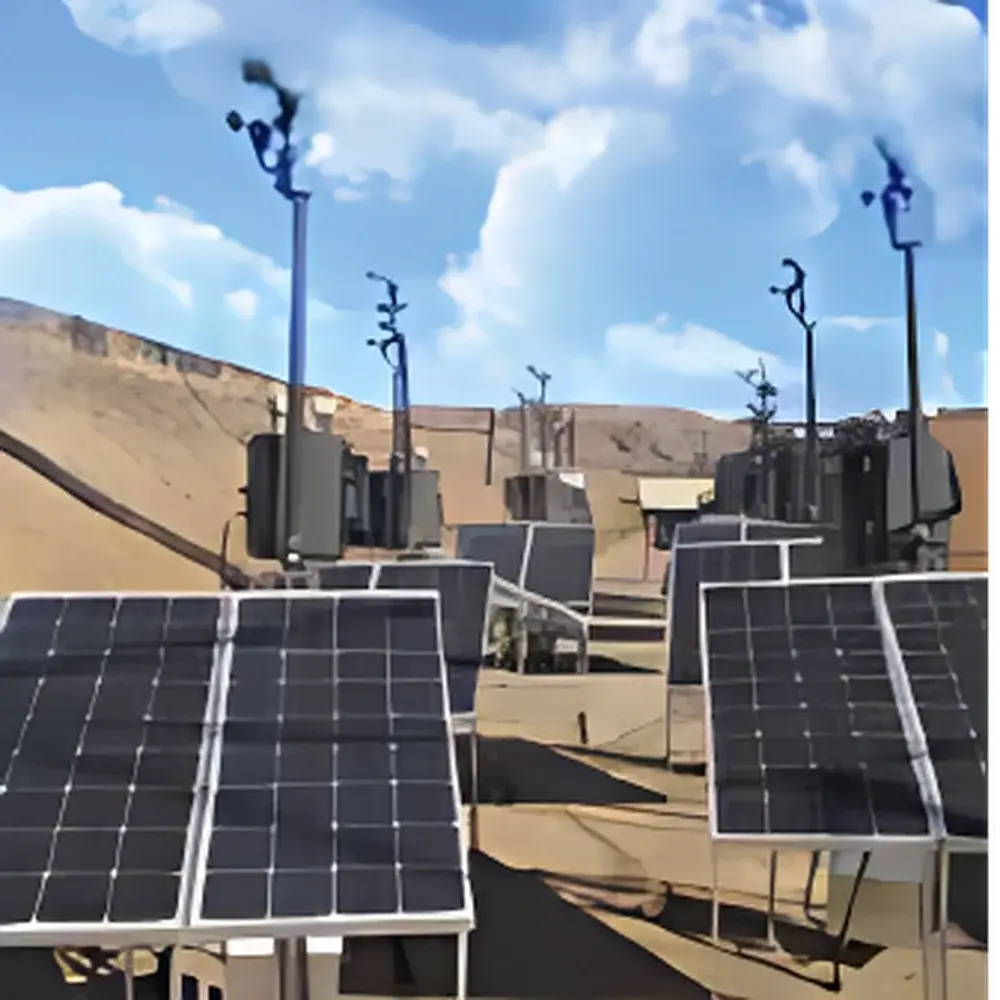
- Integrated 12V NiMH rechargeable battery with >72-hour operational autonomy; optional solar charging kit enables year-round off-grid deployment.
- Real-time LCD interface with four tactile membrane buttons; fully sealed IP65 enclosure rated for outdoor use in rain, dust, and temperature extremes (−20 °C to +60 °C).
- Onboard data logger with non-volatile memory supporting one year of second-resolution buffered storage; export via USB or network in CSV/JSON format.
- Multi-protocol wireless connectivity: Wi-Fi (2.4/5 GHz), LTE Cat-M1/NB-IoT, 900 MHz proprietary RF mesh, and Ethernet—all supporting TLS 1.2 encrypted data transmission.
Sample Compatibility & Compliance
The HIM6000 accommodates regulatory and research-grade sampling configurations without requiring external conditioning hardware. Particulate measurements adhere to ISO 12103-1 A2 test dust calibration protocols and meet EPA EQPM-0707-175 specifications for PM₂.₅ and PM₁₀ monitors. Gaseous sensors are factory-calibrated against NIST-traceable standards and validated per ASTM D6196 (VOCs), ASTM D5012 (SO₂), and EN 14625 (O₃). Optional SKC-series external sampling pumps enable integrated canister or sorbent tube collection for subsequent GC-MS or IC analysis—supporting EPA TO-15, TO-17, and Method 18 workflows. All firmware and data handling routines comply with GLP data integrity expectations, including time-stamped audit trails, user-access controls, and immutable raw-data archiving—facilitating FDA 21 CFR Part 11 readiness when paired with validated software configuration.
Software & Data Management
The HIM6000 is managed through EDC’s AirVision™ desktop application (Windows/macOS compatible), which provides graphical visualization, automated report generation (PDF/Excel), and customizable alerting (email/SMS/webhook) based on user-defined threshold logic. The software supports multi-station network topology mapping, synchronized time alignment across distributed nodes, and metadata tagging for sensor provenance, calibration history, and maintenance logs. Raw binary telemetry is stored in structured HDF5 format for reproducible reprocessing; CSV exports include ISO 8601 timestamps, sensor serial numbers, calibration coefficients, and QC flags. Remote firmware upgrades preserve configuration integrity and support delta-patching to minimize bandwidth usage in cellular deployments.
Applications
- Ambient air quality surveillance networks (urban, rural, regional)
- Industrial perimeter monitoring and fenceline compliance reporting
- Emergency response and hazmat incident characterization (e.g., chemical release, wildfire smoke, industrial fire)
- Military base environmental health and safety (EHS) programs
- Landfill and waste transfer station emissions tracking
- Construction site dust and VOC emission verification
- Indoor air quality (IAQ) baseline studies and post-remediation validation
- Academic and governmental atmospheric research campaigns
FAQ
Does the HIM6000 meet U.S. EPA equivalency requirements for regulatory reporting?
Yes—specific sensor configurations (e.g., PM₂.₅ optical counter with beta attenuation backup, electrochemical NO₂/O₃ modules) are certified as FEMs under EPA’s EQPB program. Full certification documentation is provided per configured channel.
Can I integrate third-party gas analyzers or meteorological stations?
The HIM6000 supports analog (0–5 V, 4–20 mA) and digital (RS-485 Modbus RTU) inputs; however, only EDC-validated sensors are covered under warranty and compliance assurance.
What is the calibration interval recommendation?
Particulate channels require annual NIST-traceable recalibration; electrochemical gas sensors are recommended for bump testing before each deployment and full calibration every 3–6 months depending on exposure history.
Is the system suitable for indoor use?
Yes—its low-power design, quiet operation, and absence of ozone-generating components make it appropriate for IAQ studies, though enclosure ventilation must be maintained per sensor datasheet requirements.
How is data security implemented?
All wireless transmissions use AES-256 encryption and TLS 1.2 handshake; local storage employs write-protected sectors; user roles are enforced via password-protected access levels with session timeout.







