
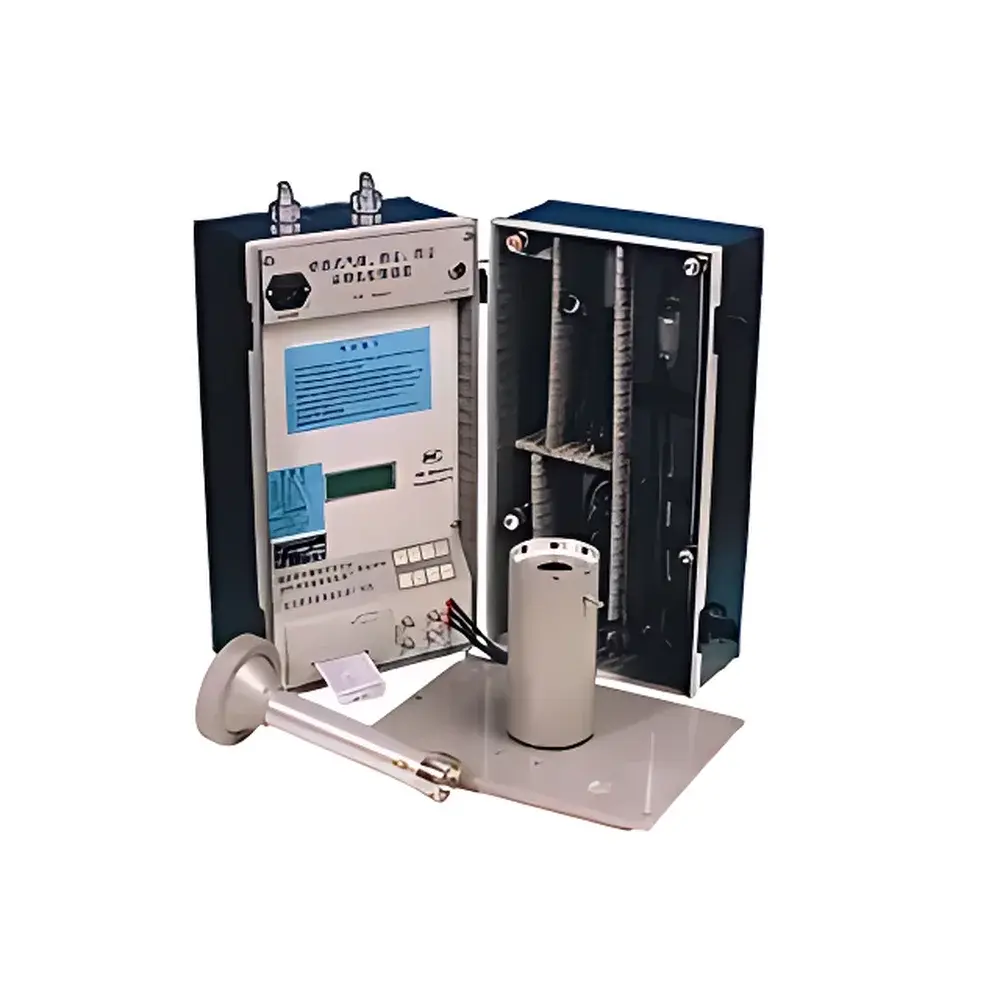
TH-BQX1 Portable Gas, Dust, and Flue Gas Sampler Calibration System
| Origin | Hubei, China |
|---|---|
| Manufacturer Type | Distributor |
| Origin Category | Domestic |
| Model | TH-BQX1 |
| Pricing | Upon Request |
| Flow Range | 0.1–150 L/min and 0.8–1.2 m³/min |
| Flow Measurement Accuracy | ±1.0% FS |
| Flow Repeatability | ≤0.5% RSD |
| Differential Pressure Range | −1000 Pa to +1000 Pa |
| Differential Pressure Accuracy | ±1.0% FS |
| Calibration Standards | Traceable to National Metrology Institute (NIM), certified reference instruments including calibrated infrared photoelectric soap-film flowmeter, infrared photoelectric diaphragm flowmeter, and orifice-type differential pressure flowmeter |
Overview
The TH-BQX1 Portable Gas, Dust, and Flue Gas Sampler Calibration System is a field-deployable metrological verification platform engineered for traceable calibration of environmental air sampling instrumentation. It operates on dual-principle flow measurement architecture—integrating calibrated infrared photoelectric soap-film flowmeters (for low-flow precision), infrared photoelectric diaphragm flowmeters (for mid-range stability), and orifice-based differential pressure flowmeters (for high-flow validation)—all referenced to national metrological standards. Designed in accordance with JJG 943–2011 (Chinese Verification Regulation for Air Sampler Calibrators) and aligned with ISO/IEC 17025:2017 requirements for calibration laboratories, the system enables direct on-site verification of volumetric flow rate and differential pressure performance across atmospheric, TSP, PM10, PM2.5, flue gas, and industrial dust sampling devices—including fixed-station automatic monitoring systems. Its modular sensor configuration ensures metrological continuity across three distinct flow regimes (0.1–150 L/min and 0.8–1.2 m³/min), supporting compliance with EPA Method 4, ISO 29463-3, EN 12341, and US EPA Reference Method PS-1 for sampler performance evaluation.
Key Features
- Triple-mode flow calibration architecture: infrared soap-film (low-flow), infrared diaphragm (mid-flow), and orifice/differential pressure (high-flow), each independently traceable to NIM-certified standards
- Integrated microprocessor control with real-time data acquisition, automatic calculation of flow deviation, repeatability index (RSD), and uncertainty propagation per GUM (JCGM 100:2008)
- High-resolution differential pressure sensing (−1000 to +1000 Pa) with thermal drift compensation and zero-stability < ±0.5 Pa over 8 hours
- Compact, ruggedized portable chassis (W × D × H: 320 × 240 × 180 mm; mass: <4.2 kg) rated IP54 for field deployment in ambient conditions from −10 °C to +50 °C
- Backlit monochrome LCD interface with Chinese-language menu navigation, step-by-step operational prompts, and context-sensitive error diagnostics
- Onboard non-volatile memory (≥1000 test records) with timestamp, instrument ID, operator code, ambient temperature/pressure logging, and pass/fail flagging per user-defined tolerance thresholds
Sample Compatibility & Compliance
The TH-BQX1 is validated for calibration of volumetric flow sensors and differential pressure transducers used in regulatory-grade environmental samplers—including but not limited to: high-volume TSP/PM10 samplers (e.g., TEOM, Beta Attenuation Monitors), low-flow passive and active VOC samplers, stack-mounted flue gas extractive systems, and occupational hygiene dust monitors (e.g., IOM, Button, and GK2.69 cyclones). All internal flow elements are calibrated per ISO/IEC 17025-accredited procedures at a CNAS-certified metrology laboratory, with full documentation including NIM-issued Certificate of Calibration (No. NIM-CC-XXXXX) covering flow and pressure channels. The system supports GLP-compliant recordkeeping through exportable CSV reports compliant with FDA 21 CFR Part 11 audit trail requirements when paired with optional PC software.
Software & Data Management
Data export is supported via USB 2.0 interface to Windows-based desktop application (TH-CalSoft v3.2), enabling report generation per ISO/IEC 17025 Annex A.3 templates, trend analysis of long-term sampler drift, and comparison against historical calibration baselines. Each stored record includes raw sensor outputs, environmental correction factors (temperature, barometric pressure, humidity), calculated volumetric flow at standard conditions (25 °C, 101.325 kPa), and uncertainty budget components (type A and type B). Audit logs capture all parameter changes, firmware updates, and user authentication events—fully traceable to individual operator IDs.
Applications
- Field verification of ambient air quality monitoring stations prior to quarterly QA/QC audits
- Pre-deployment calibration of mobile emission testing units conducting roadside or industrial fence-line measurements
- Annual metrological reassessment of fixed-stack CEMS (Continuous Emission Monitoring Systems) flow sensors per EPA Performance Specification 11 (PS-11)
- Validation of personal sampling pumps used in OSHA and NIOSH method-compliant exposure assessments
- Supporting accreditation maintenance for environmental laboratories under CNAS, UKAS, or A2LA scopes
- Technical training and proficiency testing for metrology technicians in provincial environmental monitoring centers
FAQ
Is the TH-BQX1 suitable for calibrating samplers operating at elevated temperatures or corrosive gas streams?
No—the system is designed for ambient-condition calibration of sample inlet flow paths only. It does not perform in-situ hot/wet gas calibration; users must condition samples to ambient temperature and remove particulates/condensables upstream of the calibrator inlet.
Does the device meet international metrological traceability requirements for ISO 17025 accreditation?
Yes—each unit ships with a NIM-issued Certificate of Calibration demonstrating traceability to national primary standards, accompanied by measurement uncertainty statements fully compliant with ISO/IEC 17025 Clause 6.5.2.
Can calibration data be exported in formats compatible with LIMS integration?
Yes—CSV exports include ISO/IEC 17025-mandated metadata fields (operator ID, equipment ID, environmental conditions, uncertainty components) and support direct ingestion into common LIMS platforms via configurable mapping templates.
What maintenance intervals are recommended for sustained accuracy?
Annual recalibration at an accredited metrology lab is required; soap-film and diaphragm modules undergo functional verification every 90 days using built-in self-test routines and certified check standards.
Is firmware upgradable in the field?
Yes—firmware updates are delivered via encrypted USB stick and applied through the device’s secure bootloader, with version rollback capability and SHA-256 signature validation.







