
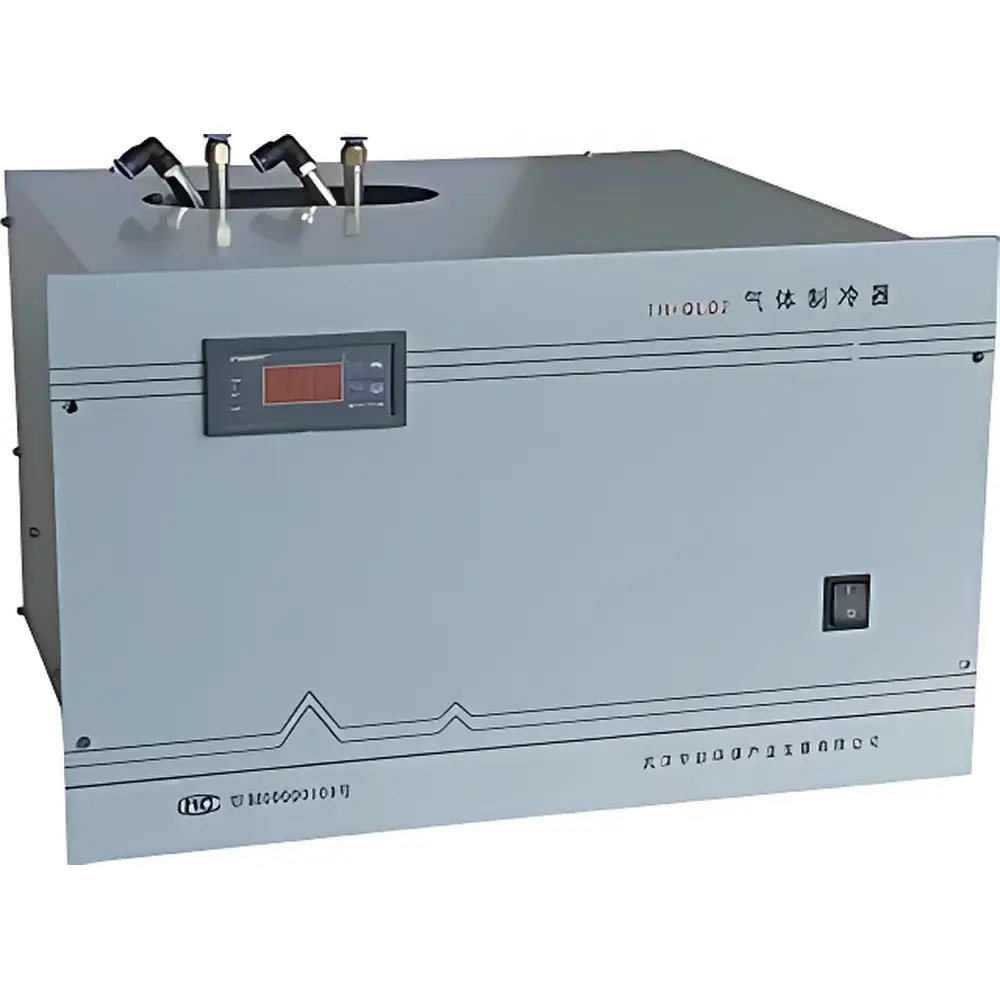
TH-QL02 Semiconductor-Based Gas Chiller with Integrated Heating and Precision Dew Point Control
| Origin | Hubei, China |
|---|---|
| Manufacturer Type | Authorized Distributor |
| Origin Category | Domestic (PRC) |
| Model | QL02 |
| Pricing | Available Upon Request |
| Refrigeration Temperature | < 5 °C |
| Heating Temperature Range | 120–160 °C |
Overview
The TH-QL02 Semiconductor-Based Gas Chiller is an engineered solution for continuous, stable conditioning of hot, humid flue gas streams prior to analytical measurement. It operates on the Peltier thermoelectric principle—leveraging solid-state semiconductor modules for both active cooling and precise heating—eliminating reliance on compressors, refrigerants, or moving mechanical parts. The system integrates three functional stages: (1) upstream high-temperature pre-heating (120–160 °C) to prevent condensation in sampling lines; (2) controlled thermoelectric cooling to sub-5 °C dew point temperatures to maximize water vapor removal; and (3) a high-efficiency coalescing gas–water separator downstream of the cold trap. This staged thermal management ensures consistent gas dryness, minimizes analyte loss due to adsorption or solubility, and maintains sample integrity for downstream analyzers such as NDIR CO/CO₂ sensors, paramagnetic O₂ detectors, electrochemical SO₂/NOₓ cells, and FTIR spectrometers.
Key Features
- Solid-state Peltier cooling and heating modules—no CFCs, no oil-lubricated compressors, zero maintenance downtime from refrigerant leakage or mechanical wear
- Multi-stage thermal control architecture: independent upstream heating zone + central refrigeration chamber + post-chill coalescer
- Automatic temperature stabilization via PID-controlled feedback loops with ±0.3 °C setpoint accuracy across full operating range
- Integrated dew point monitoring interface (optional analog 4–20 mA output) for real-time validation of drying performance
- Stainless steel 316L wetted path and fluoropolymer-sealed joints—resistant to acidic condensates (e.g., H₂SO₄, HCl) common in coal- or waste-derived flue gas
- Compact benchtop footprint (W320 × D280 × H210 mm) with DIN-rail mounting capability for OEM integration into CEMS cabinets
Sample Compatibility & Compliance
The TH-QL02 is validated for use with extractive gas sampling systems handling flue gas from industrial boilers, cement kilns, municipal waste incinerators, and biomass combustion units. It accommodates volumetric flow rates from 0.5 to 2.0 L/min at inlet pressures up to 100 kPa (gauge). All internal surfaces comply with ASTM D6784-22 Annex A3 requirements for low-adsorption conditioning of acid gases. The unit meets CE marking directives (2014/30/EU EMC, 2014/35/EU LVD), and its temperature control firmware supports audit-ready logging per ISO 17025:2017 Clause 7.7 (monitoring of environmental conditions affecting measurement validity). When deployed in regulated emissions monitoring (e.g., EPA Method 3A, EN 15267-3), it satisfies the “drying and conditioning” subsystem criteria under EN 14181 QAL1/QAL2 verification protocols.
Software & Data Management
The TH-QL02 operates in standalone mode with front-panel LED display and tactile keypad, but also supports digital integration via RS-485 Modbus RTU (default address 0x01, baud rate 9600). Optional firmware upgrade enables time-stamped internal logging of refrigeration/heating stage temperatures, fan speed, and fault codes (stored in non-volatile memory for ≥30 days). Data export is supported via USB-C serial emulation or optional Ethernet gateway module (TCP/IP Modbus TCP). All logged parameters are timestamped with UTC synchronization capability, fulfilling traceability requirements under GLP and FDA 21 CFR Part 11 when paired with validated third-party SCADA platforms.
Applications
- Continuous Emissions Monitoring Systems (CEMS) for regulatory compliance reporting (e.g., EPA 40 CFR Part 60, EU IED Directive)
- Calibration gas conditioning in metrology laboratories performing gravimetric standard preparation
- In-situ validation of optical gas analyzers where moisture-induced spectral interference must be eliminated (e.g., TDLAS water vapor cross-talk mitigation)
- Research-grade flue gas characterization in combustion efficiency studies requiring stoichiometric O₂/C/H/N/S balance closure
- Pre-concentration setups for GC-MS analysis of volatile organic compounds (VOCs) in stack emissions
FAQ
What is the maximum allowable inlet gas temperature before the TH-QL02?
The unit accepts inlet gas up to 180 °C continuously; however, sustained exposure above 160 °C requires optional high-temp inlet filter housing (part #QL02-HTF) to protect Peltier junction integrity.
Does the TH-QL02 meet EPA PS-11 requirements for certified CEMS conditioners?
While not individually PS-11 certified, the TH-QL02 satisfies all functional performance criteria outlined in PS-11 Section 6.2 (dew point suppression, condensate retention, thermal stability) when installed per manufacturer’s piping and insulation guidelines.
Can the refrigeration setpoint be adjusted below 0 °C?
Yes—the controller supports user-defined setpoints from –10 °C to +60 °C; however, operation below 0 °C requires optional anti-frost heater tape on the condensate drain line to prevent ice blockage.
Is remote firmware update supported over Modbus?
No—firmware updates require physical USB-C connection and authorized engineering access credentials to prevent unauthorized configuration changes in regulated environments.
What maintenance intervals are recommended for the coalescing separator?
Under typical coal-fired flue gas conditions (5–15 % vol H₂O), replace the hydrophobic PTFE membrane cartridge every 6 months or after 2,000 operational hours—whichever occurs first.







