
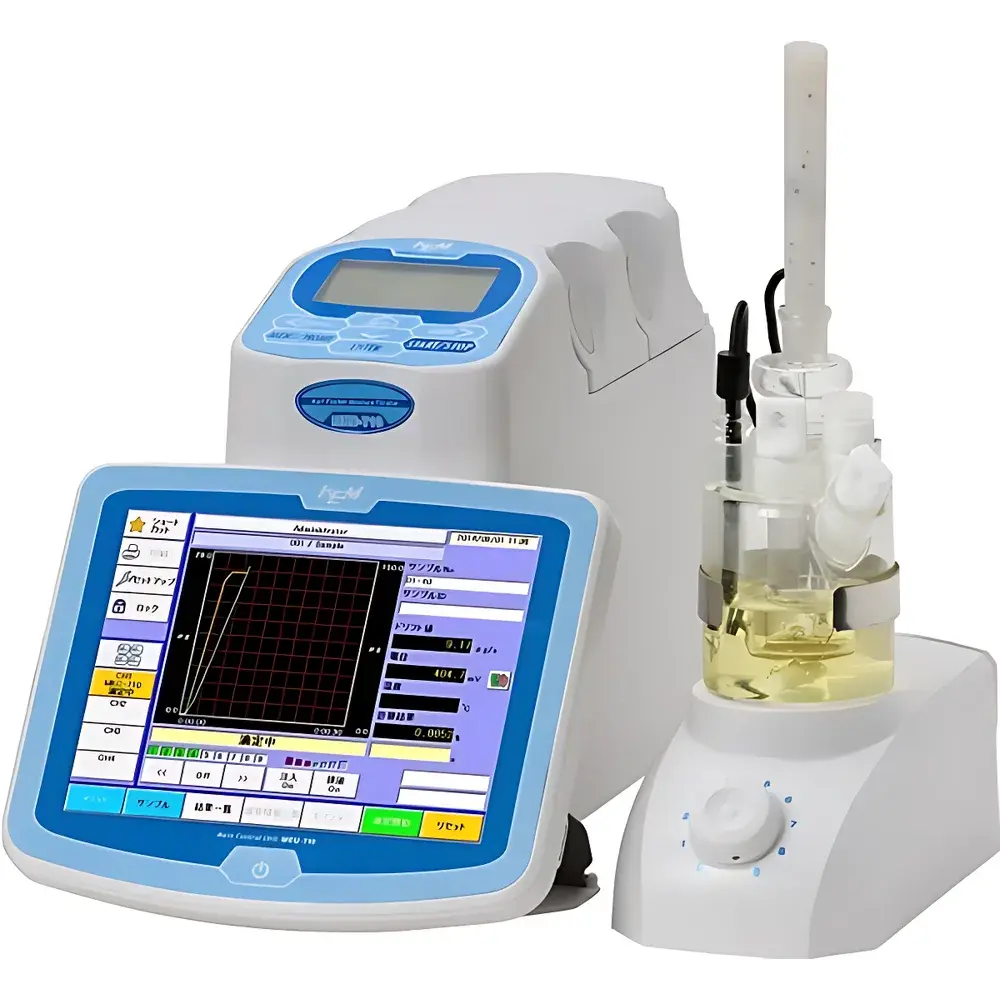
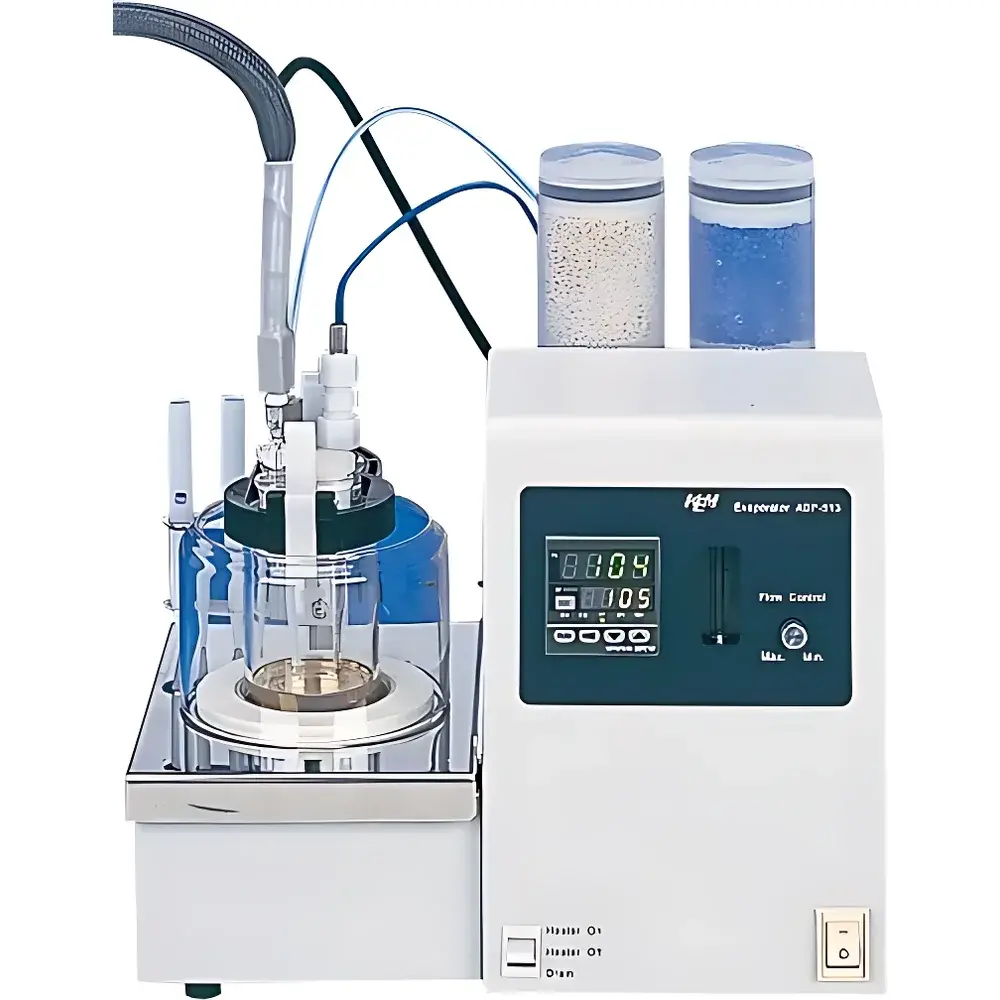
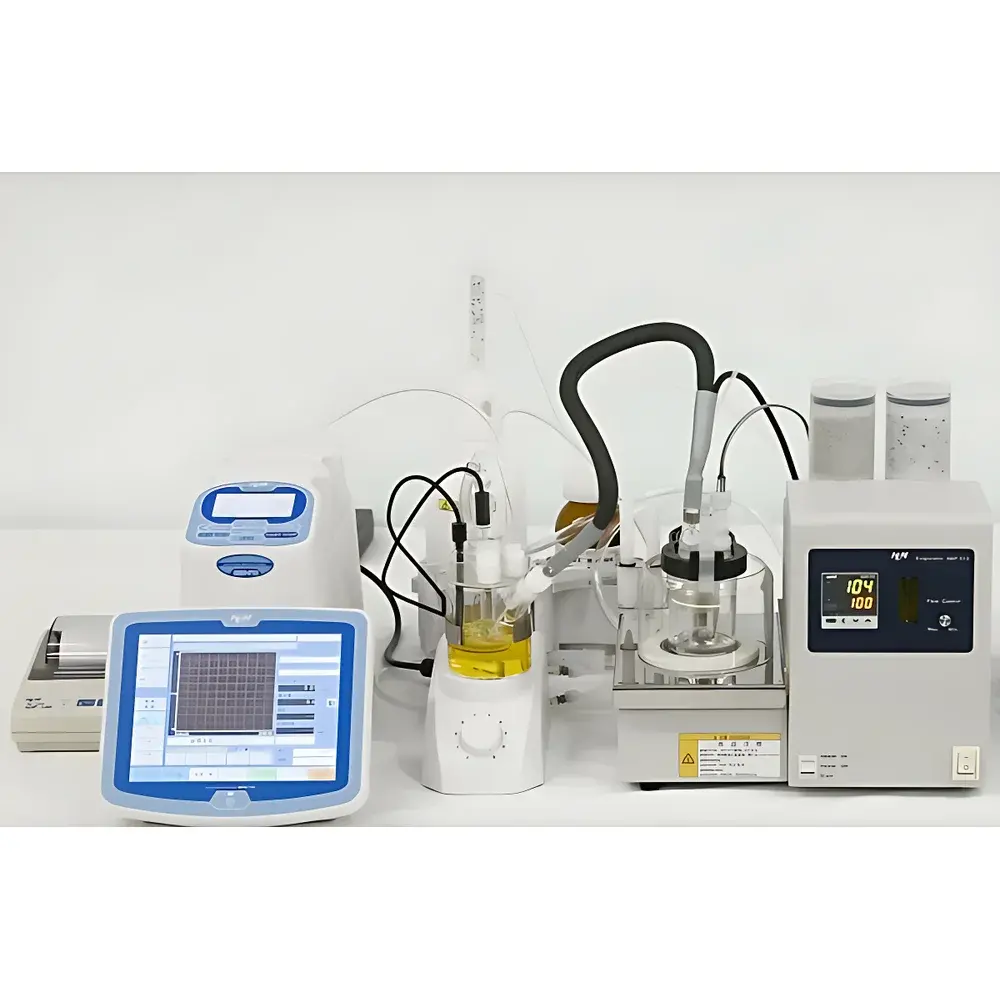
KEM MKC-710M/S/B + ADP-513 Coulometric Karl Fischer Titrator for Petroleum Products (ASTM D6304-25 Compliant)
| Brand | KEM (Kyoto Electronics Manufacturing) |
|---|---|
| Origin | Japan |
| Manufacturer Type | Original Equipment Manufacturer (OEM) |
| Product Category | Imported Analytical Instrument |
| Model | MKC-710M / MKC-710S / MKC-710B + ADP-513 |
| Pricing | Upon Request |
Overview
The KEM MKC-710M/S/B series is a high-precision coulometric Karl Fischer titrator engineered specifically for trace moisture quantification in petroleum products, lubricating oils, additives, crude oil, insulating liquids, and organic solvents. It operates on the fundamental electrochemical principle of coulometric water determination: iodine is generated *in situ* at the anode via controlled electrolysis of iodide ions in the Karl Fischer reagent; this electrogenerated iodine reacts stoichiometrically (1:1 molar ratio) with water present in the sample according to the classic Karl Fischer reaction. Endpoint detection is achieved through dual-platinum electrode polarization monitoring—when all water is consumed, a sustained increase in current (or shift in polarization potential) signals endpoint completion. Water mass is calculated directly from total charge passed (Q = I × t), applying Faraday’s law (1 mole H₂O ≡ 2 × 96,485 C). The system supports both direct injection and indirect analysis via thermal vaporization using the ADP-513 water evaporator—critical for viscous, high-boiling, or chemically interfering matrices such as heavy fuel oils, bitumen, or transformer oils.
Key Features
- Three configurable platforms: MKC-710M (wireless touchscreen control unit supporting up to four concurrent titration units), MKC-710S (standalone unit with integrated display), and MKC-710B (basic benchtop configuration).
- Coulometric generation rate: up to 2.6 mg H₂O/min—enabling rapid pre-titration stabilization and shortened measurement cycles.
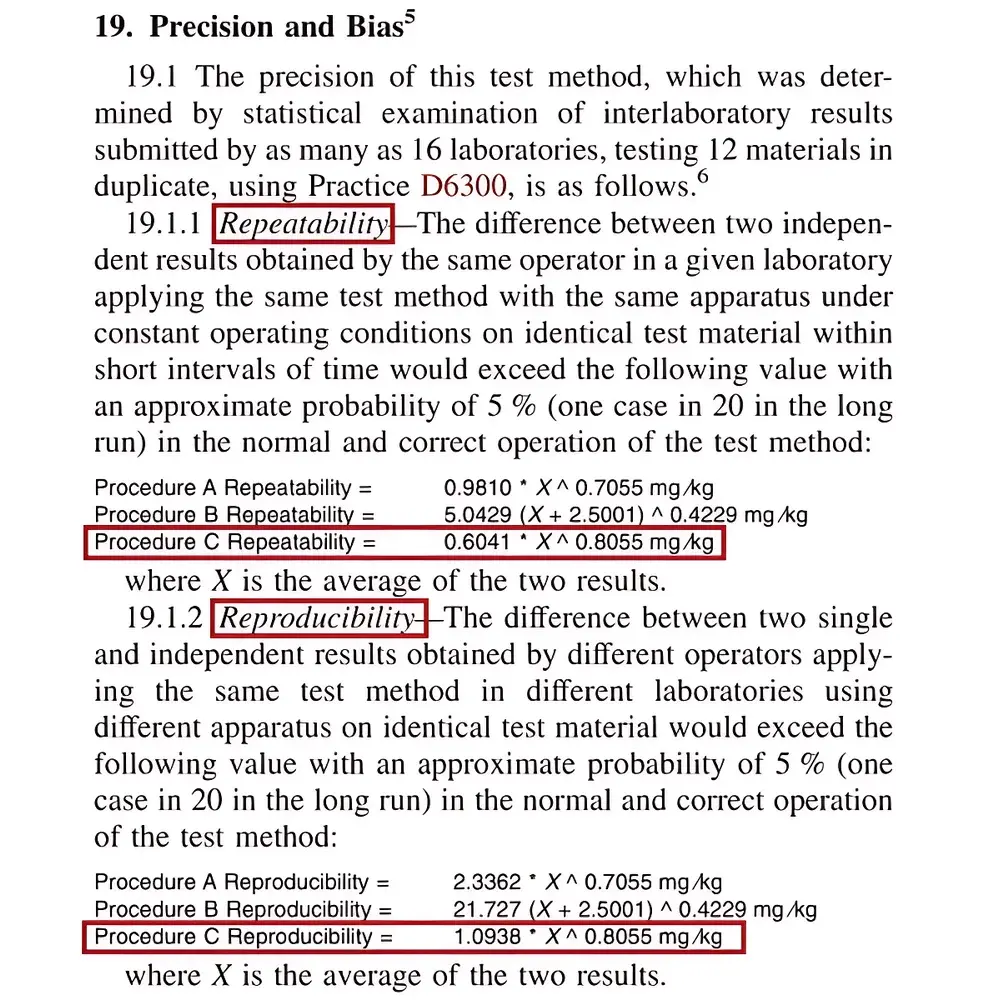
- ADP-513 integrated water evaporator compliant with ASTM D6304-25 Procedure C and GB/T 11133-2015 Section C; temperature range: ambient to 200 °C; 100 mL borosilicate glass heating chamber with transparent viewing window.
- Flexible cell options: membrane-separated and membrane-free coulometric cells—optimized for varying sample compatibility and reagent stability requirements.
- GLP/GMP-ready architecture: operator ID management, audit trail logging (including reagent replacement dates, performance verification records, and scheduled maintenance alerts), electronic signature support, and full 21 CFR Part 11 compliance when paired with SOFT-CAP data management software.
- Multi-language UI (English, Japanese, Chinese, Korean, Russian, Spanish, German, French) and dual-display capability (MKC-710M supports simultaneous real-time display across four channels).
Sample Compatibility & Compliance
The MKC-710 platform is validated for use across a broad spectrum of hydrocarbon-based and polar organic matrices. It meets or exceeds the methodological requirements of over 30 international and national standards, including ASTM D6304-25 (petroleum products), ASTM D4928-24 (crude oil), ASTM D1533-20 (insulating liquids), ASTM E1064-24 (organic liquids), ISO 12937:2000, ISO 10337:1997, BS EN ISO 10101-3:1998 (natural gas), IEC 60814 (oil-impregnated paper), and numerous GB/T, SH/T, SN/T, and NB/SH/T specifications for fuels, lubricants, industrial solvents, and energy carriers. Its design accommodates samples with viscosity up to 1000 cSt when used with ADP-513; volatile fractions (e.g., LPG, ethane blends) are compatible via liquefied gas sampling accessories per ASTM D7995-19. All configurations undergo factory calibration traceable to NIST-certified water standards.
Software & Data Management
SOFT-CAP analytical software provides comprehensive instrument control, method development, real-time data visualization, statistical reporting (mean, SD, RSD%), and automated blank correction. Data files are stored in secure, tamper-evident formats with embedded metadata (operator, timestamp, method ID, reagent lot, environmental conditions). The system supports electronic signatures, user role-based access control (administrator, analyst, reviewer), and full audit trail generation—including all parameter modifications, result edits, and calibration events. Raw current/time integration curves, drift profiles, and endpoint confirmation traces are archived for regulatory review. Export formats include CSV, PDF, and XML for LIMS integration. RS-232C (×4 on MKC-710M), USB, and SS-BUS interfaces enable seamless connectivity to balances, autosamplers (e.g., CHA-700), printers (thermal or A4), barcode scanners, and external PCs.
Applications
This instrument is routinely deployed in refinery QC labs for monitoring water content in gasoline, diesel, jet fuel (Jet A-1), and marine distillates per ASTM D6304. It supports condition monitoring of in-service turbine oils (ASTM D7600), transformer oils (IEC 60814), and hydraulic fluids (JB/T 12920). Petrochemical QA laboratories use it for specification testing of ethylene, propylene (GB/T 3727), butadiene (GB/T 6023), fluorocarbons (GB/T 7376), and aromatic feedstocks (SH/T 1551). Additional applications include moisture verification in biofuels (ASTM D7923), organic heat transfer fluids (GB 23971, GB 24747), and natural gas condensates (ISO 10101-3). When configured with ADP-513, it enables reliable analysis of residual moisture in asphalt binders, vacuum gas oils, and spent catalyst slurries where direct titration fails.
FAQ
What sample volume or mass is required for accurate coulometric analysis?
Typical sample sizes range from 0.1 g to 5 g (or 0.1–10 mL for low-viscosity liquids), adjusted to deliver 10–200 µg H₂O per injection—optimizing signal-to-noise ratio while avoiding saturation.
Can the MKC-710 series quantify bromine index or bromine number?
Yes—via optional bromine-specific coulometric cells and reagents; compliant with ASTM D1492-21 and SH/T 0630-1996 when configured accordingly.
Is method validation documentation available for regulatory submissions?
KEM provides IQ/OQ documentation packages, certified reference material test reports (e.g., 1.00 ± 0.02 mg H₂O standards), and full traceability statements aligned with ISO/IEC 17025 requirements.
How does the wireless MKC-710M enhance laboratory safety?
By enabling full remote operation from outside fume hoods—critical when handling toxic, flammable, or corrosive petroleum fractions during evaporation or titration.
What maintenance intervals are recommended for long-term reliability?
Daily: electrode cleaning and drift verification; quarterly: cell membrane inspection (if used); annually: full system performance qualification (SPQ) including amperometric linearity and Faraday efficiency verification.
Related Products





