
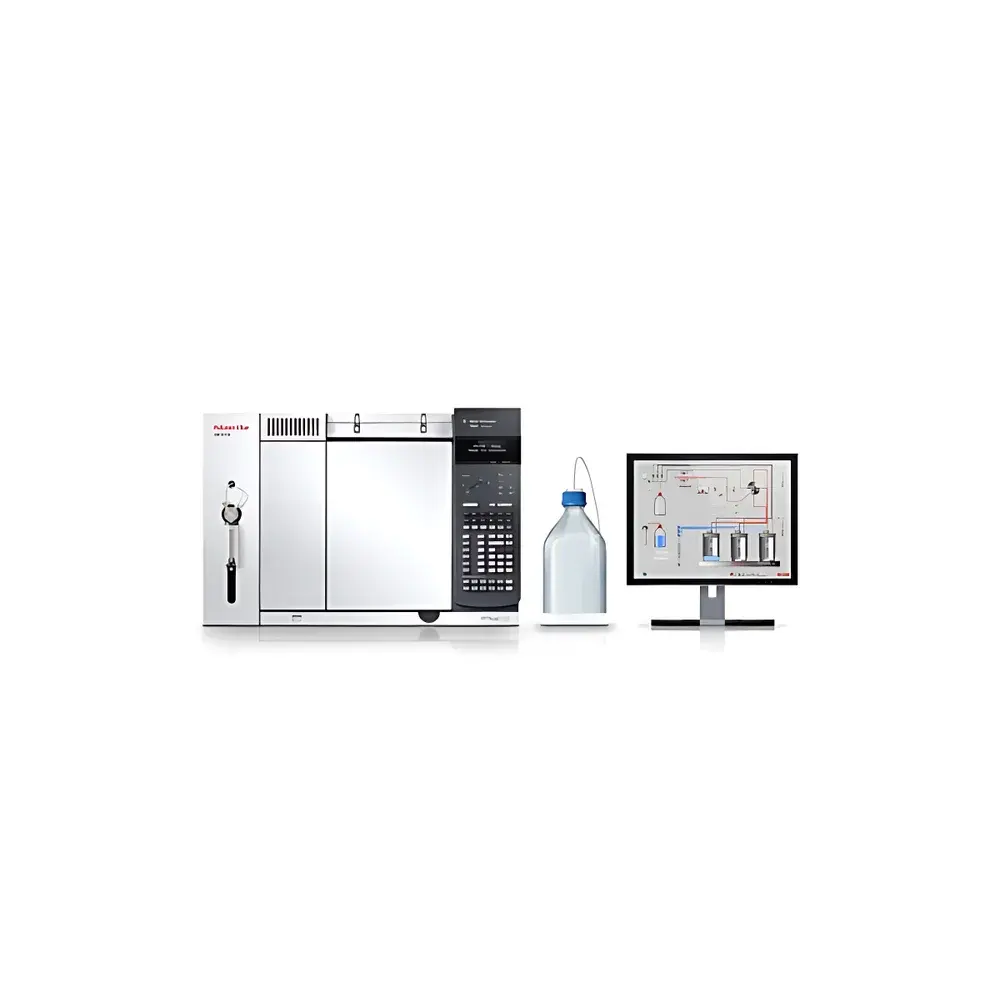
Polymer Char CRYSTEX Automated Xylene Solubles Analyzer for Polyolefins
| Brand | Polymer Char |
|---|---|
| Origin | Spain |
| Manufacturer Type | Authorized Distributor |
| Origin Category | Imported |
| Model | CRYSTEX |
| Pricing | Upon Request |
Overview
The Polymer Char CRYSTEX Automated Xylene Solubles Analyzer is a benchtop, fully automated instrument engineered for the precise and reproducible quantification of xylene solubles (XS) in polyolefin materials—primarily polypropylene (PP) and ethylene-propylene copolymers. It implements the classical solvent extraction principle defined in ASTM D5492 and ISO 16152, where polyolefin samples are dissolved in hot xylene under controlled temperature and agitation, followed by precipitation at low temperature and quantitative filtration. Unlike manual methods, CRYSTEX automates the entire sequence—including dissolution, cold precipitation, filtration, washing, drying, and gravimetric calculation—eliminating operator variability while maintaining full method equivalence. The system delivers XS content (%) alongside complementary molecular and compositional parameters critical to structure–property correlation in polyolefin development and quality control.
Key Features
- Fully automated analysis of up to three polyolefin samples per run, with typical cycle time of ~6 hours; preliminary XS results available after ~4 hours.
- Integrated dual-detection architecture: a precision gravimetric module for XS quantification and a differential viscometer for intrinsic viscosity (IV) measurement of both whole sample and xylene-soluble fraction.
- Optional near-infrared (NIR) or Fourier-transform infrared (FTIR) detector for simultaneous determination of ethylene content in both bulk polymer and xylene-soluble phase—aligned with ASTM D5227 and ISO 1133-2 protocols.
- No manual solvent handling: closed-loop solvent management minimizes exposure, reduces xylene consumption by >70% versus conventional methods, and complies with HSE, REACH, and OSHA solvent safety guidelines.
- Sample loading requires no pre-weighing; the system performs automatic mass normalization using integrated high-resolution balance feedback during dissolution.
- Remote operation and real-time diagnostic monitoring via Ethernet-connected software interface, supporting predictive maintenance alerts and firmware updates over secure TLS channels.
Sample Compatibility & Compliance
CRYSTEX is validated for heterogeneous and reactor-grade polypropylene, impact copolymers (ICP), thermoplastic olefin (TPO) blends, and ethylene–propylene rubber (EPR) phases. It accommodates pellet, granule, and milled powder forms (particle size < 2 mm). All analytical workflows adhere to internationally recognized standards including ASTM D5492 (xylene solubles), ASTM D1243 (intrinsic viscosity of polyolefins), ASTM D5227 (ethylene content by IR), and ISO 16152 (determination of soluble fraction in PP). Data integrity meets ALCOA+ principles, with full audit trail, electronic signatures, and 21 CFR Part 11–compliant user access controls available through optional GxP software package.
Software & Data Management
The CRYSTEX Control Suite is a Windows-based application built on .NET Framework with role-based permissions, multi-level user authentication, and timestamped event logging. It supports method templates, batch scheduling, and automatic report generation in PDF/CSV formats compliant with GLP and internal QA documentation requirements. Raw data—including temperature profiles, pressure curves, filtration kinetics, and detector response traces—are stored in encrypted SQLite databases with configurable retention policies. Integration with LIMS via ASTM E1384 or HL7 interfaces is supported. All calibration records, maintenance logs, and performance qualification (PQ) reports are archived within the software environment.
Applications
- Rapid screening of rubber phase content in impact polypropylene to correlate XS % with mechanical properties (e.g., notched Izod impact strength, flexural modulus).
- Process optimization in polyolefin manufacturing—identifying transition batches, validating catalyst performance, and reducing off-spec material yield.
- Quality assurance of incoming raw materials and finished goods across supply chains requiring traceable XS specifications (e.g., automotive TPO grades, medical-grade PP).
- Research into phase morphology–property relationships, especially where XS content serves as a proxy for amorphous fraction or elastomeric domain distribution.
- Supporting regulatory submissions requiring documented, auditable XS data under ISO 9001, IATF 16949, or FDA device-grade polymer characterization protocols.
FAQ
Does CRYSTEX require method validation before routine use?
Yes—users must perform initial system suitability testing (SST) per ASTM D5492, including recovery studies with certified reference materials and repeatability assessment (n ≥ 5) to establish laboratory-specific precision limits.
Can CRYSTEX analyze ethylene–propylene–diene monomer (EPDM) rubber?
No—CRYSTEX is specifically designed and validated for polyolefin systems soluble in boiling xylene; EPDM and other highly crosslinked elastomers fall outside its scope.
Is the instrument compatible with alternative solvents such as decalin or tetralin?
No—the hardware and thermal program are optimized exclusively for xylene-based extraction per standardized polyolefin test methods.
What maintenance intervals are recommended?
Filter cartridges require replacement every 50 runs; solvent lines and precipitation chambers should be cleaned weekly; annual calibration of the gravimetric and viscometric modules is advised.
How is data security ensured during remote diagnostics?
All remote sessions use end-to-end AES-256 encryption; no data is transmitted without explicit user authorization, and diagnostic logs are stored locally only unless explicitly exported.




