
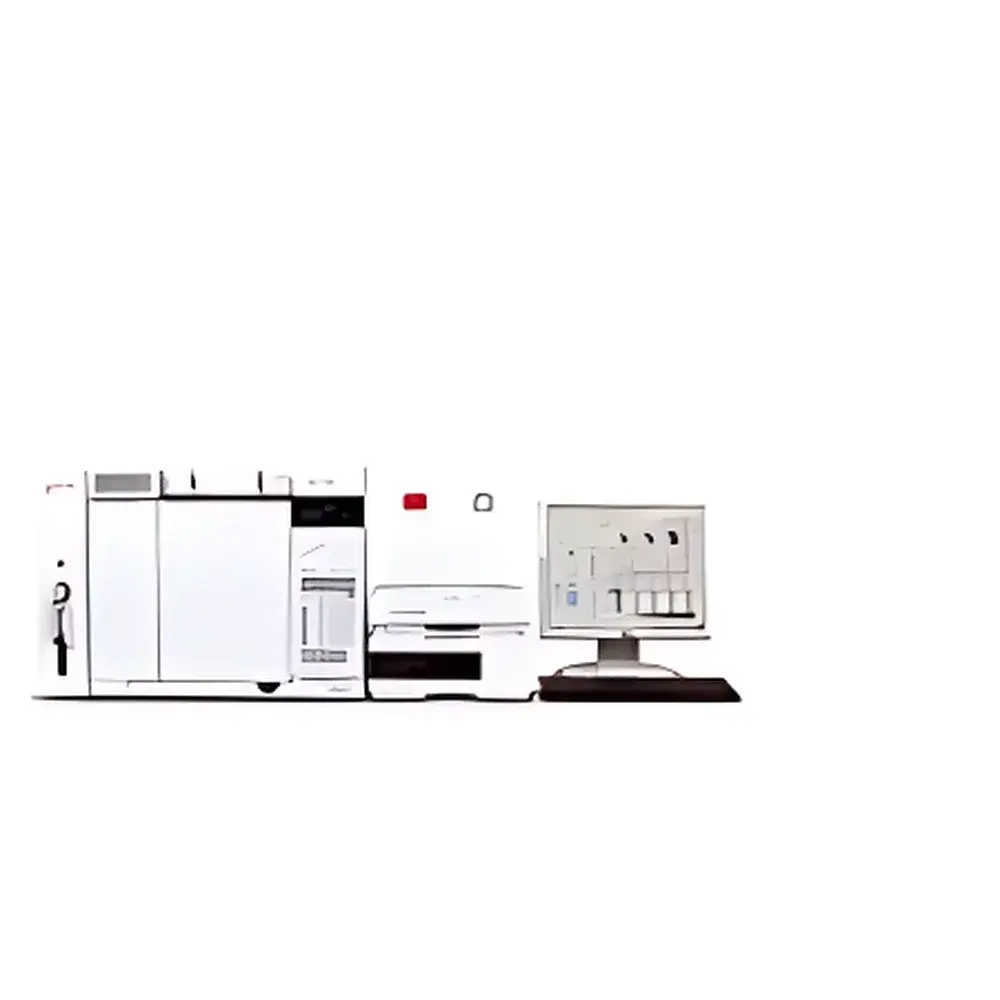
Polymer Char CRYSTAF QC Polyolefin Chemical Composition Distribution Analyzer
| Brand | Polymer Char |
|---|---|
| Origin | Spain |
| Manufacturer Type | Authorized Distributor |
| Origin Category | Imported Instrument |
| Model | CRYSTAF QC |
| Pricing | Available Upon Request |
Overview
The Polymer Char CRYSTAF QC is a dedicated, fully automated crystallization analysis system engineered for rapid and reproducible characterization of chemical composition distribution (CCD) in polyolefins—particularly linear low-density polyethylene (LLDPE), ethylene–propylene copolymers, and related olefin-based materials. It implements a refined isothermal temperature-ramp elution fractionation (TREF) methodology, optimized for quality control (QC) environments where throughput, operational robustness, and analytical consistency are critical. Unlike conventional CRYSTAF systems that rely on continuous temperature ramping, the CRYSTAF QC executes discrete isothermal crystallization steps, significantly reducing total analysis time to approximately two hours per sample while maintaining high resolution and quantitative fidelity. The instrument operates on the fundamental principle that co-monomer content governs crystallizability: segments with higher ethylene content crystallize at higher temperatures, enabling physical separation via controlled solvent-induced precipitation. This thermodynamic partitioning is monitored in real time using Polymer Char’s proprietary infrared (IR) concentration detector, which measures polymer concentration in solution during each isothermal hold—eliminating reliance on offline calibration or refractive index assumptions.
Key Features
- Fully automated workflow—from sample loading to final cleaning—minimizing operator intervention and human error.
- Two-hour typical analysis cycle for CCD determination, optimized for high-volume QC laboratories.
- Integrated IR concentration detection providing real-time, solvent-specific polymer concentration measurement during isothermal crystallization stages.
- Programmable isothermal crystallization protocol with up to 30 discrete temperature steps, enabling precise control over fractionation resolution and method transferability.
- Self-cleaning system: automatic solvent rinse of crystallization vessel and detection flow path between runs ensures cross-contamination prevention and long-term baseline stability.
- Modular hardware architecture compliant with ISO/IEC 17025 laboratory management requirements, supporting routine maintenance logging and performance verification.
Sample Compatibility & Compliance
The CRYSTAF QC accepts standard polyolefin samples dissolved in 1,2,4-trichlorobenzene (TCB) at concentrations of 0.5–2.0 mg/mL. It is validated for use with LLDPE, HDPE, ethylene–propylene rubber (EPR), and impact copolymers. Method development and validation align with ASTM D6964 (Standard Test Method for Chemical Composition Distribution of Polyolefins by Temperature Rising Elution Fractionation) and supports GLP-compliant documentation workflows. Data integrity is ensured through audit-trail-enabled software meeting FDA 21 CFR Part 11 requirements for electronic records and signatures. Instrument qualification packages—including Installation Qualification (IQ), Operational Qualification (OQ), and Performance Qualification (PQ)—are available to support regulated environments.
Software & Data Management
Control and data acquisition are managed via Polymer Char’s CRYSTAF Software Suite—a Windows-based virtual instrument platform with intuitive graphical interface and embedded method libraries. All parameters—including dissolution temperature, isothermal dwell times, cooling rates, and IR gain settings—are programmable and password-protected. Raw IR absorbance vs. temperature/time data are stored in vendor-neutral .csv and .xml formats. Post-run processing includes baseline correction, peak deconvolution, and CCD curve generation with optional normalization to cumulative mass. Reports comply with internal QA templates and can be exported directly to LIMS via ODBC connectivity. Version-controlled software updates are distributed under formal change control procedures, ensuring traceability in GMP-regulated operations.
Applications
- Routine QC monitoring of co-monomer incorporation in LLDPE production lines.
- Batch-to-batch consistency evaluation of ethylene–propylene copolymer feedstocks.
- Supporting catalyst development studies through rapid CCD profiling of pilot-scale polymerizations.
- Correlation of CCD profiles with mechanical properties (e.g., tensile strength, impact resistance) in formulation optimization.
- Troubleshooting off-spec material by identifying shifts in short-chain branching distribution.
- Method transfer between R&D and manufacturing sites using standardized isothermal protocols.
FAQ
What distinguishes CRYSTAF QC from standard CRYSTAF instruments?
The CRYSTAF QC replaces continuous temperature ramping with discrete isothermal crystallization steps, reducing analysis time to ~2 hours while retaining CCD resolution suitable for QC applications.
Is method validation support available for regulatory submissions?
Yes—Polymer Char provides IQ/OQ/PQ documentation templates, ASTM D6964 alignment guidance, and 21 CFR Part 11-compliant software configuration reports.
Can the system handle high-throughput lab environments?
With full automation, self-cleaning, and <2-hour cycle time, the CRYSTAF QC is designed for unattended operation across multiple shifts.
Which solvents and concentration ranges are supported?
1,2,4-Trichlorobenzene (TCB) is the primary solvent; recommended concentration range is 0.5–2.0 mg/mL for optimal IR signal-to-noise ratio and crystallization kinetics.
How is data integrity maintained during long-term deployment?
The software enforces electronic audit trails, user access levels, and immutable raw data archiving—meeting ISO 17025 and pharmaceutical quality system expectations.





