
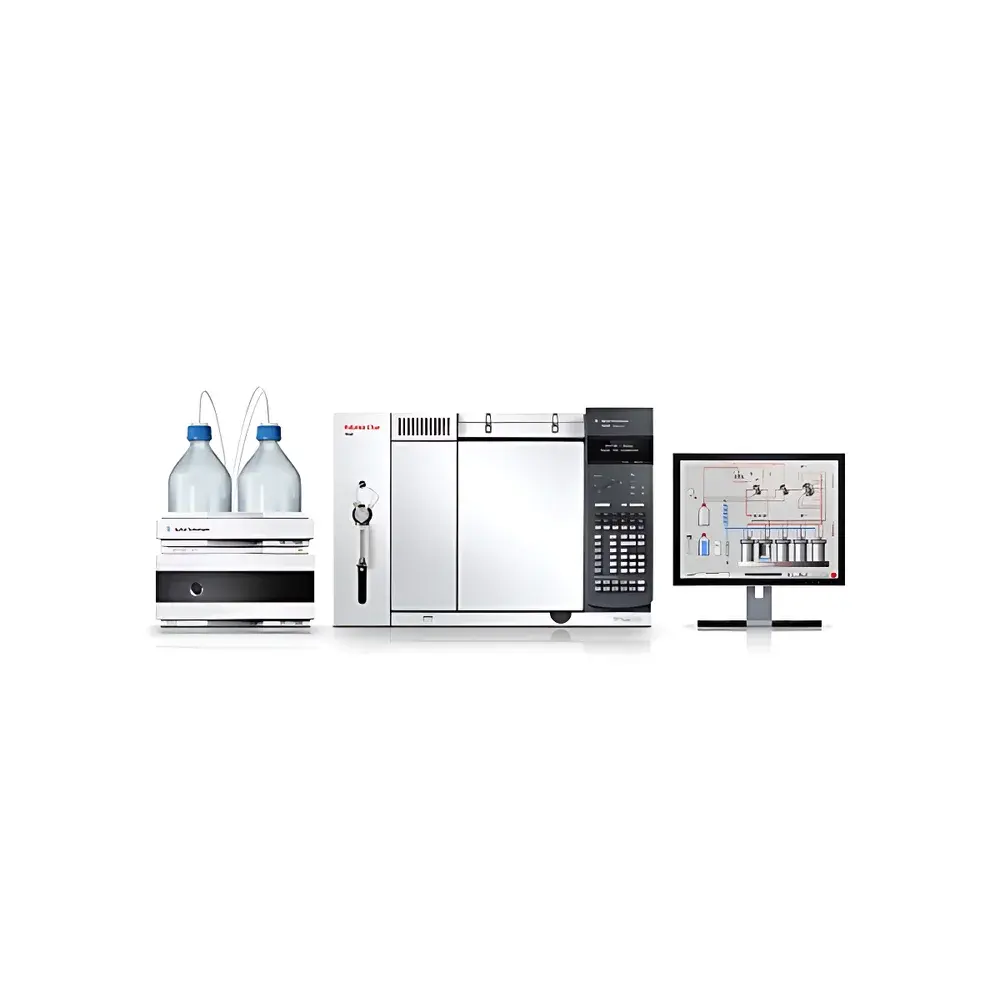
Polymer Char TREF Automated Temperature Rising Elution Fractionation Analyzer
| Brand | Polymer Char |
|---|---|
| Origin | Spain |
| Model | TREF |
| Sample Capacity | 5 positions |
| Analysis Time per Sample | ~6 hours (standard conditions) |
| Detection | IR4 Infrared Detector (standard), optional Multi-Angle Light Scattering (MALS) and Capillary Viscometer |
| Minimum Operating Temperature | –20 °C |
| Software-Controlled Automation | Full remote operation and diagnostic capability |
| Solvent Handling | Closed-loop, minimal solvent consumption, no manual solvent contact required |
| Upgrade Path | Compatible with CRYSTAF-TREF hyphenated configuration |
| Compliance | Designed for GLP-compliant laboratories |
Overview
The Polymer Char TREF Automated Temperature Rising Elution Fractionation Analyzer is a dedicated analytical platform engineered for high-precision characterization of chemical composition distribution (CCD) in polyolefins—including linear low-density polyethylene (LLDPE), ethylene/propylene copolymers, and multi-catalyst or multi-reactor resins. Based on the fundamental principle of temperature rising elution fractionation (TREF), the instrument separates polymer chains according to their crystallizability by controlled thermal desorption from a crystallized gel phase in a dilute solution. As the temperature gradually increases in a precisely programmed ramp, fractions elute sequentially in order of decreasing crystallinity—directly correlating elution temperature with comonomer content and short-chain branching distribution. Unlike manual or semi-automated TREF systems, the TREF analyzer executes the entire workflow—sample dissolution, crystallization, fractionation, detection, column regeneration, and system cleaning—without operator intervention, ensuring inter-run reproducibility and reducing analyst exposure to hazardous solvents such as 1,2,4-trichlorobenzene (TCB).
Key Features
- Fully automated batch analysis for up to five samples per run, minimizing labor input and maximizing laboratory throughput.
- Integrated IR4 infrared detector as standard, calibrated for quantitative measurement of polymer concentration across elution profiles with high signal-to-noise ratio and baseline stability.
- Modular detection architecture supporting optional integration of multi-angle light scattering (MALS) and capillary viscometry detectors—enabling simultaneous determination of absolute molar mass distribution (MMD), intrinsic viscosity, and branching microstructure alongside CCD.
- Extended low-temperature operation down to –20 °C, essential for resolving low-crystallinity polyolefin fractions (e.g., high-comonomer LLDPE or plastomers) that require sub-ambient crystallization conditions.
- Remote monitoring and diagnostics via Ethernet-connected software interface, including real-time status reporting, error logging, and predictive maintenance alerts.
- Compact benchtop footprint with simplified fluidic architecture—no high-pressure pumps or complex valve manifolds—enhancing operational reliability and reducing service downtime.
Sample Compatibility & Compliance
The TREF analyzer is validated for routine analysis of industrially relevant polyolefin samples dissolved in TCB at concentrations ranging from 0.5–2.0 mg/mL. It accommodates both homopolymers and heterogeneous copolymers, including metallocene-catalyzed, Ziegler–Natta-derived, and post-metallocene systems. The system meets core requirements for regulated environments: software enforces role-based user authentication, electronic signatures, and time-stamped audit trails compliant with FDA 21 CFR Part 11. Data integrity is preserved through automatic backup, immutable raw data archiving, and version-controlled method storage. Instrument qualification documentation (IQ/OQ/PQ protocols) and compliance reports are available to support GLP and GMP audits.
Software & Data Management
Polymer Char’s proprietary TREF Control Software provides an intuitive graphical interface for method development, sequence definition, real-time chromatogram visualization, and post-run deconvolution. All parameters—including crystallization temperature/time, elution ramp rate, flow rate, and detector gain—are fully programmable and stored with metadata. Raw chromatographic data are saved in vendor-neutral formats (e.g., .csv, .txt) and compatible with third-party data analysis platforms. Batch processing tools enable comparative CCD overlay, peak integration using tangent skim or Gaussian deconvolution algorithms, and export of temperature-resolved fraction mass percentages. Software updates are delivered remotely and validated per change control procedures.
Applications
- Quantification of comonomer incorporation heterogeneity in LLDPE production QC and catalyst screening.
- Differentiation of reactor-grade blends versus single-reactor resins via CCD profile shape analysis (e.g., bimodal vs. broad unimodal distributions).
- Correlation of CCD with mechanical properties (e.g., tensile strength, impact resistance) in formulation development.
- Supporting patent litigation or regulatory submissions requiring compositional fingerprinting of polyolefin products.
- Hyphenated operation with CRYSTAF for orthogonal characterization—combining TREF’s CCD resolution with CRYSTAF’s crystallinity distribution (CD) profiling in a single sample injection.
FAQ
What solvents are compatible with the TREF system?
TCB (1,2,4-trichlorobenzene) is the standard solvent; alternative high-boiling aromatic solvents may be evaluated upon request and system validation.
Can the TREF analyzer operate unattended overnight?
Yes—fully automated sequences, including post-run column cleaning and solvent recovery, are designed for unattended 24/7 operation.
Is method transfer possible between different TREF instruments?
Method portability is ensured through standardized hardware calibration routines and software-defined temperature/flow profiles, enabling consistent results across laboratories.
How is data security maintained during remote access?
All remote connections use TLS 1.2+ encryption; session timeouts, two-factor authentication, and encrypted local database storage comply with ISO/IEC 27001-aligned IT policies.
What maintenance intervals are recommended?
Routine checks include IR4 detector alignment verification every 3 months and column performance validation using certified reference standards every 6 months; full preventive maintenance is scheduled annually.





