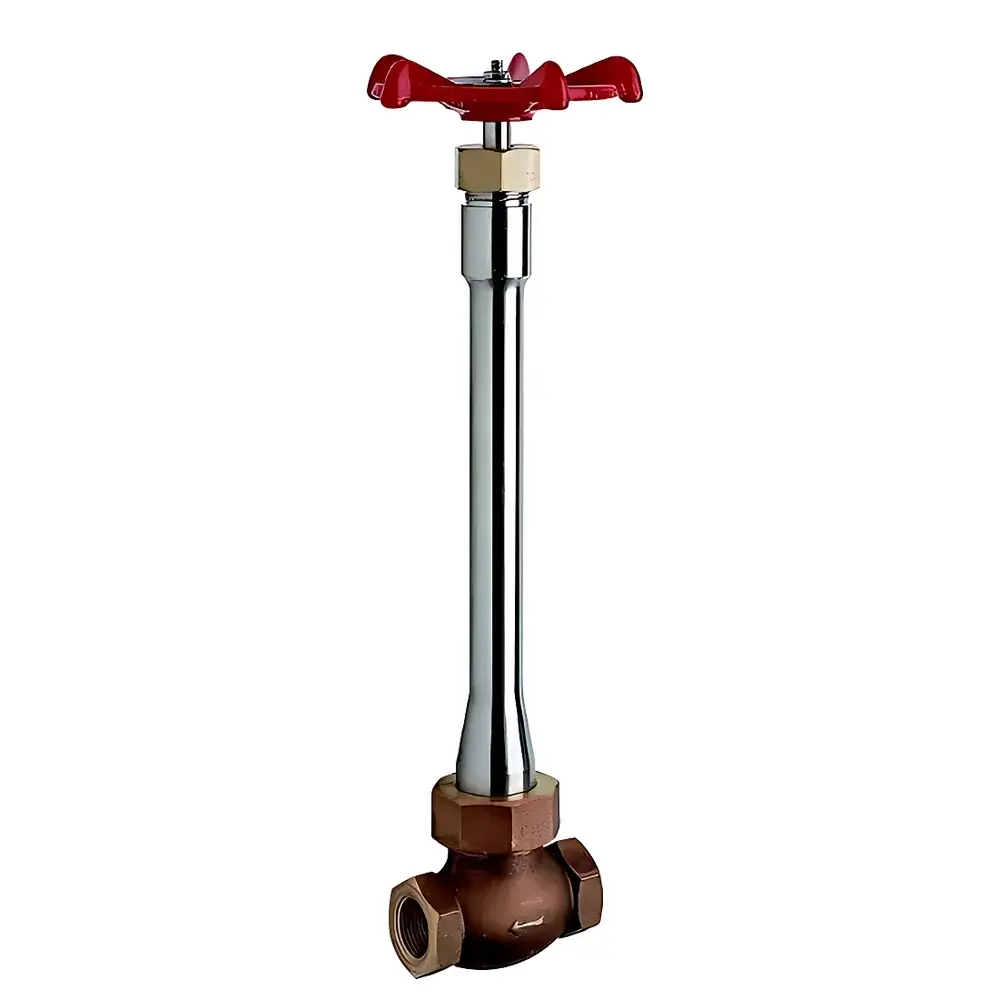
IRELAND 160100 Series Copper-Tin Alloy Low-Temperature Globe Valve
| Brand | IRELAND |
|---|---|
| Origin | France |
| Manufacturer Type | Authorized Distributor |
| Origin Category | Imported |
| Model | 160100 |
| Pricing | Available Upon Request |
| Material | CuSn Bronze Body |
| Operating Temperature | −200 °C to +120 °C |
| Size Range | DN8–DN50 |
| Pressure Rating | PN10–PN40 |
| End Connections | Threaded (Standard), Socket Weld / Flanged / Butt Weld (Optional) |
| Seal Type | Reusable Soft Seat with Bubble-Tight Shutoff Verified per ISO 5208 |
| Cryogenic Stem Extension | Stainless Steel Extended Bonnet & Stem |
| Compliance | Designed for ASME B16.34, EN 1515-1, ISO 5208, and PED 2014/68/EU |
Overview
The IRELAND 160100 Series is a manually operated, low-temperature globe valve engineered specifically for cryogenic and sub-ambient service in high-integrity process systems. Constructed from CuSn bronze (copper-tin alloy), the valve body offers superior resistance to thermal shock, non-sparking behavior, and excellent ductility at temperatures as low as −200 °C — making it suitable for liquid nitrogen, liquid oxygen, liquid argon, and other cryogenic media encountered in air separation units (ASUs), petrochemical refineries, LNG transfer systems, and hazardous material transport infrastructure. Its fundamental design follows the globe valve principle: linear stem motion actuates a disc against an integral seat to achieve precise throttling and bubble-tight shutoff, verified per ISO 5208 leakage Class A (zero detectable leakage under test conditions). The extended stainless steel bonnet and stem assembly thermally isolates the packing region from the cryogenic fluid path, minimizing heat ingress and preserving packing integrity throughout extended operation.
Key Features
- CuSn bronze body and internal components provide inherent non-sparking properties and exceptional toughness below −196 °C, compliant with OSHA 1910.106 and NFPA 56 requirements for oxygen service.
- Stainless steel extended bonnet and stem reduce thermal conduction between cryogenic fluid and upper packing gland — critical for maintaining seal performance and avoiding ice formation or packing degradation.
- Integral machined seat and replaceable soft-seal insert ensure repeatable, bubble-tight closure; validated via helium leak testing per ISO 5208 Class A.
- Robust mechanical construction includes precision-machined stem threads, hardened disc-to-seat interface, and reinforced yoke design — enabling reliable operation across full pressure range (PN10 to PN40) and cyclic duty.
- Standard threaded ends (BSPP or NPT, configurable) facilitate rapid integration into small-bore piping systems (DN8–DN50); optional end configurations include socket weld, flanged (EN 1092-1/DIN 2501), or butt-weld connections.
Sample Compatibility & Compliance
The 160100 valve is qualified for use with gaseous and liquefied industrial gases including O₂, N₂, Ar, H₂, CO₂, and He — particularly where oxygen compatibility (ASTM G93 cleaning and passivation) and low-temperature embrittlement resistance are mandatory. It conforms to multiple international standards governing design, testing, and marking: ASME B16.34 (valve pressure-temperature ratings), EN 1515-1 (flange connection requirements), ISO 5208 (industrial valve leakage classification), and PED 2014/68/EU (Pressure Equipment Directive) for CE marking. All units undergo hydrostatic shell testing at 1.5× PN and pneumatic seat testing at 1.1× PN prior to shipment. Documentation includes Material Test Reports (MTRs), Certificate of Conformity, and optional FAT reports aligned with ISO 17025-accredited third-party verification.
Software & Data Management
As a purely mechanical, manual valve, the 160100 series does not incorporate embedded electronics, actuators, or digital interfaces. However, its standardized dimensional and performance data (including torque curves, operating temperature envelopes, and material certifications) are fully compatible with common engineering asset management platforms such as SAP PM, IBM Maximo, and Aveva E3D. Digital twin-ready specifications — including STEP files, ISO 15926-compliant property sets, and P&ID tag mapping templates — are available upon request to support digital commissioning and lifecycle maintenance planning. For integrated control applications, optional pneumatic or electric actuators (fail-open/fail-closed) can be specified with SIL2-rated positioners compliant with IEC 61508 and IEC 61511.
Applications
- Air Separation Plants: Isolation and regulation of liquid oxygen/nitrogen streams in cold boxes, distillation columns, and product withdrawal lines.
- Hazardous Goods Transport: On-board isolation valves for cryogenic tank trailers and ISO containers handling liquefied gases.
- Hydrogen Infrastructure: High-purity hydrogen distribution networks requiring non-contaminating, low-leakage shut-off at −253 °C.
- Pharmaceutical & Semiconductor Gas Systems: Ultra-high-purity (UHP) inert gas manifolds where particle generation and metallic contamination must be minimized.
- Research Cryogenics: Laboratory-scale liquid helium and nitrogen supply lines requiring repeatable, low-outgassing isolation.
FAQ
What materials are used for the valve body and internal trim?
The valve body, bonnet, and disc are manufactured from CuSn bronze (copper-tin alloy), while the stem, extended bonnet, and fasteners are fabricated from austenitic stainless steel (typically AISI 316L or equivalent), selected for low-temperature ductility and corrosion resistance.
Is this valve certified for oxygen service?
Yes — when ordered with ASTM G93-compliant cleaning, oxygen-compatible lubricants, and non-organic sealing materials, the 160100 meets CGA G-4.1 and ISO 15001 requirements for gaseous and liquid oxygen systems up to 21 MPa.
Can the valve be supplied with fire-safe certification?
Yes — an optional fire-safe version is available per API RP 2000 and ISO 10497, featuring metal-to-metal secondary seating and graphite-based packing that maintains integrity during hydrocarbon fire exposure (ISO 22899-1).
What is the maximum allowable working pressure at −196 °C?
At −196 °C (liquid nitrogen temperature), the maximum allowable working pressure is PN25 for DN15–DN50 variants; PN10 applies for DN8–DN10 due to wall thickness limitations per EN 1092-2 Annex C.
Are torque values and handwheel effort specifications provided?
Yes — detailed torque vs. temperature curves and nominal handwheel operating forces (N·m) are included in the technical datasheet, derived from DIN EN 12516-3 testing protocols and validated across the full operating range.