Panlab Morris Water Maze System
| Brand | Harvard Apparatus |
|---|---|
| Origin | USA |
| Manufacturer Type | Authorized Distributor |
| Origin Category | Imported |
| Model Range | Customizable (225–500 cm diameter) |
| Price Range | USD 6,800 – 13,600 |
Overview
The Panlab Morris Water Maze System is a rigorously engineered behavioral phenotyping platform designed for spatial learning and memory assessment in rodent models. Based on the classical Morris water maze paradigm—first established in 1984—the system leverages distal visual cue–dependent navigation to quantify hippocampal-dependent cognitive function. The apparatus operates on the principle that rodents, when placed in an opaque water pool, will rapidly learn the location of a submerged escape platform using extra-maze spatial references. Performance metrics—including latency to platform, path efficiency, quadrant preference, and platform crossings—are derived from high-resolution video tracking synchronized with precise temporal annotation. This system adheres to standardized protocols defined in peer-reviewed neuroscience literature (e.g., *Nature Protocols*, 2013; *Journal of Neuroscience Methods*, 2018) and supports reproducible, ethologically relevant behavioral testing under controlled environmental conditions.
Key Features
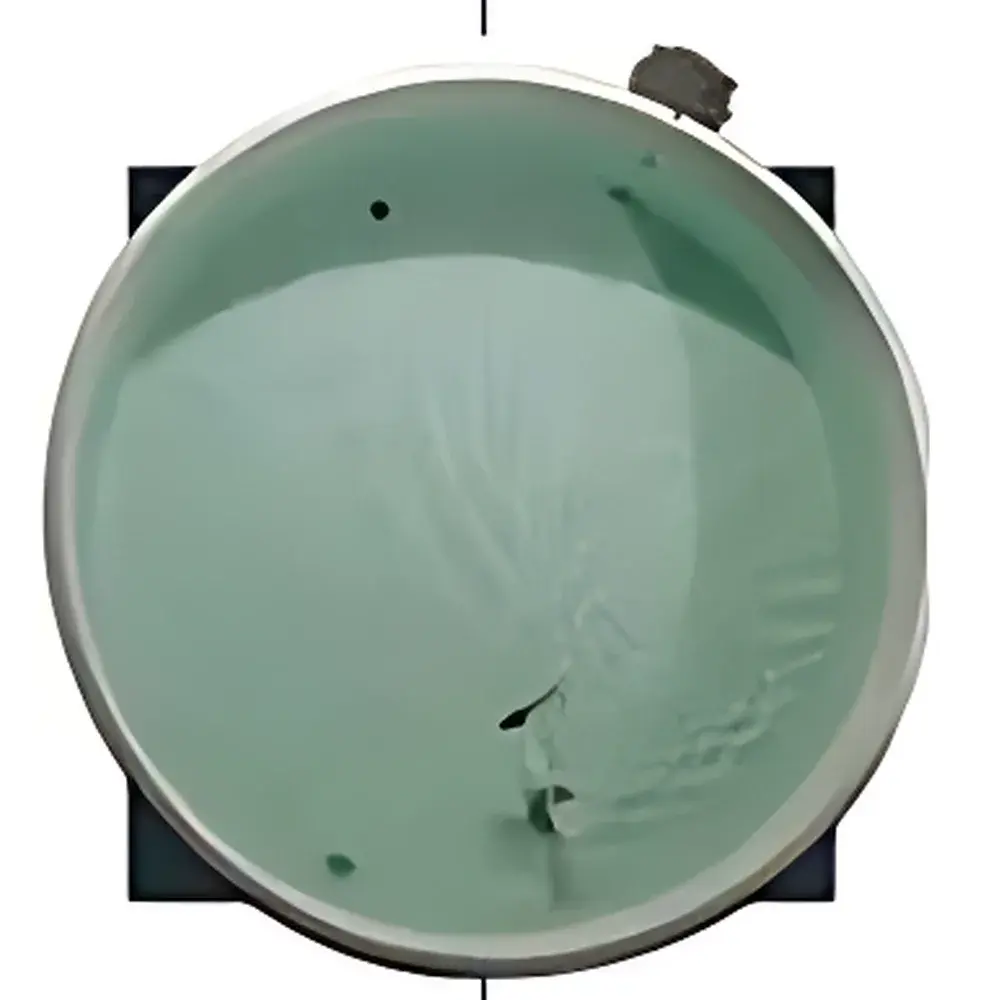
- Durable, seamless acrylic pool construction with UV-stabilized finish—available in diameters from 225 cm to 500 cm (90–197 in), optimized for C57BL/6, Sprague-Dawley, and Long-Evans strains.
- Integrated thermostatic water circulation system maintaining ±0.3 °C stability across 20–26 °C operating range, compliant with IACUC temperature guidelines for murine welfare.
- Motorized Atlantis automatic platform升降 mechanism (optional), enabling programmable submersion/retraction with 1-mm positional resolution and silent actuation for unobtrusive trial transitions.
- Self-contained water management module featuring dual-action pump, level-sensing float valve, and auto-fill/drain circuitry—enabling full experimental setup without manual intervention.
- Modular design accommodates interchangeable configurations: standard circular Morris maze, submerged 6-arm radial arm maze, and 8-arm radial arm maze—all sharing identical tracking calibration and software integration.
Sample Compatibility & Compliance
The system is validated for use with adult mice (18–35 g) and rats (200–500 g). All hardware components meet ISO 10993-5 biocompatibility standards for non-implantable devices. Water tank materials comply with NSF/ANSI Standard 61 for potable water contact surfaces. Software operation conforms to GLP-compliant data integrity requirements: SMART V3.0 implements ALCOA+ principles (Attributable, Legible, Contemporaneous, Original, Accurate, Complete, Consistent, Enduring, Available) with full audit trail, electronic signature support, and 21 CFR Part 11–ready configuration options. Experimental protocols align with NIH Office of Laboratory Animal Welfare (OLAW) guidance and European Directive 2010/63/EU Annex VIII criteria for behavioral endpoints.
Software & Data Management
SMART V3.0 Behavioral Tracking Platform serves as the central analytical engine, interfacing with CONVANAUSB video capture hardware and industrial-grade USB3.0 cameras (1280×960 @ 30 fps, global shutter). The SMARTWM Water Maze Module provides automated segmentation of pool geometry, adaptive thresholding for murine contrast detection, and real-time trajectory reconstruction. Export formats include CSV (time-stamped x/y coordinates), HDF5 (for MATLAB/Python analysis), and PDF reports compliant with journal submission standards (e.g., *eLife*, *Cell Reports*). Advanced analytics include thigmotaxis quantification, zone-based dwell time heatmaps, swim velocity histograms, and latency-curve fitting using nonlinear regression (Weibull or exponential decay models). Data provenance is preserved via embedded metadata: operator ID, animal ID, trial timestamp, environmental sensor logs (temperature/humidity), and calibration verification records.
Applications
- Preclinical evaluation of neurodegenerative disease models (e.g., APP/PS1 transgenic mice, tauopathy rat lines).
- Pharmacological screening of nootropic, anxiolytic, or neuroprotective compounds under blinded, randomized protocols.
- Genetic knock-out/knock-in validation studies assessing hippocampal synaptic plasticity deficits.
- Longitudinal aging studies tracking cognitive decline across 6–18 month cohorts.
- Cross-paradigm validation against Barnes maze, Y-maze spontaneous alternation, and novel object recognition assays.
FAQ
What is the minimum required room size for installation?
A dedicated 3.5 × 3.5 m (11.5 × 11.5 ft) space is recommended to accommodate the largest 500 cm pool, camera rig, control station, and peripheral equipment with adequate service clearance.
Does the system support multi-animal concurrent tracking?
Yes—SMART V3.0 supports up to four independent animals per session using color-coded markers or spatial separation protocols, with individual trajectory reconstruction and synchronized event logging.
Can raw video files be exported for third-party analysis?
Yes—uncompressed AVI and MP4 files are exportable alongside coordinate data; timestamps are embedded in frame headers for synchronization with electrophysiology or optogenetics rigs.
Is technical support available for protocol optimization?
Harvard Apparatus-certified application specialists provide remote and on-site consultation for protocol adaptation, IACUC documentation review, and statistical power analysis prior to study initiation.
How frequently does calibration require verification?
Geometric calibration is performed once per setup change; daily verification is conducted automatically via reference grid pattern analysis during system startup, with deviation alerts triggered at >0.5% pixel drift.