
Novel Object Recognition Test System – NORT-3D | Harvard Apparatus
| [Brand | Harvard Apparatus |
|---|---|
| Origin | USA |
| Distributor Type | Authorized Distributor |
| Import Status | Imported |
| Model Range | NORT-3D Series |
| Price Range | USD 1,400 – 7,000] |
Overview
The NORT-3D Novel Object Recognition Test System is a high-fidelity, three-dimensional behavioral tracking platform engineered for automated quantification of exploratory behaviors in rodent models during the Novel Object Recognition (NOR) paradigm. Unlike conventional 2D video-based analysis—prone to occlusion, perspective distortion, and subjective frame-by-frame scoring—the NORT-3D system employs structured-light depth sensing and real-time 3D skeletal pose estimation to reconstruct animal posture, head orientation, and precise nose-tip trajectory in volumetric space. It operates on the fundamental principle that recognition memory manifests as differential exploration time toward novel versus familiar objects, with sniffing duration (>8 seconds within a 25-pixel radial zone around object centroid) and rearing frequency serving as validated ethologically relevant endpoints. Designed specifically for translational neuroscience and cognitive pharmacology studies, the system delivers objective, observer-independent metrics aligned with established behavioral neuroscience guidelines (e.g., Ennaceur & Delacour, 1988; Leger et al., 2013).
Key Features
- True 3D Behavioral Quantification: Captures spatial coordinates (X, Y, Z) of nose tip, snout, forepaws, and center-of-mass at 30 Hz with sub-millimeter resolution (1 mm vertical and planar precision).
- Automated Sniffing & Rearing Detection: Algorithms classify sniffing events based on nose proximity (1.5 s) with hindlimb lift and elevated center-of-mass.
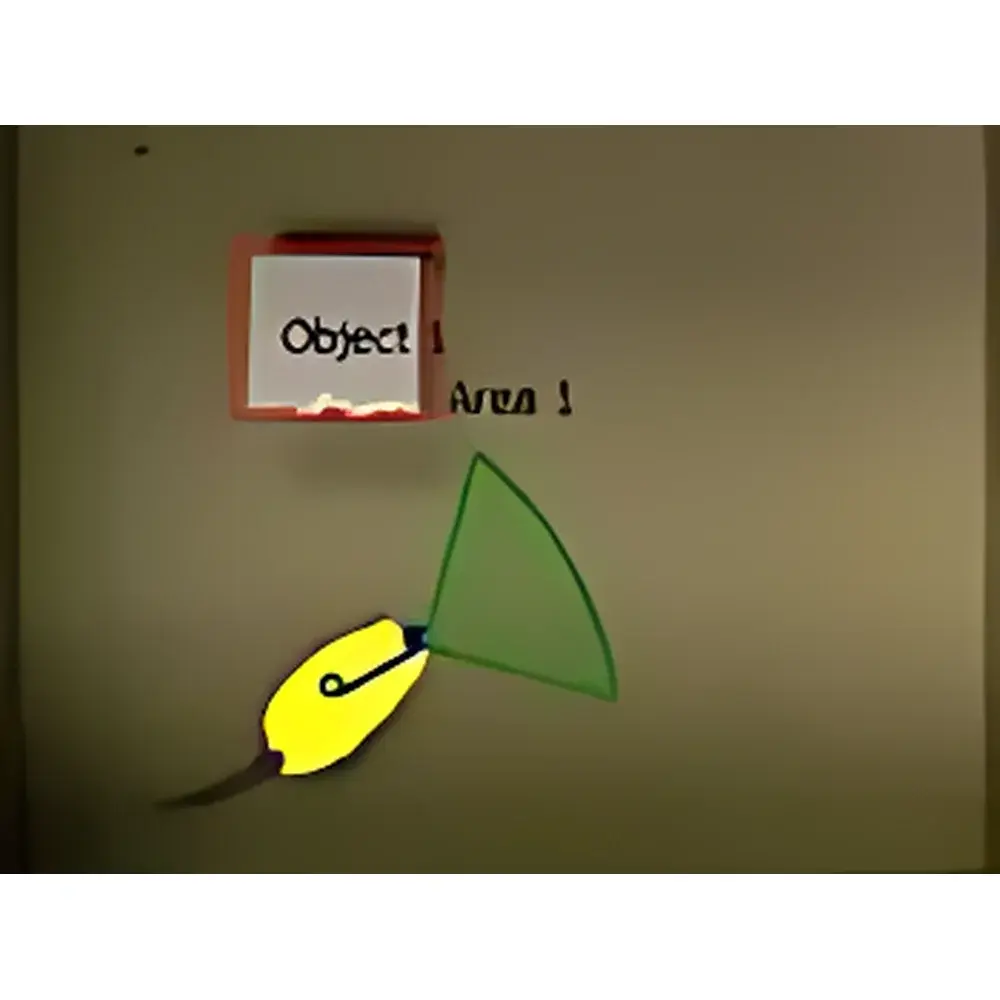
- Flexible Zone Definition: Integrated graphical ROI editor supports polygonal, circular, or irregularly shaped object zones and contextual arenas—enabling custom boundary mapping for multi-phase protocols (sample, delay, test).
- Real-Time Visualization & Live Scoring: On-screen overlay displays instantaneous exploration metrics—including cumulative sniff time per object, rearing count, path length, and velocity vectors—without post-hoc processing delay.
- Low-Interference Experimental Design: Eliminates food/water deprivation requirements; compatible with naïve, drug-naïve, or genetically modified cohorts; minimally affected by baseline locomotor bias due to volumetric normalization of exploration metrics.
Sample Compatibility & Compliance
The NORT-3D system is validated for use with adult Sprague-Dawley and Wistar rats (200–500 g) and C57BL/6, BALB/c, and CD-1 mice (20–35 g). Its non-invasive, markerless architecture ensures full compliance with institutional animal care and use committee (IACUC) standards and Directive 2010/63/EU on protection of animals used for scientific purposes. All behavioral parameters adhere to consensus definitions published in the Journal of Neuroscience Methods and are traceable to NIH Behavioral Core Facility best practices. Data export formats (CSV, HDF5, MATLAB .mat) support integration into GLP-compliant workflows requiring audit trails and version-controlled metadata.
Software & Data Management
NORT-3D Control Suite v4.x provides intuitive experiment setup, real-time monitoring, and batch analysis across multiple sessions. The software implements timestamp-synchronized logging of hardware triggers (e.g., door open/close, light phase transitions), environmental sensor inputs (ambient temperature, humidity), and user-defined annotations. Exported datasets include raw 3D coordinates, derived event logs (sniff onset/offset, rearing duration), and summary statistics (discrimination index, exploration ratio, habituation slope). Audit-ready reporting modules generate PDF reports compliant with FDA 21 CFR Part 11 requirements when paired with network-authenticated user accounts and electronic signature configuration.
Applications
- Assessment of hippocampal- and perirhinal cortex-dependent recognition memory in neurodegenerative disease models (e.g., APP/PS1, tau P301L).
- Evaluation of acute and chronic effects of nootropics, antipsychotics, or anxiolytics on short-term (1–4 h) and long-term (24–72 h) memory retention.
- Phenotyping of transgenic lines exhibiting subtle cognitive deficits undetectable by Morris water maze or fear conditioning.
- Validation of non-hippocampal memory pathways—such as striatal or prefrontal circuits—in models of ADHD, schizophrenia, or aging-related cognitive decline.
- High-throughput screening in contract research organizations (CROs) requiring standardized, reproducible NOR endpoints across multi-site studies.
FAQ
What is the minimum recommended arena size for mouse and rat testing?
Standard configurations support 40 × 40 cm (mouse) and 60 × 60 cm (rat) acrylic arenas; custom calibration is available for larger enclosures up to 100 × 100 cm.
Does the system require reflective markers or animal tagging?
No—NORT-3D uses markerless 3D pose estimation via calibrated depth-camera arrays; no surgical implantation, dye application, or adhesive markers are needed.
Can I integrate NORT-3D data with electrophysiology or optogenetics rigs?
Yes—TTL-compatible trigger I/O ports enable hardware synchronization with neural recording systems (e.g., Intan, Neuralynx) and laser stimulation controllers (e.g., Prizmatix, Doric).
Is validation documentation available for regulatory submissions?
Harvard Apparatus provides IQ/OQ/PQ protocol templates, system verification reports, and ISO 13485-aligned manufacturing documentation upon request for GCP/GLP-regulated studies.
How is data security and user access managed?
Role-based access control (RBAC), encrypted local storage, and optional LDAP/Active Directory integration ensure compliance with HIPAA and GDPR data governance frameworks.





