Harvard Apparatus Inspira ASVv Volume-Controlled Animal Ventilator
| Brand | Harvard Apparatus |
|---|---|
| Origin | USA |
| Model | Inspira ASVv (Volume-Controlled) |
| Animal Weight Range | 15 g – 10 kg |
| Tidal Volume Range | 0.1 – 100 mL |
| Respiratory Rate | 5 – 200 bpm |
| I | E Ratio Adjustment: 1:4 to 4:1 |
| Trigger Sensitivity (Assist Mode) | –1 to –10 cmH₂O |
| PEEP Capability | Not applicable (ASVv is volume-controlled |
| Cylinder Options | 0.1–10 mL and 10–100 mL glass/graphite piston-cylinder assemblies |
| Sigh Breathing | Programmable or manual trigger via front-panel SIGH button |
| Gas Compatibility | Non-flammable anesthetic agents (e.g., isoflurane, sevoflurane, nitrous oxide, halothane) |
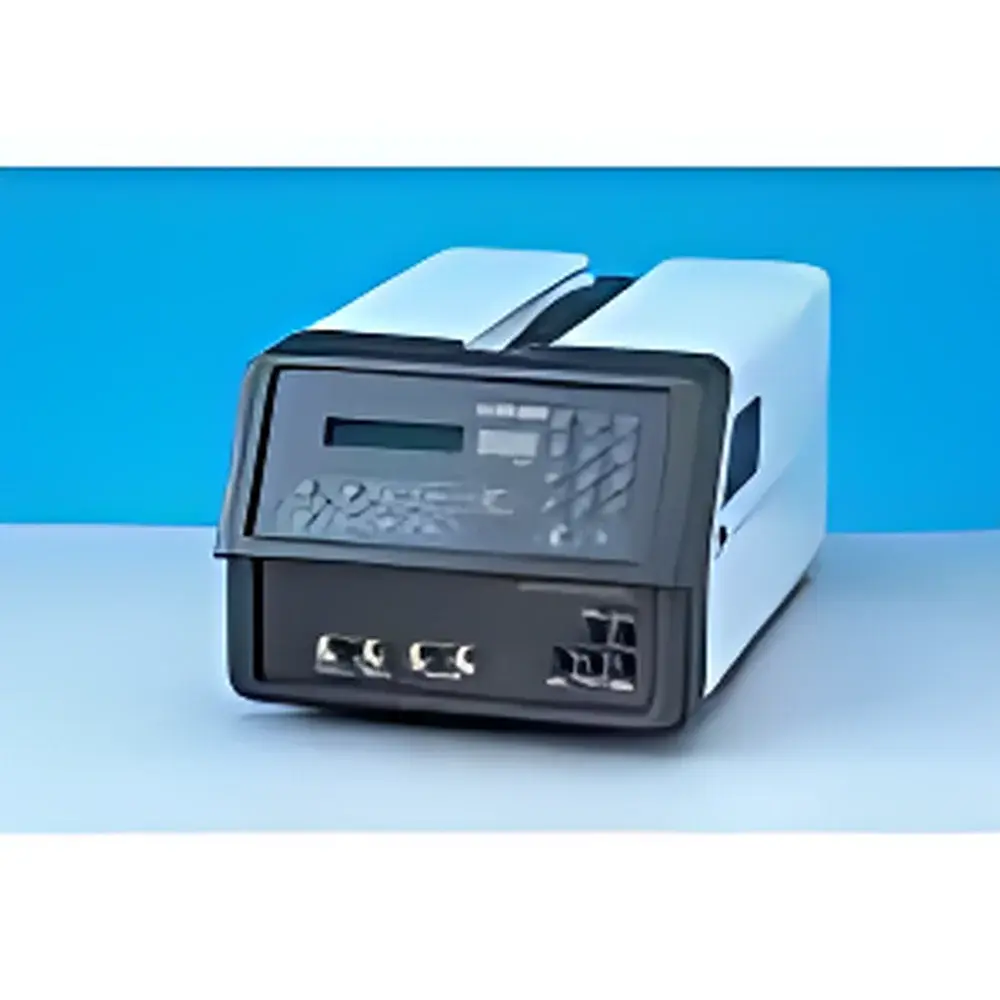
| Interfaces | Front-mounted gas ports, dual analog outputs, external trigger input, synchronization output |
| Display | Backlit LCD with intuitive keypad navigation |
| Compliance | Designed for GLP-compliant preclinical research |
Overview
The Harvard Apparatus Inspira ASVv is a microprocessor-controlled, volume-targeted small-animal ventilator engineered for precision mechanical ventilation across a broad physiological spectrum—from neonatal mice (15 g) to feline models (up to 10 kg). It operates on a positive-pressure, piston-driven displacement principle: a calibrated glass-and-graphite piston-cylinder assembly delivers user-specified tidal volumes with high reproducibility and minimal dead space. Unlike pressure-limited systems, the ASVv guarantees consistent volumetric delivery regardless of airway resistance or lung compliance changes—making it especially suitable for longitudinal studies involving bronchoconstriction, pulmonary edema, or post-surgical recovery where tidal volume fidelity is critical. Its architecture supports both spontaneous-breathing-assisted and fully controlled ventilation modes, enabling seamless transition from assisted to unassisted respiration during weaning protocols.
Key Features
- Single-platform versatility: One ventilator accommodates rodent (mouse, rat, guinea pig), lagomorph (rabbit), and feline models without hardware reconfiguration.
- Intelligent parameter initialization: Enter animal weight once; the embedded algorithm calculates recommended respiratory rate, tidal volume, and I:E ratio per species-specific allometric scaling—fully editable by the user.
- Dual-range piston-cylinder system: Interchangeable 0.1–10 mL and 10–100 mL assemblies auto-detected upon installation; tool-free replacement in under 60 seconds.
- Assist mode with adjustable trigger sensitivity: Detects spontaneous inspiratory effort via real-time intrapulmonary pressure drop (–1 to –10 cmH₂O threshold); initiates mandatory breath upon detection—critical for evaluating respiratory drive recovery.
- Programmable sigh ventilation: Delivers periodic high-volume breaths (user-defined frequency and magnitude) to reverse atelectasis and maintain alveolar recruitment during prolonged ventilation.
- Front-panel-integrated connectivity: All gas inlets/outlets, analog voltage outputs (0–10 V), external TTL trigger input, and sync pulse output are co-located for streamlined setup in stereotaxic, imaging, or electrophysiology rigs.
- RS-232 serial interface (rear panel): Enables bidirectional communication with third-party acquisition systems (e.g., LabChart, Spike2) or custom scripts for automated protocol execution and timestamped event logging.
Sample Compatibility & Compliance
The Inspira ASVv is validated for use with mechanically ventilated mammals within the 15 g–10 kg mass range, including C57BL/6 and BALB/c mice, Sprague-Dawley and Wistar rats, Hartley guinea pigs, New Zealand White rabbits, and domestic cats under terminal or survival surgical protocols. It supports integration with vaporizer-delivered non-flammable anesthetics (isoflurane, sevoflurane, halothane, nitrous oxide) via standard anesthesia circuits. The device meets electrical safety requirements per UL 61010-1 and IEC 61010-1. While not a medical device, its design aligns with GLP documentation standards—including audit-trail-capable parameter logging when used with Harvard Apparatus’ SafeRange™ software—and supports 21 CFR Part 11–compliant electronic records when deployed with validated timestamping and user-access controls.
Software & Data Management
SafeRange™ software provides a secure, wizard-guided interface for ventilator configuration, parameter validation, and session archiving. Upon entering subject weight, the software cross-references peer-reviewed allometric equations (e.g., Kleiber’s law adaptations for respiratory physiology) to propose initial settings compliant with AALAS and NIH OLAW guidelines. All parameters—including tidal volume, rate, I:E, sigh parameters, and assist thresholds—are editable and digitally signed prior to execution. Session data (real-time flow/pressure waveforms, trigger events, sigh timestamps) export in CSV or HDF5 format. When connected via RS-232, the ASVv streams synchronized analog outputs to DAQ systems, enabling concurrent recording of ventilator metrics with EEG, EMG, or plethysmography signals.
Applications
- Preclinical respiratory pharmacology: Evaluation of bronchodilators, neuromuscular blockers, or opioid-induced respiratory depression.
- Neurorespiratory coupling studies: Integration with optogenetic or chemogenetic stimulation in brainstem nuclei.
- Pulmonary disease modeling: Ventilation support during acute lung injury (ALI), COPD, or fibrosis progression assays.
- Survival surgery recovery monitoring: Long-duration ventilation with automated sighs to prevent atelectasis in post-thoracotomy or tracheostomy models.
- Anesthesia delivery platform: Precise carrier-gas flow control for volatile anesthetic administration during functional MRI or PET imaging.
- Respiratory neurophysiology: Closed-loop triggering of neural recordings based on ventilator-derived respiratory phase markers.
FAQ
What animal species and weight ranges does the Inspira ASVv support?
It is validated for mice (15 g), rats, guinea pigs, rabbits, and cats up to 10 kg. Calibration and piston selection must match the expected tidal volume range.
Does the ASVv provide PEEP (Positive End-Expiratory Pressure)?
No—PEEP is implemented exclusively on the pressure-controlled Inspira ASVP model. The ASVv maintains zero baseline pressure at end-expiration.
Can the Inspira ASVv be used with anesthetic vaporizers?
Yes—its gas pathway is compatible with non-flammable anesthetic agents delivered via calibrated vaporizers; ensure upstream filtration and downstream scavenging per institutional EHS protocols.
How is sigh ventilation triggered?
Sighs can be scheduled at fixed intervals (e.g., every 50 breaths) or manually initiated via the front-panel SIGH button during live operation.
Is the RS-232 interface capable of real-time parameter adjustment?
Yes—ASCII command protocol allows dynamic modification of rate, tidal volume, I:E, and assist threshold during ongoing ventilation, enabling adaptive experimental designs.