
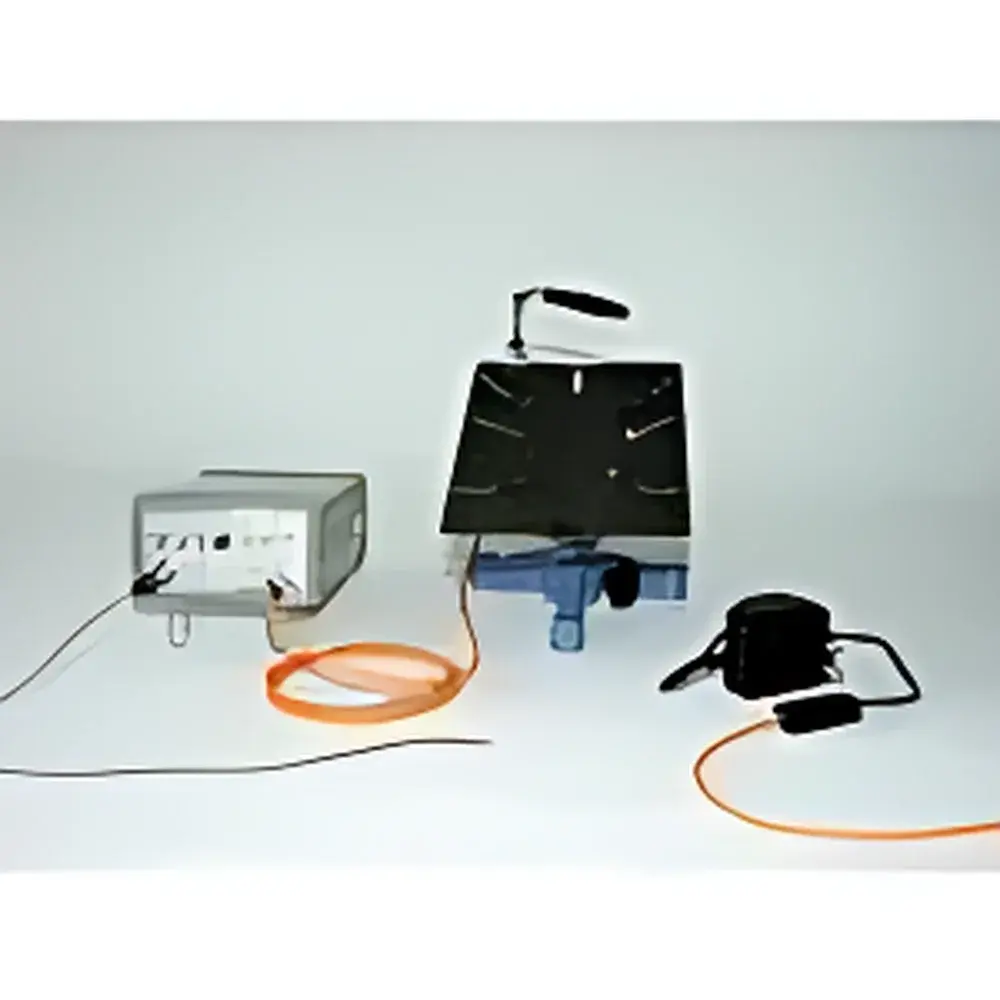
Harvard Apparatus Size 5 Small Animal Surgical Table
| Brand | Harvard Apparatus |
|---|---|
| Origin | USA |
| Manufacturer Type | Authorized Distributor |
| Origin Category | Imported |
| Model | Size 5 |
| Pricing | Upon Request |
Overview
The Harvard Apparatus Size 5 Small Animal Surgical Table is an engineered platform designed for precise, repeatable, and physiologically stable surgical interventions in preclinical research involving rodents and other small laboratory animals (e.g., mice, rats, guinea pigs, and rabbits up to ~3.5 kg). Its core architecture adheres to fundamental principles of biomechanical restraint and ergonomic accessibility—enabling optimal exposure of thoracic, abdominal, cranial, and orthopedic surgical fields while minimizing animal stress and operator fatigue. The table operates on a passive mechanical stabilization paradigm: no integrated actuation or real-time feedback control is employed; instead, positional integrity relies on rigid anodized aluminum construction, precision-machined T-slots, and standardized accessory mounting interfaces compliant with ISO 9001–certified manufacturing protocols.
Key Features
- Anodized aluminum platform measuring 300 × 185 mm (11.8 × 7.3 in), offering high stiffness-to-weight ratio, corrosion resistance, and non-magnetic properties essential for concurrent electrophysiological or imaging workflows.
- Standardized T-slot array along both longitudinal edges—compatible with Harvard Apparatus’ full suite of accessories including limb restraints, sternal retractors, stereotaxic adapters, and ball-and-socket universal mounts (e.g., model 72-1010).
- Included set of four adjustable paw clamps with low-compliance silicone-coated jaws, designed to secure limbs without compromising peripheral perfusion or nerve conduction integrity.
- Modular base configurations: six distinct variants available—including tripod base (for height-adjustable stability on uneven surfaces), inclined flat base (for gravity-assisted exposure), non-heated, fixed-temperature heated (37.0 ± 0.5 °C), and PID-controlled thermostatic heating (maintains core body temperature within ±0.3 °C during prolonged procedures).
- Integrated 4 mm banana jack grounding port located at the rear-left corner of the platform—designed for connection to isolated ground reference systems required for ECG, EEG, or EMG signal acquisition under GLP-compliant electrophysiology setups.
Sample Compatibility & Compliance
The Size 5 platform supports consistent positioning across species ranging from neonatal mice (P7–P14) to adult Sprague-Dawley rats (up to 350 g) and New Zealand White rabbits (≤3.5 kg). All configurations comply with NIH Guide for the Care and Use of Laboratory Animals (8th Edition) standards for surgical support surface design, including non-porous finish, cleanability validation per ASTM F2275-22, and absence of leachable plasticizers. Accessories are sterilizable via autoclaving (121 °C, 15 psi, 20 min) or ethylene oxide treatment. The system is compatible with institutional IACUC-approved surgical protocols and integrates seamlessly into FDA 21 CFR Part 11–aligned data acquisition environments when paired with validated analog-to-digital converters and audit-trail-enabled software.
Software & Data Management
This surgical table is a hardware-only platform with no embedded firmware or onboard software. It functions as a passive mechanical interface—requiring no driver installation or firmware updates. However, its grounding port and standardized accessory geometry ensure interoperability with third-party physiological monitoring systems (e.g., ADInstruments PowerLab, BIOPAC MP160, or Noldus EthoVision XT) for synchronized timestamped event logging. All mounting interfaces conform to ANSI/ISO 80000-1:2022 dimensional referencing conventions, enabling CAD-integrated surgical workflow planning and digital twin modeling in MATLAB Simulink or COMSOL Multiphysics-based procedural simulation frameworks.
Applications
- Cardiovascular surgery: Thoracotomy, coronary artery ligation, and Langendorff perfusion setup alignment.
- Neurosurgery: Craniotomy, intracerebral injection, and optogenetic fiber implantation requiring sub-millimeter head stabilization.
- Transplantation models: Orthotopic liver, kidney, or pancreatic islet transplantation requiring precise organ orientation and vascular access.
- Pharmacokinetic studies: Serial blood sampling, IV catheterization, and microdialysis probe placement under sterile field conditions.
- Imaging-guided interventions: MRI-compatible configurations (non-ferromagnetic base options) for intra-scanner surgical manipulation.
FAQ
Is the Size 5 surgical table compatible with stereotaxic frames?
Yes—when equipped with the optional stereotaxic adapter plate (Part #72-1025), it accepts standard Kopf and Stoelting stereotaxic arms with 12.7 mm dovetail interfaces.
Can the heated variants be used in CO₂ anesthesia chambers?
Only non-heated and fixed-temperature (37 °C) variants are rated for use inside regulated gas environments; PID-controlled units require external ambient temperature ≤25 °C and relative humidity <60% to maintain thermal accuracy.
What is the maximum load capacity of the platform?
The anodized aluminum platform supports static loads up to 5.0 kg distributed evenly across its surface; dynamic loading (e.g., during retractor use) must remain below 3.0 kg to preserve long-term T-slot integrity.
Are replacement paw clamps available separately?
Yes—silicone-jaw paw clamps are stocked under Part #72-0980 and are supplied in sets of four with calibrated tension springs (torque range: 0.12–0.18 N·m).
Does Harvard Apparatus provide IACUC protocol templates for this device?
Upon request, authorized distributors supply SOP documentation aligned with AAALAC International benchmarking criteria, including cleaning validation records and material safety data sheets (MSDS) for all contact surfaces.




