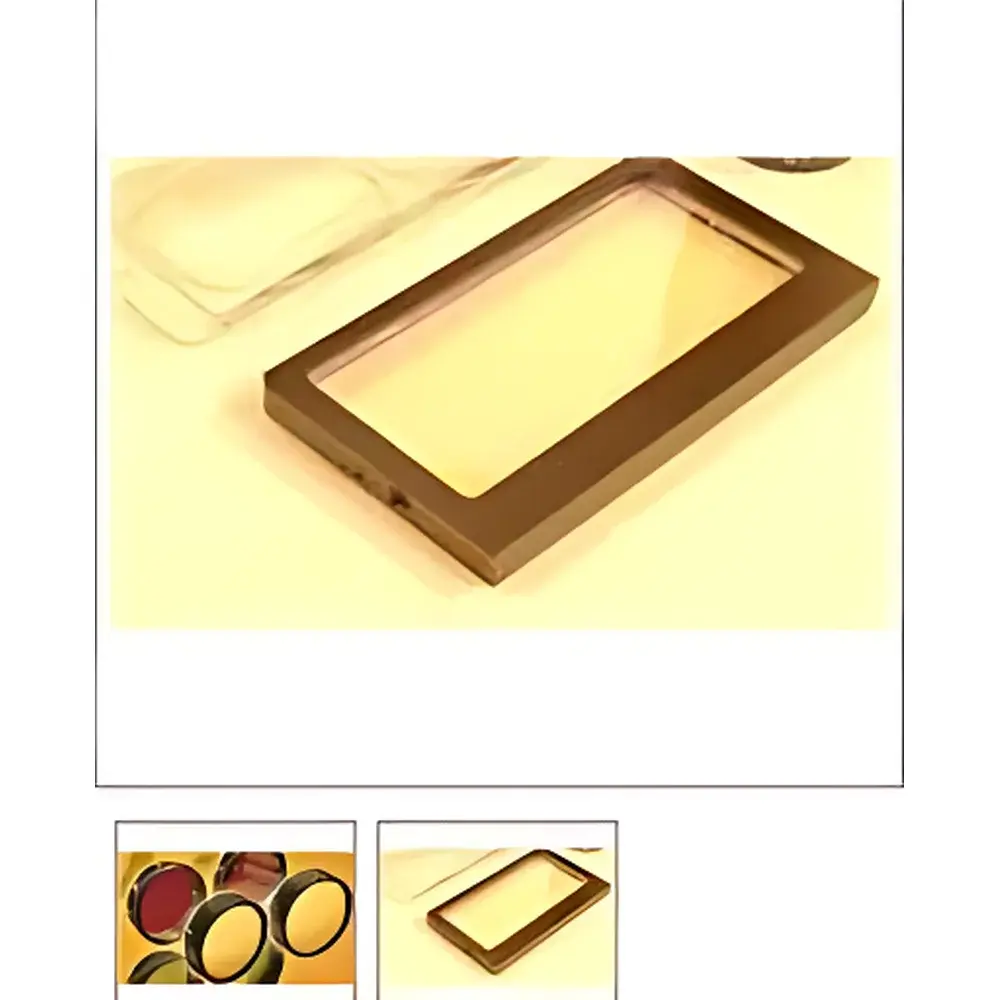
BLS FS/TEF Series Fluorescent Protein Filter Sets
| Brand | BLS |
|---|---|
| Origin | Imported (Non-China) |
| Distributor Type | Authorized General Distributor |
| Model | FS/TEF Series |
| Wavelength Ranges | FS/TEF-1C2 (470–500 nm), FS/TEF-2G2 (500–515 nm), FS/TEF-3GY1 (500–650 nm), FS/TEF-3GY2 (500–550 nm), FS/TEF-4Y1 (520–650 nm), FS/TEF-4Y2 (520–650 nm), FS/TEF-4R2 (590–660 nm) |
| Mounting | Standard 25 mm or 32 mm diameter, threaded (M25.5×0.75 or M32×0.75), optical grade anodized aluminum housings |
| Optical Density (OD) | ≥6 at blocking bands |
| Transmission Peak | >90% at center wavelength |
| Steepness | Edge transition <15 nm (typ.) |
| Substrate | Fused silica or BK7, λ/4 surface flatness, AR-coated both sides |
Overview
The BLS FS/TEF Series Fluorescent Protein Filter Sets are precision optical components engineered for high-fidelity detection and separation of fluorescent protein emissions in chemiluminescence analyzers, fluorescence microscopes, and multimodal clinical immunoassay platforms. Designed specifically for use in clinical laboratory instruments—particularly automated chemiluminescence analyzers requiring multiplexed biomarker quantification—the series implements hard-coated interference filter technology to deliver sharp spectral cutoffs, deep out-of-band rejection (OD ≥6), and exceptional transmission efficiency (>90% at peak). Each filter set comprises an excitation filter, a dichroic mirror, and an emission filter, optimized for common genetically encoded fluorescent proteins including mTurquoise2, EGFP, mNeonGreen, SYTO dyes, mCherry, and tdTomato. The filters operate on the principle of wavelength-selective transmittance and reflectance governed by thin-film interference physics, enabling precise spectral isolation critical for minimizing crosstalk in multi-color assays compliant with CLIA, ISO 15189, and IVD regulatory frameworks.
Key Features
- Optimized bandpass configurations aligned to canonical fluorescent protein emission maxima—e.g., FS/TEF-1C2 (470–500 nm) for cyan variants, FS/TEF-2G2 (500–515 nm) for enhanced green fluorescence, and FS/TEF-4R2 (590–660 nm) for red-shifted proteins such as mCherry and DsRed
- High optical density (OD ≥6) in blocking regions ensures effective suppression of autofluorescence and excitation bleed-through, essential for low-background clinical signal acquisition
- Fused silica and BK7 substrates with λ/4 surface flatness and dual-side anti-reflection coatings minimize wavefront distortion and maximize throughput across UV-Vis-NIR ranges
- Mechanically robust anodized aluminum housings (M25.5×0.75 or M32×0.75 thread) ensure repeatable alignment and long-term thermal/mechanical stability under continuous instrument operation
- Manufactured under ISO 9001-certified cleanroom conditions; each lot undergoes spectral verification via calibrated CCD-based spectrophotometry per ISO 9211-3
Sample Compatibility & Compliance
The FS/TEF Series is validated for integration into CE-marked and FDA-cleared chemiluminescence analyzer platforms used in clinical chemistry, infectious disease serology, oncology biomarker testing, and autoimmune diagnostics. Compatible with standard 96-well and 384-well microplate readers, fiber-optic light guides, and integrated optical benches. Filters meet RoHS 2011/65/EU material restrictions and are supplied with full traceability documentation—including spectral transmission curves, coating thickness profiles, and batch-specific certification of conformance. For laboratories operating under GLP or GMP environments, the filters support audit-ready documentation packages compliant with 21 CFR Part 11 requirements when deployed with validated instrument control software.
Software & Data Management
While the FS/TEF filters themselves are passive optical elements, their performance is fully leveraged through integration with analyzer firmware that supports configurable assay protocols. Instrument control systems—including those compliant with ASTM E2500-18 (Standard Guide for Specification and Verification of Pharmaceutical and Biotechnology Manufacturing Systems)—can map specific filter sets to assay parameters (e.g., “FS/TEF-2G2 → IL-6 ELISA”), enabling automatic optical path selection, gain calibration, and background subtraction. Spectral metadata (center wavelength, FWHM, blocking range) is embeddable in LIMS-compatible XML or JSON payloads for chain-of-custody tracking and QC trending. No proprietary drivers or middleware are required; mechanical interchangeability ensures plug-and-play compatibility with third-party optical modules.
Applications
- Quantitative detection of cytokine panels (e.g., IFN-γ, TNF-α, IL-2) in flow cytometry–integrated chemiluminescence immunoassays
- Multiplexed viral antigen screening (HBsAg, anti-HCV, HIV p24) using tandem fluorescent protein–labeled secondary reagents
- Monitoring CRISPR-Cas9 editing efficiency via co-expressed fluorescent reporters (e.g., GFP/RFP dual-reporter constructs)
- High-sensitivity detection of cardiac troponin I and procalcitonin in point-of-care analyzers with expanded dynamic range
- Validation of antibody-drug conjugate (ADC) payload release kinetics using pH-sensitive fluorescent protein tags
FAQ
Are these filters compatible with non-BLS chemiluminescence analyzers?
Yes—mechanical and optical specifications conform to international standards (DIN 61227, ISO 10110-7), enabling integration with major OEM platforms including Siemens Atellica, Roche Cobas e, and Beckman DxI series, provided physical mount and optical path dimensions align.
Do you provide spectral transmission data for each individual filter lot?
Yes—certified spectral scans (200–1100 nm, 1 nm resolution) are included with every shipment, traceable to NIST-traceable reference spectrometers.
Can custom bandpass configurations be manufactured?
Yes—BLS offers OEM filter design services with lead times of 8–12 weeks; minimum order quantities apply for non-standard center wavelengths or edge steepness requirements.
What is the expected operational lifetime under continuous illumination?
Rated for >10,000 hours under typical LED or laser excitation (≤100 mW/cm² irradiance); accelerated aging tests per ISO 10110-7 confirm no measurable degradation in OD or transmission after 5,000 hours at 60°C and 90% RH.