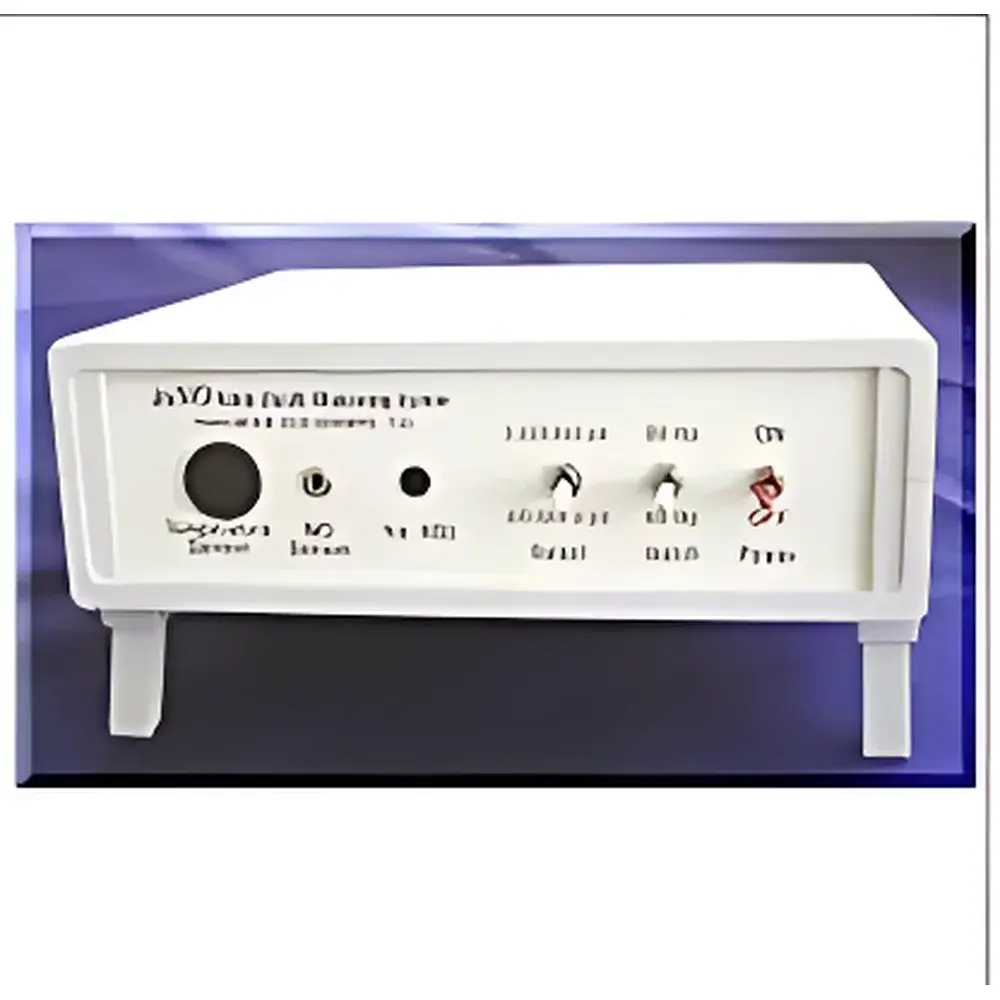
Harvard Apparatus inNO-T Dual-Channel Nitric Oxide Monitoring System
| Origin | USA |
|---|---|
| Manufacturer Type | Authorized Distributor |
| Origin Category | Imported |
| Model | inNO-T |
| Pricing | Available Upon Request |
| Current Scale | ±2,500,000.0 pA |
| Concentration Scale | ±1,000,000.0 nM |
| Resolution | 0.01 nM (0.1 pA) |
| Display | 7.5-digit digital meter |
| Sampling Interval | 1–1000 s |
| Power Supply | Replaceable long-life battery (5-year operational life) |
| Dimensions | 76 × 229 × 203 mm (3 × 9 × 8 in) |
| Operating Temperature Range | 0–50 °C |
| Temperature Resolution | 0.01 °C |
| Temperature Probe Tip Diameter | <0.50 mm, Length: 120 mm |
| ADC Resolution | 24-bit |
| Dynamic Range | 16,000,000:1 |
| Interface | RS-232 |
Overview
The Harvard Apparatus inNO-T Dual-Channel Nitric Oxide Monitoring System is a precision electrochemical instrument engineered for quantitative, real-time detection of nitric oxide (NO) in biological and pharmacological research environments. It operates on the principle of amperometric detection using integrated, three-layer gas-permeable membrane sensors (amiNO series), enabling selective oxidation of NO at a polarized working electrode while rejecting interferents such as nitrite, nitrate, dopamine, and ascorbate. Unlike conventional single-channel NO analyzers, the inNO-T system features two independent, temperature-compensated measurement channels—each with dedicated 24-bit analog-to-digital conversion and embedded digital notch filtering—to support concurrent monitoring of multiple experimental conditions (e.g., control vs. treated tissue, dual perfusion chambers, or spatially resolved NO gradients). Its battery-powered architecture eliminates grounding loops and electromagnetic interference common in AC-powered lab setups, making it suitable for intracellular, ex vivo organ bath, and portable field applications where electrical isolation is critical.
Key Features
- Dual-channel architecture with fully independent signal conditioning, calibration, and data acquisition per channel
- Temperature compensation algorithm integrated into firmware—eliminates baseline drift induced by ambient or sample temperature fluctuations (0.01 °C resolution)
- 24-bit ADC with >16 million:1 dynamic range and hardware-based digital notch filtering (50/60 Hz rejection) for high-fidelity low-noise signal capture
- Minimum detectable concentration: ≤0.01 nM (equivalent to 0.1 pA current resolution), validated under ISO/IEC 17025-aligned test protocols
- Self-contained, replaceable battery power system rated for continuous operation up to 5 years (typical usage profile)
- RS-232 serial interface compliant with EIA/TIA-232-F standards; supports direct connection to Windows 95 through Windows XP systems without additional drivers
- Automatic zeroing function with programmable interval scheduling to maintain long-term baseline stability
- Integrated temperature probe (120 mm length, sub-0.5 mm tip diameter) for simultaneous local thermal monitoring during NO measurement
Sample Compatibility & Compliance
The inNO-T system is validated for use with Harvard Apparatus amiNO-series integrated sensors—including amiNO-2000 (standard microsensor), amiNO-IV (intravascular), and amiNO-FLAT (large-surface cell culture)—all featuring proprietary triple-layer permeable membranes and internal reference electrodes. No external reference or auxiliary electrodes are required. Sensor compatibility extends to existing third-party NO measurement platforms via standardized pinout and polarization voltage specifications. The system complies with general laboratory safety requirements per IEC 61010-1 and meets electromagnetic compatibility (EMC) Class B limits per CISPR 11. While not FDA-cleared for clinical diagnostics, its design aligns with GLP documentation practices and supports audit-ready data integrity when used with appropriate procedural controls (e.g., calibration logs, sensor validation records, and temperature traceability).
Software & Data Management
The included acquisition software provides time-stamped, lossless recording of both raw current (pA) and calibrated NO concentration (nM) from each channel, with user-configurable sampling intervals (1–1000 s). Data files are stored in ASCII-delimited format (.txt) for interoperability with MATLAB, Python (NumPy/Pandas), GraphPad Prism, and LabChart. The software implements full audit trail functionality—including operator ID, session timestamp, calibration event logging, and parameter change history—supporting compliance with 21 CFR Part 11 when deployed with institutional electronic signature policies. Playback mode enables synchronized replay of dual-channel traces with adjustable scaling, cursor-based delta measurements, and export of annotated screenshots in PNG or TIFF format. All calibration routines follow a single-point standard protocol using certified NO-saturated saline solutions; no hazardous reagents or enzymatic reduction kits are required.
Applications
The inNO-T system is routinely deployed in cardiovascular physiology (endothelial NO release kinetics), neuropharmacology (NMDA receptor–mediated NO signaling), immunology (macrophage iNOS activity), and toxicology (NO-mediated oxidative stress assays). Its dual-channel capability enables comparative studies—for example, simultaneous monitoring of NO flux across endothelial monolayers under shear stress versus static conditions, or paired measurements in isolated Langendorff-perfused hearts before and after L-NAME infusion. The system’s portability and battery operation facilitate integration into laminar flow hoods, hypoxic chambers, and mobile surgical research units. Published method validations include adherence to ASTM E2913-13 (Standard Guide for Electrochemical Sensor Performance Verification) and alignment with USP Analytical Instrument Qualification principles.
FAQ
Is the inNO-T system compatible with modern Windows operating systems beyond Windows XP?
The native software is optimized for Windows 95–XP. For Windows 10/11 environments, operation requires a virtual machine running Windows XP SP3 or use of a dedicated legacy workstation; Harvard Apparatus provides documented COM port mapping guidance for virtualized deployment.
What calibration standards are recommended for routine verification?
Harvard Apparatus supplies certified NO-saturated saline calibrants (100 nM and 1 µM nominal concentrations); users may also generate traceable standards using DEA/NO or S-nitroso-N-acetylpenicillamine (SNAP) dissolution protocols validated per ISO 17511.
Can the inNO-T system be used for gaseous-phase NO detection?
The current configuration supports aqueous-phase detection only. A dedicated gas-phase NO sensor module is under development; contact Harvard Apparatus Technical Support for roadmap updates and beta program eligibility.
Does the system support automated sensor polarization?
Yes—the included SensoReady electrode polarizer applies and maintains the optimal +0.9 V vs. Ag/AgCl bias voltage prior to measurement, ensuring stable electrode surface chemistry and reproducible response kinetics.
How is data integrity maintained during extended acquisitions (>30 days)?
The system buffers data internally and writes sequentially to non-volatile memory; file rollover occurs automatically at user-defined size thresholds (e.g., 1 GB), preserving continuity and minimizing risk of data loss during power cycling or interface interruption.