
Graphene Nanomaterial Standards for Scanning Probe Microscopy (SPM) Calibration and Characterization
| Origin | USA |
|---|---|
| Supplier Type | Authorized Distributor |
| Import Status | Imported |
| Available Volumes | 50 mL, 100 mL, 200 mL, 500 mL (aqueous or organic dispersion) |
| Pricing | Upon Request |
Overview
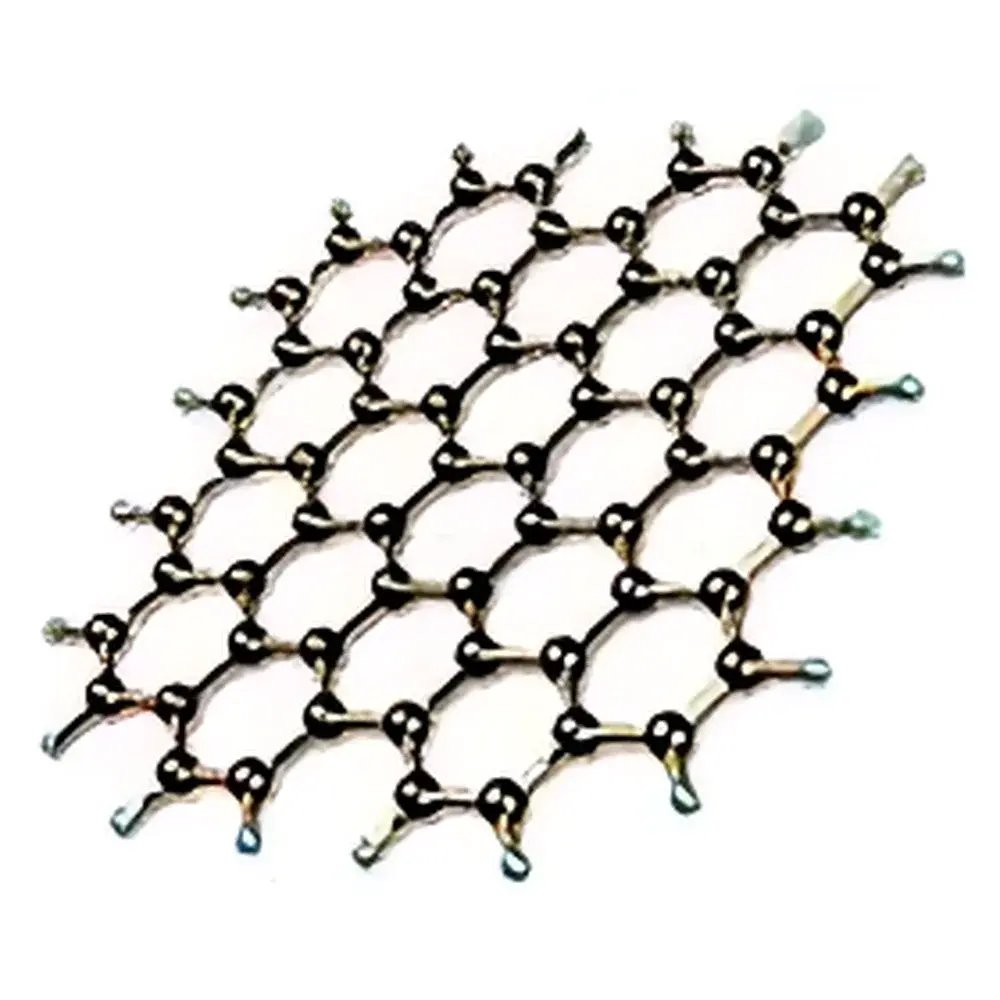
Graphene nanomaterial standards are reference-grade dispersions and powders engineered for high-fidelity calibration, tip characterization, and topographic validation in scanning probe microscopy (SPM) systems—including atomic force microscopy (AFM), scanning tunneling microscopy (STM), and related high-resolution surface metrology platforms. These materials consist of atomically thin, single-layer carbon lattices arranged in a two-dimensional honeycomb structure, with defined thicknesses (≤1.0 nm), lateral dimensions (<200 nm or <1 µm), and controlled surface chemistry. Their exceptional structural uniformity, crystallinity, and surface flatness make them ideal for quantitative assessment of SPM resolution, z-sensitivity, tip convolution effects, and scanner linearity—critical for ISO/IEC 17025-compliant laboratory workflows and GLP-aligned nanomaterial characterization studies.
Key Features
- Four chemically distinct product forms: pristine graphene suspensions, graphene oxide (GO) aqueous dispersions, surface-functionalized graphene solutions, and dry graphene/GO powders—each batch traceably characterized by Raman spectroscopy, AFM height profiling, and UV-Vis absorbance.
- Monolayer-dominant composition confirmed by statistical analysis of >500 height measurements per sample; average thickness: 0.8 ± 0.1 nm for pristine graphene, 1.0 ± 0.15 nm for GO and functionalized variants.
- Dispersion stability validated over ≥6 months under refrigerated storage (4 °C); no centrifugation-induced aggregation observed in dynamic light scattering (DLS) assays.
- Powder forms supplied in argon-purged, moisture-barrier vials to prevent oxidation and interlayer restacking; BET surface area >500 m²/g for pristine graphene powder.
- Batch-specific Certificate of Analysis (CoA) includes lateral size distribution histograms (via TEM image analysis), C/O atomic ratio (XPS), defect density (ID/IG from Raman), and pH/conductivity data for liquid formulations.
Sample Compatibility & Compliance
These standards are compatible with all major SPM platforms (Bruker, Keysight, Park Systems, Nanosurf) and support routine verification per ASTM E2539–22 (“Standard Practice for Calibration of Scanning Probe Microscopes”) and ISO/IEC 17025 requirements for measurement uncertainty estimation. Liquid dispersions are optimized for spin-coating, drop-casting, and Langmuir-Blodgett deposition onto Si/SiO₂, HOPG, mica, and Au(111) substrates. Powder forms enable controlled transfer via dry pickup or polymer-assisted exfoliation. All materials comply with REACH Annex XIV exemptions for graphene-based substances and meet RoHS Directive 2011/65/EU restrictions on hazardous substances. Documentation supports FDA 21 CFR Part 11–aligned electronic record retention when used within validated QC/QA protocols.
Software & Data Management
Each shipment includes a QR-coded digital CoA accessible via secure portal, containing raw Raman spectra (.spc), AFM height maps (.tif), DLS intensity distributions (.csv), and TEM micrographs (.tiff). Data files conform to MIAME/MINSEQE metadata standards and are exportable to Gwyddion, SPIP, and MountainsMap® for cross-platform analysis. Optional integration with laboratory information management systems (LIMS) is supported through RESTful API endpoints for automated batch tracking, expiry alerts, and audit trail generation compliant with GLP/GMP documentation practices.
Applications
- SPM tip shape reconstruction using step-height and edge-scan artifacts on monolayer graphene terraces.
- Z-calibration verification across multiple scan ranges (100 nm to 10 µm) using intrinsic thickness uniformity as a physical reference.
- Quantitative assessment of lateral resolution limits via autocorrelation analysis of graphene domain boundaries.
- Surface potential mapping validation in Kelvin probe force microscopy (KPFM) using work function gradients across GO-to-pristine transitions.
- Interlaboratory comparison studies for nanoscale dimensional metrology accreditation (e.g., NIST SRM 2462 benchmarking).
FAQ
Are these graphene dispersions stable for long-term AFM substrate preparation?
Yes—dispersions maintain colloidal stability for ≥24 weeks at 4 °C; recommended substrate deposition within 72 hours of sonication-assisted homogenization.
Can I use the powder form directly for AFM imaging without re-dispersion?
No—dry powders require controlled solvent-based exfoliation and sonication prior to deposition; direct powder application causes uncontrolled aggregation and invalidates topographic quantification.
Do you provide custom concentration or solvent formulation?
Yes—custom batches (e.g., NMP, DMF, or isopropanol dispersions; concentrations from 0.01 to 1.0 mg/mL) are available under NDA with lead time of 4–6 weeks.
Is Raman spectral data provided for each batch?
Yes—full-range (100–3500 cm⁻¹) Raman spectra acquired using 532 nm excitation, including baseline-corrected D-, G-, and 2D-band fitting parameters and I2D/IG ratios.
How is monolayer content verified?
By statistical height analysis of ≥500 randomly selected flakes via tapping-mode AFM in air; monolayer yield is reported as % of total imaged features with height ≤1.0 nm after deconvolution of tip-sample convolution artifacts.




