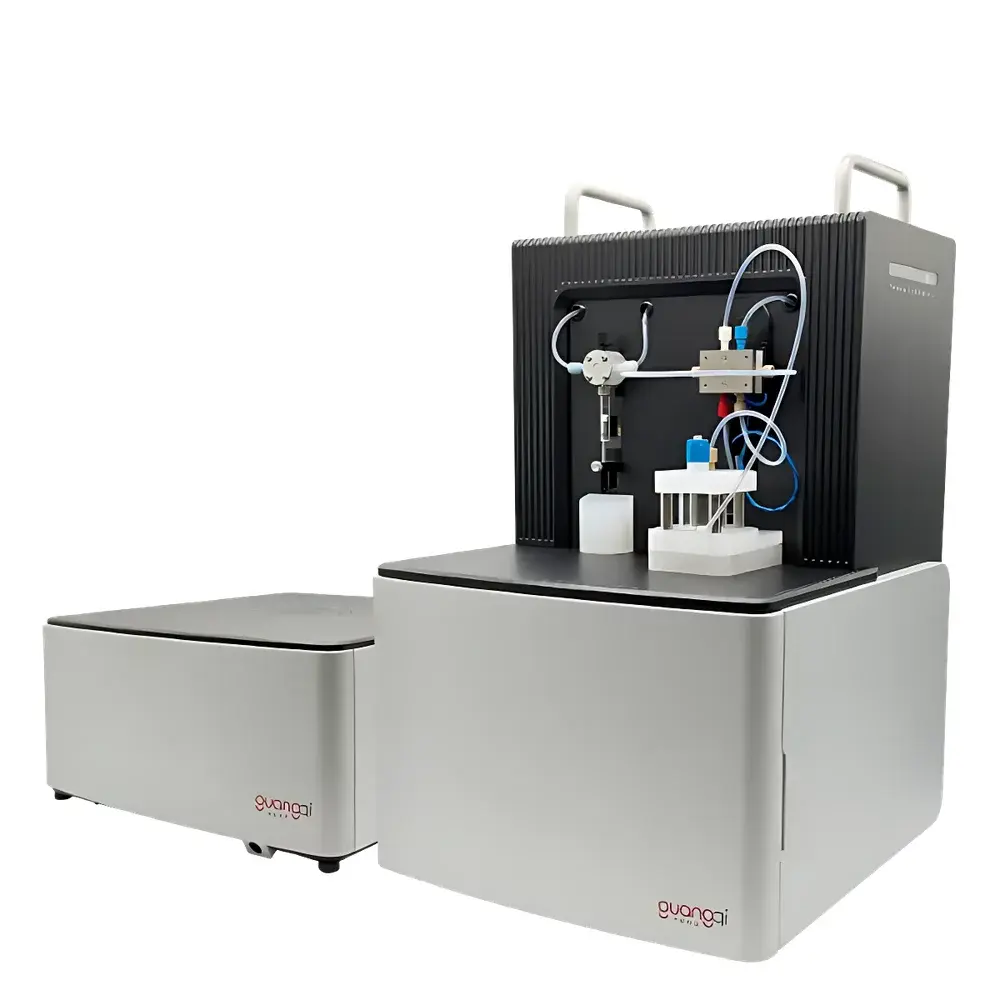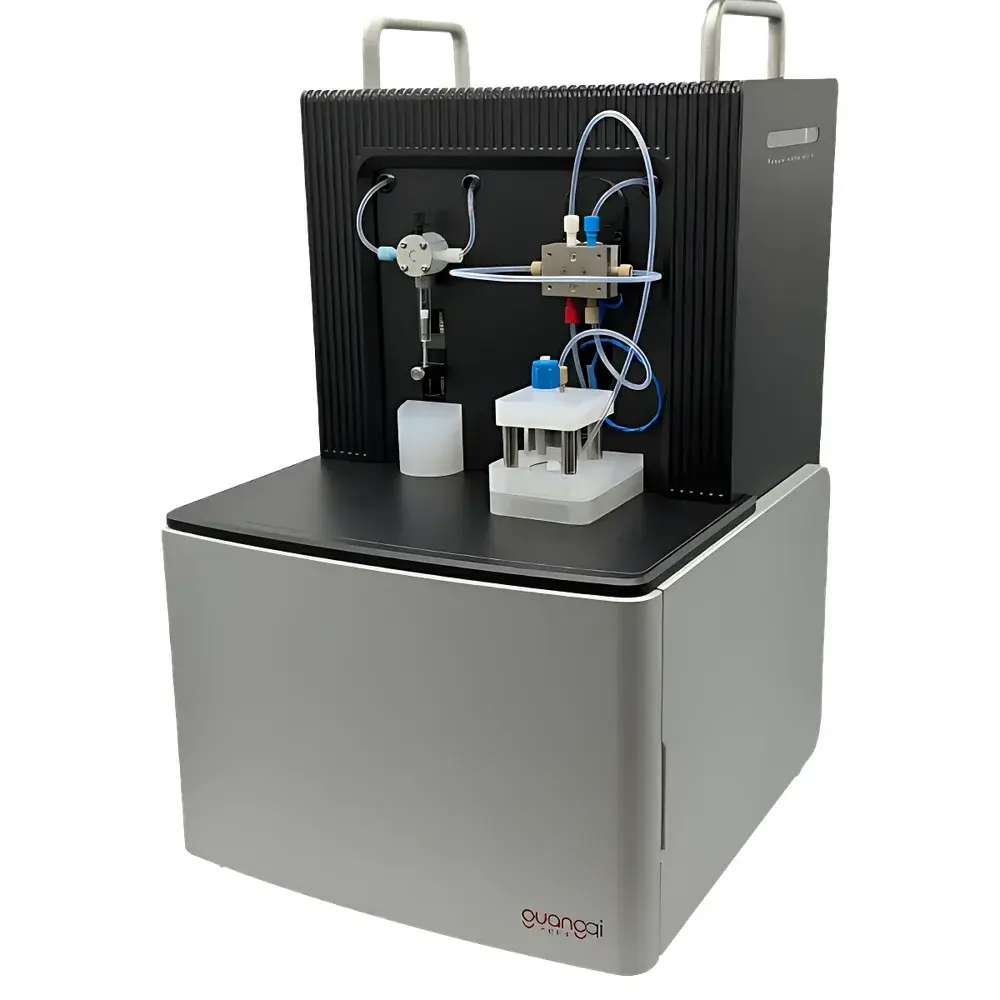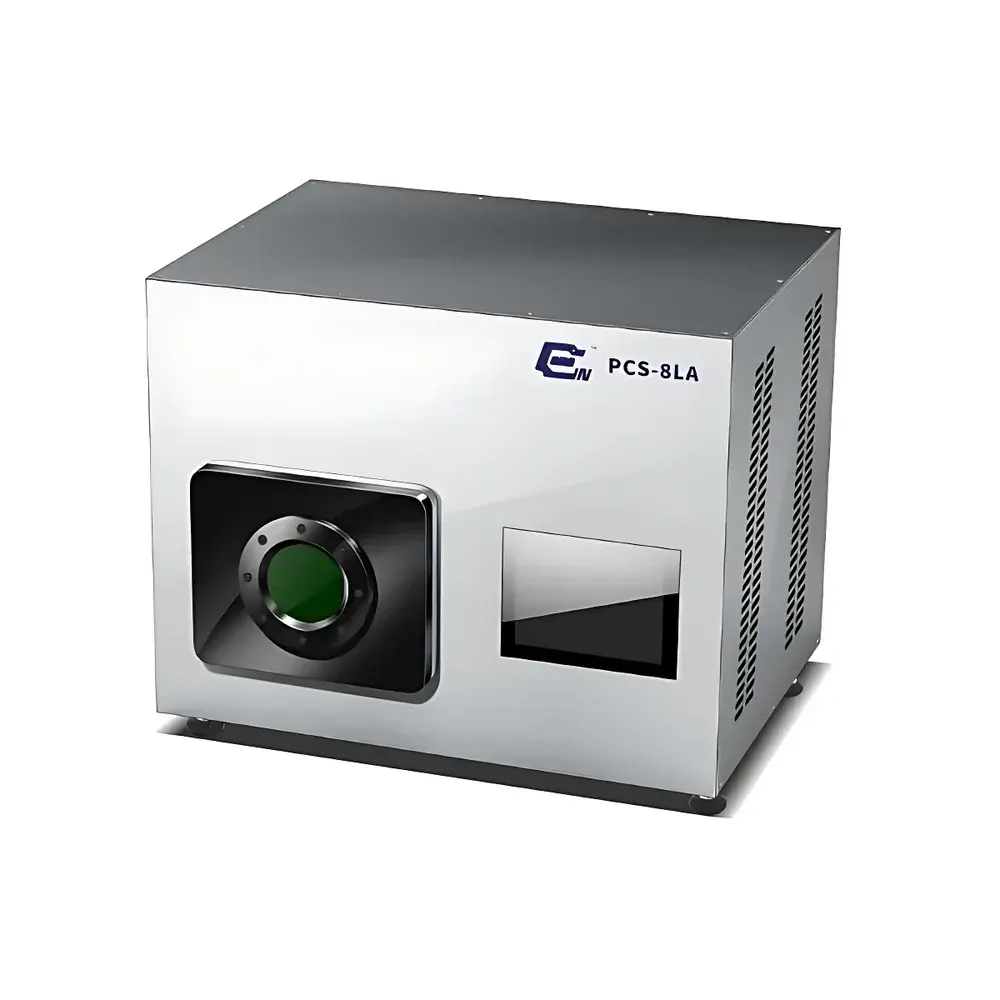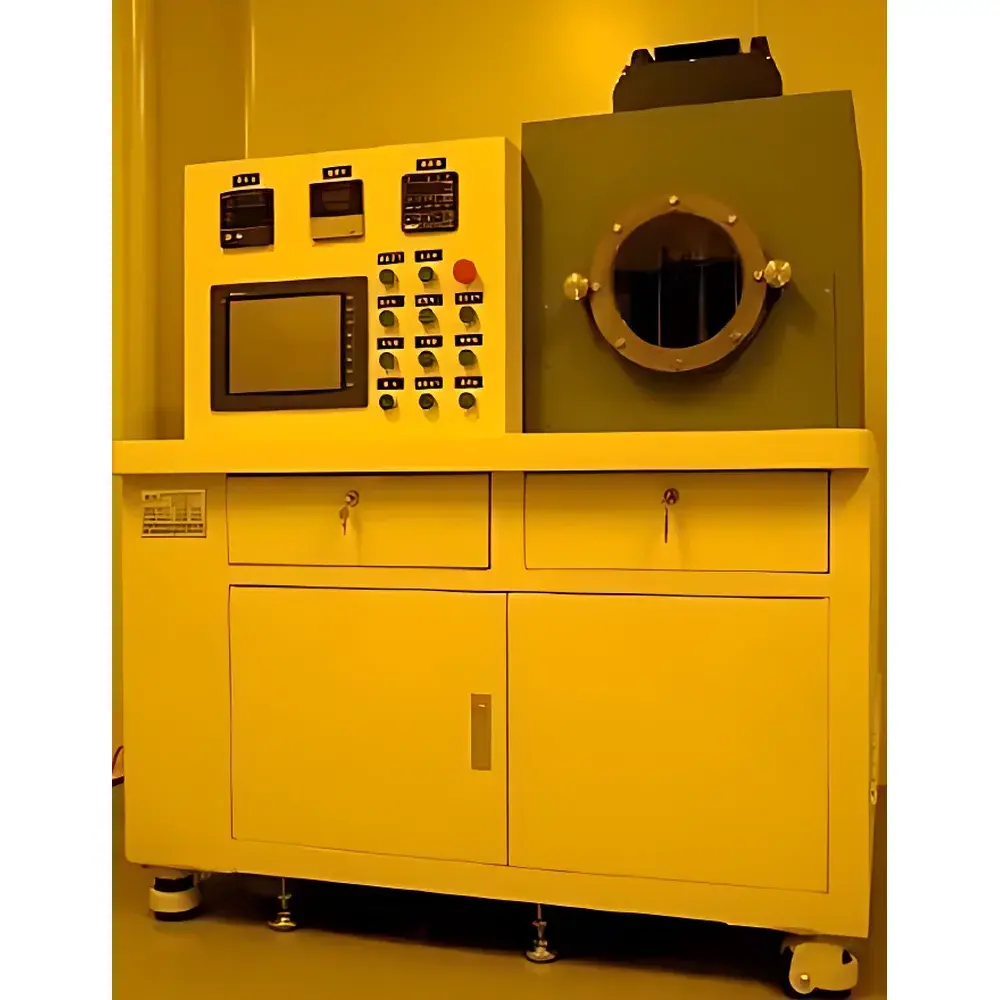
SHNTI YPL-NIL-SI400 Thermal & UV Nanoimprint Lithography System
| Brand | SHNTI |
|---|---|
| Origin | Shanghai, China |
| Model | YPL-NIL-SI400 |
| Temperature Range | RT to 350 °C |
| Pressure Range | 0–20 psi (on 4″ wafer) |
| Vacuum Range | 101.3 kPa to 0.1 Pa |
| UV Exposure System | Integrated |
| Sample Holder Max Diameter | 100 mm (4″) |
| Cooling | Integrated Water-Cooled System |
| Control | PLC-based with Touchscreen HMI |
| Software | Proprietary SI400 Machine Control Suite |
| Loading Method | Manual Wafer/Template Handling |
| Sealing | Bellows-Sealed Vacuum Chamber |
| Compliance | Designed for Class 100–1000 cleanroom integration |
Overview
The SHNTI YPL-NIL-SI400 is a dual-mode thermal and ultraviolet (UV) nanoimprint lithography (NIL) system engineered for high-fidelity, large-area pattern replication in semiconductor R&D, MEMS fabrication, photonic device prototyping, and advanced nanofabrication laboratories. Unlike conventional photolithography, NIL relies on direct mechanical transfer of nanoscale topographies from a rigid master template into a thermoplastic or UV-curable resist layer—enabling sub-20 nm feature resolution without the optical diffraction limits of stepper-based systems. The YPL-NIL-SI400 implements a hybrid imprint architecture: it supports both thermal imprinting (via heated chuck and controlled dwell time) and UV-NIL (using integrated broadband UV LED source with intensity monitoring), allowing process flexibility across resist chemistries—including PMMA, NOA series, OrmoStamp, and custom formulations. Its low-vacuum operational envelope (101.3 kPa down to 0.1 Pa) ensures rapid chamber evacuation and stable ambient control during mold-resist contact, minimizing air entrapment and bubble formation—critical for defect-free pattern fidelity over 4-inch substrates.
Key Features
- Multi-parameter pressure control: Precise 0–20 psi regulation via compressed-air-driven actuation with real-time feedback; incorporates mechanical buffering and hydraulic-equivalent pressure equalization to eliminate edge shear and ensure uniform force distribution across the entire 100 mm substrate.
- Automated leveling and gap control: Motorized Z-axis with closed-loop position sensing enables dynamic parallelism adjustment between template and wafer during approach—compensating for substrate warpage up to ±15 µm and ensuring <±0.5 µm gap uniformity prior to imprint initiation.
- Dual-process capability: Independent thermal module (RT–350 °C, ±0.5 °C stability) and UV exposure subsystem (365 nm peak, adjustable irradiance 10–50 mW/cm²) allow seamless switching between thermoplastic deformation and free-radical polymerization imprint modes.
- Bellows-sealed vacuum chamber: Stainless-steel construction with metal-sealed bellow expansion joints ensures long-term vacuum integrity and particulate containment—compatible with ISO Class 5 (Class 100) cleanroom environments.
- Integrated water-cooling circuit: Maintains thermal stability of chuck, optics, and drive actuators during extended imprint cycles; prevents thermal drift in critical alignment components.
- PLC-based deterministic control architecture: IEC 61131-3 compliant logic engine synchronized with touchscreen HMI (10.1″ capacitive display); supports recipe-driven execution, event logging, and hardware interlock monitoring per SEMI E10 guidelines.
Sample Compatibility & Compliance
The YPL-NIL-SI400 accommodates standard 100 mm (4″) silicon, quartz, glass, or flexible polymer wafers—and includes a smart sample holder capable of securing irregularly shaped pieces and diced die via vacuum-assisted clamping. Template mounting uses kinematic V-groove alignment with spring-loaded retention, supporting quartz, silicon, and nickel shims up to 150 mm × 150 mm. All vacuum, pressure, and thermal subsystems conform to CE machinery directive (2006/42/EC) and electromagnetic compatibility (2014/30/EU). The system’s control software architecture supports audit-trail generation and user-access-level management—facilitating alignment with GLP, ISO/IEC 17025, and internal QA documentation requirements. While not FDA-certified as standalone equipment, its deterministic process logging and parameter traceability meet foundational criteria for inclusion in GMP-compliant pilot-line workflows under 21 CFR Part 11 Annex 11 review protocols.
Software & Data Management
The proprietary SI400 Machine Control Software provides full lifecycle management of imprint processes: from recipe definition (temperature ramp profiles, pressure ramp rates, UV dose timing, vacuum sequence) to real-time monitoring of 32+ analog/digital process variables. All operations are timestamped and logged in SQLite-based local storage with optional network export to FTP/SFTP servers or OPC UA-enabled MES platforms. The software enforces role-based access control (Operator, Engineer, Administrator), supports electronic signature capture for critical steps, and generates PDF reports containing metadata, parameter traces, and pass/fail flags per ASTM E2500-18. Optional add-ons include remote diagnostics via TLS-secured web interface and integration with LabVIEW or Python-based automation frameworks through TCP/IP socket API.
Applications
- Semiconductor packaging: Fabrication of redistribution layers (RDLs) and through-silicon via (TSV) alignment marks with <50 nm overlay accuracy.
- Metasurface prototyping: Replication of subwavelength plasmonic and dielectric nanostructures for AR/VR waveguides and LiDAR diffractive optics.
- Microfluidic device manufacturing: High-throughput patterning of nanochannels (<100 nm width) and surface-functionalized reservoirs in PDMS and COC substrates.
- Nanoimprint template qualification: In-situ evaluation of template wear, residual layer thickness (RLT), and pattern collapse thresholds under controlled thermal-mechanical stress.
- Academic and government lab use: Platform for investigating resist rheology, interfacial adhesion kinetics, and defect propagation mechanisms in soft-lithographic processes.
FAQ
What substrates and templates are compatible with the YPL-NIL-SI400?
Standard 100 mm wafers (Si, SiO₂, fused silica, GaAs, PET, PI) and rigid templates up to 150 mm × 150 mm made of quartz, silicon, or electroformed Ni are supported. Custom holders for non-circular or fragmented samples are available upon request.
Does the system support automated template alignment?
No—manual optical alignment via built-in monocular microscope (20×–100× zoom) and XYZ translation stage is standard. Automated alignment is available as an optional upgrade with motorized stages and vision-based pattern recognition.
Can the pressure range be extended beyond 20 psi?
Yes—high-pressure variants (up to 100 psi) and larger-format configurations (6″ and 8″) are offered as OEM-customized builds, subject to structural reinforcement and vacuum chamber revalidation.
Is the UV exposure system calibrated and traceable?
The UV source includes factory-calibrated radiometric sensors with NIST-traceable certificate (valid for 12 months); users may perform in-house verification using a calibrated photodiode power meter.
What maintenance intervals are recommended?
Vacuum pump oil change every 3,000 operating hours; bellows inspection and O-ring replacement every 12 months or 500 cycles; annual calibration of temperature and pressure transducers by authorized SHNTI service partner.