
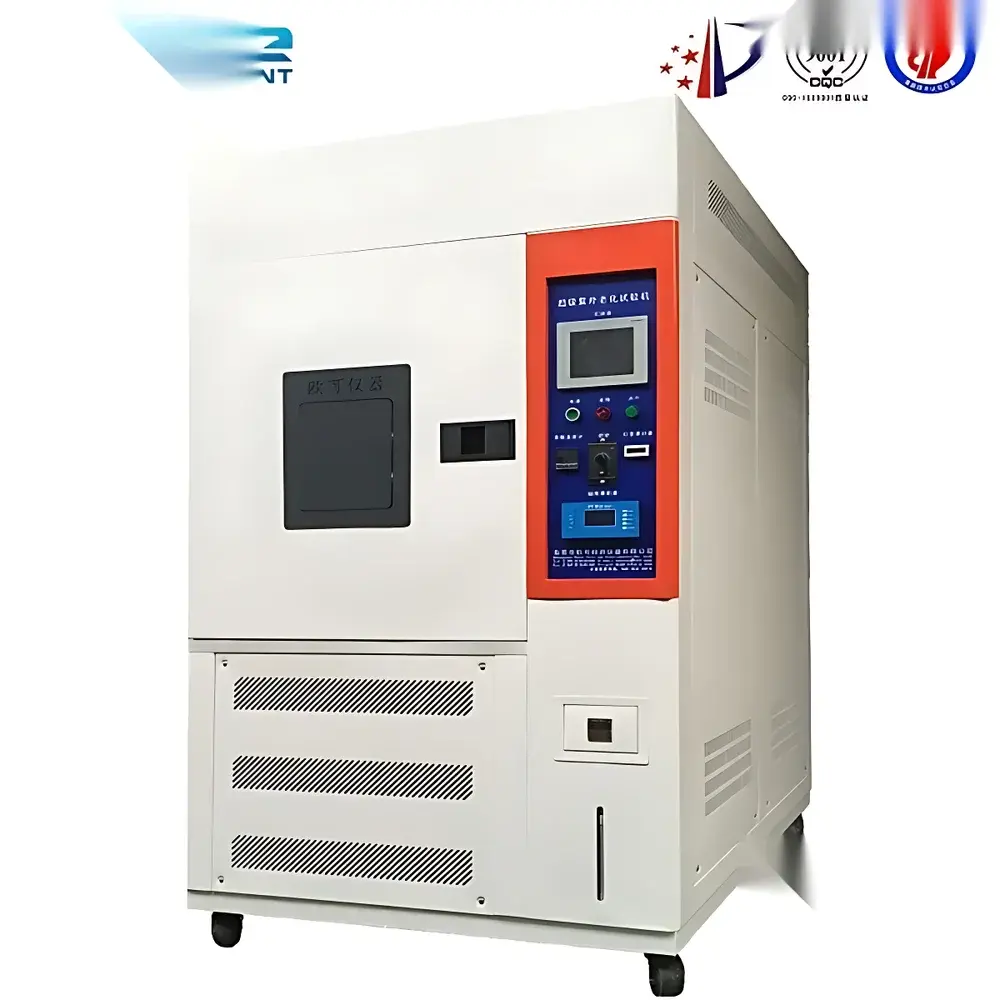
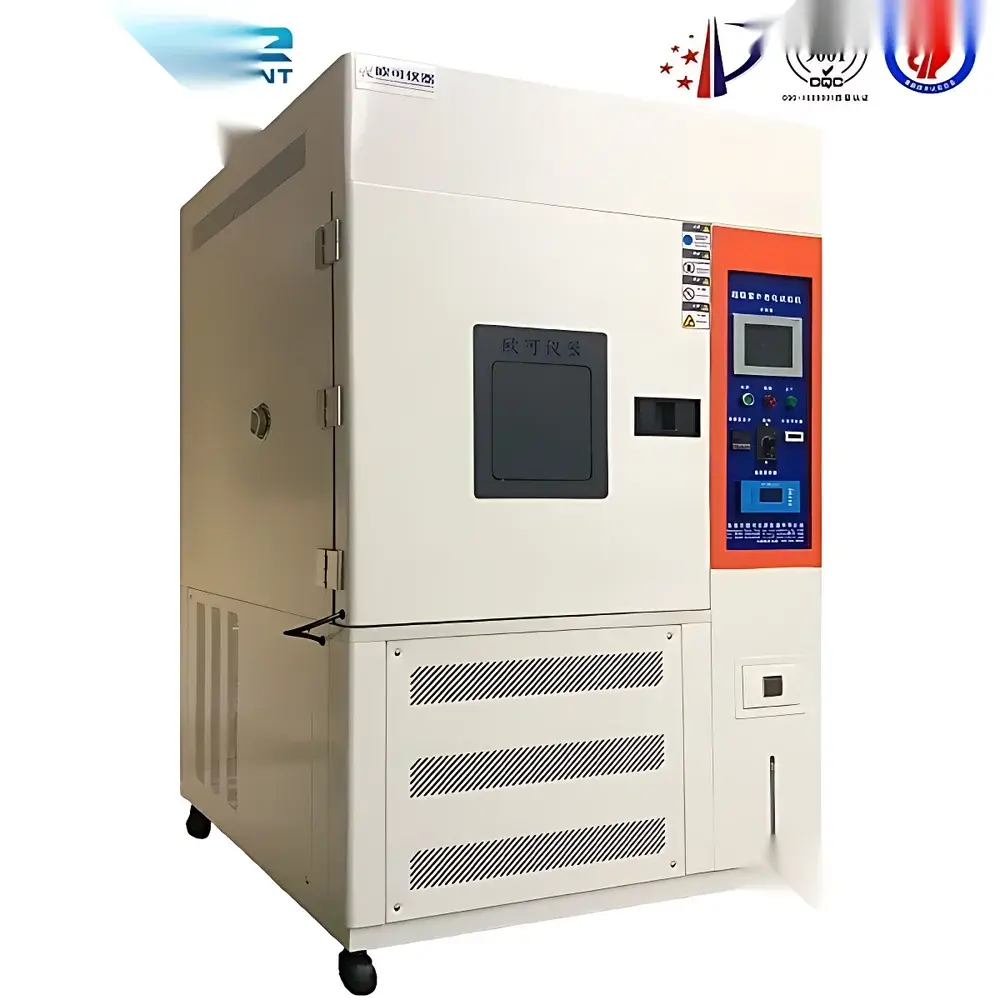
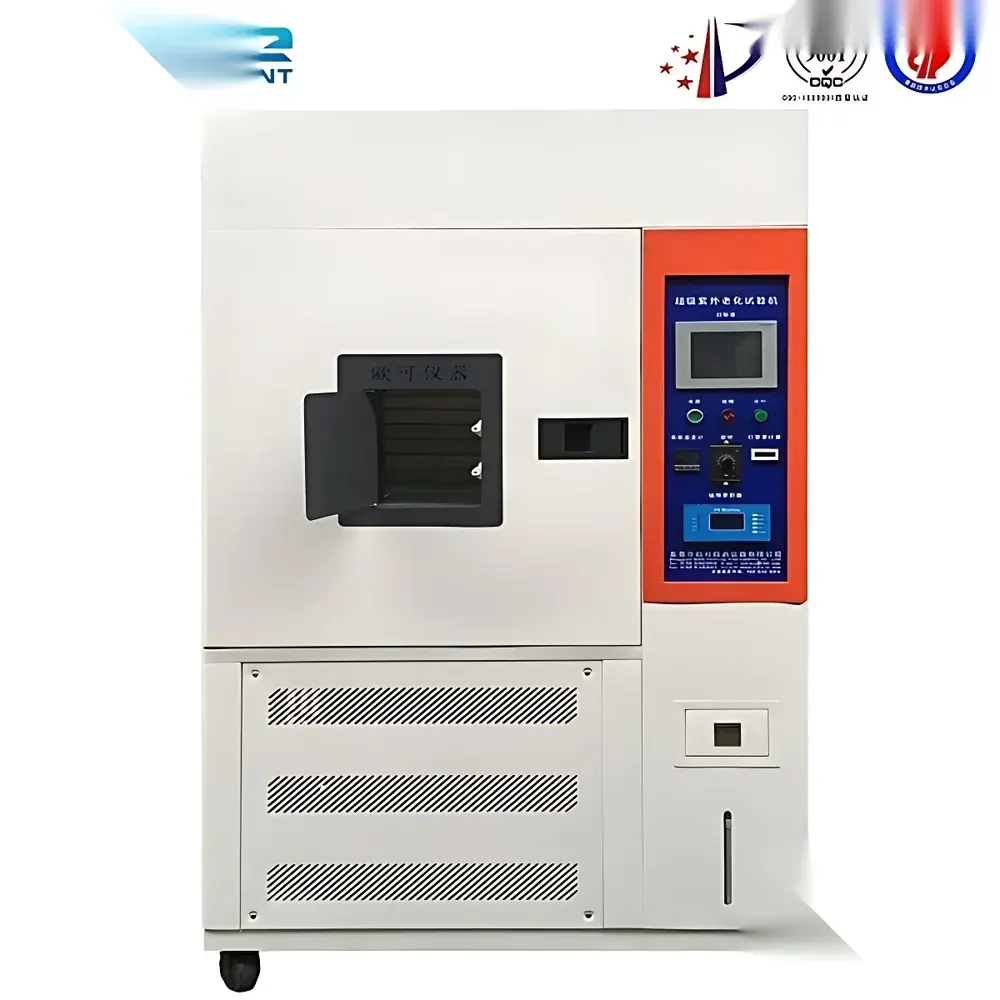
Super UV Weathering Test Chamber
| Brand | OEM |
|---|---|
| Origin | Imported |
| Manufacturer Type | Authorized Distributor |
| Price | USD 21,500 (FOB) |
Overview
The Super UV Weathering Test Chamber is an advanced accelerated weathering instrument engineered for precision simulation of solar radiation, thermal cycling, and moisture-induced degradation mechanisms. It employs air-cooled metal halide lamps as the primary radiation source, generating a continuous spectral output spanning 295–450 nm—covering the biologically and chemically active UVA, UVB, and near-visible regions. Through proprietary optical filtering, the chamber delivers a relative spectral power distribution (SPD) at the specimen plane that closely replicates terrestrial sunlight filtered through 3 mm of borosilicate glass—a condition aligned with ISO 4892-2:2013 and ASTM G155 Class A irradiance requirements. Unlike fluorescent UV lamp-based systems, this metal halide configuration provides broadband irradiance with high photon flux density, enabling realistic photodegradation kinetics for polymeric, coated, and composite materials under controlled temperature (25–85°C) and humidity (10–95% RH) profiles.
Key Features
- High-intensity air-cooled metal halide lamp array (single or multi-lamp configuration), delivering stable irradiance ≥ 0.55 W/m² @ 340 nm (calibrated per ISO 17025-accredited spectroradiometer)
- Integrated condensation cycle via bottom-mounted water reservoir and controlled chamber wall cooling, simulating nocturnal dew formation per ISO 4892-2 Annex B
- Programmable spray cycle with adjustable duration, frequency, and water pressure (deionized water recommended), compliant with ASTM D4329 wetting protocols
- Microprocessor-controlled environmental system with real-time monitoring of black standard temperature (BST), chamber air temperature, and relative humidity
- Specimen exposure plane equipped with calibrated UV radiometer input port and standardized sample mounting fixtures (ISO 4892-2-compliant rack geometry)
- Robust stainless-steel interior construction with quartz-filtered lamp housing and forced-air convection for uniform thermal distribution
Sample Compatibility & Compliance
The chamber accommodates flat-panel specimens up to 600 × 600 mm (standard rack), with optional custom racks supporting irregular or oversized automotive components, photovoltaic modules, and full-scale electronic enclosures. It meets the operational and reporting requirements of multiple international standards, including ISO 4892-2 (Methods A and B), ASTM G155 (Cycle A, B, C), SAE J2527, and PVQCT-IEC 61215-2 MQT03. All irradiance calibration procedures follow ISO/IEC 17025 traceable methodology, and data logging supports GLP-compliant audit trails. The system architecture is compatible with FDA 21 CFR Part 11–ready software upgrades when deployed in regulated QC environments.
Software & Data Management
The embedded controller features a 7-inch color touchscreen HMI with intuitive profile programming, real-time graphing of irradiance, BST, and humidity, and automatic alarm logging for out-of-specification excursions. Optional PC-based software (Windows-compatible) enables remote monitoring, multi-chamber synchronization, automated report generation (PDF/CSV), and integration with LIMS platforms via OPC UA or Modbus TCP. All measurement data—including lamp runtime, cumulative radiant exposure (J/m²), and thermal history—is timestamped and stored with checksum validation to ensure data integrity for regulatory submissions.
Applications
This test chamber is routinely deployed in R&D laboratories and quality assurance departments for evaluating long-term durability of exterior automotive trim, paint systems, polymer composites, architectural coatings, solar module encapsulants, and outdoor electrical enclosures. Its ability to replicate synergistic UV/thermal/moisture stressors makes it particularly effective for predicting gloss loss, chalking, microcracking, yellowing (Δb*), and tensile strength retention—parameters directly correlated to field service life per ISO 11341 and ASTM D2565 correlation models. It is also specified in OEM material approval processes (e.g., Ford WERCS, GMW14124, VW TL226).
FAQ
What spectral range does the metal halide lamp emit, and how is it filtered?
The lamp emits broadband radiation from 295 nm to 450 nm; a borosilicate glass filter attenuates wavelengths below 295 nm and shapes the SPD to match terrestrial solar irradiance through 3 mm glazing.
Is the chamber suitable for testing full-size automotive parts?
Yes—standard configuration supports panels up to 600 × 600 mm; custom interior dimensions and rack designs are available for larger assemblies upon engineering review.
How is irradiance calibrated and maintained over time?
Calibration uses a NIST-traceable spectroradiometer; lamp aging compensation algorithms adjust power supply output to maintain target irradiance setpoints across lamp lifetime (typical 1,500–2,000 h).
Does the system comply with FDA 21 CFR Part 11 requirements?
The base controller supports electronic signatures and audit trails; full Part 11 compliance requires optional validated software package and site-specific IQ/OQ documentation.
Can deionized water be used for both condensation and spray cycles?
Yes—deionized water (≤ 5 µS/cm conductivity) is strongly recommended to prevent mineral deposition on specimens and optical surfaces.



