
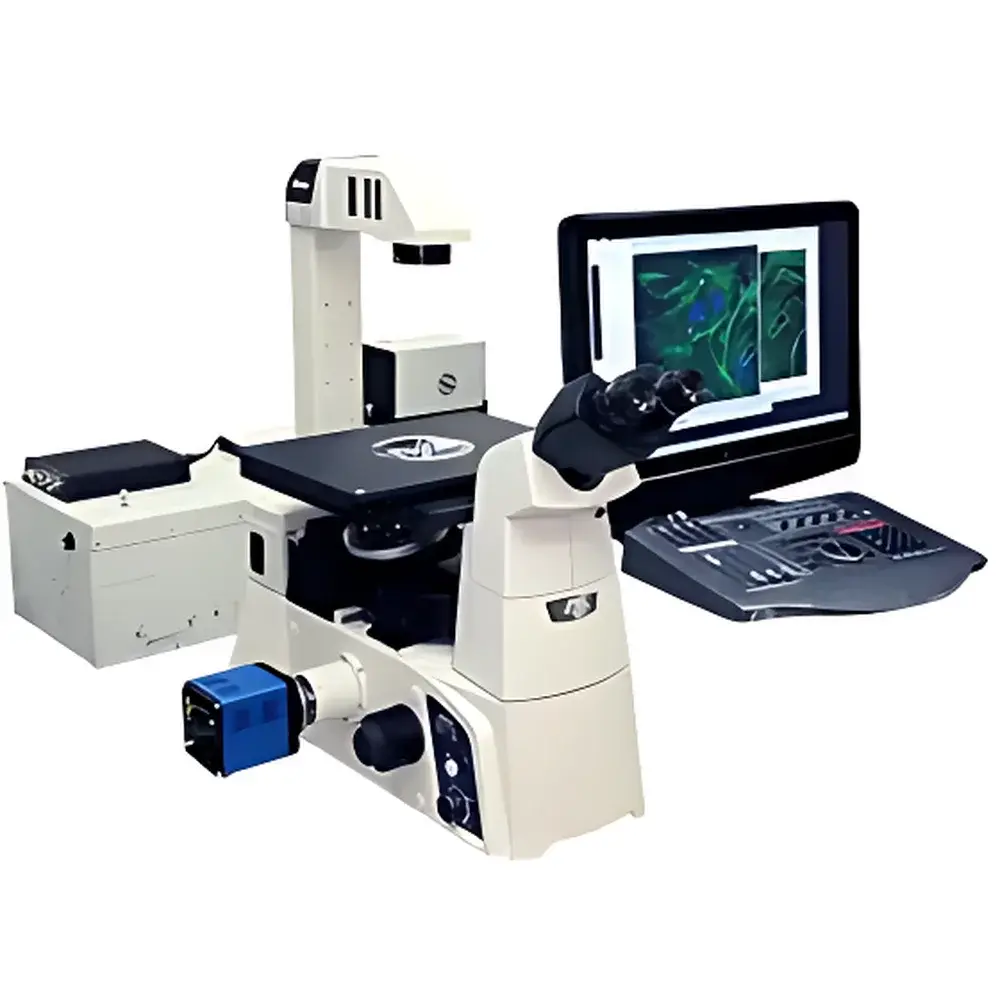
HORIBA EasyRatioPro Ultra-Fast Ratiometric Ion Fluorescence Imaging System
| Brand | HORIBA |
|---|---|
| Origin | USA |
| Distributor Type | Authorized Distributor |
| Import Status | Imported |
| Model | EasyRatioPro |
| Spectral Dispersion Element | Grating |
| Excitation Wavelength Control | Motorized Dual-Filter Wheel with Precision Filter Positioning |
| Maximum Wavelength Scanning Speed | 500 nm/s |
| Illumination Technology | DeltaRAM™ High-Speed Monochromatic Illumination System |
| Data Acquisition Engine | PAE (Precision Acquisition Engine) |
| Human Interface | WarpDrive™ Ergonomic Control Console |
| Primary Applications | Intracellular Ca²⁺, Na⁺, and pH Ratiometric Imaging |
Overview
The HORIBA EasyRatioPro Ultra-Fast Ratiometric Ion Fluorescence Imaging System is a purpose-engineered platform for quantitative, dynamic measurement of intracellular ion concentrations—including calcium (Ca²⁺), sodium (Na⁺), and proton activity (pH)—using dual-wavelength ratiometric fluorescence microscopy. Built upon the fundamental principle of excitation-ratio imaging, the system acquires synchronized, high-temporal-resolution images at two or more precisely defined excitation wavelengths (e.g., 340 nm / 380 nm for Fura-2-based Ca²⁺ assays), enabling robust correction for variations in dye concentration, cell thickness, photobleaching, and optical path heterogeneity. Unlike intensity-based single-wavelength systems, ratiometric quantification delivers intrinsic calibration stability and superior signal-to-noise performance in live-cell physiological experiments. The EasyRatioPro integrates monochromatic illumination, high-speed filter positioning, and hardware-synchronized camera triggering into a unified architecture optimized for sub-second kinetic resolution across spatially resolved cellular domains.
Key Features
- DeltaRAM™ Illumination Engine: A high-stability, computer-controlled monochromator delivering discrete, narrow-band excitation light (typical bandwidth <2 nm) with wavelength switching speeds up to 500 nm/s—enabling rapid spectral scanning without mechanical filter wheel latency.
- WarpDrive™ Ergonomic Control Console: A tactile, context-aware hardware interface with programmable function keys and real-time status feedback, reducing operator cognitive load during complex multi-parameter acquisition protocols.
- Precision Acquisition Engine (PAE): A dedicated FPGA-based timing controller that synchronizes illumination wavelength selection, exposure duration, camera readout, and stage movement at microsecond-level precision—ensuring temporal fidelity across multi-channel ratiometric datasets.
- Optimized Optical Path Design: Minimized chromatic aberration and field flatness across the full UV–visible range (320–700 nm); compatible with standard epifluorescence microscopes equipped with C-mount or OEM integration ports.
- Thermal & Mechanical Stability: Solid aluminum chassis with passive thermal management and vibration-damped optical mounts—designed to maintain alignment integrity during extended time-lapse sessions (>12 h).
Sample Compatibility & Compliance
The EasyRatioPro supports live adherent and suspension cells, primary neuronal cultures, tissue slices, and 3D organoids when mounted on inverted or upright research-grade microscopes. It is routinely deployed in GLP-compliant electrophysiology and pharmacological screening workflows. While the system itself does not carry FDA 510(k) clearance, its data output structure and audit-trail-capable software comply with ALCOA+ principles (Attributable, Legible, Contemporaneous, Original, Accurate, Complete, Consistent, Enduring, Available) as required under FDA 21 CFR Part 11 for regulated preclinical studies. Instrument validation documentation—including IQ/OQ templates and wavelength accuracy verification procedures—aligns with ISO/IEC 17025 and ASTM E2919 standards for analytical instrument qualification.
Software & Data Management
Acquisition and analysis are managed via HORIBA’s RatioWorks™ software suite (v6.2+), a Windows-based application supporting real-time ratio calculation (e.g., F340/F380), background subtraction, region-of-interest (ROI) kinetics export, and batch processing of multi-experiment datasets. All raw image stacks (16-bit TIFF), metadata (wavelength, exposure, gain, timestamp), and processing history are stored in a self-documenting HDF5 container format. Software features include built-in calibration curve fitting (e.g., Grynkiewicz equation for Ca²⁺), drift correction algorithms, and export to MATLAB, Python (via h5py), or Excel-compatible CSV for downstream statistical modeling. Audit trail logging records user actions, parameter changes, and software version identifiers—fully traceable for regulatory review.
Applications
- Real-time monitoring of Ca²⁺ oscillations in cardiomyocytes during β-adrenergic stimulation
- Quantitative Na⁺ flux kinetics in renal epithelial cells under osmotic stress
- pH-dependent conformational dynamics of pH-sensitive fluorescent proteins (e.g., pHluorin) in synaptic vesicles
- High-content screening of GPCR-mediated second-messenger responses in 96-well plate formats using automated stage control
- Multi-parametric ion imaging in co-cultures (e.g., neuron–astrocyte interactions) with simultaneous differential interference contrast (DIC) channel registration
FAQ
What dyes are compatible with the EasyRatioPro system?
Standard ratiometric indicators including Fura-2, BCECF, SBFI, and SNARF series are fully supported; custom dye excitation profiles can be loaded via the DeltaRAM™ wavelength library.
Can the system be integrated with confocal or spinning-disk platforms?
Yes—via TTL-triggered illumination gating and external synchronization I/O ports; full integration requires microscope OEM coordination and optional fiber-coupled illumination adapters.
Is wavelength accuracy traceable to NIST standards?
DeltaRAM™ monochromators are factory-calibrated using mercury-argon emission lines; users may perform periodic verification using certified reference filters (e.g., Thorlabs FLH1000 series).
Does the PAE support asynchronous acquisition modes?
No—the Precision Acquisition Engine enforces strict hardware synchronization to preserve temporal integrity in ratiometric calculations; asynchronous capture is disabled by design.
What maintenance is required for long-term operational stability?
Annual lamp replacement (Xenon arc source), biannual grating alignment verification, and quarterly cleaning of optical surfaces per HORIBA Maintenance Protocol MP-EZRP-03.
Related Products





