
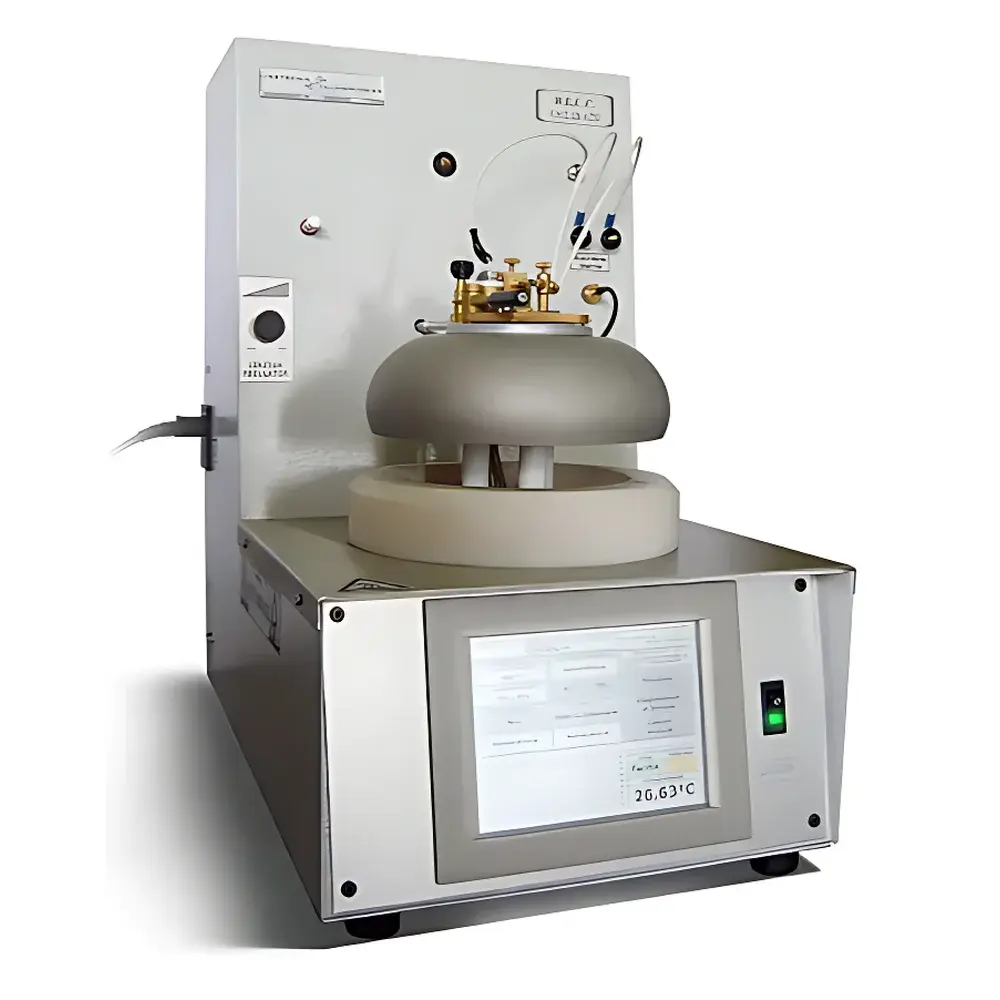
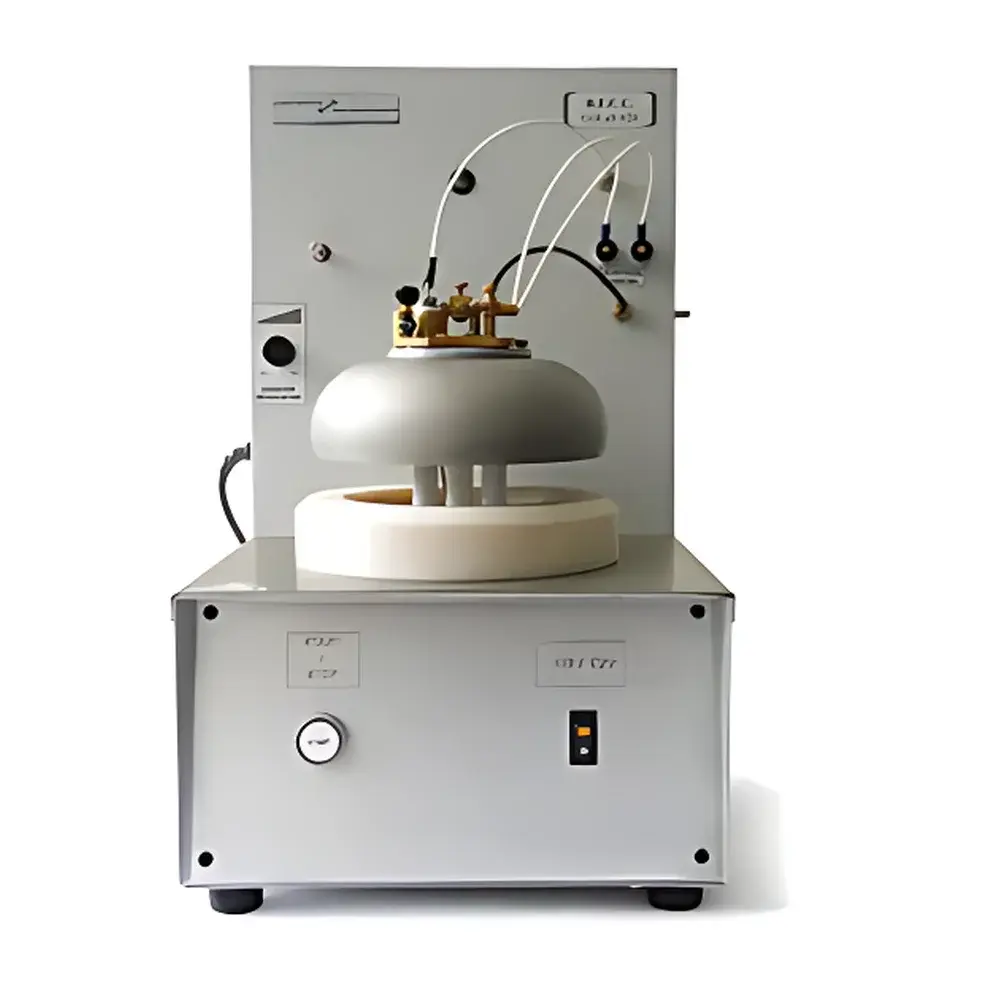
RECC OilLab 620 Automatic Rapid Small-Sample Closed-Cup Flash Point Analyzer
| Origin | Switzerland |
|---|---|
| Standard Compliance | ASTM D3828, IP 303, ISO 3679 |
| Model | OilLab 620 |
| Temperature Range | −50 °C to +350 °C |
| Temperature Resolution | 0.06 °C |
| Temperature Accuracy | ±0.1 °C |
| Sensor Type | PT100 Class A |
| Sample Volume | ~4 mL |
| Heating System | Electronic with Over-Temperature Protection |
| Cooling Method | Forced-air fan cooling |
| Dimensions (W×D×H) | 31 × 47 × 52 cm |
| Weight | 27 kg |
| Power Supply | 220 V ±15 %, 50/60 Hz |
| Ambient Limits | ≤35 °C, ≤80 % RH |
| Safety Certification | CE |
Overview
The RECC OilLab 620 is an automatic rapid small-sample closed-cup flash point analyzer engineered for precision, safety, and regulatory compliance in petroleum product testing laboratories. It implements the Rapid Equilibrium Closed-Cup (RECC) method—a thermodynamically robust variant of equilibrium-based flash point determination—as defined in ASTM D3828, IP 303, and ISO 3679. Unlike traditional Pensky-Martens or Tag methods requiring larger sample volumes and longer equilibration times, the OilLab 620 achieves flash point measurement using only ~4 mL of sample within a sealed aluminum test cup housed in a precisely controlled air-bath environment. The instrument maintains the sample at a user-specified or algorithmically estimated temperature, then initiates automated ignition via dual-point spark sources while continuously monitoring vapor-phase ionization response. Detection of transient conductive current—indicative of incipient flame propagation—is used to determine the flash point with high reproducibility across volatile and semi-volatile hydrocarbon matrices including gasoline, diesel, jet fuel, lubricating oils, and biodiesel blends.
Key Features
- RECC methodology compliant with ASTM D3828, IP 303, and ISO 3679—enabling rapid, low-volume flash point determination without compromising metrological integrity
- Integrated PT100 Class A temperature sensor with ±0.1 °C accuracy and 0.06 °C digital resolution across −50 °C to +350 °C range
- Dual independent spark ignition system with mechanically actuated ignition gate synchronized to standard timing protocols
- Aluminum test cup with high-temperature fluorosilicone O-ring seal, designed for thermal stability and chemical resistance to aggressive hydrocarbons
- Electronic heating module with real-time thermal feedback control and redundant over-temperature cutoff circuitry
- Forced-air cooling system enabling rapid cooldown between sequential tests—reducing cycle time without external chillers
- Self-contained operation with built-in industrial-grade LCD display and embedded computing platform; no external PC required for routine operation
- CE-marked design meeting IEC 61010-1 safety requirements for laboratory electrical equipment
Sample Compatibility & Compliance
The OilLab 620 is validated for use with petroleum distillates, refinery intermediates, formulated fuels, and base oils exhibiting flash points from cryogenic volatility (e.g., light naphthas) up to high-boiling lubricants. Its minimal sample requirement (~4 mL) reduces hazardous waste generation and improves analyst safety during handling of highly volatile or toxic materials. The RECC method eliminates open-flame exposure risks associated with manual Cleveland or Pensky-Martens testers. Instrument design supports GLP-compliant workflows: all temperature setpoints, ignition events, detection timestamps, and final flash point results are internally logged with immutable audit trail metadata. Data export formats include CSV and PDF reports compatible with LIMS integration. While not inherently 21 CFR Part 11–compliant out-of-the-box, optional firmware upgrades support electronic signature capture, user access controls, and audit log encryption for regulated QA/QC environments.
Software & Data Management
The embedded software interface provides intuitive navigation through test setup, calibration verification, method selection (including custom temperature ramp profiles), and result review. Each test record includes raw ionization signal trace, temperature vs. time curve, ignition event markers, and pass/fail status against predefined acceptance criteria. Data storage capacity accommodates ≥10,000 test records with timestamp, operator ID (via login), and environmental condition logging (ambient temperature/humidity). USB export enables transfer to external databases or statistical process control platforms. Optional LabLink™ connectivity module allows remote monitoring, scheduled diagnostics, and centralized fleet management for multi-instrument installations.
Applications
- Quality assurance of gasoline, kerosene, diesel, and marine fuels per refinery specifications and transportation safety regulations
- Flash point verification of used engine oils and hydraulic fluids during condition monitoring programs
- R&D screening of novel biofuel formulations and additive packages under controlled thermal conditions
- Regulatory submission testing for UN GHS classification (Class 3 Flammable Liquids) and transport documentation (IMDG Code, ADR/RID)
- Forensic analysis of fire debris where sample quantity is severely limited
- Compliance testing for ASTM D93 (Pensky-Martens) cross-validation studies where rapid throughput is critical
FAQ
What standards does the OilLab 620 comply with?
ASTM D3828, IP 303, and ISO 3679—covering rapid equilibrium closed-cup flash point determination.
How much sample volume is required per test?
Approximately 4 mL of liquid sample is sufficient for reliable measurement.
Is external cooling water required?
No—the system uses an integrated forced-air cooling fan; no chiller or tap-water connection is needed.
Can the instrument be integrated into a laboratory information management system (LIMS)?
Yes, via USB data export (CSV/PDF) or optional LabLink™ Ethernet interface with configurable API endpoints.
What maintenance is required for long-term operational reliability?
Routine cleaning of the test cup and ignition electrodes; annual verification of PT100 sensor calibration using NIST-traceable reference standards.





