
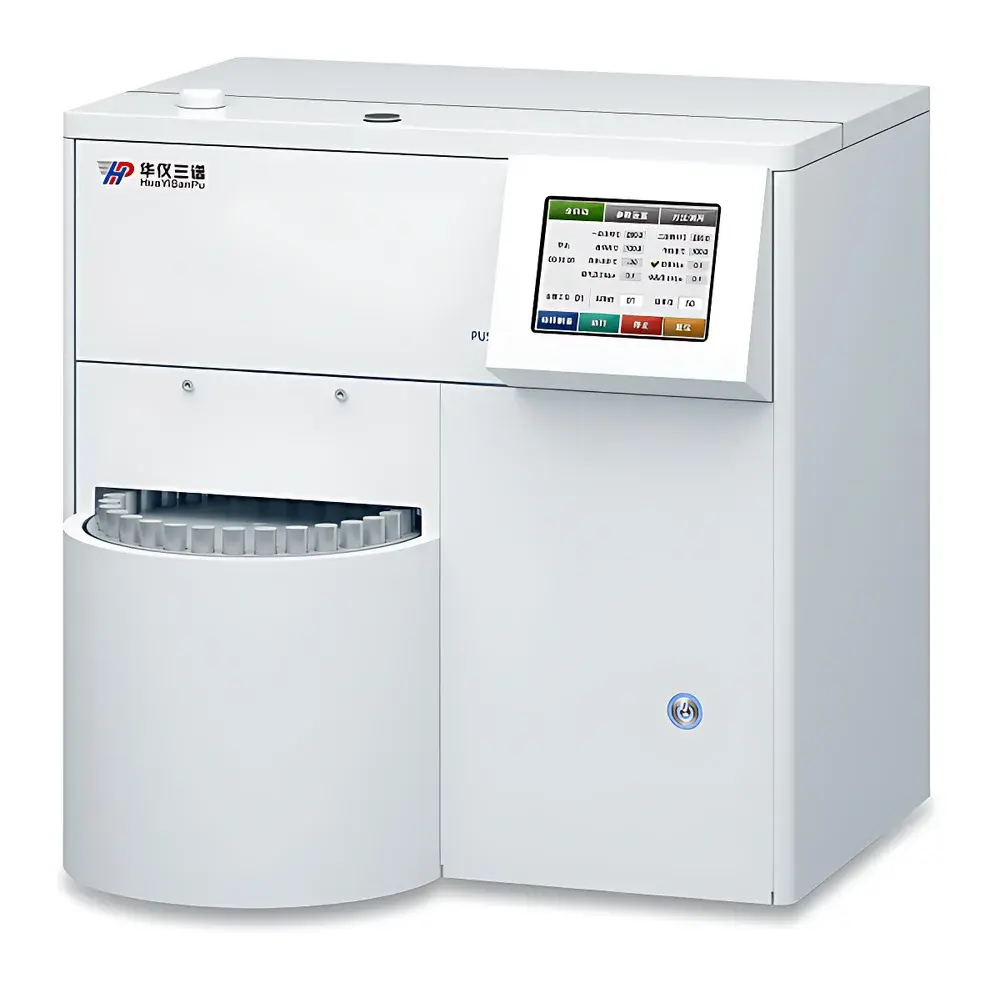
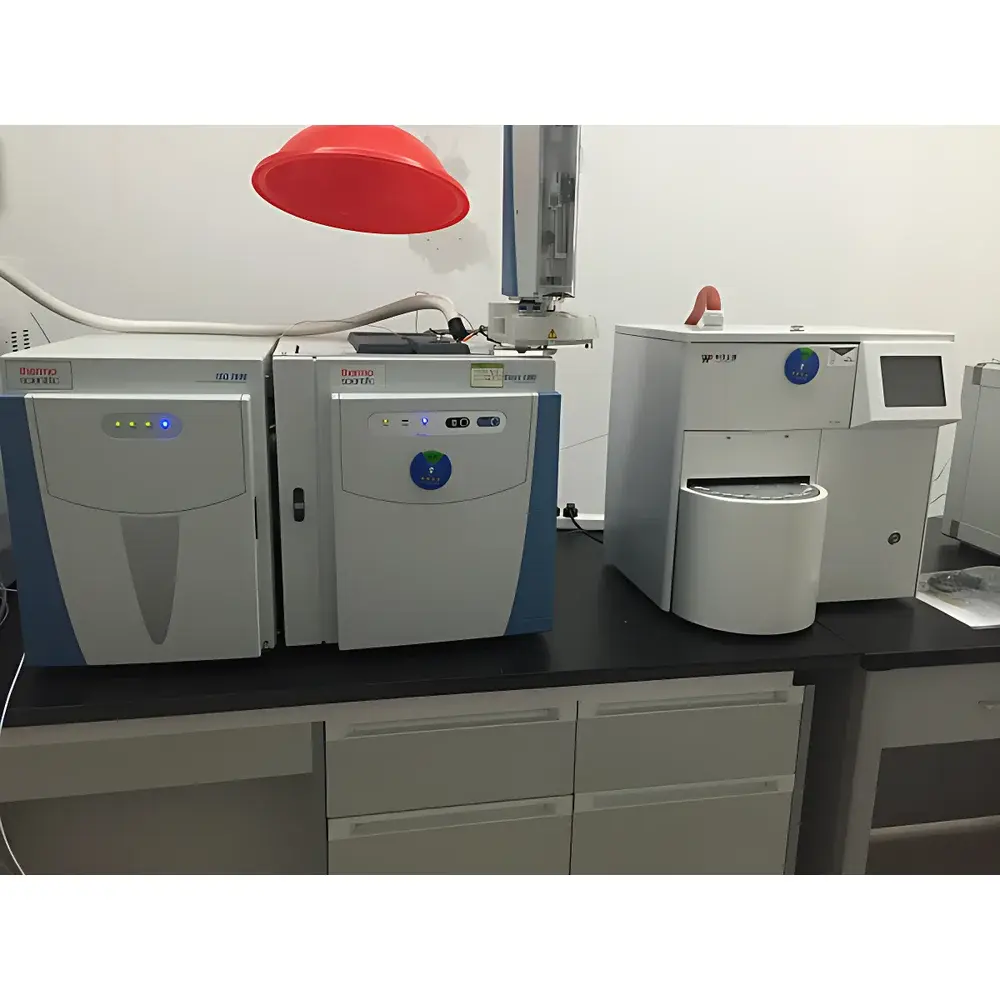
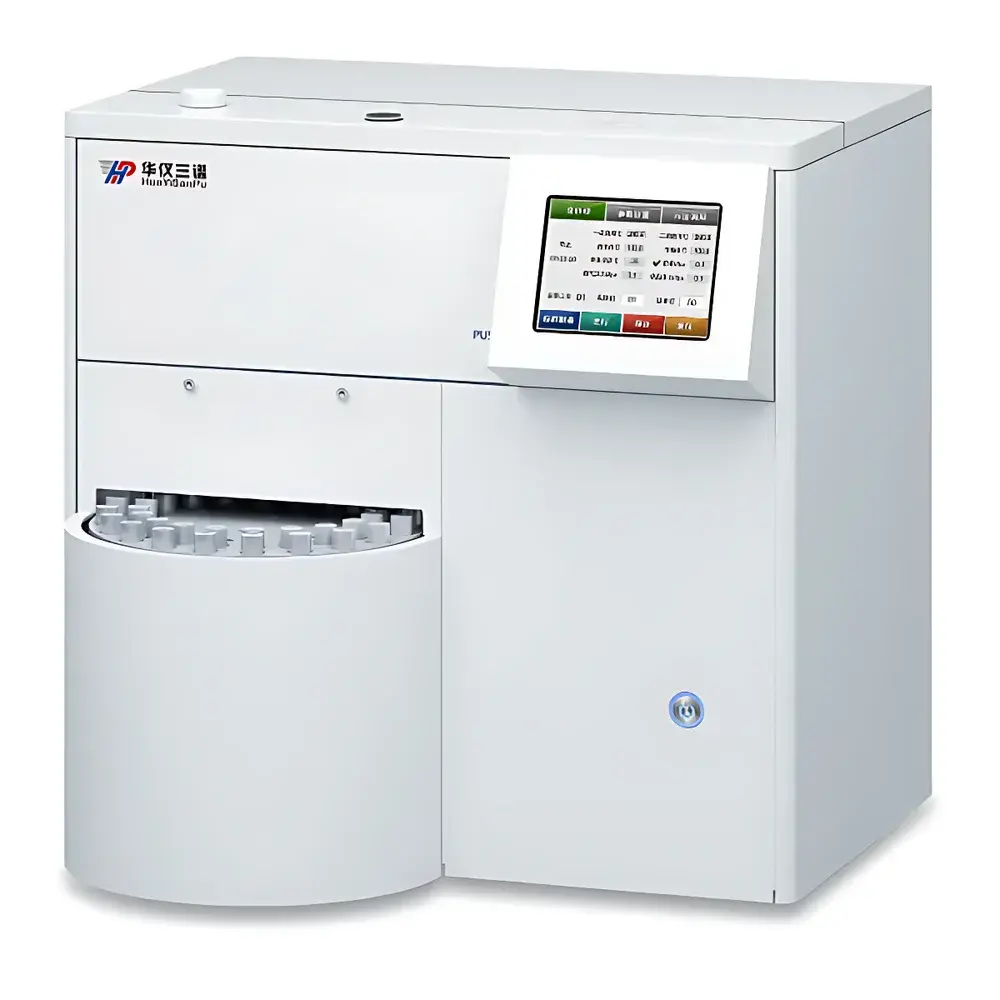
Huayisanpu ATDS-3440S Fully Automated Two-Stage Thermal Desorber
| Brand | Beijing Huayisanpu |
|---|---|
| Origin | Beijing, China |
| Model | ATDS-3440S |
| Automation Level | Fully Automated |
| Primary Desorption Temp Range | Ambient to 380°C, ±0.5°C accuracy, 1°C increment |
| Secondary Desorption Temp Range | Ambient to 380°C, ±0.5°C accuracy, 1°C increment, >3000°C/min ramp rate |
| Cold Trap Temp Range | Ambient to –40°C (ambient-dependent), ±1°C accuracy, 1°C increment |
| Valve & Transfer Line Temp Range | Ambient to 260°C, ±1°C accuracy, 1°C increment |
| Sample Capacity | 30 tubes |
| Desorption Recovery | >98% (toluene, 0.1 µL, 10:1 split) |
| Peak Width (FWHM) | <3 s |
| RSD | <2.5% (GC-dependent) |
| Power Consumption | <1000 VA |
| Dimensions (H×W×D) | 470 × 490 × 450 mm |
| Weight | ~40 kg |
Overview
The Huayisanpu ATDS-3440S is a fully automated two-stage thermal desorption system engineered for high-fidelity volatile organic compound (VOC) and semi-volatile organic compound (SVOC) analysis in conjunction with gas chromatography (GC) or GC–mass spectrometry (GC–MS). It operates on the principle of sequential thermal desorption: first, analytes are thermally released from sorbent tubes under controlled inert gas flow (primary desorption); second, the evolved vapors are cryogenically focused in a cooled trap (cold trap), then rapidly heated and injected as a narrow, concentrated band into the GC inlet (secondary desorption). This dual-stage process significantly enhances sensitivity, chromatographic resolution, and quantitative reproducibility—particularly for trace-level environmental, occupational hygiene, indoor air quality, and forensic samples where low detection limits and minimal carryover are critical.
Key Features
- Fully automated batch processing of up to 30 sorbent tubes per run, minimizing manual intervention and operator variability.
- Independent, precise temperature control across five critical zones: primary desorption furnace (ambient to 380°C, ±0.5°C), secondary desorption oven (ambient to 380°C, ±0.5°C, >3000°C/min heating rate), cold trap (ambient to –40°C, ±1°C), six-port valve (ambient to 260°C, ±1°C), and transfer lines (ambient to 260°C, ±1°C).
- Programmable sample handling protocols—including tube conditioning (baking), back-flush desorption, and timed valve actuation—with up to 15 external event triggers and timing resolution down to 0.1 minute (±0.1% accuracy).
- Gas flow control for primary desorption (0–100 mL/min, continuously adjustable with digital indication) and robust pneumatic actuation (0.4 MPa).
- Modular tube compatibility: accepts stainless steel, quartz glass, and fused-silica capillary traps; supports customizable sorbent configurations (e.g., Tenax TA, Carbopack B/C, Carboxen) for broad analyte coverage.
- Fast, synchronized GC triggering: desorption start signal output with <2 s latency, ensuring seamless integration with modern GC systems requiring TTL or contact-closure initiation.
Sample Compatibility & Compliance
The ATDS-3440S accommodates standard 6 mm OD stainless steel or quartz sorbent tubes (e.g., ASTM D6196, ISO 16017-1 compliant formats) and supports method development for EPA TO-17, EN 16705, and ISO 16000-6 applications. Its programmable thermal profiles and inert gas management meet requirements for GLP-compliant laboratories performing validated VOC monitoring. While the instrument itself does not embed 21 CFR Part 11 audit trail functionality, its deterministic timing, repeatable temperature ramps, and hardware-triggered GC synchronization support traceable data generation when operated within a validated laboratory information management system (LIMS) or electronic lab notebook (ELN) framework.
Software & Data Management
Operation is managed via an embedded industrial-grade controller with intuitive touchscreen interface, supporting method storage, sequence definition, real-time status monitoring, and event logging. All temperature setpoints, flow rates, timing parameters, and valve states are digitally recorded per run. Exportable log files (CSV/ASCII) contain timestamps, actual vs. target temperatures, pressure readings, and trigger events—enabling retrospective review and alignment with GC data acquisition software. No proprietary vendor software installation is required on the host GC computer; communication relies solely on hardwired TTL or dry-contact signals for maximum interoperability.
Applications
- Environmental monitoring: ambient air, stack emissions, soil headspace, and water purge-and-trap extracts per EPA Method TO-17.
- Indoor air quality (IAQ) assessment: formaldehyde, benzene, toluene, xylenes (BTX), and C2–C12 aliphatics in residential, commercial, and school environments (ISO 16000-6, EN 16705).
- Occupational health & safety: workplace exposure assessment for solvents, monomers, and process intermediates (NIOSH 1501, OSHA 1005).
- Materials emission testing: VOC screening of carpets, adhesives, paints, and automotive interior components (VDA 278, SAE J1756).
- Forensic and failure analysis: identification of residual solvents in pharmaceutical packaging, counterfeit product characterization, and polymer degradation products.
FAQ
What sorbent tube formats are supported?
Standard 6 mm OD stainless steel or quartz tubes (110–135 mm length); compatible with multi-bed configurations (e.g., Tenax TA + Carbopack B + Carboxen 1000) for extended volatility range.
Can the cold trap temperature reach –40°C under all ambient conditions?
Achievable cold trap temperature depends on laboratory ambient conditions; performance is optimized at ≤25°C room temperature and ≤60% RH. At higher ambient temperatures, minimum achievable temperature may be elevated.
Is the system compatible with split/splitless GC inlets?
Yes—designed for direct coupling to both split (e.g., 10:1 split ratio demonstrated with toluene) and splitless inlets; rapid secondary desorption ensures sharp, symmetrical peaks without band broadening.
How is carryover mitigated between samples?
Carryover control is achieved through programmable tube baking (up to 380°C), inert gas purging of all transfer paths, and cold trap bake-out cycles—validated by repeated blank runs showing <0.5% relative response versus calibration standards.
Does the ATDS-3440S support remote operation or network connectivity?
The unit operates as a standalone peripheral with no Ethernet/Wi-Fi interface; however, its TTL/contact-closure I/O enables integration into centralized automation platforms via PLC or custom SCADA systems.




