
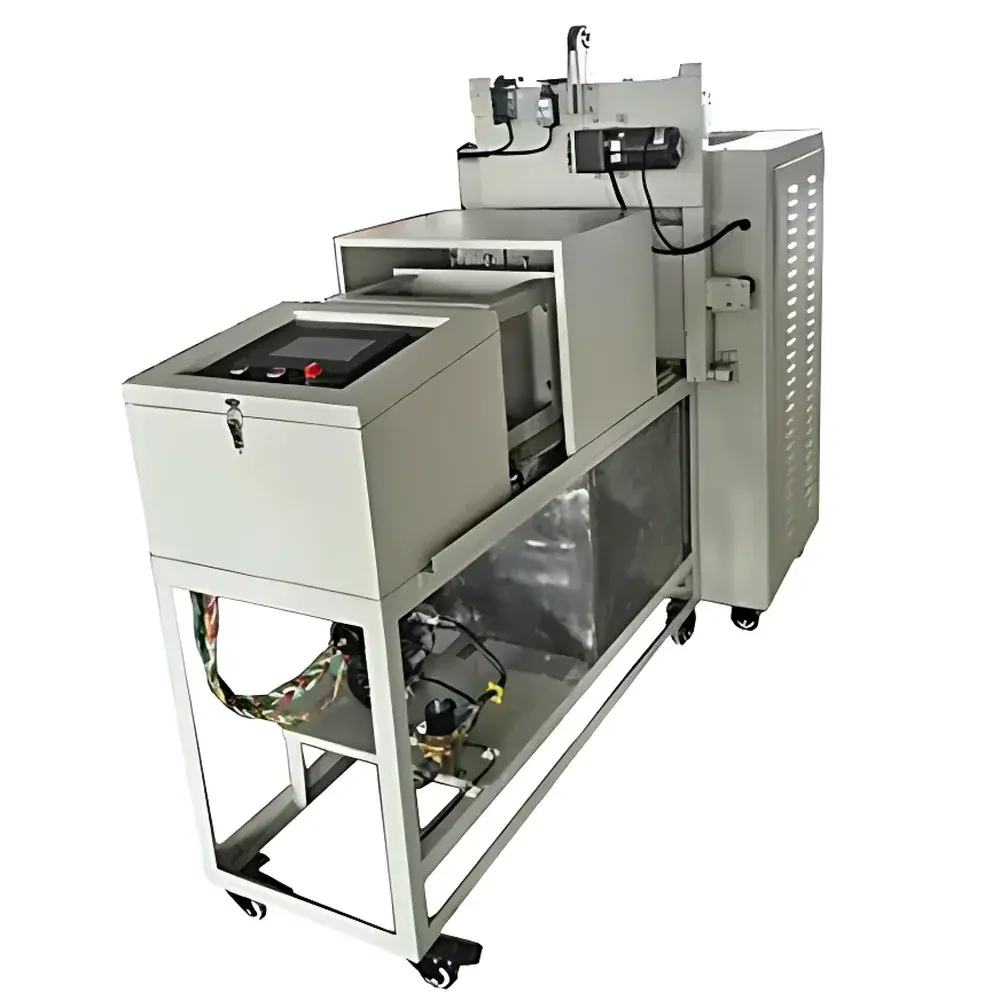
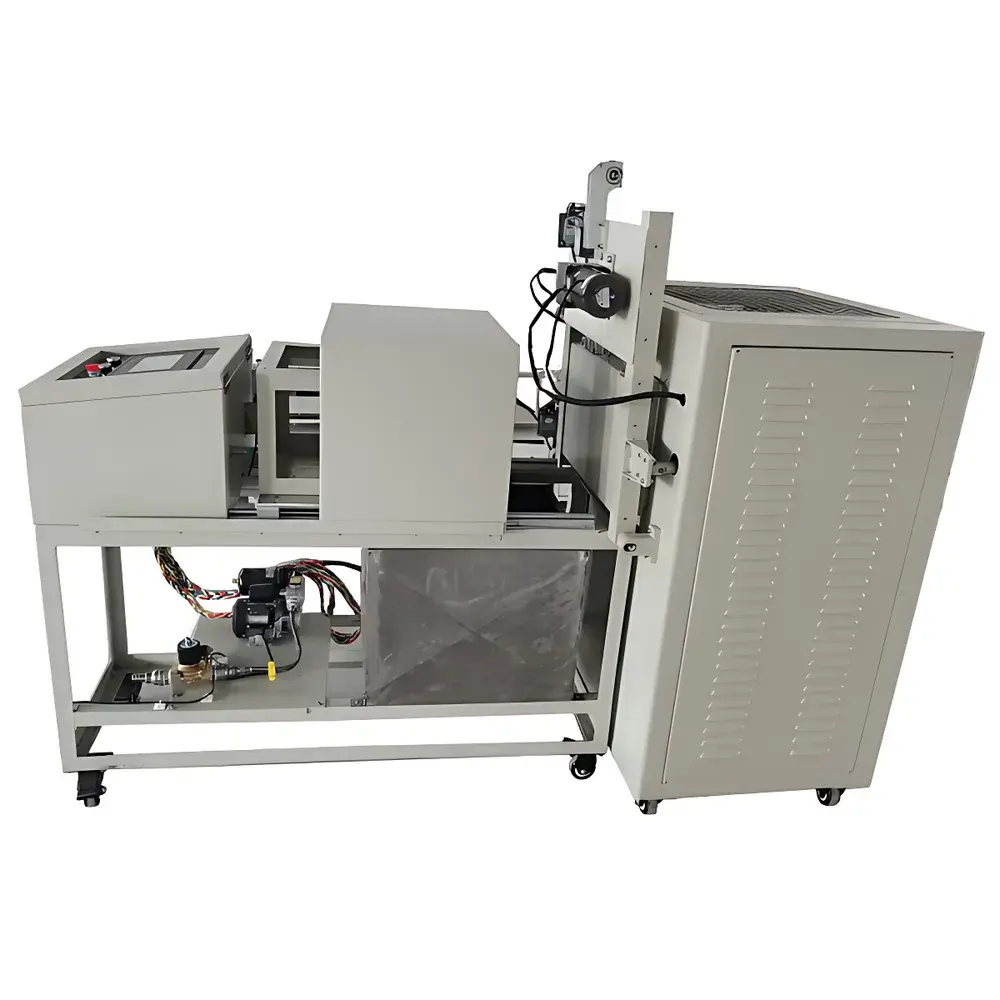
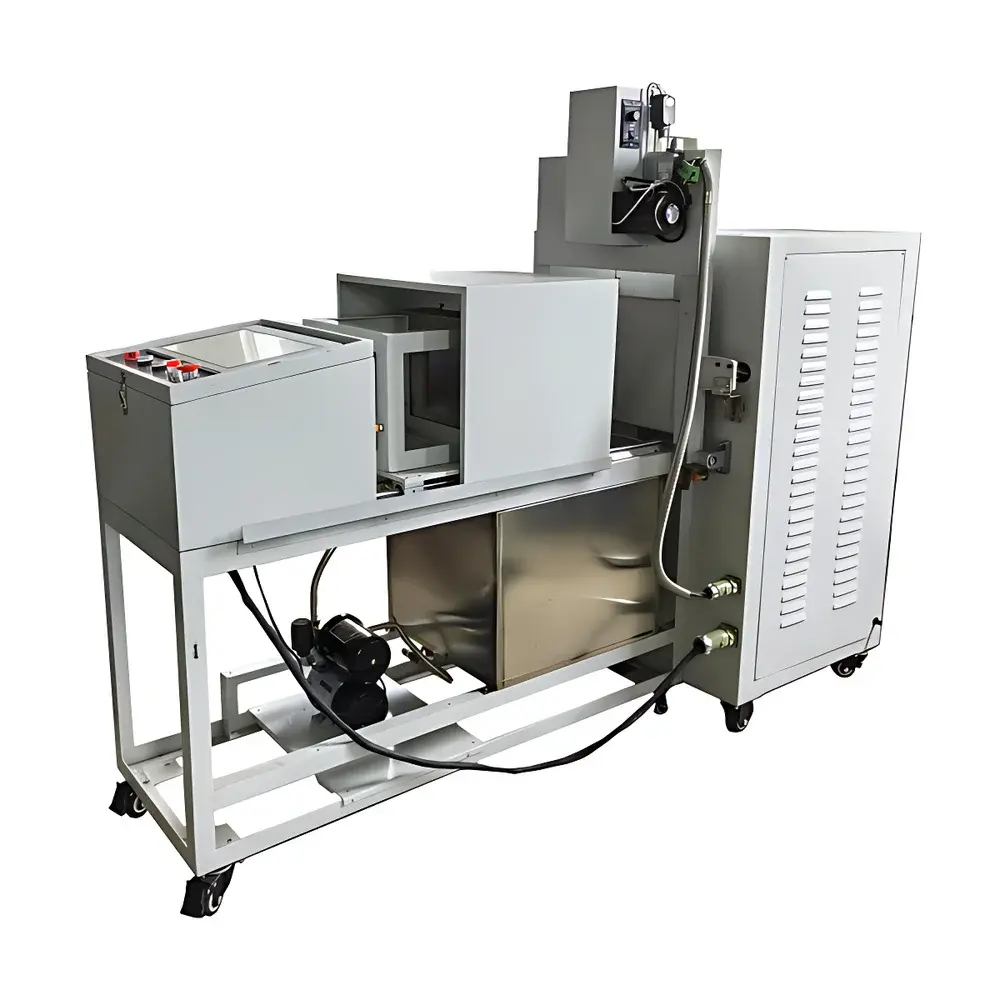
ZHENHUAFENXI RZL-II-16 Fully Automated Thermal Shock Resistance Tester for Refractories
| Brand | ZHENHUAFENXI |
|---|---|
| Origin | Hunan, China |
| Model | RZL-II-16 |
| High-Temperature Range | 1600 °C |
| Low-Temperature Range | 10–50 °C |
| Thermal Shock ΔT Range | 1000 °C |
| Temperature Stability | ±2 °C |
| Heating Rate | 15 °C/min |
| Cooling Rate | 50 °C/min |
Overview
The ZHENHUAFENXI RZL-II-16 Fully Automated Thermal Shock Resistance Tester is a purpose-built instrument engineered for precise, repeatable evaluation of thermal shock resistance in refractory ceramics, high-purity oxides, graphite, silicate-based composites, and other inorganic non-metallic materials. It operates on the principle of controlled rapid thermal cycling—alternating between extreme high-temperature exposure (up to 1600 °C) and rapid quenching via either pressurized air jet (0.1 MPa, Ø8 mm nozzle) or regulated water immersion (10–50 °C, ±2 °C uniformity)—to simulate real-world thermal stress conditions encountered in kiln linings, metallurgical ladles, aerospace thermal barriers, and glass annealing furnaces. The system complies with YB/T 376.1–2016 and YB/T 2206.1–1998—the primary Chinese national standards governing thermal shock testing of refractories—and supports method validation under ISO 5069-2 (Refractories — Determination of resistance to thermal shock) and ASTM C1100 (Standard Test Method for Thermal Shock Resistance of Refractory Materials). Its robust architecture integrates a high-stability silicon carbide heating chamber (300 × 200 × 220 mm usable volume), dual-mode quenching subsystems, and closed-loop temperature control with Pt100 sensors (0.1 °C resolution) to ensure measurement fidelity across repeated cycles.
Key Features
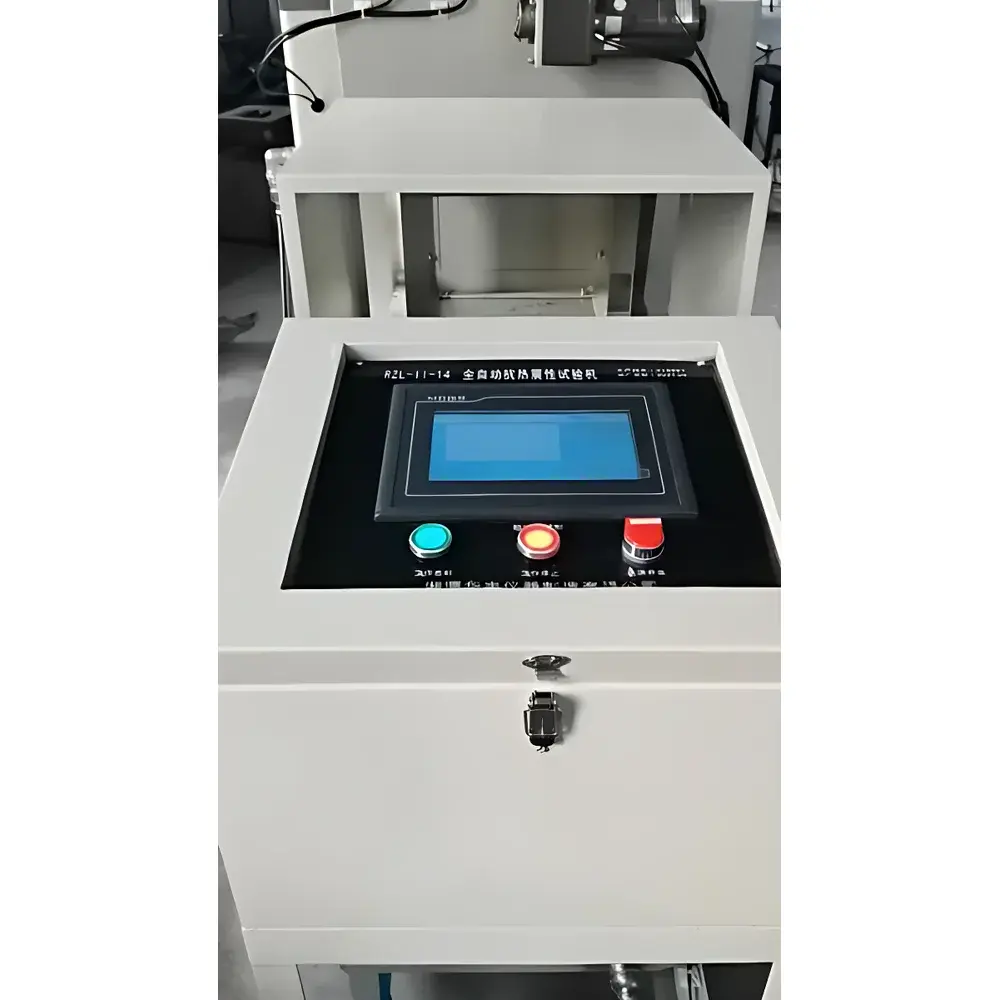
- Fully automated operation via Siemens S7-1200 PLC with 12-inch industrial touchscreen HMI; supports both automatic sequence execution and manual intervention modes
- Dual quenching options: programmable water-bath immersion (temperature-controlled 10–50 °C, ±2 °C uniformity, 6 kW heating / 3 kW refrigeration) or compressed-air jet cooling (0.1 MPa, Ø8 × 5 mm nozzle)
- High-precision thermal control: ±2 °C stability across the 1600 °C operating range; ≤5 min cold-sample recovery time to setpoint after insertion
- Rotatable horizontal sample holder enabling unobstructed visual inspection of fracture propagation on specimen end faces during and after cycling
- Configurable test parameters: cycle count (0–100), dwell time per temperature stage (0–120 min), quench delay, and ramp profiles
- Comprehensive safety architecture: over-temperature cutoff, thermocouple break detection, emergency stop circuit, and grounded 3-phase 380 V/50 Hz power interface (15 kW total load)
Sample Compatibility & Compliance
The RZL-II-16 accommodates standard refractory specimens (e.g., 230 × 114 × 65 mm fire bricks, up to three simultaneously) as well as custom-sized ceramic, graphite, and composite coupons. Its uniform temperature zone maintains ≤±2 °C deviation across any two points within the hot zone—critical for meeting ISO/IEC 17025 calibration traceability requirements. The instrument satisfies material qualification protocols referenced in GB/T 2997 (Bulk density and apparent porosity of refractories), GB/T 5988 (Heating permanent linear change), and aligns with GLP-compliant data integrity expectations through timestamped parameter logging and audit-ready event records. While not FDA-certified, its deterministic control logic and hardware redundancy support validation under GMP Annex 15 and USP Analytical Instrument Qualification frameworks when deployed in regulated manufacturing environments.
Software & Data Management
The embedded Windows-based SCADA interface delivers real-time graphical monitoring of furnace temperature, quench medium temperature, cycle progress, and fault status. All operational parameters—including setpoints, actual readings, timestamps, and alarm events—are logged in CSV-compatible format with millisecond-level resolution. The system supports user-defined report templates compliant with internal QA documentation standards and enables export of raw datasets for post-test statistical analysis (e.g., Weibull modulus estimation of fracture onset). Audit trail functionality records operator logins, parameter modifications, and mode transitions—providing essential traceability for ISO 9001:2015 and IATF 16949 quality management system audits.
Applications
- Quality assurance of alumina, magnesia, zirconia, and silicon carbide refractories used in steelmaking converters and continuous casting tundishes
- R&D evaluation of novel ceramic matrix composites (CMCs) for turbine shroud applications requiring >1000 °C cyclic stability
- Thermal durability screening of sintered silicon nitride substrates for semiconductor processing fixtures
- Validation of graphite electrode performance under simulated electric arc furnace (EAF) thermal transients
- Comparative assessment of glaze adhesion and microcracking resistance in architectural and technical ceramics
FAQ
What standards does this tester explicitly support?
It is designed and validated against YB/T 376.1–2016 and YB/T 2206.1–1998, with functional alignment to ISO 5069-2 and ASTM C1100 for thermal shock methodology.
Can the system operate without water cooling?
Yes—the air-quench configuration operates independently using a dedicated compressor; no water circulation or chiller is required in that mode.
Is remote monitoring or integration with LIMS possible?
The unit provides Modbus TCP and OPC UA server interfaces (optional firmware upgrade), enabling integration with laboratory information management systems and centralized SCADA networks.
What maintenance intervals are recommended for the heating elements and cooling components?
SiC heating elements require biannual visual inspection; water-bath refrigerant charge and compressor oil should be verified annually per manufacturer service guidelines.
Does the software support multi-language UI or only Chinese?
The base configuration features a Chinese GUI; English-language firmware and documentation packages are available upon request for international deployment.
Related Products



