
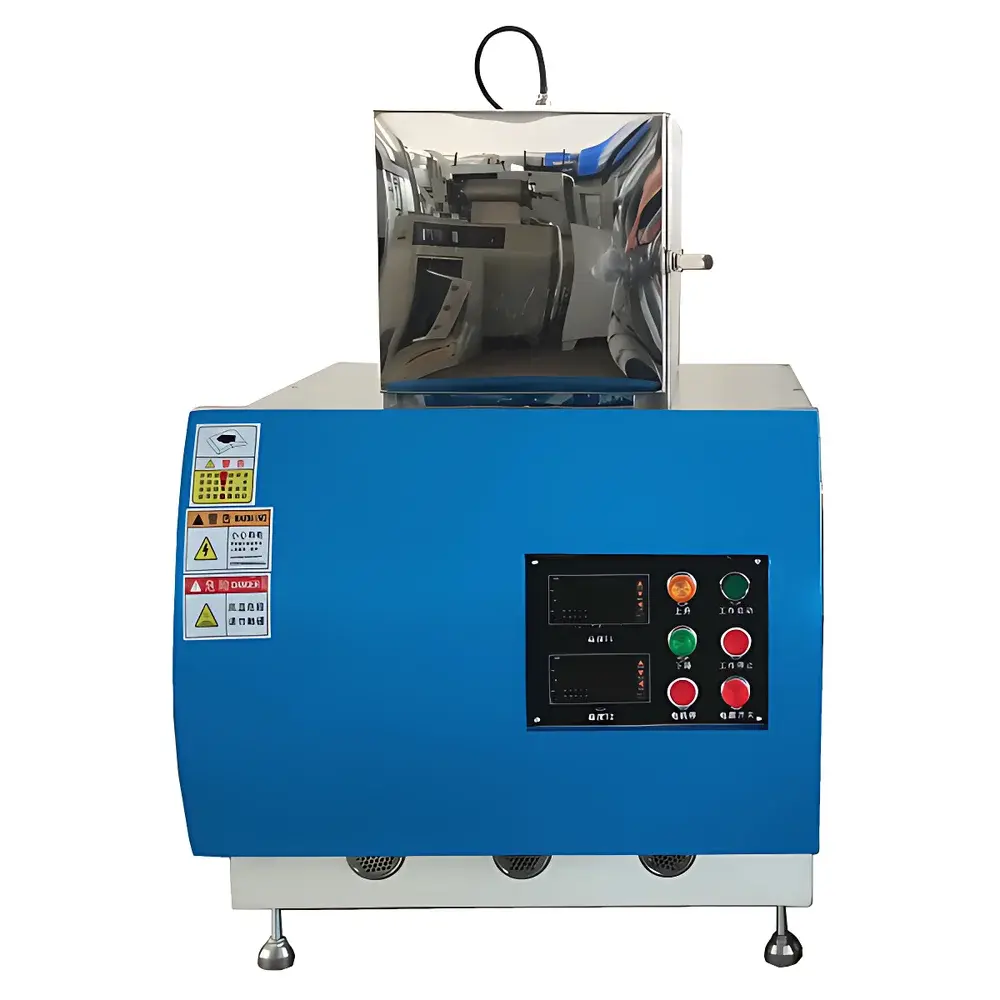
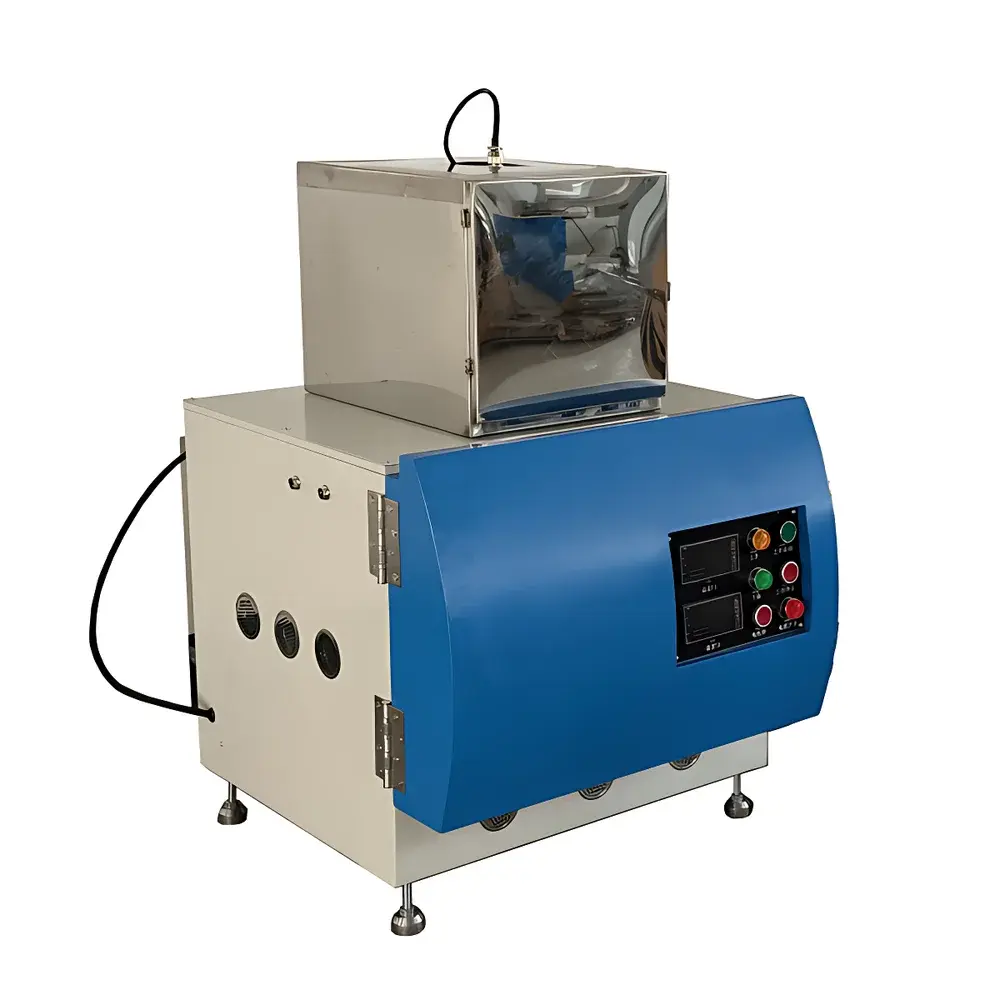
ZHENHUAFENXI DRX-II-JG Laser Flash Thermal Diffusivity Analyzer
| Brand | ZHENHUAFENXI |
|---|---|
| Model | DRX-II-JG |
| Measurement Principle | Laser Flash Method (LFA) |
| Temperature Range | RT to 1000 °C |
| Thermal Diffusivity Range | 0.01–1000 mm²/s |
| Thermal Conductivity Range | 0.1–1000 W/(m·K) |
| Accuracy | ±3% |
| Repeatability | ±2% (thermal diffusivity), ±3% (specific heat) |
| Sample Forms | Solid, Powder, Liquid, Film, Composite, Ceramic, Metal, Graphite, Polymer |
| Atmosphere Options | Ambient air, inert gas, oxidizing/reducing gas, vacuum (down to 10⁻³ Pa) |
| Sample Dimensions | Ø12–20 mm or ≥10×10 mm, thickness 0.1–10 mm (recommended 3 mm) |
| Detection | Infrared detector (non-contact) |
| Data Acquisition Rate | 2 MHz |
| Software Platform | Windows 10 (64-bit), GLP-compliant reporting, ASTM E2585 / ISO 22007-4 / GB/T 22588 / GJB 1201.1-91 compliant |
Overview
The ZHENHUAFENXI DRX-II-JG Laser Flash Thermal Diffusivity Analyzer is a precision instrument engineered for the rapid, non-contact determination of thermal diffusivity (α), specific heat capacity (Cp), and derived thermal conductivity (λ) of solid, powdered, and low-to-medium viscosity liquid materials. Based on the standardized laser flash method (LFA), the system delivers a controlled energy pulse from a high-repetition-rate pulsed xenon lamp onto the front surface of a uniformly prepared sample. An infrared detector—calibrated for high-speed transient response—monitors the time-resolved temperature rise on the rear surface. From the resulting temperature-time curve, thermal diffusivity is calculated using established analytical models (e.g., Cowan, Cape–Lehman, or numerical inverse solutions), incorporating rigorous corrections for finite pulse width, heat losses (radial conduction, radiation, convection), and sample geometry effects. When combined with independently measured density (ρ) and specific heat (Cp), thermal conductivity is computed via the fundamental relation λ = ρ·Cp·α. This principle underpins its use in R&D labs, QC/QA departments, and national metrology institutes where traceable, high-reproducibility thermal property data are required across aerospace composites, nuclear ceramics, battery electrode materials, and advanced packaging substrates.
Key Features
- Multi-range temperature capability: Standard operation from ambient (RT) to 100 °C; optional high-temperature furnace modules extend range to 1000 °C with precise PID control and axial thermal uniformity ≤±2 °C over the sample zone.
- Dual-atmosphere flexibility: Configurable for ambient air, inert (N₂, Ar), oxidizing (air/O₂), reducing (H₂/N₂), or dynamic/static vacuum environments—vacuum level down to 10⁻³ Pa supports measurements of low-conductivity insulators without convective interference.
- High-fidelity signal acquisition: 2 MHz sampling rate enables sub-millisecond resolution of thermal wave propagation, critical for thin films (<1 mm) and high-diffusivity metals (e.g., Cu, Al).
- Automated 3-position sample changer: Motorized carousel allows sequential testing of up to three samples per run without manual intervention—ideal for batch qualification and comparative studies.
- Comprehensive thermal modeling suite: Built-in algorithms include pulse-energy integration, radial heat-loss correction, and multi-layer contact resistance analysis—supporting interfacial thermal resistance (Rc) extraction for bonded structures and coated systems.
- Modular hardware architecture: Integrated electronics, optical path alignment verification tools, and field-serviceable IR detector ensure long-term stability and minimal downtime.
Sample Compatibility & Compliance
The DRX-II-JG accommodates diverse physical forms—including dense solids (metals, ceramics, graphite), porous media (foams, sintered powders), anisotropic laminates, elastomers, and suspensions—within dimensional constraints of Ø12–20 mm (or ≥10×10 mm square) and 0.1–10 mm thickness. Powdered samples require optional cold-pressing fixtures or binder-free pelletization to ensure thermal contact integrity. All measurement protocols align with internationally recognized standards: ASTM E2585 (Standard Test Method for Thermal Diffusivity of Solids by the Flash Method), ISO 22007-4 (Plastics—Determination of Thermal Conductivity and Thermal Diffusivity—Part 4: Laser Flash Method), GB/T 22588 (Flash Method for Thermal Diffusivity and Thermal Conductivity), and GJB 1201.1-91 (Military Standard for High-Temperature Thermal Diffusivity Testing of Solid Materials). Instrument firmware and software support audit trails, electronic signatures, and report generation compliant with GLP and FDA 21 CFR Part 11 requirements when configured with user access controls and secure data logging.
Software & Data Management
The proprietary Windows 10 (64-bit) analysis platform provides full automation—from temperature ramping and laser triggering to real-time curve fitting and statistical reporting. It features intuitive workflow navigation, customizable test templates, and embedded reference databases for common calibration standards (e.g., NIST SRM 710a graphite, sapphire, stainless steel). Raw thermogram data are stored in HDF5 format for long-term archival and third-party interoperability. Export options include CSV, PDF (with embedded metadata), and XML for LIMS integration. The software implements multiple fitting models (Cowan, modified Cape–Lehman, iterative deconvolution), automatic baseline correction, and uncertainty quantification per ISO/IEC Guide 98-3 (GUM). All operations—including parameter changes, result acceptance, and report generation—are timestamped and logged with operator ID, satisfying traceability mandates in regulated environments.
Applications
- Characterization of high-thermal-conductivity materials: diamond heat spreaders, SiC power modules, copper-clad laminates, and graphene-enhanced composites.
- Thermal management validation: TIMs (thermal interface materials), phase-change materials (PCMs), and encapsulation resins used in EV battery packs and 5G RF modules.
- Quality control of refractory ceramics and nuclear fuel pellets under elevated temperatures (up to 1000 °C).
- Research into phonon transport mechanisms in nanostructured thin films and multilayer heterostructures.
- Validation of computational thermophysical models (e.g., molecular dynamics, finite element simulations) against experimental α and λ datasets.
- Regulatory submissions requiring ASTM- or ISO-aligned thermal property data for medical device packaging, aerospace composites, and defense-grade electronic housings.
FAQ
What standards does the DRX-II-JG comply with for thermal diffusivity measurement?
ASTM E2585, ISO 22007-4, GB/T 22588, and GJB 1201.1-91—covering both room-temperature and high-temperature flash method protocols.
Can the system measure liquids and powders?
Yes—low-viscosity liquids and dry powders can be tested using specialized sample holders; powders require densification (e.g., cold pressing) to minimize interparticle voids and ensure reliable thermal coupling.
Is vacuum capability included as standard?
No—vacuum operation (down to 10⁻³ Pa) is available as an optional configuration; base system operates in ambient air.
How is specific heat determined?
Cp is derived indirectly via comparative analysis using certified reference materials of known heat capacity, enabling calculation of absolute Cp values with ±3% repeatability for most solids.
Does the software support automated compliance reporting for regulated industries?
Yes—when deployed with role-based user accounts and enabled audit trail settings, the software meets GLP and 21 CFR Part 11 requirements for electronic records and signatures.
What is the minimum recommended sample thickness?
3 mm is optimal for minimizing edge effects and maximizing signal-to-noise ratio; however, the system supports valid measurements from 0.1 mm (films) to 10 mm (bulk ceramics) with appropriate model selection and correction factors.



