
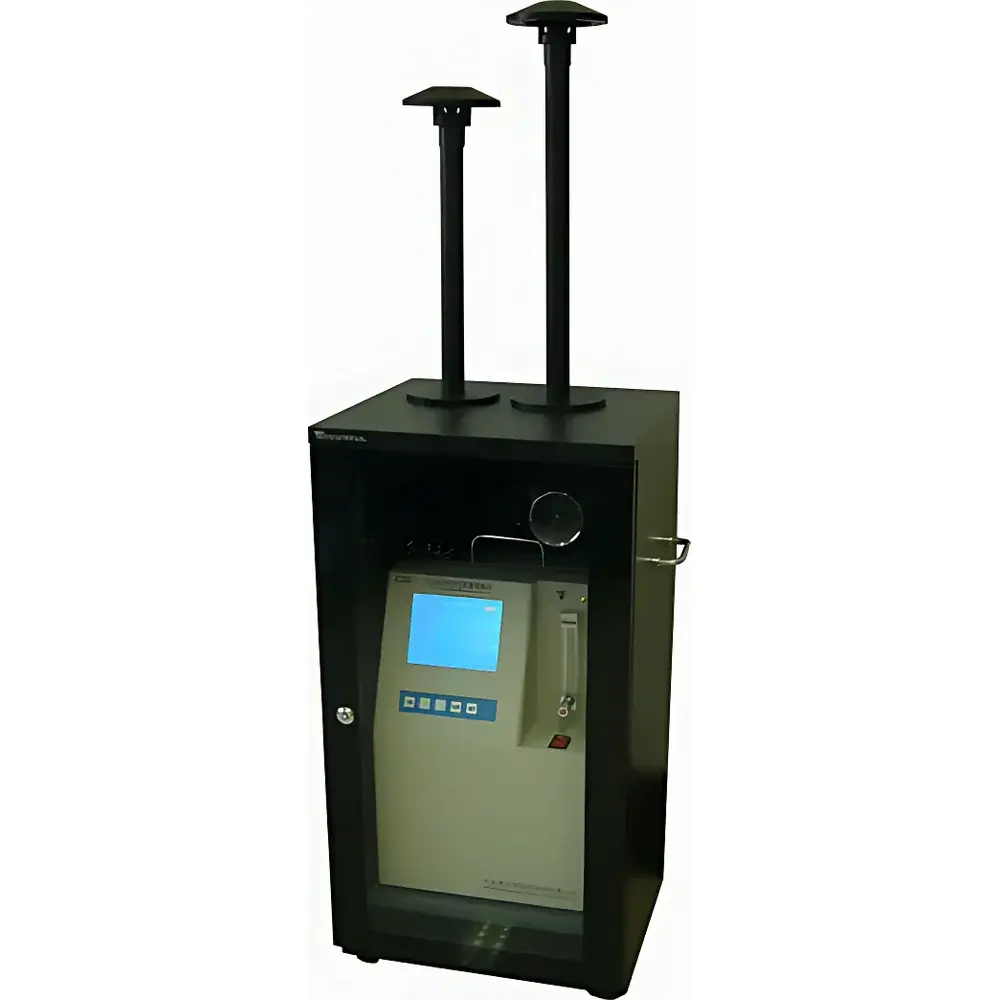
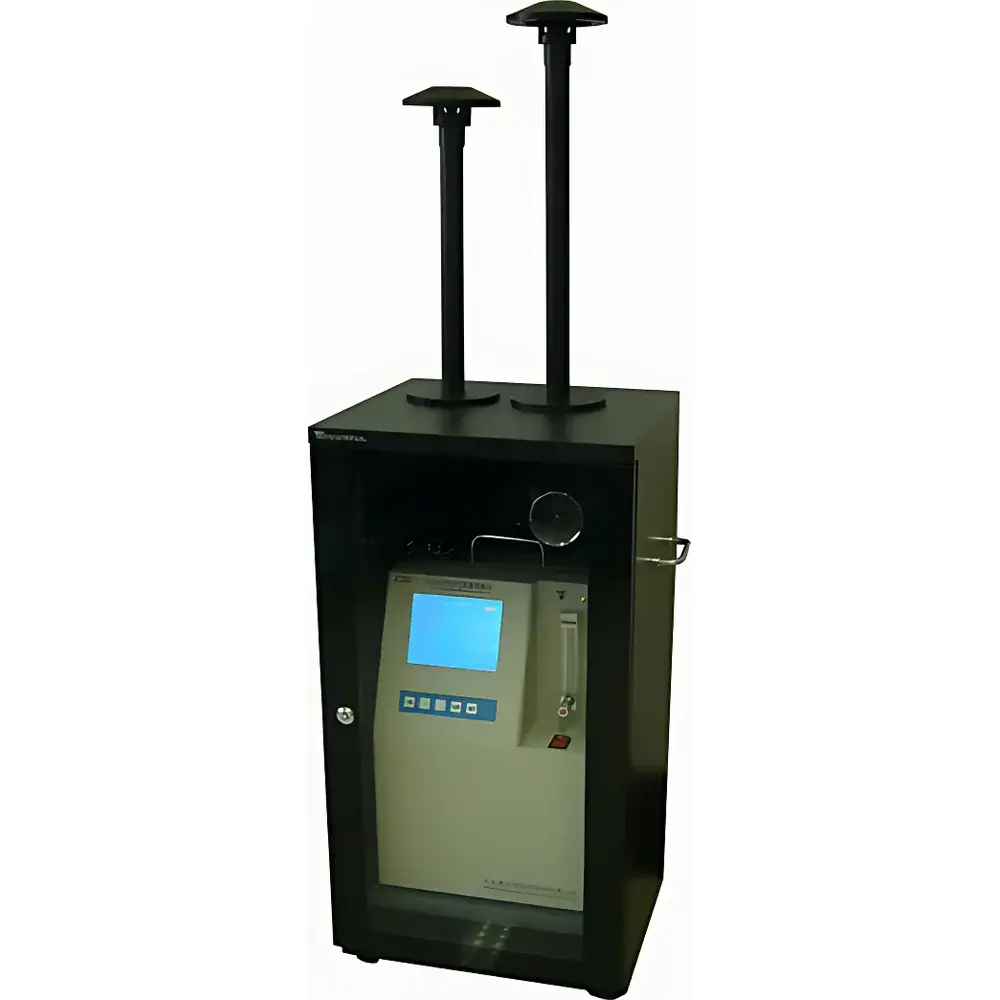
CPR-KA Series Environmental Air Quality Automatic Monitoring System
| Origin | Beijing |
|---|---|
| Manufacturer Type | Distributor |
| Origin Category | Domestic |
| Model | CPR-KA |
| Pricing | Upon Request |
Overview
The CPR-KA Series Environmental Air Quality Automatic Monitoring System is a fully integrated, real-time ambient air monitoring platform engineered for continuous, unattended measurement of gaseous pollutants and aerosol particulate matter in urban, industrial, and regulatory monitoring applications. Built upon dry-method instrumentation architecture, the system employs potentiostatic electrolytic sensing for trace gas detection (SO₂, NO₂, O₃, CO, H₂S, HF) and beta-ray attenuation (β-ray absorption) for gravimetric PM₁₀ and PM₂.₅ mass concentration quantification. Its modular station architecture—comprising centralized data management software and distributed substation hardware—enables scalable deployment across multi-point monitoring networks. The system complies with China’s HJ 653–2013, HJ 654–2013, and HJ 93–2013 technical specifications for ambient air quality monitoring stations, and supports alignment with international reference methods including ISO 7281 (SO₂), ISO 10498 (NO₂), and EN 14907 (PM). Designed for high uptime and long-term stability, it delivers robust performance under variable environmental conditions while maintaining traceability through on-site calibration infrastructure.
Key Features
- Modular, expandable architecture supporting configurable pollutant modules—including SO₂, NO₂, O₃, CO, H₂S, HF (potentiostatic electrolytic sensors) and PM₁₀/PM₂.₅ (beta-ray absorption method)
- Dual-power operation: AC mains input with integrated UPS and rechargeable Li-ion battery backup ensuring ≥16 hours of continuous operation during power interruption
- Real-time, on-screen display of concentration values in multiple units (µg/m³, mg/m³, ppm, ppb) with dynamic trend graphs and instrument status visualization
- Integrated meteorological sensor suite measuring wind speed/direction, ambient temperature, relative humidity, and barometric pressure; optional modules for rainfall and solar irradiance
- On-site calibration subsystem including certified standard gases and automated gas dilution/calibration manifold compliant with EPA Method TO-15 and ISO 6145 series protocols
- Embedded microcontroller-based data acquisition with local storage, USB export capability, and remote polling via GPRS or PSTN modem
- Large-format graphical LCD interface with full Chinese menu navigation and intuitive human-machine interaction logic
- Comprehensive data preprocessing engine supporting automatic calculation of hourly/daily/monthly averages, Air Quality Index (AQI), and regulatory compliance reporting formats
Sample Compatibility & Compliance
The CPR-KA system is validated for ambient air matrices across diverse operational environments—including urban background, traffic-impacted, industrial fence-line, and rural reference sites. All gaseous analyzers meet China’s Ministry of Ecology and Environment (MEE) type-approval requirements for automatic monitoring instruments, with documented linearity (R² ≥ 0.999), zero drift (< ±2 µg/m³ over 24 h), and span drift (< ±2% FS over 7 days). PM modules conform to HJ 93–2013 for beta-ray-based particulate monitors, including inlet isokinetic sampling design, temperature/humidity compensation algorithms, and filter tape auto-advancement mechanisms. The system supports audit-ready data logging with timestamped event records (e.g., calibration, maintenance, alarm), fulfilling GLP-aligned documentation needs. While not pre-certified to US EPA or EU CE directives, its measurement principles and uncertainty profiles are consistent with equivalent reference-grade systems used in ISO/IEC 17025-accredited laboratories.
Software & Data Management
The CPR-KA software suite consists of two interoperable components: Substation Embedded Firmware (SEF) and Central Station Management Platform (CSMP). SEF performs real-time signal conditioning, analog-to-digital conversion, sensor diagnostics, and local buffering of raw and processed data at 1-minute resolution. CSMP provides centralized configuration, remote firmware updates, alarm threshold management, QA/QC flagging (e.g., spike detection, calibration failure alerts), and automated report generation in PDF/Excel formats. Data exchange follows MODBUS TCP and ASCII-based serial protocols, enabling integration into third-party SCADA or environmental information systems (EIS). Audit trails—including user login history, parameter changes, and calibration logs—are retained for ≥18 months and support manual export for regulatory submission. The system does not implement FDA 21 CFR Part 11 electronic signature functionality but maintains time-stamped, immutable records suitable for internal QA review and MEE inspection readiness.
Applications
- Continuous ambient air quality monitoring for municipal environmental protection bureaus and provincial ecological monitoring centers
- Industrial emission boundary monitoring (fence-line) to verify compliance with GB 16297–1996 and local VOC/odorous compound limits
- Mobile and temporary deployments for emergency response (e.g., chemical spill, fire-related smoke dispersion)
- Source apportionment studies requiring synchronized multi-pollutant time-series data
- Long-term trend analysis for national air quality assessment and policy evaluation under China’s “Blue Sky Defense Campaign” framework
- Research-grade field validation of low-cost sensor networks and satellite-derived aerosol optical depth (AOD) products
FAQ
What measurement principles are used for gaseous pollutants and PM?
Gaseous species (SO₂, NO₂, O₃, CO, H₂S, HF) are measured using potentiostatic electrolytic sensors; PM₁₀ and PM₂.₅ are quantified via beta-ray attenuation with temperature- and pressure-compensated mass calculation.
Is the system compatible with international data standards such as AQMS or WMO GAW?
It outputs data in standardized ASCII format with UTC timestamps and supports mapping to AQMS metadata schemas; direct WMO GAW compatibility requires custom middleware for FTP/SFTP ingestion and QC flag harmonization.
Can the system operate without internet connectivity?
Yes—substation firmware stores all data locally on embedded flash memory and transmits queued records upon network restoration via GPRS or dial-up modem.
What is the recommended maintenance interval?
Bi-weekly zero/span checks with certified gases, quarterly sensor replacement (electrolytic cells), and semi-annual PM filter tape and beta source verification per HJ 653–2013 guidelines.
Does the system support remote diagnostics and firmware updates?
Yes—CSMP enables secure remote login for real-time health monitoring, error log retrieval, and over-the-air firmware upgrades with version rollback capability.
Related Products







