
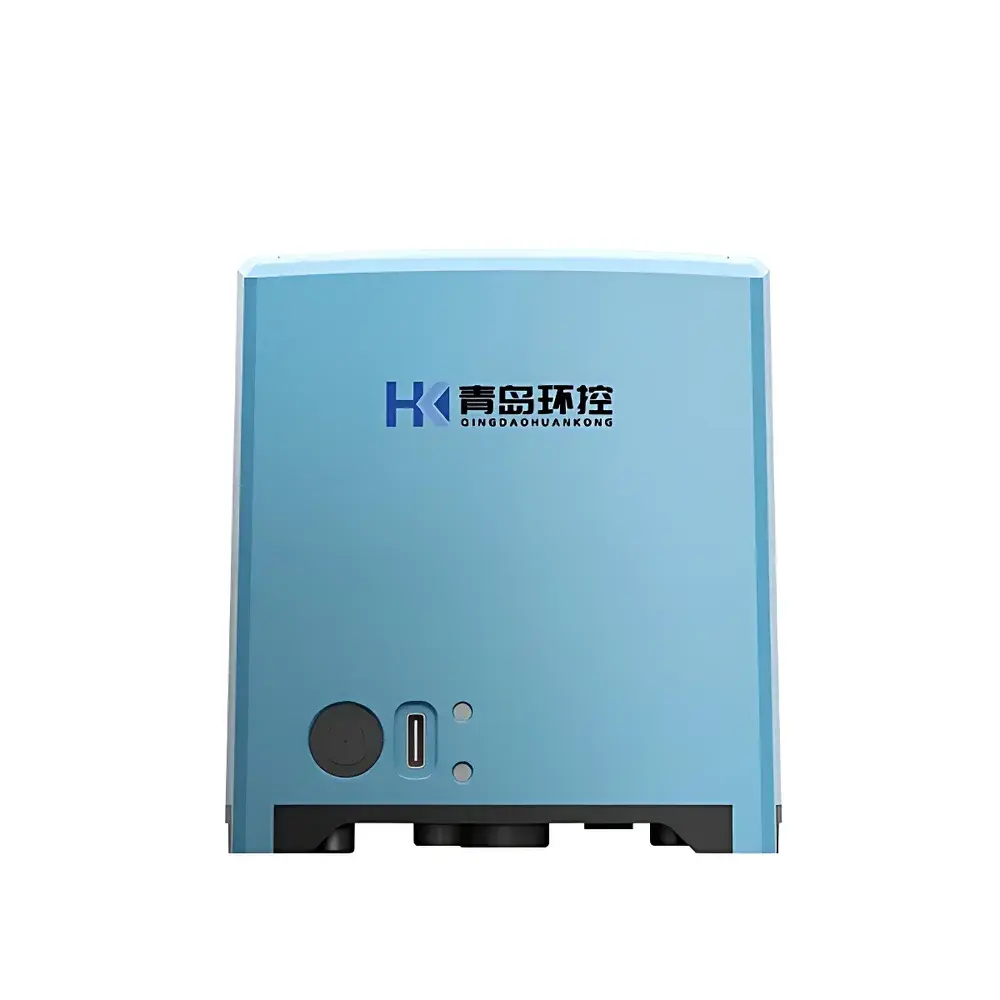
HUANKONG DHK-200 Power Frequency Electromagnetic Field Strength Analyzer
| Brand | HUANKONG |
|---|---|
| Origin | Shandong, China |
| Manufacturer Type | Manufacturer |
| Country of Origin | China |
| Model | DHK-200 |
| Frequency Range | Selectable (e.g., 1 Hz – 100 kHz) |
| Measurement Accuracy | Compliant with GBZ/T 189.3–2018 and HJ 681–2013 standards |
| Electric Field Range | 4 mV/m – 100 kV/m |
| Magnetic Field Range | Not specified in input (assumed compliant with GBZ/T 189.3–2018, typically 0.01 µT – 10 mT) |
| Display | 6.5-inch color HD touchscreen |
| Storage | 60 GB internal |
| Connectivity | Optical fiber, Wi-Fi, Bluetooth |
| Positioning | Built-in BeiDou GNSS module |
| Data Export | CSV-compatible table files |
| Compliance | GB 8702–2014, GBZ 2.2–2007, GBZ/T 189.3–2018, HJ/T 10.2–1996, HJ/T 10.3–1996, HJ 681–2013, HJ 24–2014, HJ 1113–2020, DL/T 799.7–2019, DL/T 988–2023, T/CECS 725–2020 |
Overview
The HUANKONG DHK-200 Power Frequency Electromagnetic Field Strength Analyzer is a dedicated, field-deployable instrument engineered for precise, real-time assessment of low-frequency electromagnetic fields (EMF) in occupational and environmental settings. It operates on the principle of broadband isotropic sensing—employing triaxial electric and magnetic field probes to capture orthogonal components simultaneously—enabling vector magnitude computation and spatially resolved exposure evaluation. Designed specifically for power frequency applications (50/60 Hz), the analyzer supports selectable frequency bands across the 1 Hz–100 kHz range, aligning with international definitions of extremely low frequency (ELF) fields per ICNIRP and IEEE C95.6. Its architecture integrates analog signal conditioning, high-resolution ADCs, and digital signal processing optimized for dynamic range compression and harmonic rejection—critical for accurate measurement near high-voltage infrastructure where waveform distortion is common. The DHK-200 meets the metrological requirements of Chinese national standards for EMF monitoring, including GBZ/T 189.3–2018 (Measurement of Physical Agents in Workplace: Electric and Magnetic Fields, 1 Hz–100 kHz) and HJ 681–2013 (Method for Monitoring Power Frequency Electric and Magnetic Fields from AC Transmission and Substation Projects), ensuring traceability and regulatory acceptability in compliance-driven sectors.
Key Features
- Simultaneous dual-parameter measurement: Real-time acquisition of electric field strength (E-field, V/m or kV/m) and magnetic flux density (B-field, µT or mT) on a single display interface.
- Multi-mode operational framework: Supports time-domain (real-time waveform), frequency-domain (FFT-based spectral analysis), and discrete frequency-point recording—enabling targeted assessment at user-defined frequencies (e.g., 50 Hz, 100 Hz, 150 Hz harmonics).
- Adaptive unit scaling: Automatic switching between mV/m / V/m / kV/m and nT / µT / mT based on measured magnitude—minimizing manual configuration errors and improving data interpretability.
- Integrated 6.5-inch HD touchscreen with embedded ultra-HD camera: Enables synchronized geotagged photo/video documentation of measurement locations, probe orientation, and site conditions—essential for audit-ready reporting.
- Onboard 60 GB non-volatile storage: Saves raw and processed data in standardized CSV format, directly compatible with Excel, MATLAB, and statistical analysis platforms without proprietary software dependencies.
- Dual connectivity architecture: Combines optical fiber isolation (for EMI-immune long-distance data transfer) with Wi-Fi and Bluetooth 5.0—facilitating remote control, live streaming, and wireless printing via optional thermal printers.
- BeiDou GNSS positioning + offline-capable map engine: Provides centimeter-level positional metadata (latitude, longitude, altitude, timestamp) for spatial mapping of EMF contours; supports firmware over-the-air (FOTA) updates when connected to LTE/Wi-Fi networks.
Sample Compatibility & Compliance
The DHK-200 is validated for use in heterogeneous electromagnetic environments—including high-gradient zones adjacent to 500 kV substations, urban rail traction systems, industrial induction heating facilities, EV charging stations, and medical MRI support infrastructure. Its probe design conforms to IEC 61786-1:2013 (Measurement of DC and 1 Hz–100 kHz electromagnetic fields) and incorporates isotropic response correction algorithms certified per GB/T 18204.1–2013 (Public Health Inspection Methods—Part 1: Physical Factors). All measurement protocols—including automatic averaging (sliding, arithmetic), spatial sampling grids, and timed sequences—are programmable to satisfy GLP-aligned workflows required by third-party testing laboratories accredited to CNAS (China National Accreditation Service) and ISO/IEC 17025. The device’s firmware implements mandatory exposure limit comparisons against GB 8702–2014 (Limits for Electromagnetic Environment Control), with configurable alert thresholds and pass/fail indicators aligned with occupational (GBZ 2.2–2007) and public exposure criteria.
Software & Data Management
Data acquisition, visualization, and export are handled entirely onboard—eliminating reliance on external PCs during field operation. The embedded operating system provides real-time plotting of E- and B-field vectors, three-axis component traces (Ex/Ey/Ez, Bx/By/Bz), and RMS/peak/crest factor statistics. All measurements include embedded metadata: GPS coordinates, UTC timestamp, probe calibration ID, battery status, and ambient temperature. Exported CSV files contain column headers compliant with ISO/IEC 17025 documentation requirements (e.g., “Timestamp_UTC”, “Lat_deg”, “Lon_deg”, “E_RMS_Vm”, “B_Z_RMS_uT”, “Measurement_Mode”, “Standard_Reference”). Optional PC-based post-processing software (available separately) enables contour mapping, statistical trend analysis, and automated report generation per HJ 24–2014 and HJ 1113–2020 templates—with full audit trail logging meeting FDA 21 CFR Part 11 principles (electronic signatures, change history, user access controls).
Applications
- Power Infrastructure Monitoring: Routine and commissioning surveys of AC transmission lines (110 kV–1000 kV), GIS substations, and converter stations per DL/T 988–2023 and HJ 681–2013.
- Occupational Health Surveillance: Workplace assessments in steel mills (induction furnaces), welding facilities, and rail depots under GBZ/T 189.3–2018 and GBZ 2.2–2007 compliance frameworks.
- Environmental Impact Assessment (EIA): Baseline and post-construction EMF characterization for green building certification (T/CECS 725–2020), smart city projects, and renewable energy interconnection studies.
- Research & Development: Low-frequency bioelectromagnetics studies, shielding effectiveness validation, and numerical model verification using measured field distributions.
- Regulatory Enforcement: Field verification by provincial ecological environment bureaus and health supervision agencies conducting routine inspections per HJ 1113–2020 technical mandates.
FAQ
Does the DHK-200 comply with international EMF exposure guidelines such as ICNIRP or IEEE C95.1?
Yes—the instrument’s measurement methodology, probe isotropy, and uncertainty budget are designed to support comparison against ICNIRP 2010 and IEEE C95.1–2019 reference levels when used with appropriate measurement protocols (e.g., spatial averaging over 30 cm × 30 cm area for public exposure assessment).
Can the device perform harmonic analysis up to the 50th order?
It supports FFT-based spectral analysis within its configured frequency range (up to 100 kHz); harmonic orders are derived mathematically from fundamental frequency input—e.g., 50 Hz base yields measurable harmonics up to 2.5 kHz (50th order).
Is factory calibration traceable to national metrology institutes?
Each unit ships with a calibration certificate traceable to the China National Institute of Metrology (NIM) for electric and magnetic field sensitivity, with recalibration recommended annually or after mechanical shock.
What is the typical measurement uncertainty at 50 Hz?
Per GBZ/T 189.3–2018 Annex B, combined standard uncertainty is ≤ ±1.5 dB (≈ ±17%) for E-field and ≤ ±2.0 dB (≈ ±26%) for B-field under reference conditions (23°C, 50% RH, no ambient RF interference).
Does the analyzer support custom limit line overlays in spectrum view?
Yes—users may import CSV-formatted limit tables (frequency vs. field strength) for real-time pass/fail annotation during frequency-domain measurements.
Related Products







