
HUANKONG PF-300 Portable Methane and Non-Methane Hydrocarbons (NMHC) Analyzer
| Brand | HUANKONG |
|---|---|
| Origin | Shandong, China |
| Manufacturer Type | Direct Manufacturer |
| Instrument Type | Portable |
| Detection Principle | Catalytic Oxidation–Flame Ionization Detection (CO-FID) |
| Measured Parameters | Methane (CH₄), Total Hydrocarbons (THC), Non-Methane Hydrocarbons (NMHC) |
| Measurement Range | Field-Expandable |
| Detection Limit | mgC/m³ |
| Repeatability | Low Relative Standard Deviation |
Overview
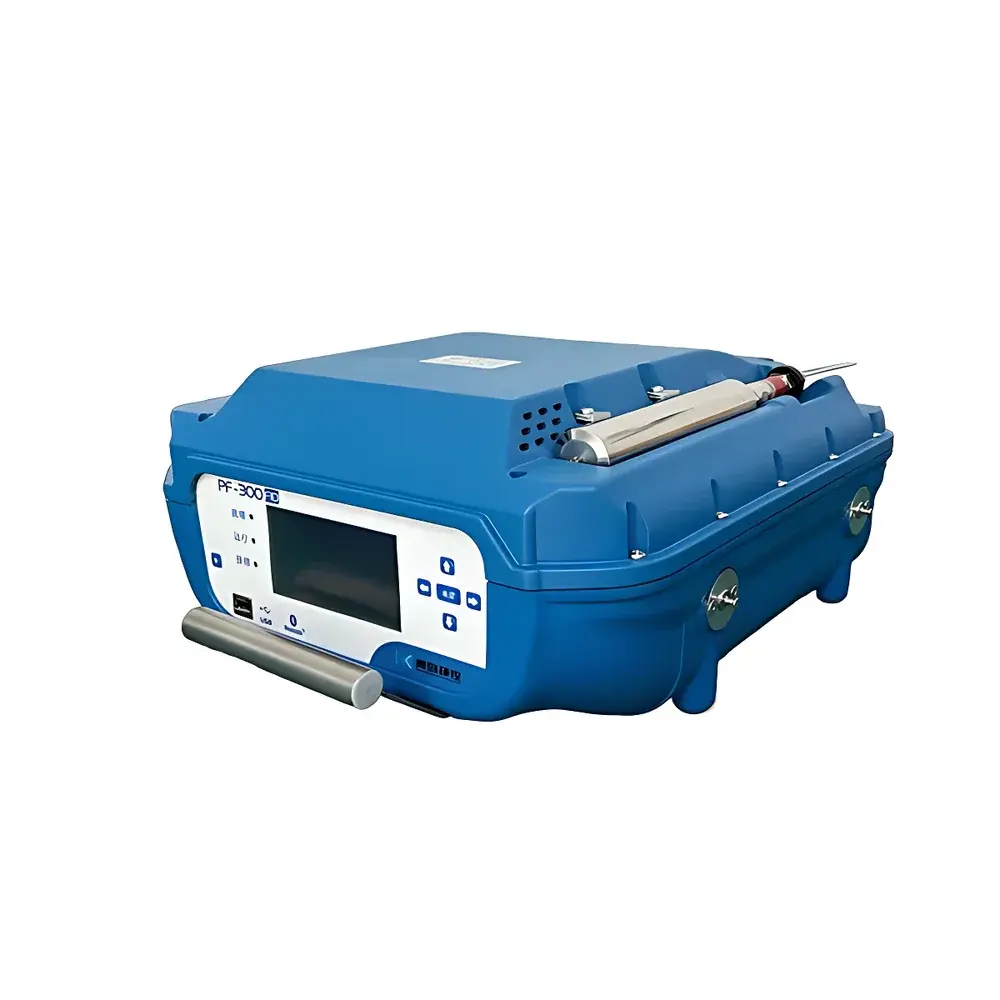
The HUANKONG PF-300 Portable Methane and Non-Methane Hydrocarbons (NMHC) Analyzer is an engineered field-deployable instrument designed for regulatory-compliant measurement of methane, total hydrocarbons (THC), and non-methane hydrocarbons in ambient air, fugitive emissions at plant boundaries, and stack effluents from stationary sources. It operates on the catalytic oxidation–flame ionization detection (CO-FID) principle: sample gas is first passed through a high-temperature catalytic converter (typically >600 °C) to oxidize all non-methane organic compounds to CO₂ and H₂O, while methane remains intact; the residual methane is then quantified by FID. THC is measured directly without catalysis, and NMHC is derived by subtraction (THC – CH₄). This dual-path methodology ensures traceable, stoichiometrically consistent hydrocarbon speciation—critical for compliance with EPA Method 25A equivalents and Chinese national standards including HJ 1331–2023 and HJ 1012–2018.
Key Features
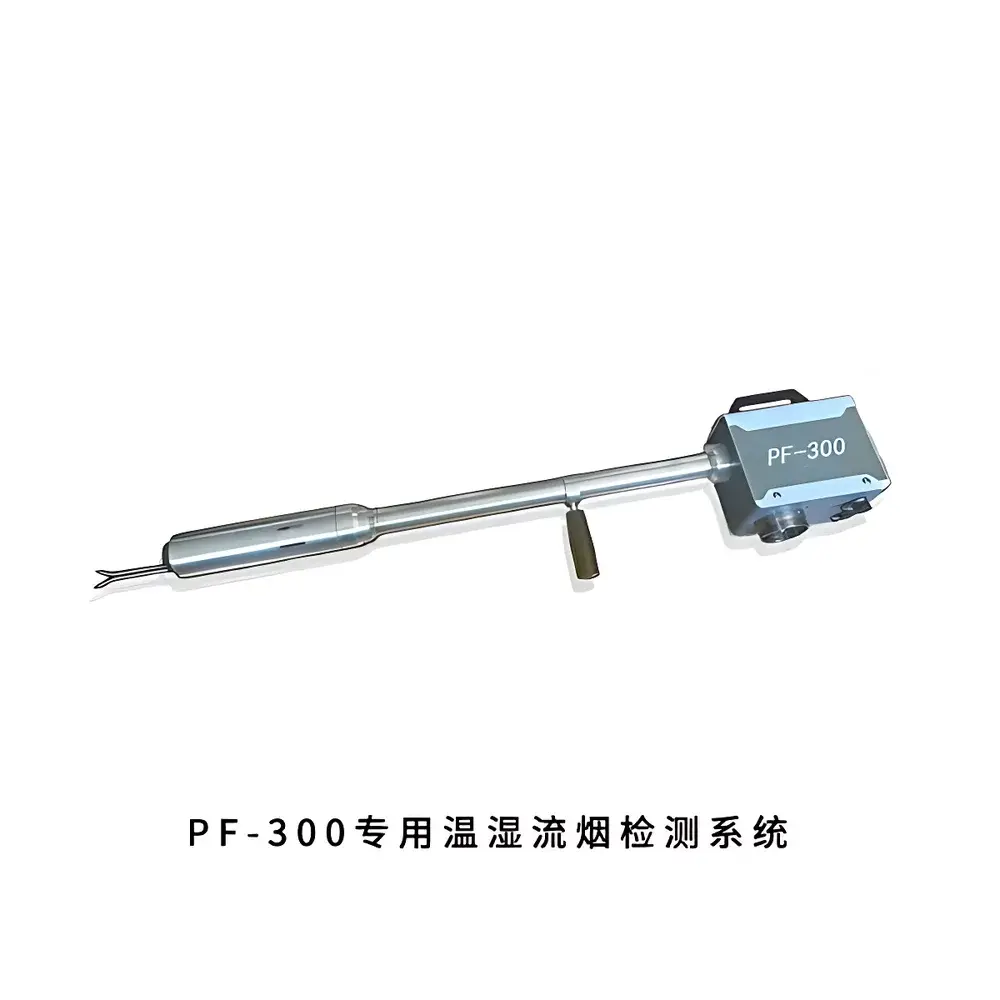
- Integrated catalytic oxidation module with precise temperature control (adjustable up to 650 °C), ensuring complete conversion of C₂–C₁₂ hydrocarbons while preserving methane integrity.
- Fully heated sampling path—including heated transfer line, catalytic reactor, FID detector chamber, and sample loop—eliminates condensation artifacts in high-humidity or low-temperature flue gas environments (up to 95% RH, 180 °C stack temperature).
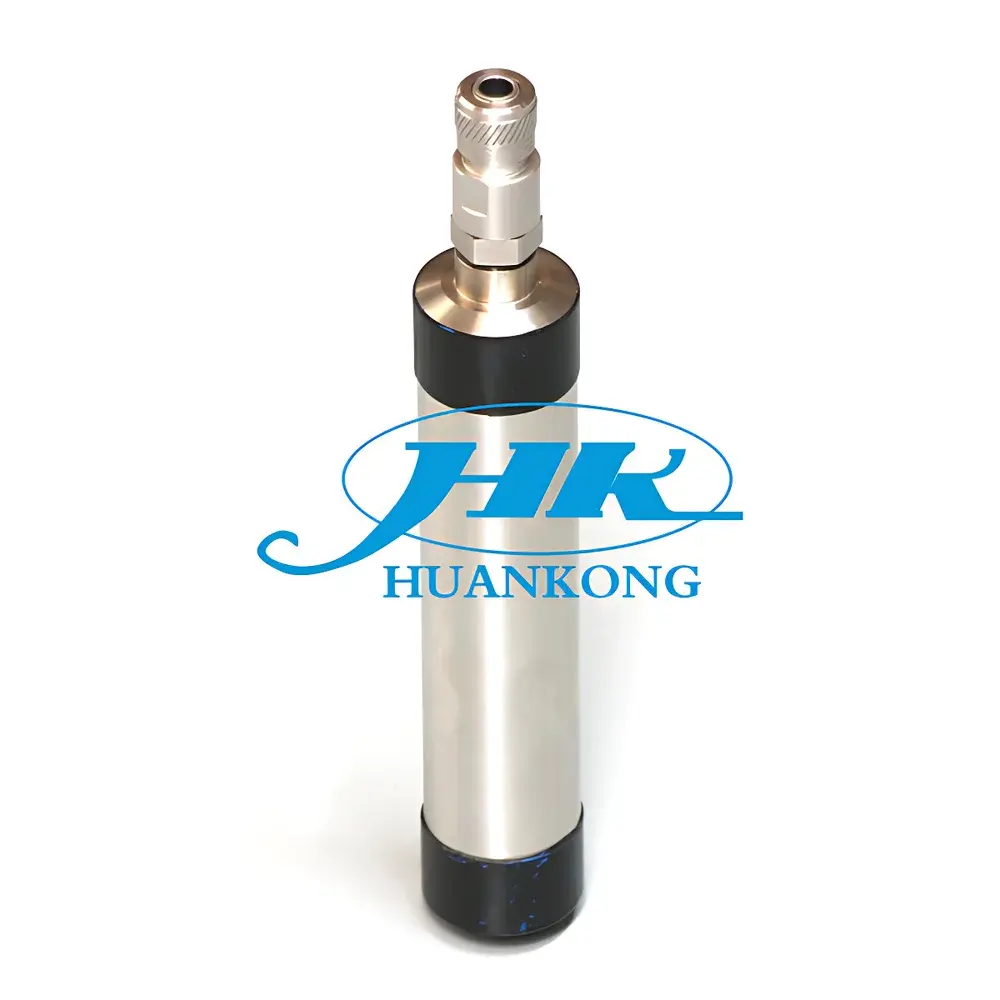
- Onboard solid-state metal hydride hydrogen storage cylinder: certified for Class II transport, refillable via external H₂ supply, and compliant with UN ECE R134a safety protocols for field deployment.
- Pre-calibrated multi-range quantitative loop injection system enabling simultaneous THC and CH₄ analysis from a single sample aliquot—minimizing temporal drift and inter-sample variability.
- Embedded zero air and certified calibration gas reservoirs (traceable to NIM or CNAS-accredited standards), supporting on-site QC checks per ISO/IEC 17025 requirements.
- Real-time wireless data transmission via Bluetooth/Wi-Fi to iOS/Android tablets or laptops; local thermal printing capability; encrypted cloud synchronization with audit-trail logging.
Sample Compatibility & Compliance
The PF-300 is validated for use across heterogeneous emission matrices: ambient air (HJ 1012–2018), ducted industrial exhaust (HJ 1331–2023), and emergency VOC plume screening scenarios. It meets performance criteria specified in GB 37822–2019 for unorganized emission monitoring and aligns with DB37/T 3922–2020 and DB35/T 1913–2020 for catalytic CO-FID-based NMHC determination. All firmware and calibration protocols support full traceability to primary reference materials, and raw data files include embedded metadata (operator ID, GPS coordinates, ambient T/P, catalyst temperature, FID bias voltage) required for GLP/GMP-aligned reporting. The instrument’s hardware architecture complies with IEC 61000-6-2 (immunity) and IEC 61000-6-4 (emissions) for electromagnetic compatibility in industrial settings.
Software & Data Management
The PF-300 runs proprietary HUANKONG FieldLink™ firmware v3.2+, featuring configurable measurement sequences (e.g., auto-zero → span-check → sample → post-run purge), user-defined averaging intervals (1–60 s), and dynamic range switching based on real-time signal amplitude. Data export supports CSV, PDF report templates (with digital signature fields), and direct ingestion into LIMS platforms via RESTful API. Audit trails record every parameter change, calibration event, and firmware update with timestamp, operator credential, and IP address—fully satisfying FDA 21 CFR Part 11 electronic record requirements. Remote over-the-air (OTA) firmware updates are authenticated via RSA-2048 signatures and require dual-factor authorization.
Applications
- Regulatory stack testing for petrochemical refineries and olefin crackers under provincial VOC emission permits.
- Fugitive emission surveys at tank farms, loading docks, and pump seals per LDAR (Leak Detection and Repair) programs.
- Performance verification and QA/QC of fixed CEMS systems measuring TH/NMHC.
- Emergency response to chemical spills or process upsets involving volatile organic releases.
- Research-grade source apportionment studies requiring time-resolved THC/CH₄ ratios in complex industrial zones.
- Verification of abatement device efficiency (e.g., thermal oxidizers, carbon adsorbers) via inlet/outlet paired measurements.
FAQ
Does the PF-300 comply with U.S. EPA Method 25A or EN 12619?
The PF-300 implements the same catalytic oxidation–FID principle as EPA Method 25A but is calibrated and validated per Chinese national standards (HJ 1331–2023). Cross-method equivalency studies per ASTM D6348–20 can be conducted using site-specific protocol alignment.
Can the instrument operate continuously for >8 hours on a single hydrogen charge?
Yes—using the integrated metal hydride cylinder (120 L STP H₂ capacity) and optimized FID gas flow (≤35 mL/min), continuous operation exceeds 10 hours at standard sampling rate (1 L/min).
Is third-party certification available for international metrological traceability?
Calibration certificates issued by CNAS-accredited laboratories (e.g., SGS Qingdao, CTI Shenzhen) provide traceability to NIM SRMs; optional UKAS-endorsed calibration packages are available upon request.
How is moisture interference managed during high-humidity stack sampling?
The fully heated sample path (maintained ≥180 °C throughout) prevents water condensation; optional Nafion™ dryer integration is supported for ultra-high moisture applications (>30 vol% H₂O).
What data security protocols are implemented for remote transmission?
All wireless communications use TLS 1.3 encryption; local storage employs AES-256 full-disk encryption; audit logs are write-once/read-many (WORM) compliant.
Related Products







