LI-COR LI-550 Miniature 3D Ultrasonic Anemometer
| Brand | LI-COR |
|---|---|
| Origin | USA |
| Model | LI-550 |
| Dimensions | 9.1 cm × 9.1 cm × 5.2 cm |
| Measurement Path Length | 35 mm |
| Weight | ≤50 g |
| Power Supply | 5–32 VDC @ 320 mW |
| Output Interfaces | RS-232 (LI-550), RS-232/RS-422/UART-3V (LI-550P) |
| Sampling Frequencies | 1, 2, 5, 10, 20, 40 Hz |
| Ultrasonic Frequency | 60 kHz |
| Wind Speed Range | 0–50 m/s |
| Wind Speed Resolution | 0.01 m/s |
| Wind Speed Accuracy | ±0.2 m/s (0–10 m/s), ±2% (11–30 m/s), ±4% (31–50 m/s) |
| Wind Direction (u/v) | 0–359°, Resolution: 1°, Accuracy: ±1° |
| Vertical Wind Component (w) Range | ±15° |
| Temperature Range | −20 to +72 °C, Resolution: 0.01 °C, Accuracy: ±2.0 °C |
| Relative Humidity Range | 0–100 %RH, Resolution: 0.1 %RH, Accuracy: ±3 %RH |
| Barometric Pressure Range | 50–115 kPa, Resolution: 0.1 kPa, Accuracy: ±1.0 kPa |
| 3D Accelerometer Range | ±2 g (u/v/w), Tilt (Pitch/Roll): ±90° |
| Magnetometer Range | ±50 Gauss (u/v/w), Heading Accuracy: ±5° |
| Dew Point & Air Density | Computed from measured T, RH, and P |
Overview
The LI-COR LI-550 is a miniature, high-integrity 3D ultrasonic anemometer engineered for precision atmospheric turbulence measurement in space-constrained and low-power environments. It employs time-of-flight ultrasonic transit-time difference principles across four orthogonal acoustic paths—each 35 mm long—to compute three orthogonal wind velocity components (u, v, w) with minimal flow distortion. Its open-path design eliminates mechanical obstructions, preserving natural wind field structure—a critical requirement for eddy covariance flux measurements, UAV-mounted boundary layer profiling, and urban micrometeorology. The integrated suite of environmental sensors—including thermistor-based temperature, capacitive relative humidity, piezoresistive barometric pressure, MEMS 3D accelerometer, and magnetometer—enables simultaneous acquisition of meteorological state variables essential for air density correction, coordinate system alignment, and tilt compensation. All measurements are synchronized at user-selectable sampling rates up to 40 Hz, supporting both fast-response turbulent flux analysis and long-term climatological monitoring.
Key Features
- Compact form factor (9.1 × 9.1 × 5.2 cm) and ultra-lightweight construction (≤50 g) optimized for drone payloads, mast-mounted micro-sites, and portable eddy covariance systems.
- Four-path ultrasonic geometry with real-time path redundancy management: the instrument automatically identifies and excludes the most acoustically distorted path during each calculation cycle, improving vector accuracy under crosswind or thermal gradient conditions.
- Integrated inertial and magnetic sensing: on-board 3D accelerometer and magnetometer provide dynamic tilt correction (pitch/roll up to ±90°) and compass-derived heading (±5° accuracy), enabling robust orientation-aware wind vector transformation without external GNSS or attitude reference units.
- Flexible digital interfacing: standard RS-232 output (base model); optional pipe-mount variant (LI-550P) adds RS-422 and 3.3 V UART for noise-immune long-cable operation and compatibility with industrial SCADA or embedded data loggers.
- Low-power architecture: operates continuously at 320 mW across 5–32 VDC input range, compatible with solar-charged battery banks, UAV power buses, and remote field deployments where energy budgeting is critical.
Sample Compatibility & Compliance
The LI-550 is designed for direct exposure to ambient atmospheric conditions and requires no aspiration or shielding for routine operation. Its open-path transducers resist rain-induced signal attenuation through hydrophobic coating and active acoustic self-cleaning algorithms. The sensor meets IP65-rated ingress protection when mounted using the included DN15 Schedule 10 pipe adapter—cabling routed internally to minimize aerodynamic interference and environmental exposure. While not certified to IEC 61000-6-2/6-4 for EMC immunity, its analog front-end and digital signal processing comply with common laboratory and field instrumentation electromagnetic compatibility expectations. Data outputs adhere to NMEA 0183-compatible ASCII framing and support traceable timestamping when paired with DL422 data loggers equipped with GPS synchronization. The instrument’s measurement methodology aligns with established practices defined in ASTM D5096 (standard test method for wind speed and direction instruments) and ISO 24549-2 (meteorological sensors for unmanned aerial systems).
Software & Data Management
The LI-550 delivers raw and processed data via ASCII-formatted serial packets, supporting seamless integration into custom Python, MATLAB, or LabVIEW acquisition frameworks. LI-COR provides the free LI-COR EddyPro® software suite (v8.2+), which natively ingests LI-550 streams and applies standardized post-processing—including planar fit rotation, WPL correction for density fluctuations, and spectral filtering—per AmeriFlux and ICOS protocols. When used with the DL422 data logger, the system supports audit-trail-enabled logging compliant with GLP principles: all configuration changes, firmware updates, and calibration metadata are stored alongside time-stamped sensor data on the internal MicroSD card. Optional DL422-E2/E4 configurations allow synchronized multi-sensor deployments, with inter-unit clock skew <10 µs—critical for spatially distributed turbulence studies. Firmware updates and configuration are performed via CLI over serial, ensuring reproducibility and version control in regulated research environments.
Applications
- Eddy covariance flux towers: deployed as the primary 3D wind sensor in CO₂, H₂O, CH₄, and N₂O exchange studies, especially where tower weight or wind shadow constraints limit conventional anemometer options.
- Unmanned aerial systems (UAS): integrated into fixed-wing or multirotor platforms for vertical profile mapping of momentum, heat, and scalar fluxes in agricultural, forest, and coastal boundary layers.
- Urban meteorology networks: installed on streetlight poles or building façades to characterize local ventilation, pollutant dispersion, and pedestrian-level wind comfort metrics.
- Wind tunnel validation: used as a reference-grade probe in low-speed (<50 m/s) aerodynamic testing due to its minimal wake interference and high-frequency response.
- Climate resilience infrastructure monitoring: embedded in smart city sensor nodes for real-time wind loading assessment on bridges, solar canopies, and green roofs.
FAQ
What mounting options are available for the LI-550?
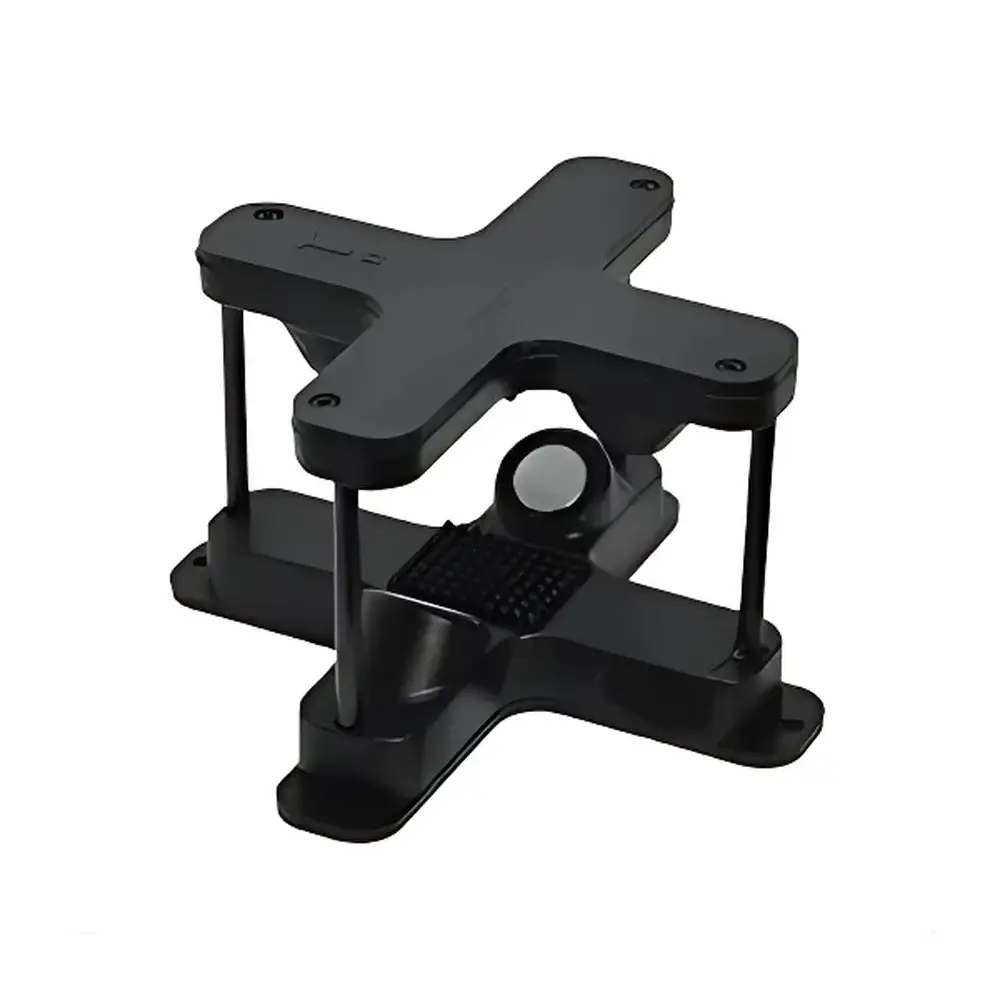
The LI-550 ships with a universal DN15 (½″) Schedule 10 pipe adapter; alternatively, users may fabricate custom brackets using the standardized 4×M3 threaded mounting holes located on the base plate.
Can the LI-550 operate independently without a data logger?
Yes—it outputs continuous ASCII data over RS-232 and can be connected directly to a PC, Raspberry Pi, or PLC with appropriate level-shifting and buffering; however, long-term unattended operation requires external power regulation and storage logic.
Is the LI-550 calibrated traceable to NIST standards?
Each unit undergoes factory calibration against reference-grade wind tunnels and environmental chambers; full calibration certificates—including uncertainty budgets per ISO/IEC 17025—are available upon request for GxP-compliant deployments.
How does the LI-550 handle precipitation or condensation?
Transducer faces feature hydrophobic nano-coating and operate at 60 kHz to minimize raindrop scattering effects; internal diagnostics flag acoustic path failures in real time, allowing automated fallback to redundant paths.
What is the recommended data processing workflow for eddy covariance?
LI-COR recommends using EddyPro® with default settings for flux partitioning, applying 30-minute block averaging, double-coordinate rotation, and WPL correction—consistent with FLUXNET Level 4 processing standards.