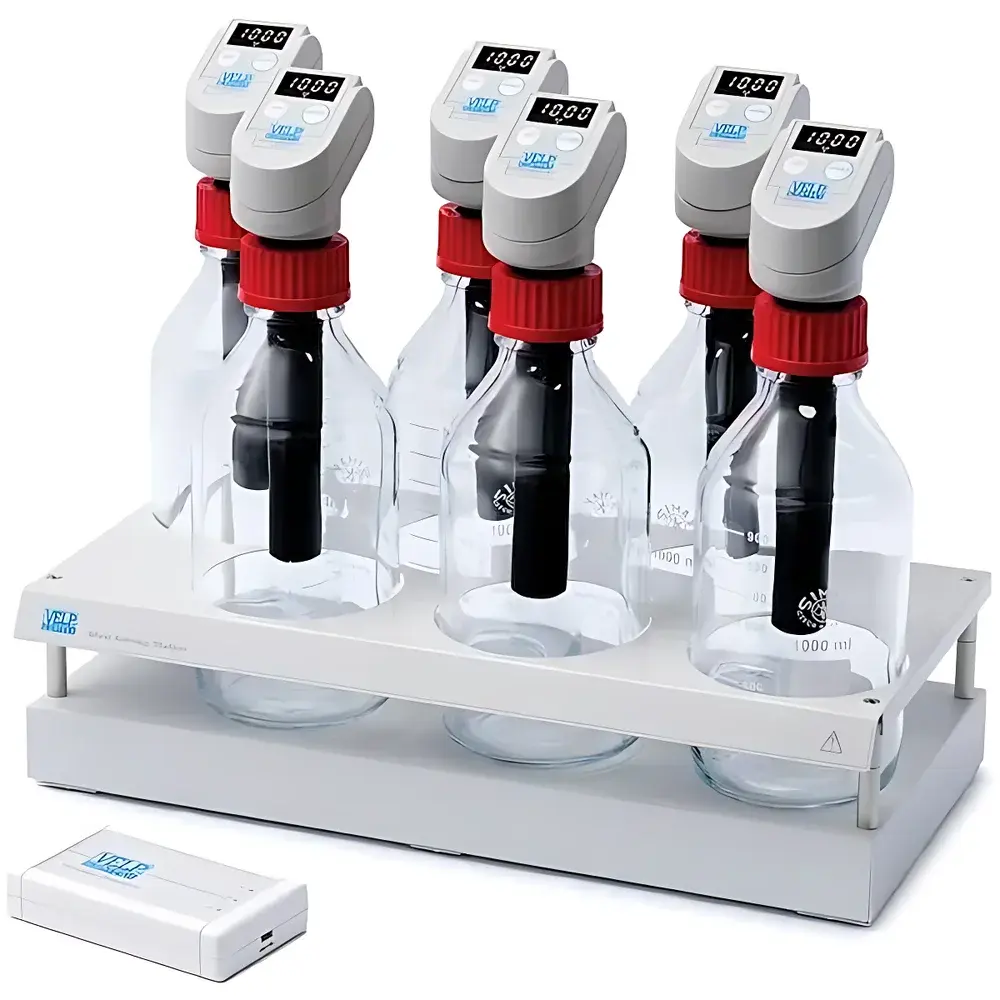
VELP 6 Maxi-BMP Respirometric Methane Potential Measurement System
| Brand | VELP |
|---|---|
| Origin | Italy |
| Model | 6 Maxi-BMP |
| Sensor Type | Electronic Pressure Transducer (Mercury-Free) |
| Pressure Range | 500–2000 hPa |
| Display | 4-digit LED |
| Interface | Dual-button Control |
| Output Units | NmL CH₄/g SV and mbar |
| Test Vessel Capacity | 1000 mL |
| Max. Sensors per Databox™ | 48 |
| Data Acquisition Interval | 2 h to 48 h |
| Test Duration | 10–60 days |
| Enclosure Rating | IP54 (per EN 60529) |
| Safety Compliance | IEC/EN 61010-1 |
| Connectivity | USB (RESPIROSoft™) or Optional Wi-Fi (Ermes™ Cloud Platform) |
| Power | Rechargeable Battery (Long Standby) |
| Optional Module | Ermes™ Remote Monitoring & Alert System |
Overview
The VELP 6 Maxi-BMP Respirometric Methane Potential Measurement System is a dedicated benchtop instrument engineered for standardized, high-reproducibility determination of Biochemical Methane Potential (BMP) in organic substrates under controlled anaerobic digestion conditions. Based on respirometric pressure measurement principles, the system quantifies cumulative CH₄ production by monitoring real-time pressure differentials within sealed, alkaline-scrubbed reaction vessels—where CO₂ is chemically absorbed, leaving only methane-induced pressure rise proportional to biogas yield. This method aligns with internationally recognized BMP testing protocols including ISO 11734, ASTM D5210, and VDI 4630, enabling laboratories to generate traceable, audit-ready data compliant with GLP and regulatory reporting requirements for waste valorization, biogas feasibility studies, and circular bioeconomy R&D.
Key Features
- Integrated respirometric sensing architecture using mercury-free electronic pressure transducers calibrated for long-term stability across 500–2000 hPa range
- Dual-button user interface with 4-digit LED display—designed for glove-compatible operation inside incubators without compromising intuitive method setup or status verification
- Modular sensor configuration supporting up to six independent BMP assays simultaneously, each with dedicated 1000 mL test bottles and individual pressure tracking
- Onboard battery-powered operation ensures uninterrupted measurements during extended incubation cycles (10–60 days), eliminating cable constraints inside temperature-controlled environments
- Databox™ hub enables wireless aggregation of up to 48 RESPIROMETRIC sensors (8 × 6-channel systems), facilitating scalable multi-project deployment in shared lab facilities
- Automatic unit conversion between raw pressure (hPa/mbar) and normalized methane yield (NmL CH₄/g Volatile Solids), eliminating manual post-processing errors
Sample Compatibility & Compliance
The 6 Maxi-BMP accommodates diverse feedstock types—including agricultural residues, sewage sludge, food waste, energy crops, and co-digestion blends—within standardized 1000 mL borosilicate glass reactors equipped with integrated KOH scrubbing caps. Its design supports full compliance with ISO 11734:1995 (determination of ultimate anaerobic biodegradability) and VDI 4630:2016 (characterization of organic substrates for biogas production). The system’s IP54-rated enclosure and IEC/EN 61010-1 certified electrical safety profile ensure safe operation in humid, temperature-stabilized incubator environments. All hardware components—including sensor housings and vessel seals—are constructed from inert, high-performance polymers resistant to H₂S, organic acids, and alkaline corrosion encountered during prolonged anaerobic fermentation.
Software & Data Management
Data acquisition and analysis are managed via RESPIROSoft™ desktop software (Windows-based), which provides real-time visualization of pressure curves, automatic baseline correction, and customizable reporting templates aligned with peer-reviewed publication standards. Each assay session logs timestamped pressure readings, sensor health metrics (including battery voltage diagnostics), and user-defined metadata (substrate ID, inoculum ratio, pH, temperature). For regulated environments, RESPIROSoft™ supports 21 CFR Part 11-compliant audit trails when deployed with network authentication and electronic signature modules. Optional Ermes™ cloud integration extends functionality via secure HTTPS access—enabling remote monitoring, cross-lab collaboration, automated email alerts upon threshold breaches (e.g., pressure saturation or sensor failure), and export to LIMS or Excel-compatible formats (.csv, .pdf).
Applications
- Quantitative BMP screening for feedstock selection and process optimization in anaerobic digestion plants
- Research into inhibitory effects of antibiotics, heavy metals, or ammonia on methanogenic activity
- Validation of pretreatment efficacy (thermal, enzymatic, mechanical) on biodegradability enhancement
- Supporting life cycle assessment (LCA) and carbon footprint modeling for bioenergy projects
- Adaptation for denitrification studies using purpose-designed nitrate-reducing bottles (sold separately)
- Educational use in environmental engineering and microbiology curricula for hands-on biokinetic experimentation
FAQ
How does the system differentiate CH₄ from CO₂ in the headspace?
It uses chemical absorption: CO₂ is removed in situ by potassium hydroxide (KOH) pellets mounted in the bottle cap, ensuring only CH₄ contributes to measurable pressure increase.
Can the system operate unattended for 60 days?
Yes—the rechargeable battery provides >90 days standby life and >60 days continuous logging at 2-hour intervals without external power.
Is calibration required before each test?
No routine recalibration is needed; factory-traceable pressure transducers maintain ±0.5% FS accuracy over 24 months under typical lab conditions.
Does the software support multi-user access with role-based permissions?
RESPIROSoft™ supports local multi-user profiles; Ermes™ cloud deployment enables configurable roles (admin, analyst, viewer) with granular data access controls.
What happens if network connectivity is lost during an Ermes™-enabled run?
All sensor data continues logging locally on the Databox™ unit and synchronizes automatically once connection resumes—no data loss occurs.