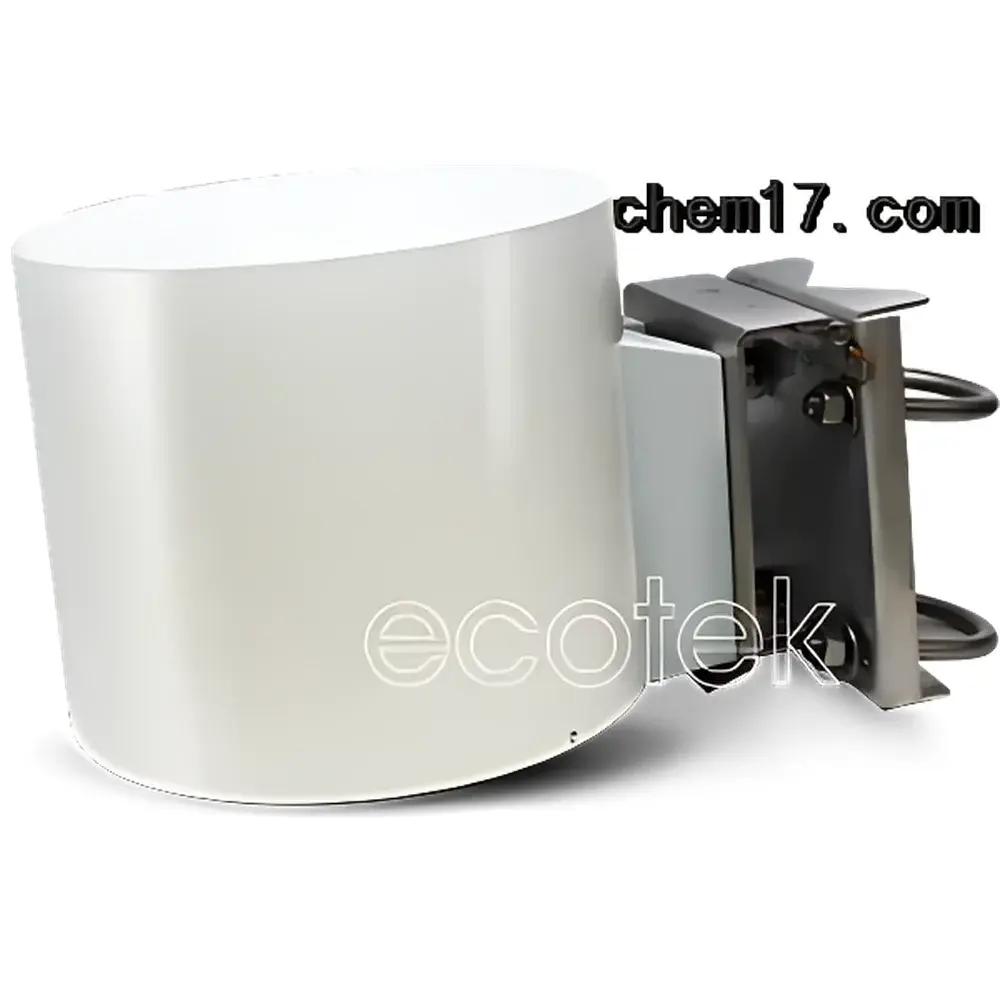
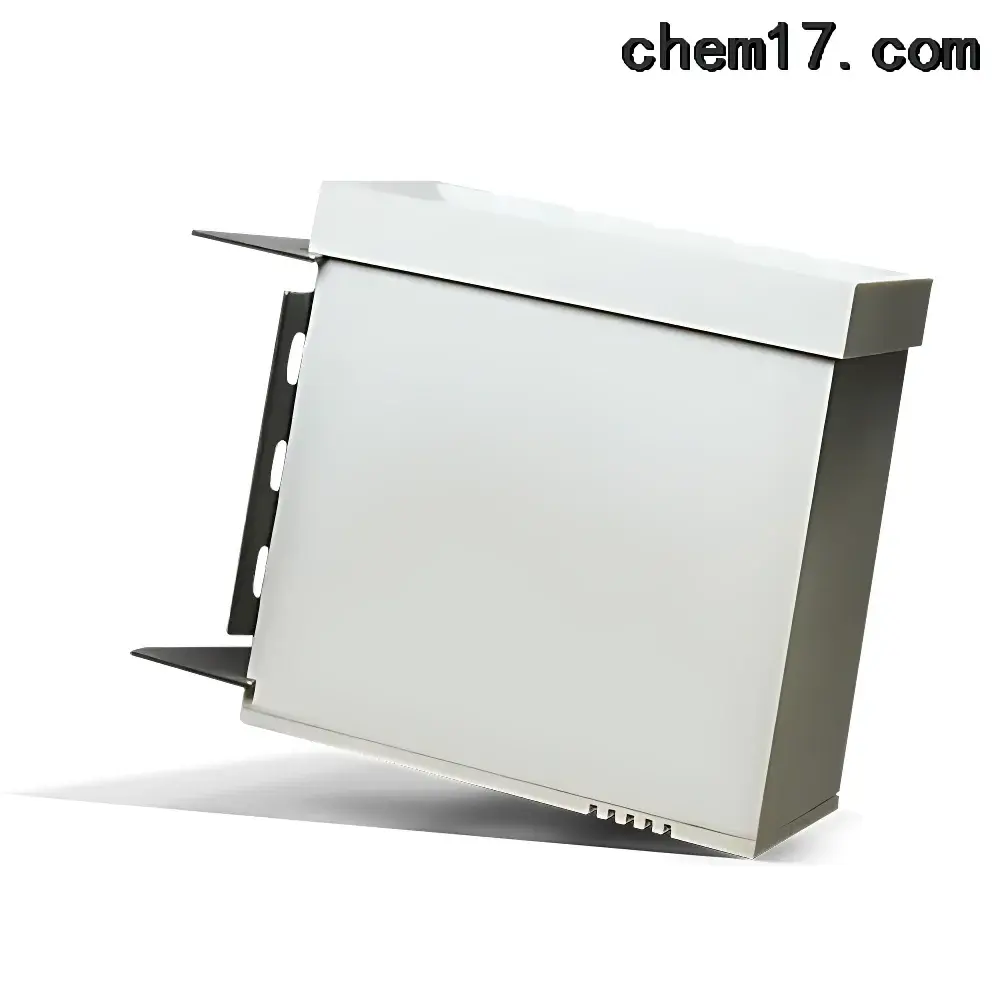
METER ECRN Series Precision Rainfall Sensors
| Brand | METER |
|---|---|
| Origin | USA |
| Model | ECRN-50 / ECRN-100 |
| Sensor Type | Tipping Bucket (Single for ECRN-50 |
| Resolution | 1.0 mm per tip (ECRN-50) / 0.2 mm per tip (ECRN-100) |
| Output | Pulse (Open Collector) |
| Housing Material | UV-stabilized, waterproof, frost-resistant ABS plastic |
| Operating Temperature | 0–60 °C |
| Cable Length | 5 m |
| Connector Type | 3.5 mm mono audio jack |
| Compatible Data Loggers | METER ZL6, EM50/EM60 series, ProCheck |
| Compliance | Designed for long-term field deployment in accordance with ASTM D3478 and ISO 9060:2018 Class B recommendations for precipitation measurement |
Overview
The METER ECRN Series rainfall sensors are precision-engineered tipping bucket instruments designed for reliable, long-term quantitative precipitation measurement in environmental monitoring, agricultural research, hydrological modeling, and climate station networks. Based on the fundamental principle of mechanical displacement detection—where accumulated rainwater fills a calibrated dual-chamber (ECRN-100) or single-chamber (ECRN-50) bucket assembly until gravitational torque triggers a controlled tip—the sensor generates a discrete electrical pulse for each measured increment. This analog pulse output is inherently compatible with industry-standard data loggers and SCADA systems, enabling high-fidelity temporal resolution of rainfall intensity, cumulative depth, and event timing without reliance on proprietary firmware or cloud dependencies. Unlike optical or weighing-based alternatives, the ECRN’s mechanical architecture ensures operational stability across wide temperature ranges (0–60 °C), resistance to wind-induced undercatch, and immunity to signal drift associated with electronic drift or battery voltage fluctuations.
Key Features
- Two-tier resolution options: ECRN-50 delivers 1.0 mm per tip (equivalent to 0.04 in) for general-purpose monitoring; ECRN-100 achieves 0.2 mm per tip (0.008 in) for high-sensitivity research applications such as evapotranspiration partitioning or stormwater runoff calibration.
- Robust housing constructed from UV-stabilized ABS polymer—certified for continuous outdoor exposure without degradation in color, dimensional stability, or structural integrity over multi-year deployments.
- Frost-resistant internal geometry prevents ice bridging and freezing-induced jamming during sub-zero winter precipitation events—a critical design element validated through accelerated thermal cycling per IEC 60068-2-14.
- Integrated funnel aperture conforms to WMO-recommended 200 cm² collection area (diameter ≈ 16 cm), minimizing splash loss and wind turbulence effects while maintaining compatibility with standard mounting hardware.
- Open-collector pulse output (sinking type) ensures galvanic isolation, noise immunity, and direct integration with TTL- or CMOS-level digital inputs across third-party logging platforms.
- Calibration traceability aligned with NIST-traceable volumetric standards; factory calibration certificates available upon request for GLP-compliant installations.
Sample Compatibility & Compliance
The ECRN series is optimized for liquid-phase precipitation only and is not intended for solid-phase (e.g., snow, hail) or mixed-phase event quantification without ancillary heating or melting modules. Its mechanical tipping mechanism exhibits minimal hysteresis and low inertia response—meeting the dynamic performance criteria outlined in ASTM D3478 “Standard Practice for Calibration and Field Testing of Tipping-Bucket Rain Gauges” and referenced in ISO 9060:2018 for Class B instruments. Units are CE-marked and RoHS-compliant. While not certified for regulatory-grade meteorological networks (e.g., NOAA COOP or WMO GSN), the ECRN series is widely deployed in academic field studies, USDA ARS watershed observatories, and EPA-funded nonpoint source monitoring programs where reproducibility, serviceability, and cost-per-node efficiency are prioritized.
Software & Data Management
Pulse data from the ECRN is ingested natively by METER’s ZL6, EM50, and EM60 data loggers via configurable counter channels, supporting user-defined aggregation intervals (e.g., 1-min, 15-min, hourly totals) and automatic unit conversion (mm, in, L/h, gal/h). Raw pulse timestamps are stored with microsecond-resolution hardware counters, preserving temporal fidelity for intensity-duration-frequency (IDF) analysis. When paired with METER’s PC-based LoggerNet or cloud-enabled METER Connect platform, data undergoes automated QA/QC flagging—including spike detection, dry-tip validation, and missing-pulse interpolation—aligned with USGS WaterML2 metadata conventions. All logged datasets support export in CSV, NetCDF, and CF-compliant formats suitable for integration into R, Python (Pandas/Xarray), or MATLAB workflows. Audit trails, user permissions, and electronic signatures comply with FDA 21 CFR Part 11 requirements when configured within validated laboratory information management systems (LIMS).
Applications
- Long-term precipitation trend analysis in ecological transects and eddy covariance flux towers
- Irrigation scheduling and soil water balance modeling in precision agriculture trials
- Urban stormwater infrastructure performance assessment (e.g., green roof retention, bioswale infiltration)
- Calibration and ground-truthing of satellite-based precipitation products (e.g., IMERG, CHIRPS)
- Hydrological model input for SWAT, HEC-HMS, and MIKE SHE simulations
- Education and outreach programs requiring rugged, maintenance-free instrumentation for K–12 and undergraduate field labs
FAQ
What is the recommended cleaning and maintenance schedule for the ECRN sensor?
Routine visual inspection every 3–6 months is advised; debris removal using soft-bristled brush and deionized water. No lubrication or internal recalibration is required under normal operating conditions.
Can the ECRN be used in freezing climates without supplemental heating?
Yes—the frost-resistant bucket design enables functional operation down to 0 °C. For sustained sub-zero environments (< –5 °C), METER recommends pairing with the optional ECH2O-5TE heated rain gauge heater kit.
Is the 3.5 mm audio jack connector weatherproof?
The connector itself is not sealed; METER advises routing the cable through an IP67-rated junction box or using heat-shrink butt connectors with dielectric grease for permanent outdoor installations.
Does the ECRN require a power supply?
No—it is a passive pulse generator. Power is supplied solely by the connected data logger’s pull-up resistor (typically 4.7 kΩ @ 3.3 V or 5 V).
How does the dual-bucket mechanism in the ECRN-100 improve accuracy?
The dual-lever system reduces moment-of-inertia asymmetry and minimizes residual water carryover between tips, lowering systematic error in high-intensity rainfall (>50 mm/h) and improving repeatability to ±1.5% across the full dynamic range.