
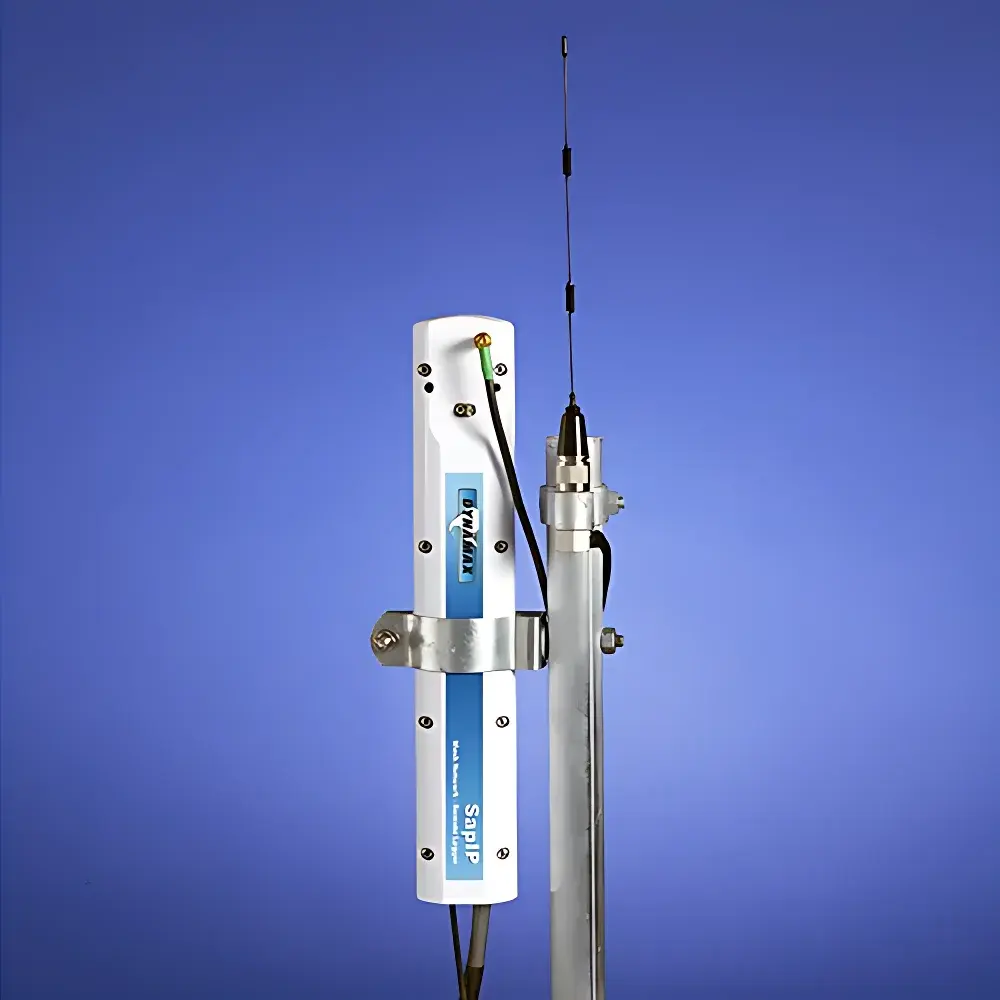
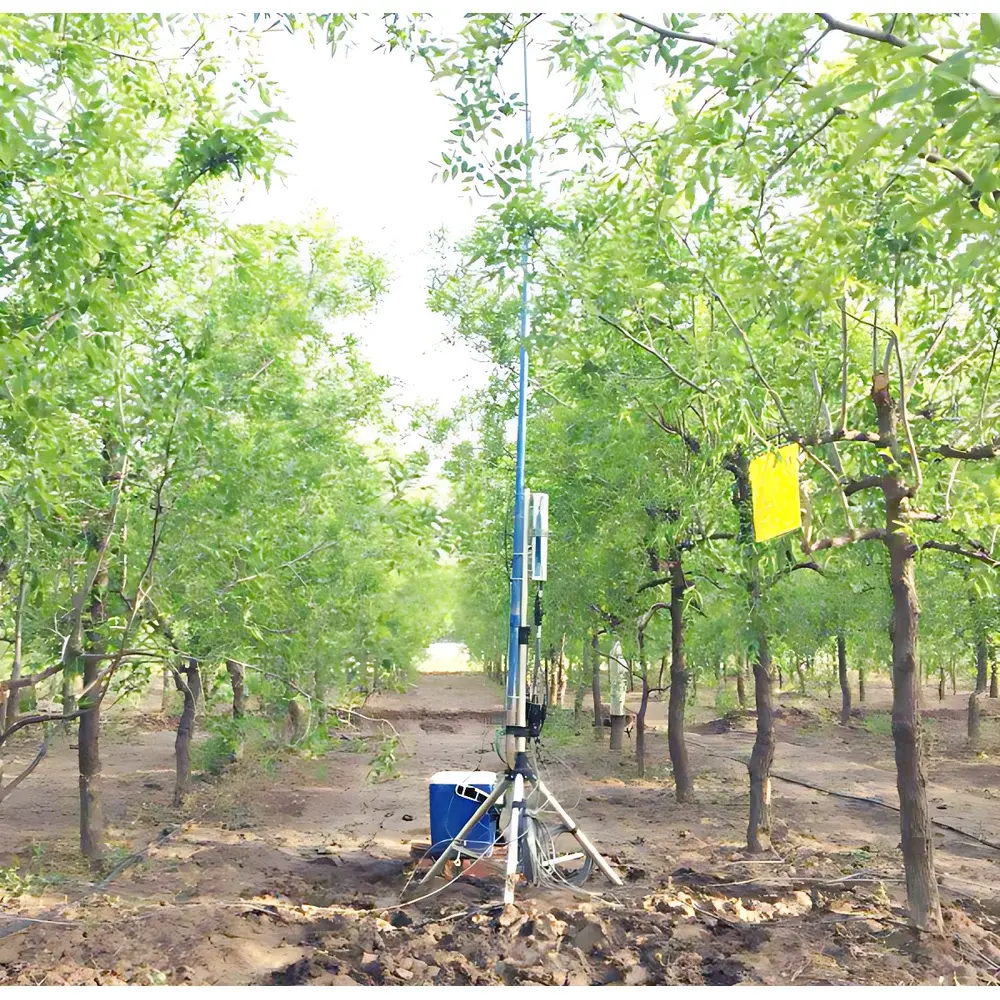
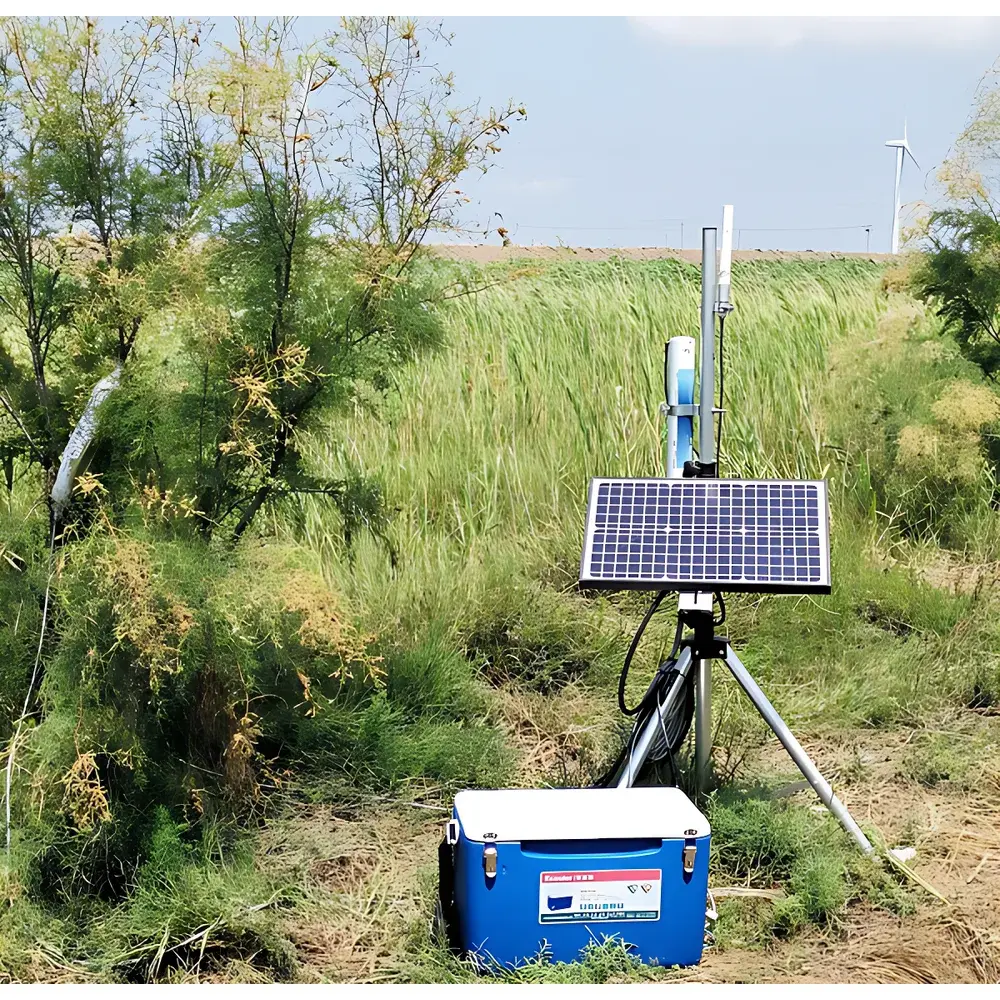
Dynamax SapIP Stem Flow Monitoring Network
| Brand | Dynamax |
|---|---|
| Origin | USA |
| Model | SapIP Monitoring Network |
| Node-to-Node Range | 300–500 m |
| Onboard Storage | 30,000 Records per Node |
| Compliance | Designed for Field-Deployable Ecophysiological Research under GLP-Aligned Data Integrity Practices |
Overview
The Dynamax SapIP Stem Flow Monitoring Network is a field-deployable, wireless mesh-based ecosystem engineered for high-temporal-resolution measurement of sap flux density in woody and herbaceous plants. It operates on the principle of thermal dissipation (TDP), heat pulse velocity (HPV), or constant heating (Dynagage/SGDC/EXO-Skin), depending on sensor configuration—enabling quantification of whole-plant transpiration, stomatal conductance proxies, and water-use efficiency across heterogeneous canopies. Unlike centralized data loggers requiring trenching or line-of-sight radio links, SapIP implements a self-organizing, multi-hop wireless mesh architecture. Each SapIP node functions as an autonomous data acquisition unit with embedded signal conditioning, timestamped analog-to-digital conversion, and adaptive duty cycling—optimized for long-term unattended operation in remote ecological sites, agroforestry trials, and climate change observatories.
Key Features
- Modular wireless mesh topology: SPIP-24K nodes form ad-hoc networks with up to 25 devices per gateway; automatic route discovery and redundancy ensure robust data delivery even if intermediate nodes fail.
- Dual connectivity options: SPIP-CELL variant integrates cellular (2G/3G) modems with carrier-agnostic SIM support (China Mobile/Unicom compatible), enabling direct cloud upload without gateway dependency or line-of-sight constraints.
- Flexible sensor compatibility: Supports four sensor families—TDP (thermocouple-based thermal dissipation), SGDC (surface-mounted thermistor arrays), Dynagage (wrap-around constant-power heaters), and EXO-Skin (epidermis-conformal thermal sensors)—covering stem diameters from 2.1 mm to 165 mm.
- High-channel-count analog front-end: 8 differential input channels per node allow simultaneous connection of up to two Dynagage units, two EXO-Skin sensors, four SGDC modules, or six TDP probes—enabling intra-plant replication or multi-species co-monitoring.
- Onboard non-volatile storage: 30,000 timestamped records retained locally during network outages; data integrity preserved via cyclic redundancy check (CRC) and monotonic real-time clock synchronization.
- Energy-optimized deployment: Compatible with solar-charged battery systems (e.g., 12 V lead-acid or LiFePO₄); sleep current <15 µA; configurable sampling intervals from 1 minute to 24 hours.
Sample Compatibility & Compliance
SapIP is validated for use with angiosperm and gymnosperm species exhibiting radial symmetry, bark thickness ≥0.5 mm, and xylem sap conductivity within standard physiological ranges (0.01–10 cm³·cm⁻²·h⁻¹). Sensor selection follows established allometric guidelines: TDP probes for trunks >50 mm diameter (ASTM D7927-15 referenced for probe insertion depth calibration); SGDC for irregular stems or thin-barked species (e.g., Populus tremuloides, Vitis vinifera); Dynagage for high-precision diurnal tracking in controlled-environment studies. The system adheres to FAO-56 dual-crop coefficient methodology for scaling sap flux to stand-level evapotranspiration. While not certified to ISO/IEC 17025, its architecture supports GLP-compliant audit trails when deployed with Agrisensors’ server-side metadata logging (user ID, sensor ID, firmware version, UTC timestamps, and CRC-verified transmission logs).
Software & Data Management
Agrisensors is a browser-based, role-managed web platform built on PostgreSQL and Python/Django, designed specifically for ecological time-series data curation. Users authenticate via TLS 1.2-secured credentials to access instrument-specific dashboards featuring interactive Google Maps integration (Baidu Map API not exposed externally; georeferenced coordinates stored in WGS84). Raw sensor voltages undergo on-server calibration using manufacturer-provided coefficients (e.g., Granier’s equation for TDP, Tuzet’s correction for SGDC). Derived metrics—including sap flux density (Js, g·cm⁻²·h⁻¹), daily transpiration (L·tree⁻¹·d⁻¹), and normalized transpiration ratio (NTR)—are computed in real time. Data exports comply with CF Metadata Conventions v1.8 and are available in CSV, NetCDF4, or JSON formats. Audit logs record all user-initiated actions (data deletion, parameter edits, export events) satisfying FDA 21 CFR Part 11 requirements for electronic records when enabled via enterprise licensing.
Applications
- Long-term drought response phenotyping across tree provenances in common-garden experiments.
- Validation of satellite-derived evapotranspiration products (e.g., MOD16, SSEBop) at flux tower footprint scales.
- Rootstock-scion interaction studies in orchard systems using paired TDP + soil moisture (SapIP-SM) and microclimate (SapIP-MICRO) nodes.
- Urban forestry water budget modeling integrating sap flow, stem water potential, and eddy covariance data.
- Carbon-water coupling analysis via concurrent sap flow and portable photosynthesis system measurements.
FAQ
What communication protocols does SapIP support?
Radio frequency communication uses proprietary 900 MHz ISM-band protocol (FCC ID: XOO-SAPIP24K) for mesh networking; SPIP-CELL employs AT-command-driven PPP over GSM/GPRS (2G/3G bands only; LTE not supported).
Can SapIP operate without internet connectivity?
Yes—local data retrieval is possible via USB-C cable; onboard memory retains full resolution until download. However, cloud synchronization, remote reconfiguration, and automated alerts require active connectivity.
Is firmware update capability available over-the-air?
Firmware updates must be initiated manually via Agrisensors web interface and delivered through gateway or SPIP-CELL channel; no autonomous background updates are performed.
How is time synchronization maintained across nodes?
Each SapIP includes a temperature-compensated crystal oscillator (TCXO) with ±2 ppm accuracy. Gateways broadcast NTP-like time packets hourly; nodes adjust drift using weighted moving average of last 10 sync events.
Are calibration certificates provided with sensors?
Dynamax supplies factory calibration reports traceable to NIST standards for all TDP and Dynagage sensors; SGDC and EXO-Skin units include batch-specific thermal resistance curves and installation geometry documentation.





