
LI-COR LI-8250 Multi-Channel Automated Soil CH₄/CO₂/H₂O Flux Measurement System
| Brand | LI-COR |
|---|---|
| Origin | USA |
| Model | LI-8250 |
| Gas Analyzers Supported | LI-7810 (CH₄/CO₂/H₂O) or LI-870 (CO₂/H₂O) |
| Max Channels | 36 (via 8250-01 expansion modules) |
| Chamber Types | 8200-104 (opaque) or 8200-104C (transparent) |
| Data Storage | 8 GB internal |
| Operating Temperature | –20 to 45 °C |
| Humidity Range | 0–95% RH (non-condensing) |
| Enclosure Rating | IEC IP55 |
| Power Input | 10–30 VDC |
| Wi-Fi | 2.4 GHz, 802.11 a/b/g/n/ac |
| GPS Accuracy | 2.5 m CEP |
| Max Chamber Radius | 15.0 m (single line), 30.0 m (with 8250-01) |
| Pressure Sensor Range | 20–110 kPa (±0.4 kPa accuracy) |
| Flow Rate to Chambers | ~2–3 L/min |
| Software | SoilFluxPRO™ |
Overview
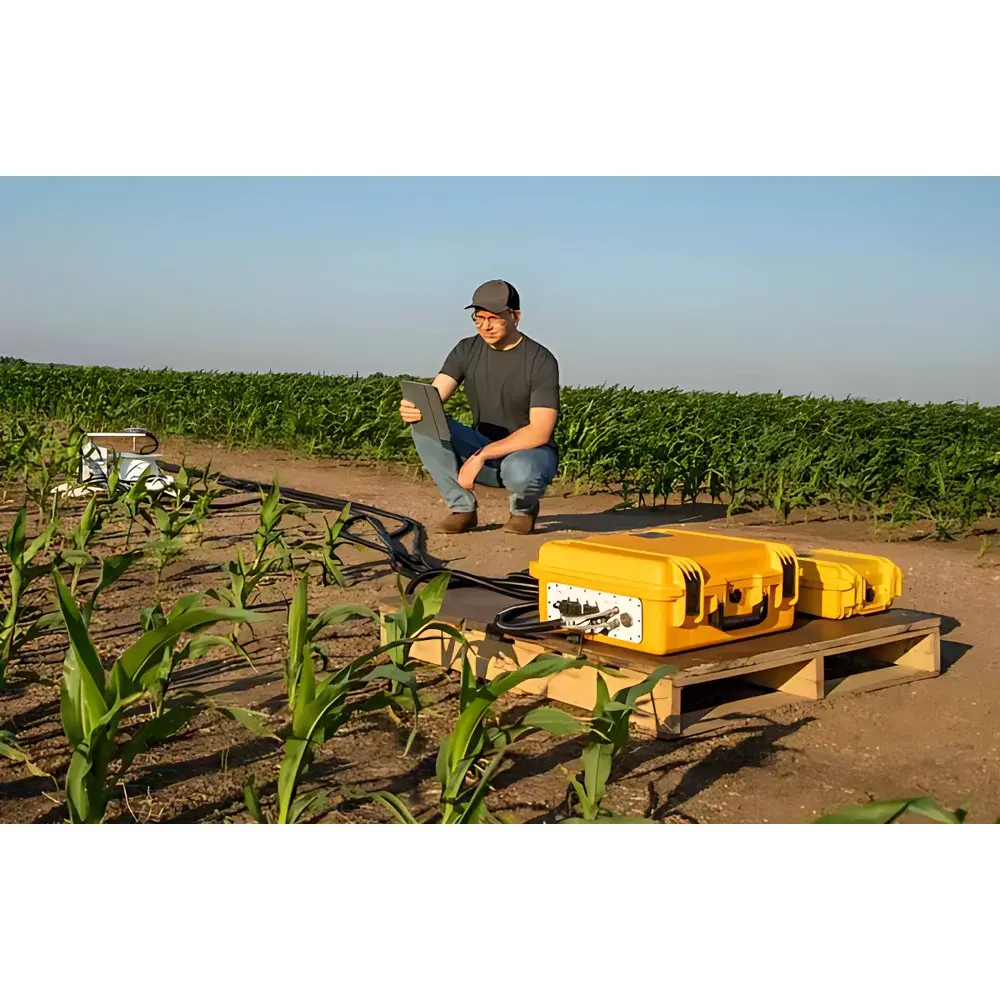
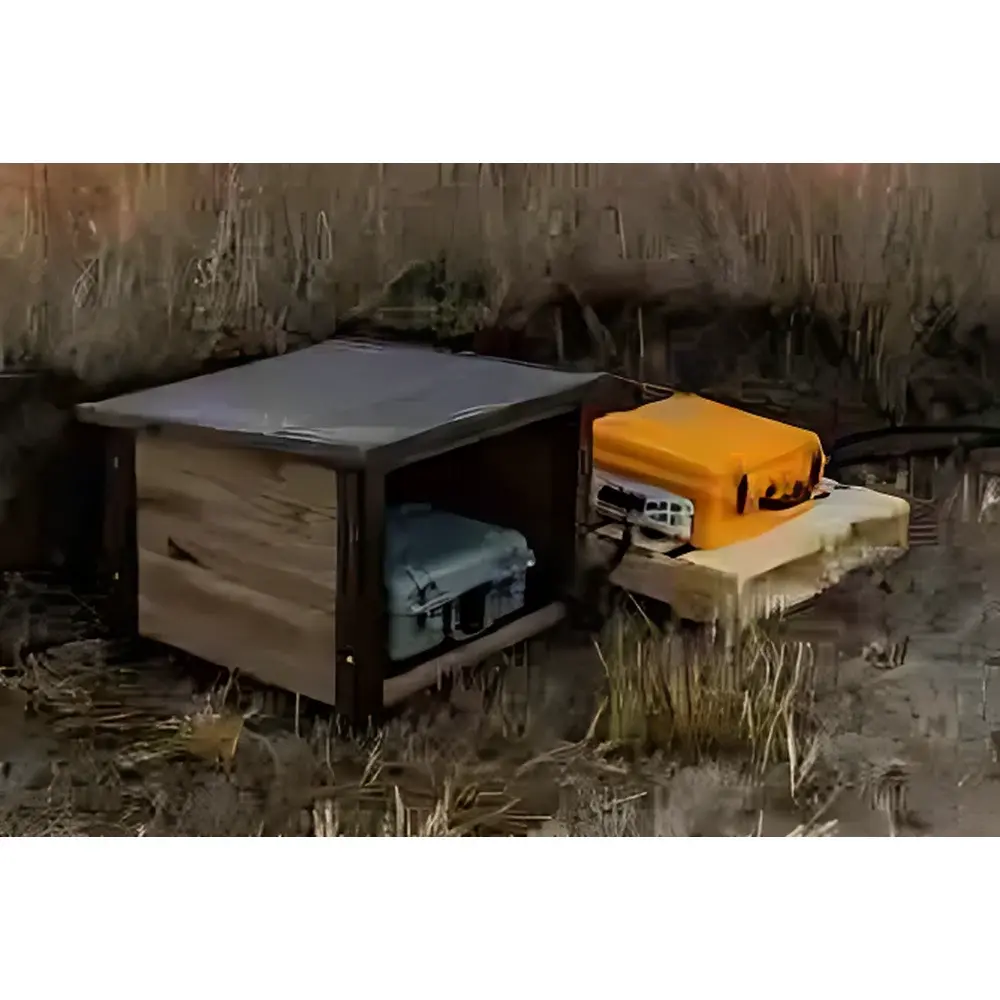
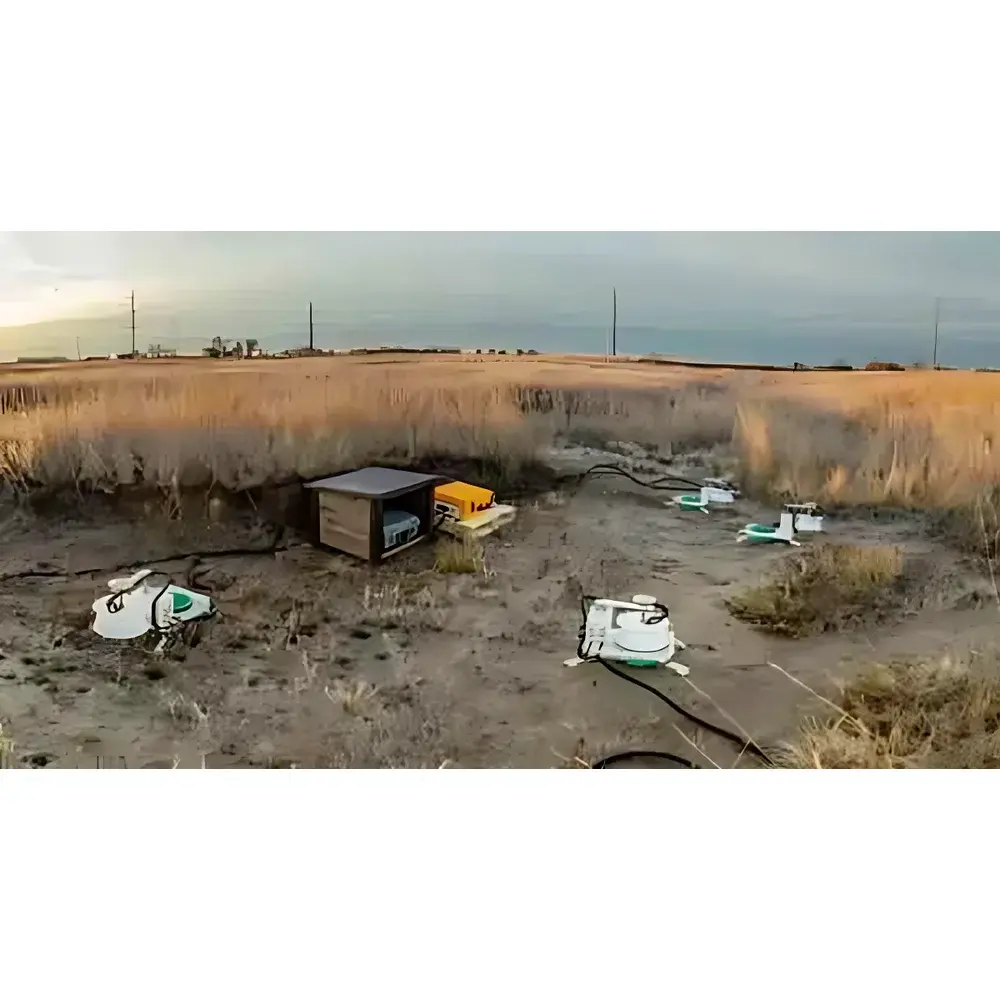
The LI-COR LI-8250 Multi-Channel Automated Soil CH₄/CO₂/H₂O Flux Measurement System is an integrated, field-deployable platform engineered for high-temporal-resolution, long-term quantification of soil-atmosphere greenhouse gas exchange. At its core lies the LI-8250 multiplexer—a central control and data integration unit that coordinates sequential sampling from up to 36 SDI-12–compatible long-term measurement chambers (e.g., 8200-104 or 8200-104C) and interfaces with high-precision trace gas analyzers, primarily the LI-7810 (CH₄/CO₂/H₂O) or LI-870 (CO₂/H₂O). The system employs closed-chamber methodology grounded in Fick’s first law of diffusion, where time-series concentration changes within a sealed chamber volume are used to compute vertical flux densities (µmol m⁻² s⁻¹ for CO₂ and CH₄; mmol m⁻² s⁻¹ for H₂O vapor). All flux calculations are performed onboard using temperature-, pressure-, and humidity-corrected algorithms compliant with widely accepted eddy covariance and chamber-based best practices. Designed for unattended operation across diverse biomes—from arctic tundra to tropical agroecosystems—the LI-8250 supports both spatially distributed monitoring networks and longitudinal studies requiring multi-year continuity.
Key Features
- Onboard flux computation engine with real-time correction for ambient temperature, barometric pressure, and relative humidity—no post-processing required for preliminary flux estimates
- Modular architecture supporting up to 36 measurement locations via optional 8250-01 expansion modules, enabling scalable deployment across heterogeneous landscapes
- Integrated dual-band Wi-Fi (2.4 GHz) and optional cellular modem compatibility for secure remote access, firmware updates, and alarm-triggered notifications
- 8 GB internal flash storage with automatic rollover and timestamped binary logging; data export via USB-A or Ethernet
- Embedded GPS module (2.5 m CEP accuracy) for georeferenced chamber positioning and metadata tagging in compliance with FAO and IPCC Tier 2 reporting frameworks
- IP55-rated enclosure rated for continuous outdoor operation between –20 °C and 45 °C, with condensation-resistant thermal management
- SDI-12 interface standardization across all chambers, permitting seamless integration of auxiliary environmental sensors (soil temperature, volumetric water content, PAR, soil heat flux)
- Low-power design optimized for solar-rechargeable battery systems; typical operational draw: 4.8 W (standby), 15.6 W (sampling), 18.2 W (startup)
Sample Compatibility & Compliance
The LI-8250 system accommodates two primary chamber configurations: the 8200-104 opaque chamber for dark-flux measurements (e.g., heterotrophic respiration, methanogenesis under anaerobic conditions), and the 8200-104C transparent chamber for net carbon exchange (NCE) assessments under natural irradiance. Both chambers feature standardized 317.8 cm² soil surface area and 3955 cm³ headspace volume, ensuring methodological consistency across sites and studies. All hardware components meet IEC IP55 ingress protection standards. The system supports full audit trails and user-access logs—critical for GLP-compliant environmental monitoring programs. While not certified under FDA 21 CFR Part 11, SoilFluxPRO™ software includes configurable electronic signatures, version-controlled processing scripts, and immutable raw-data archiving—features aligned with ISO/IEC 17025:2017 requirements for testing laboratories. Data formats adhere to CF (Climate and Forecast) Metadata Conventions v1.8, facilitating ingestion into ICOS, AmeriFlux, and FLUXNET repositories.
Software & Data Management
SoilFluxPRO™ is the dedicated desktop application for visualization, quality control, reprocessing, and statistical analysis of chamber-derived flux data. It natively imports binary files from the LI-8250’s internal storage or network-mounted drives and reconstructs time-aligned concentration curves for each chamber–analyzer pair. Users may apply custom linear/nonlinear regression models (e.g., HMR, R script integrations), filter outliers based on chamber closure duration or pressure drift thresholds, and generate spatial heatmaps of flux magnitude and inter-chamber variability. Batch processing supports ISO-standardized uncertainty propagation per chamber replicate, incorporating analytical precision (LI-7810: ±0.3 ppb CH₄, ±0.1 ppm CO₂, ±10 ppm H₂O) and environmental sensor tolerances. Export options include NetCDF, CSV, and Excel-compatible XLSX, with metadata embedded per CF conventions. Remote access is enabled via HTTPS-secured web interface, allowing live dashboard viewing and parameter adjustment without physical site visits.
Applications
- Long-term monitoring of soil carbon balance in managed ecosystems (croplands, pastures, restored wetlands) under climate change scenarios
- Partitioning autotrophic vs. heterotrophic respiration using opaque/transparent chamber comparisons in forest floor and rhizosphere studies
- Quantifying methane oxidation rates in aerobic soils and emission hotspots in rice paddies or peatlands
- Evaluating biochar amendment effects on GHG mitigation potential across soil texture gradients
- Validating land surface models (e.g., CLM, ORCHIDEE) with high-frequency in situ flux observations
- Supporting national greenhouse gas inventories (UNFCCC Annex I reporting) through standardized, traceable measurement protocols
- Atmospheric boundary layer profiling via vertical arrays of LI-8250-linked chambers coupled with tower-based meteorology
FAQ
Can the LI-8250 operate independently without a connected PC or cloud service?
Yes—the LI-8250 runs fully autonomous measurement cycles with onboard scheduling, data logging, and flux calculation. No external computer is required for routine operation.
What is the maximum recommended distance between the LI-8250 and a single 8200-104 chamber?
15.0 meters using one dedicated sample line; extended to 30.0 meters when using the 8250-01 expansion module with dual-line configuration.
Is SoilFluxPRO™ compatible with macOS or Linux operating systems?
SoilFluxPRO™ is Windows-native (Windows 10/11, 64-bit); however, raw binary data files can be parsed programmatically using Python (via LI-COR’s open-source li8250 package) on any OS.
Does the system support third-party gas analyzers beyond LI-COR models?
Yes—via analog voltage or RS-422 input, provided the analyzer outputs concentration values in real time and supports external trigger synchronization.
How frequently does the LI-7810 require calibration verification in field deployments?
The LI-7810’s OF-CEAS optical architecture enables stable performance over 6–12 months without recalibration; annual zero/span verification with certified gas standards is recommended for regulatory-grade applications.
Related Products







