
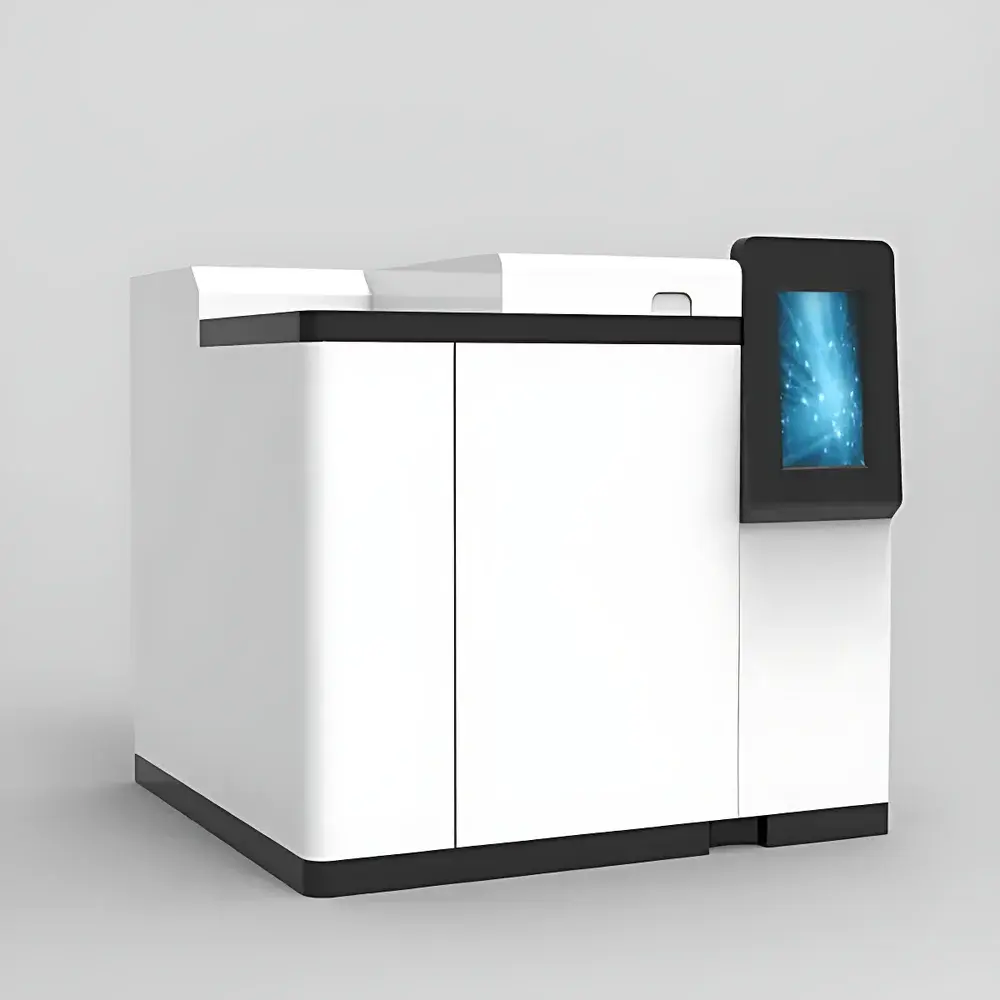
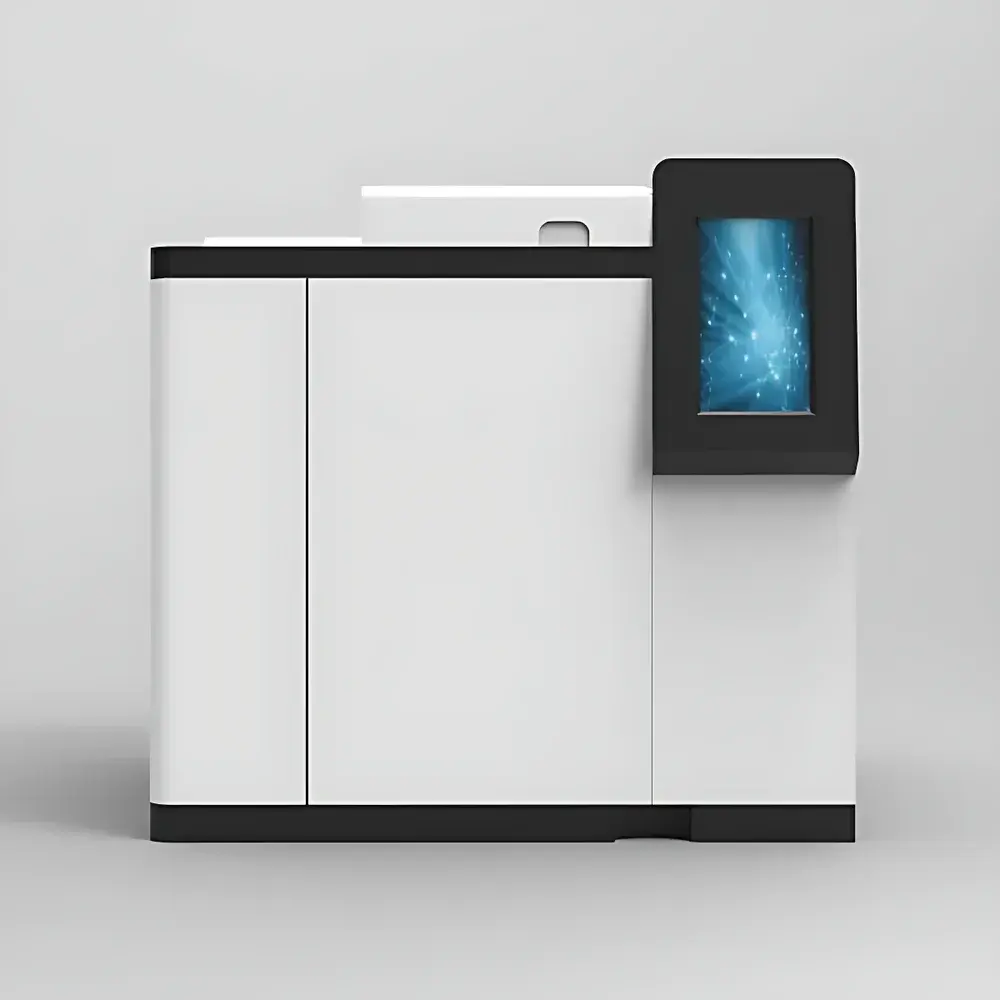
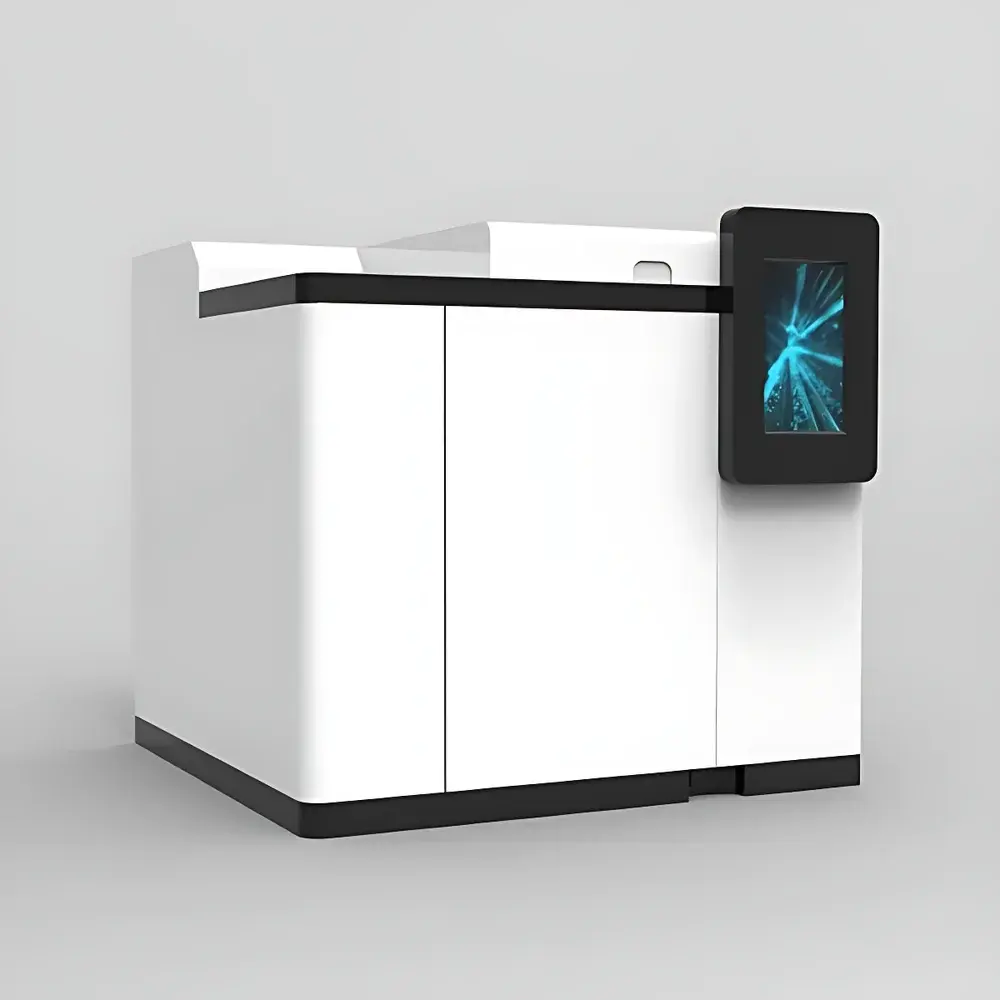
Shandong Luchuang GC-9860 Gas Chromatograph with 7-inch Capacitive Touchscreen
| Brand | Shandong Luchuang |
|---|---|
| Origin | Shandong, China |
| Manufacturer Type | Direct Manufacturer |
| Instrument Type | Laboratory Gas Chromatograph |
| Application Field | Petrochemical Industry |
| Temperature Control Range | Ambient +8 °C to 450 °C |
| Maximum Ramp Rate | 65 °C/min |
| Cool-down Time | ≤3.5 min (300 °C → 100 °C at 25 °C ambient) |
| Temperature Stability | ±0.01 °C |
| Programmed Temperature Steps | Up to 99 |
| Injector Max Temp | 450 °C |
| Injector Pressure Range | 0–1000 kPa |
| Carrier Gas Flow Range | 0–1200 mL/min |
| Carrier Gas Pressure Control Range | 0–1000 kPa |
| Detector Options | FID, TCD, ECD, FPD, NPD (up to 4 simultaneously installed) |
| FID Detection Limit | ≤2×10⁻¹² g/s (n-hexadecane) |
| FID Linear Dynamic Range | ≥10⁷ |
| TCD Sensitivity | ≥10,000 mV·mL/mg (benzene) |
Overview
The Shandong Luchuang GC-9860 is a high-performance laboratory gas chromatograph engineered for precision, reliability, and operational flexibility in petrochemical and industrial QC/QA environments. Built upon robust capillary and packed-column separation principles, the system employs carrier gas-driven solute partitioning across a thermally stabilized stationary phase to resolve complex volatile and semi-volatile organic mixtures. Its core architecture integrates advanced thermal management, modular detector design, and fully electronic pneumatic control—eliminating mechanical pressure gauges in favor of real-time digital flow and pressure monitoring. The instrument complies with fundamental chromatographic performance criteria outlined in ASTM D3606, ISO 10301, and USP , supporting method validation workflows under GLP and GMP-aligned laboratory practices.
Key Features
- 7-inch capacitive touchscreen interface: High-resolution display with intuitive graphical navigation enables rapid method setup, real-time parameter adjustment, and live chromatogram visualization—reducing operator training time and minimizing input error.
- Ultra-stable temperature control system: Patented heat-exchange chamber design ensures uniform thermal distribution; achieves ±0.01 °C isothermal stability and supports up to 99-step programmed temperature ramps with maximum heating rate of 65 °C/min and cool-down from 300 °C to 100 °C in ≤3.5 minutes (at 25 °C ambient).
- Modular multi-injector configuration: Accommodates up to three independent inlet ports simultaneously, with six interchangeable inlet types—including split/splitless, on-column, PTV, and gas sampling valves—enabling multi-method analysis without hardware reconfiguration.
- Multi-detector expandability: Supports concurrent installation of up to four detectors (FID, TCD, ECD, FPD, or NPD), including dual-FID, dual-TCD, or hybrid combinations; TCD features dual post-column makeup gas channels for flexible column configurations (single/dual packed or capillary columns).
- Digital pneumatic control (DPC): Fully electronic regulation of carrier, makeup, and fuel gases with continuous feedback monitoring across 0–1200 mL/min flow and 0–1000 kPa pressure ranges—ensuring reproducible retention times and peak area precision.
Sample Compatibility & Compliance
The GC-9860 is validated for routine analysis of hydrocarbons (C₁–C₃₀), oxygenates, sulfur compounds, halogenated organics, and aromatic species commonly encountered in refinery streams, LPG, gasoline, diesel, and polymer feedstock testing. Its injector temperature range (up to 450 °C) and inert flow path support thermally labile and high-boiling analytes. The system meets essential regulatory expectations for data integrity per FDA 21 CFR Part 11 when paired with compliant chromatography data systems (CDS); audit trails, electronic signatures, and method locking are implemented via its embedded IoT-enabled workstation software.
Software & Data Management
Built-in chromatography data system operates on a Linux-based IoT platform, enabling remote instrument monitoring, method deployment, and result retrieval via secure web interface or dedicated client application. Raw data files conform to ANDI/NetCDF standards. Quantitative workflows include automated peak detection, calibration curve generation (linear, quadratic, or weighted), integration event scripting, and customizable report templates aligned with ISO/IEC 17025 documentation requirements. Batch processing, spectral library searching (for compatible detectors), and export to LIMS-compatible formats (e.g., CSV, XML, PDF/A) are natively supported.
Applications
- Petrochemical QA/QC: Simulated distillation (ASTM D2887), benzene/toluene/xylene (BTX) quantification, olefin content analysis, and sulfur speciation (ASTM D5453, D7039)
- Fuel additive profiling and oxidation stability assessment
- Environmental VOC screening in air, water, and soil extracts (EPA Method 8021B, 8260D)
- Residual solvent analysis in polymers and pharmaceutical excipients (ICH Q3C)
- Quality control of industrial solvents, monomers, and synthetic intermediates
FAQ
Does the GC-9860 support compliance with 21 CFR Part 11?
Yes—when operated with validated software modules enabling electronic signatures, audit trails, and user access controls, the system satisfies core technical requirements for regulated environments.
Can I run both packed and capillary columns on the same instrument?
Yes—the TCD module includes dual makeup gas channels and configurable column connections, permitting single-column, dual-column, or capillary-only configurations without hardware modification.
What is the minimum detectable concentration for benzene using the TCD?
Under optimized conditions (2 mV·mL/mg sensitivity, 1 mL injection, 0.53 mm ID column), typical LOD for benzene is ~0.5 ppm in gaseous samples; actual values depend on column efficiency, injection volume, and signal averaging.
Is firmware upgrade available remotely?
Yes—secure OTA (over-the-air) updates are supported via authenticated HTTPS connection to the manufacturer’s update server, preserving configuration integrity during version transitions.
How many users can be configured in the access control system?
Up to 32 unique user profiles with role-based permissions (operator, supervisor, administrator) can be defined and managed locally or synchronized with LDAP directories.




