
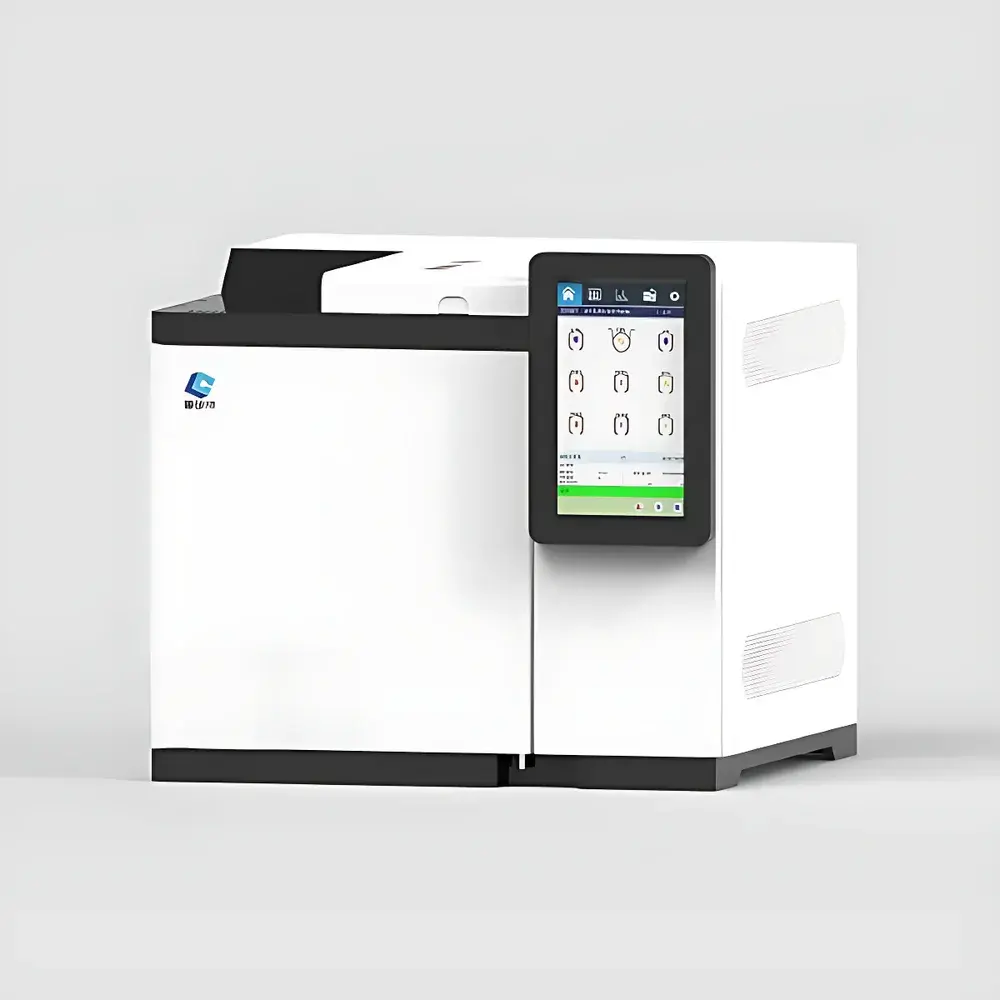
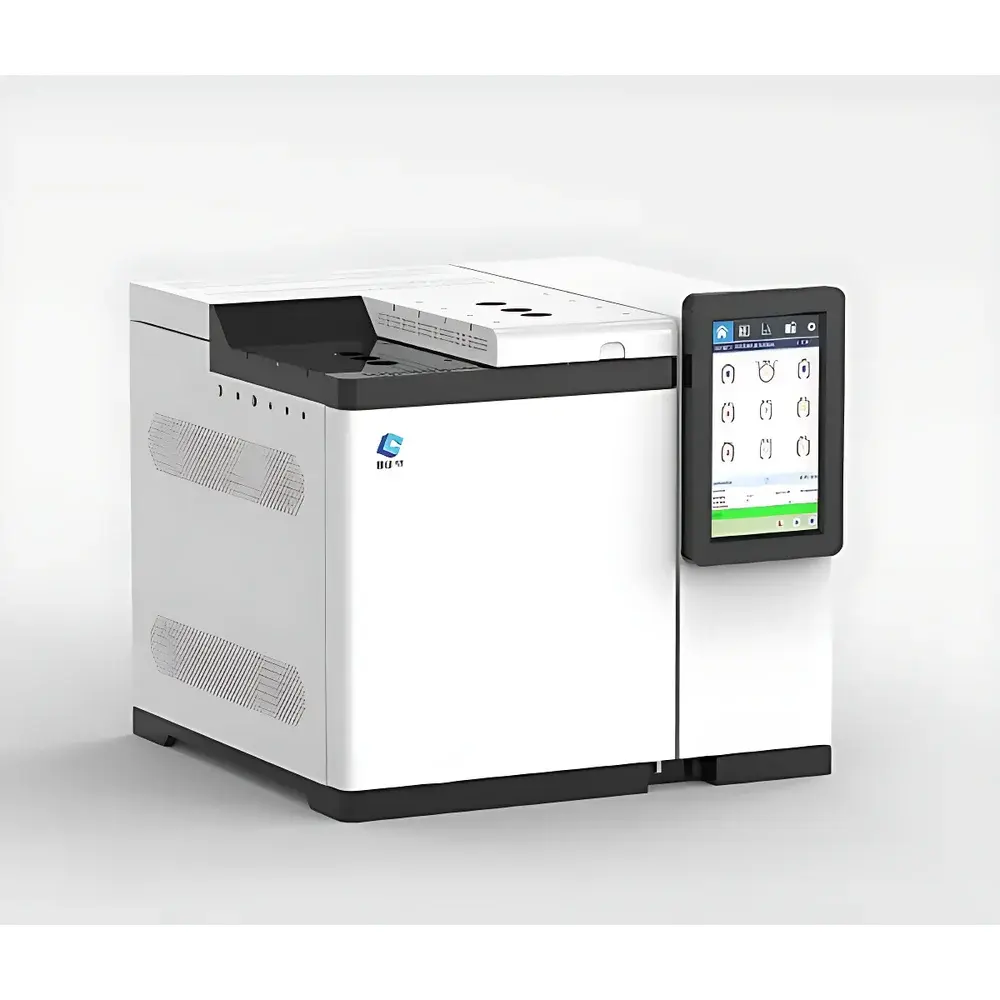
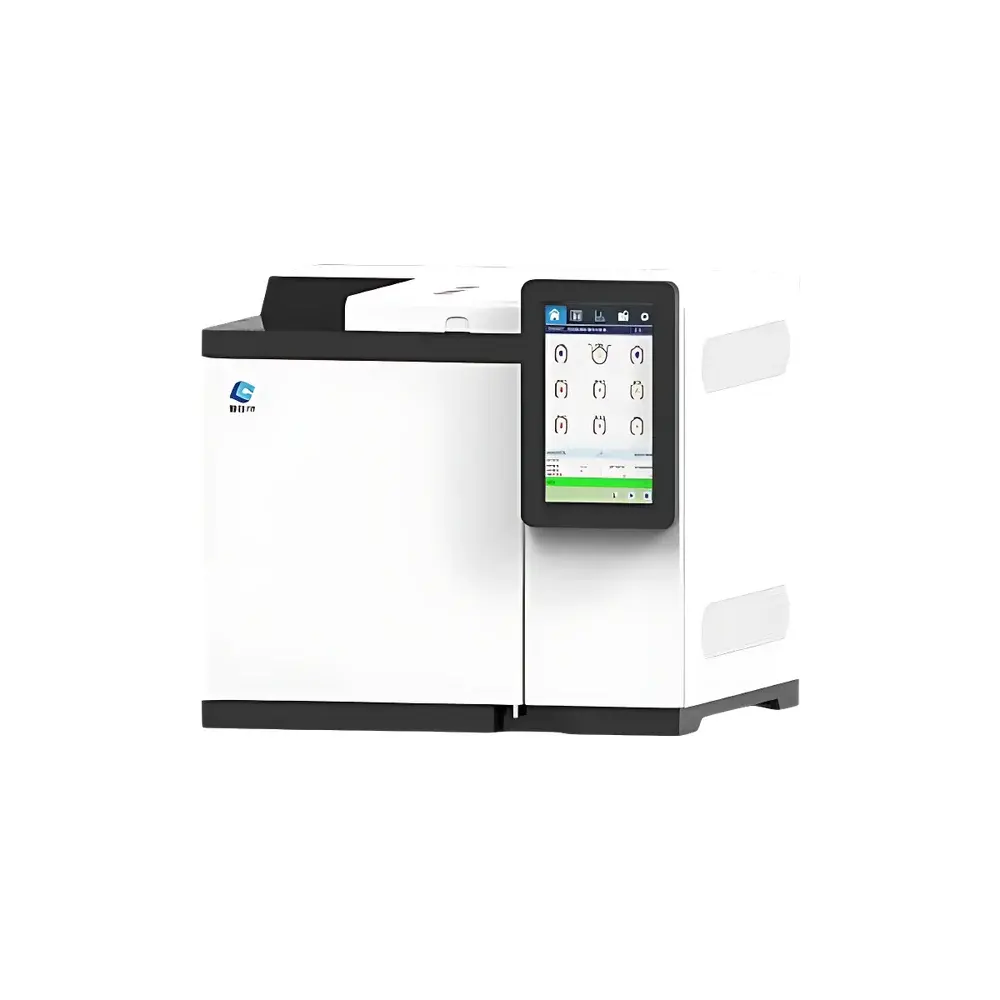
Shandong Luchuang GC-9870 Advanced Gas Chromatograph with 10-inch Capacitive Touchscreen
| [Brand | Shandong Luchuang |
|---|---|
| Origin | Shandong, China |
| Manufacturer Type | OEM Manufacturer |
| Instrument Type | Laboratory Gas Chromatograph |
| Application Field | Petrochemical Industry |
| Temperature Control Range | Ambient +8 °C to 450 °C |
| Max. Ramp Rate | 65 °C/min |
| Cool-down Time | ≤3.5 min (300 °C → 100 °C at 25 °C ambient) |
| Temperature Stability | ±0.01 °C |
| Temp. Gradient Uniformity | ±1% (100–350 °C) |
| Programmable Steps | Up to 99 |
| Max. Run Time | 9999 min |
| Carrier Gas Flow Range | 0–1200 mL/min |
| Carrier Gas Pressure Range | 0–1000 psi |
| Injector Max. Temp. | 450 °C |
| Injector Pressure Setpoint Range | 0–1000 psi |
| Injector Total Flow Setpoint Range | 0–1200 mL/min |
| Detector Options | FID, TCD, ECD, FPD, NPD |
| Simultaneous Detectors | Up to 4 |
| Injector Configurations | Up to 3 injectors |
| Inlet Modes | Split, splitless, on-column, PTV, cool-on-column, direct injection] |
Overview
The Shandong Luchuang GC-9870 Advanced Gas Chromatograph is a high-performance, laboratory-grade analytical instrument engineered for precise separation, identification, and quantification of volatile and semi-volatile organic compounds in complex petrochemical matrices. Built upon a robust dual-channel pneumatic architecture with fully electronic pressure and flow control (EPC/EFC), the system implements capillary and packed column chromatography using standardized gas-phase partitioning principles governed by the Van Deemter equation and retention time modeling. Its thermally optimized oven design—featuring rapid heat exchange geometry and dual-zone thermal sensing—enables reproducible temperature programming across 99-step gradients, supporting compliance-critical workflows in refinery QA/QC, catalyst evaluation, hydrocarbon speciation, and ASTM D3606/D5599-compliant fuel analysis.
Key Features
- 10-inch industrial-grade capacitive touchscreen interface with intuitive, context-aware method editor—enabling full method configuration (injection parameters, oven program, detector settings) without external PC dependency;
- Electronic pneumatic control system replacing mechanical valves and analog gauges—delivering digital readout accuracy of ±0.1 psi for pressure and ±0.2 mL/min for flow, reducing calibration drift and operator-induced variability;
- Advanced thermal management architecture: oven achieves ±0.01 °C isothermal stability and 65 °C/min maximum ramp rate, with verified cool-down performance of ≤3.5 minutes from 300 °C to 100 °C (ambient 25 °C);
- Modular multi-inlet support: up to three independently configurable inlets installed simultaneously—including split/splitless, on-column, PTV, and cool-on-column options—with six factory-certified inlet modules available for method flexibility;
- Multi-detector capability: supports concurrent installation of up to four detectors (FID, TCD, ECD, FPD, NPD) with independent power, gas, and signal conditioning circuits; TCD includes dual post-column makeup gas channels for single-column, dual-column, or capillary-only operation;
- Integrated embedded chromatography workstation running a real-time Linux-based OS with built-in IoT connectivity—enabling remote monitoring, secure data streaming via TLS 1.2, and audit-trail-enabled method execution logs.
Sample Compatibility & Compliance
The GC-9870 accommodates liquid, gaseous, and headspace samples via standard 1/16″ stainless steel or fused silica tubing interfaces. It complies with core regulatory requirements for analytical instrumentation in regulated environments: hardware-level timestamped event logging meets FDA 21 CFR Part 11 foundational expectations for electronic records; thermal and detector performance specifications align with ASTM E260, ISO 17025:2017 Clause 5.9.1, and USP chromatographic system suitability criteria. All detector modules are calibrated traceably to NIST-traceable standards (e.g., n-hexadecane for FID, benzene for TCD), and system suitability tests (SST) can be automated within the onboard software suite.
Software & Data Management
The embedded chromatography platform provides native acquisition, processing, and reporting functions without third-party licensing. Raw data is stored in vendor-neutral .CDF (NetCDF-based) format compliant with ASTM E1947. The software supports automated integration, peak purity assessment, retention time locking (RTL), and multi-point calibration curves with forced zero-intercept and weighting options. Audit trail functionality records all user actions—including method edits, sequence changes, and report exports—with immutable timestamps and operator ID linkage. Data export supports CSV, PDF, XML, and LIMS-compatible HL7 v2.5/ASTM E1384 formats. Remote access is secured via TLS-encrypted web interface or OPC UA server for enterprise SCADA integration.
Applications
- Petrochemical QA/QC: gasoline oxygenates (MTBE, ETBE), aromatic/hydrocarbon ratios (BTEX, naphthalene), sulfur compounds (mercaptans, sulfides) per ASTM D5599 and D6667;
- Refinery process stream analysis: light ends (C1–C5), olefin/paraffin ratios, and catalyst deactivation markers;
- Environmental testing: VOC screening in soil gas, wastewater headspace, and ambient air per EPA Method 8021B and TO-17;
- Polymers & additives: residual monomers (vinyl chloride, styrene), plasticizers (phthalates), and stabilizer degradation products;
- Food & flavor chemistry: terpenes, aldehydes, esters, and off-flavor compounds in essential oils and distillates.
FAQ
Does the GC-9870 support GLP/GMP-compliant operation?
Yes—the system provides electronic signature support, full audit trail with tamper-evident hashing, and configurable user roles (Admin, Analyst, Reviewer) aligned with ALCOA+ data integrity principles.
Can I upgrade detector configurations post-purchase?
All detector modules are hot-swappable and field-installable using standardized mechanical and electrical interfaces; firmware auto-detects newly installed units.
Is method transfer possible between GC-9870 and other major GC platforms?
Method translation tools are included for Agilent, Thermo, and Shimadzu instruments, preserving retention indices, flow profiles, and detector gain settings where physically feasible.
What maintenance intervals are recommended for the EPC system?
Electronic pressure controllers require no routine calibration; annual verification against NIST-traceable deadweight tester is advised per ISO/IEC 17025 internal quality procedures.
How is cybersecurity handled for remote access?
The embedded OS disables unused network services by default, enforces TLS 1.2+ encryption, supports certificate-based authentication, and isolates chromatographic data traffic from general IT networks via VLAN tagging.




