
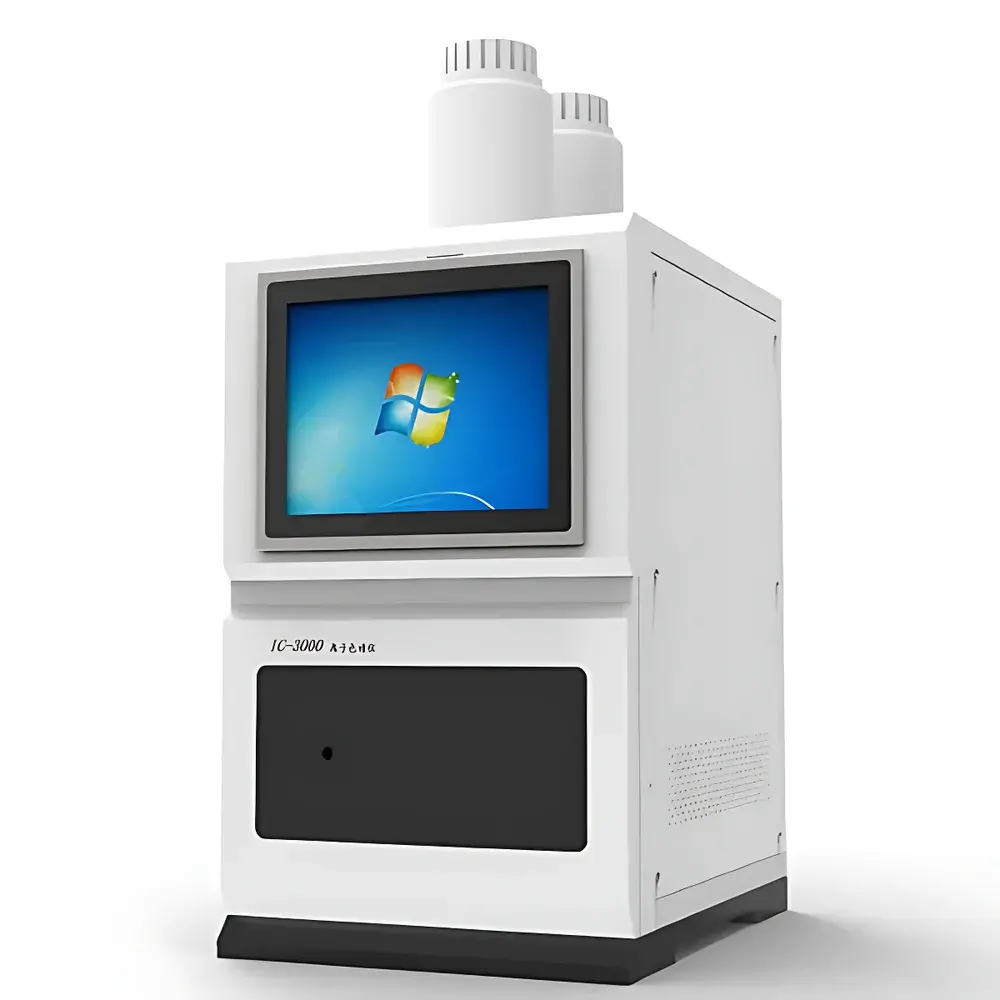
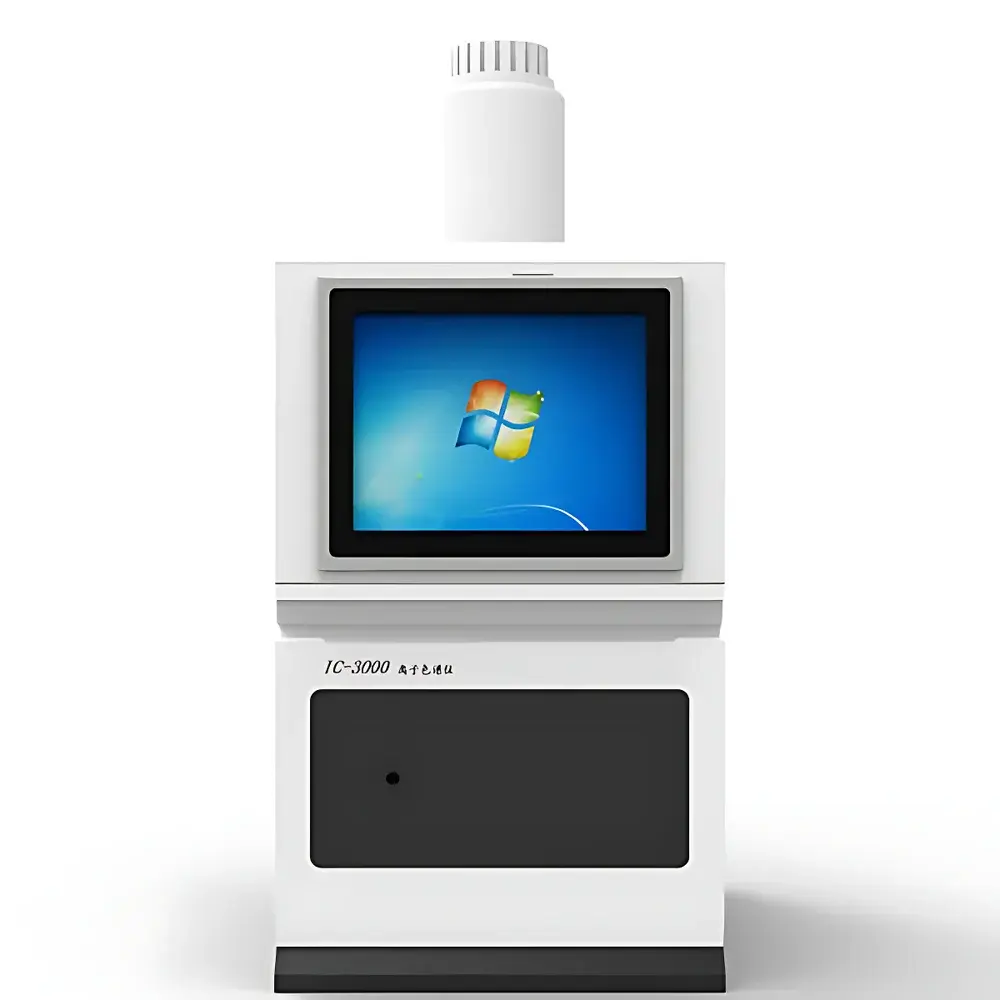
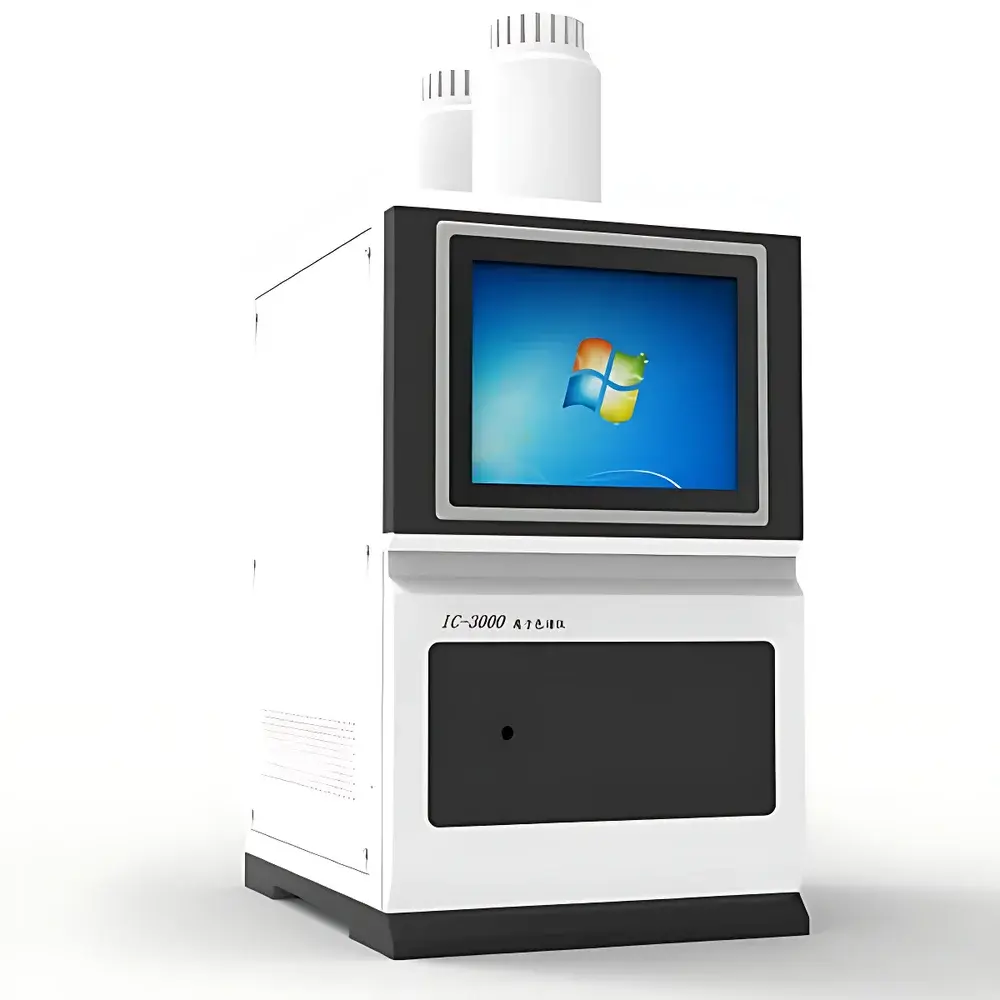
Shandong Luchuang IC-3000 Cation-Selective Ion Chromatograph
| Brand | Shandong Luchuang |
|---|---|
| Origin | Shandong, China |
| Manufacturer Type | Direct Manufacturer |
| Regional Classification | Domestic (China) |
| Model | IC-3000 (Cation Mode) |
| Instrument Type | Laboratory Benchtop System |
| Application Scope | General-Purpose Cation Analysis |
| Pump Pressure Range | 0–35 MPa (0–5000 psi) |
| Flow Rate Range | 0.00–10.00 mL/min |
| Eluent Flow Rate | 0.1–3.0 mL/min |
| Max Operating Pressure | 35 MPa |
| Operating Temperature Range | 30–60°C (86–140°F) |
| Temperature Reproducibility | ±0.1°C |
| Eluent Concentration Range | 0.1–100 mM (varies by eluent chemistry) |
Overview
The Shandong Luchuang IC-3000 Cation-Selective Ion Chromatograph is a fully integrated, laboratory-grade benchtop system engineered for high-precision, reproducible quantification of inorganic cations—including Li⁺, Na⁺, NH₄⁺, K⁺, Ca²⁺, Mg²⁺, Sr²⁺, and Ba²⁺—in environmental, pharmaceutical, food, and industrial water matrices. Based on suppressed conductivity detection coupled with ion-exchange chromatography, the IC-3000 employs a dual-column eluent generation architecture and electrochemical suppression to achieve low background conductivity, enhanced signal-to-noise ratio, and minimal baseline drift. Its core measurement principle relies on the selective retention of cations on a high-capacity, chemically stable cation-exchange column, followed by post-column suppression to convert analyte ions into low-conductivity forms (e.g., H⁺), enabling sensitive and linear detection via a five-electrode conductivity cell. Designed for routine QC/QA and regulatory-compliant analysis, the system meets foundational requirements for method validation under ISO 17025 and supports alignment with USP , ASTM D4327, and EPA Method 300.0 for cationic species.
Key Features
- Integrated all-in-one architecture: Combines high-pressure pump, eluent generator, electrochemical suppressor, thermostatted separation column, conductivity detector, and embedded 12.1-inch industrial PC workstation in a single compact chassis—reducing dead volume and minimizing peak dispersion.
- PLC-based centralized control system: Unified software interface enables one-click instrument startup/shutdown, automated valve injection, real-time parameter monitoring, and context-sensitive operational tutorials—all accessible via touchscreen or mouse navigation.
- High-stability dual-piston reciprocating pump: PEEK-wetted components (pump head, tubing, seals) compatible with pH 0–14 eluents and organic modifiers; flow accuracy ≤0.1%, pulse dampening optimized via adaptive microprocessor control.
- Five-electrode conductivity detector: Constructed with passivated 316L stainless steel electrodes; baseline noise ≤0.002 µS/cm, drift ≤0.008 µS/cm over 30 min, detection limit ≤0.0005 µg/mL (as Cl⁻), linear dynamic range ≥0.9995 (R²), resolution ≤0.0020 nS/cm.
- Continuous electrochemical regeneration suppressor: Self-regenerating membrane design eliminates manual chemical regeneration; operates across full pH 0–14 range; stabilization time ≤12 min with excellent inter-run reproducibility.
- Integrated thermostatic chamber: Maintains column, suppressor, detector cell, and amplifier circuitry at identical setpoint (5–65°C ±0.01°C) within an insulated oven—effectively mitigating thermal-induced conductivity drift and baseline noise.
- On-line electrolytic eluent generator: Produces high-purity isocratic or gradient eluents (0.1–100 mM) from deionized water only—eliminating manual preparation, reducing contamination risk, and improving long-term retention time stability.
- Integrated vacuum degasser: Achieves >75% dissolved oxygen removal (from 8 ppm to ≤2 ppm at 1.5 mL/min); max flow capacity 5 mL/min; operating vacuum −0.018 MPa.
Sample Compatibility & Compliance
The IC-3000 supports direct aqueous injection of filtered (0.22 µm) samples containing cations at trace to millimolar concentrations. Compatible with standard cation-exchange columns (e.g., CS12A, CS16, or equivalent domestic alternatives) and fully validated for use with EPA-approved methods for drinking water, wastewater, and process streams. All fluidic pathways are fabricated from inert PEEK, ensuring compatibility with strong acids (e.g., methanesulfonic acid), bases (e.g., KOH), and up to 100% miscible organic solvents (e.g., acetonitrile, methanol) for column cleaning and method development. The system’s hardware and firmware architecture supports audit trail functionality and user-access-level permissions—laying the foundation for compliance with FDA 21 CFR Part 11 when paired with validated electronic signature workflows and secure data archiving protocols.
Software & Data Management
The embedded 24-bit analog-to-digital converter interfaces with proprietary ion chromatography software via USB 2.0, delivering real-time chromatogram acquisition, automatic peak integration (including negative peak recognition and baseline correction), customizable report templates, and method parameter auto-storage. Software features include: retention time locking, multi-point calibration curve generation (linear/nonlinear), batch processing, spectral overlay, and export to CSV, PDF, or XML formats. Raw data files are stored in vendor-neutral binary format with embedded metadata (date/time, operator ID, method name, instrument configuration). While native software is GUI-driven and Chinese-localized, it exports structured data compatible with third-party LIMS and statistical analysis platforms (e.g., JMP, Minitab) for further multivariate evaluation.
Applications
- Environmental monitoring: Quantification of alkali and alkaline earth metals in surface water, groundwater, and treated effluents per ISO 10304-2 and EPA Method 300.0.
- Pharmaceutical excipient testing: Detection of residual sodium, potassium, and ammonium in active pharmaceutical ingredients (APIs) and parenteral formulations per USP .
- Food & beverage quality control: Measurement of cationic mineral content (Ca²⁺, Mg²⁺, Na⁺) in dairy products, infant formula, and bottled waters.
- Power plant chemistry: Monitoring cation impurities (e.g., Na⁺, NH₄⁺) in boiler feedwater and steam condensate to prevent corrosion and scaling.
- Chemical manufacturing: Verification of catalyst metal residues (e.g., Li⁺, K⁺) in synthesis intermediates and final products.
FAQ
What cation species can the IC-3000 quantify in a single run?
Li⁺, Na⁺, NH₄⁺, K⁺, Ca²⁺, Mg²⁺, Sr²⁺, and Ba²⁺—when configured with a certified high-capacity cation-exchange column and appropriate eluent (e.g., methanesulfonic acid gradient).
Is the system compliant with GLP or GMP requirements?
The IC-3000 provides foundational hardware and software capabilities required for GLP/GMP environments—including user access control, method versioning, audit-ready event logs, and raw data integrity—though formal validation must be performed by the end-user laboratory per ICH Q2(R2) and Annex 11 guidelines.
Can the IC-3000 operate without external computing hardware?
Yes—the integrated 12.1-inch industrial PC runs the full chromatography software stack natively; no external computer, monitor, or peripheral is required for operation or data review.
What maintenance intervals are recommended for the electrochemical suppressor?
The continuous regeneration design eliminates routine chemical replacement; however, periodic inspection of suppressor current stability and background conductivity is advised every 3–6 months depending on sample matrix complexity and daily usage volume.
Does the system support gradient elution for complex cation mixtures?
Yes—via the built-in electrolytic eluent generator, which enables precise, programmable isocratic or multi-step gradient elution profiles using only deionized water as the consumable input.






