
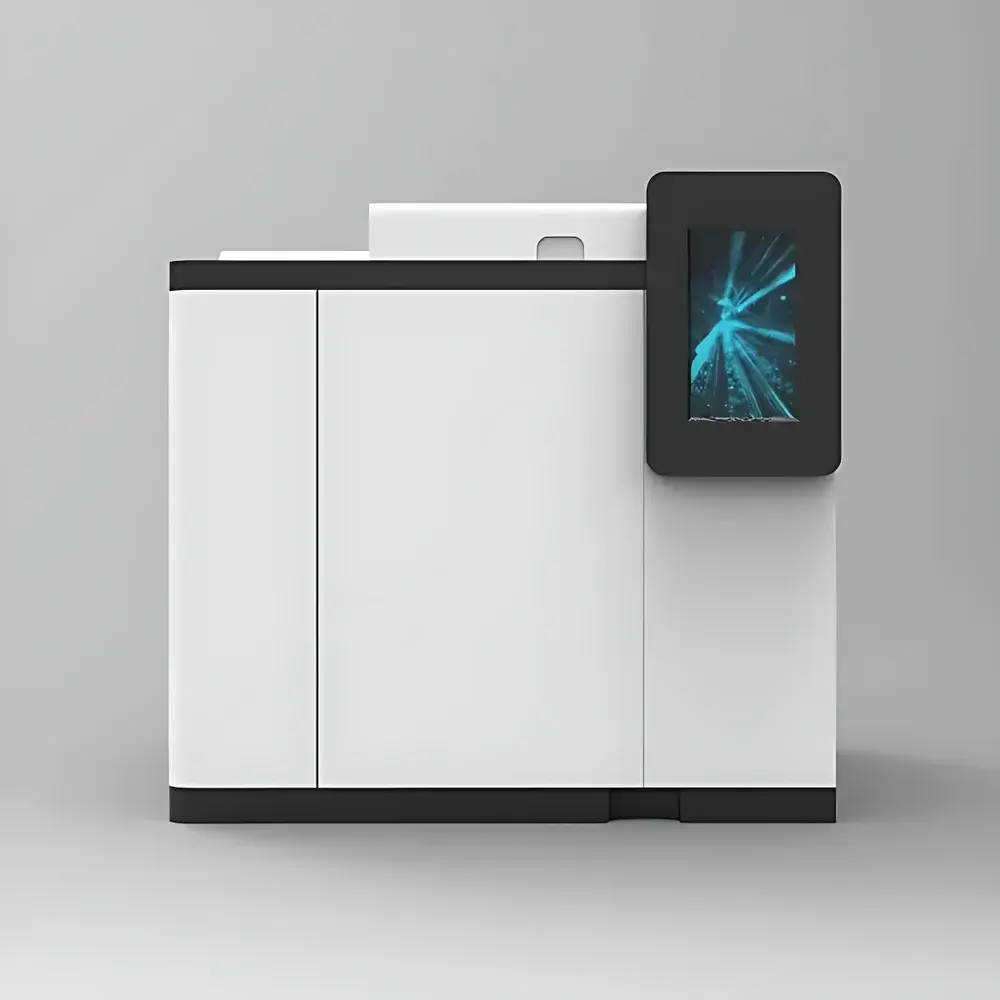
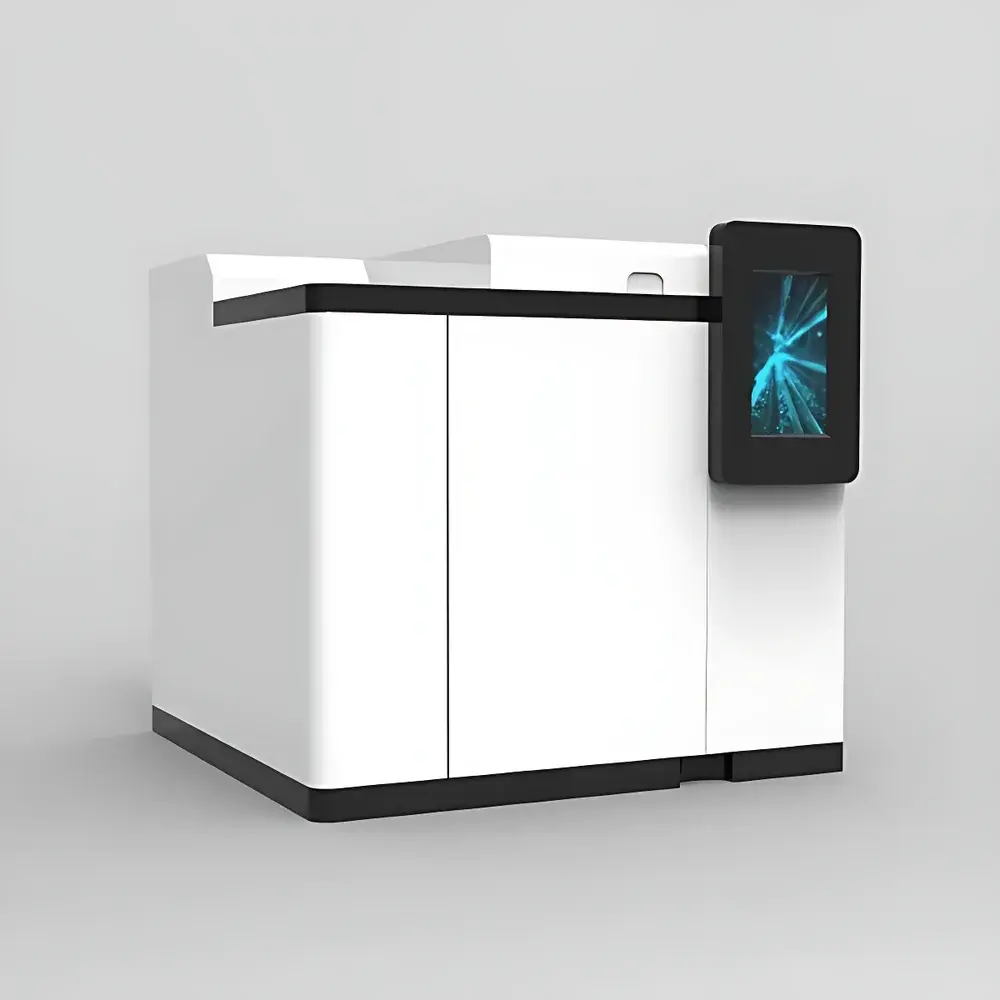
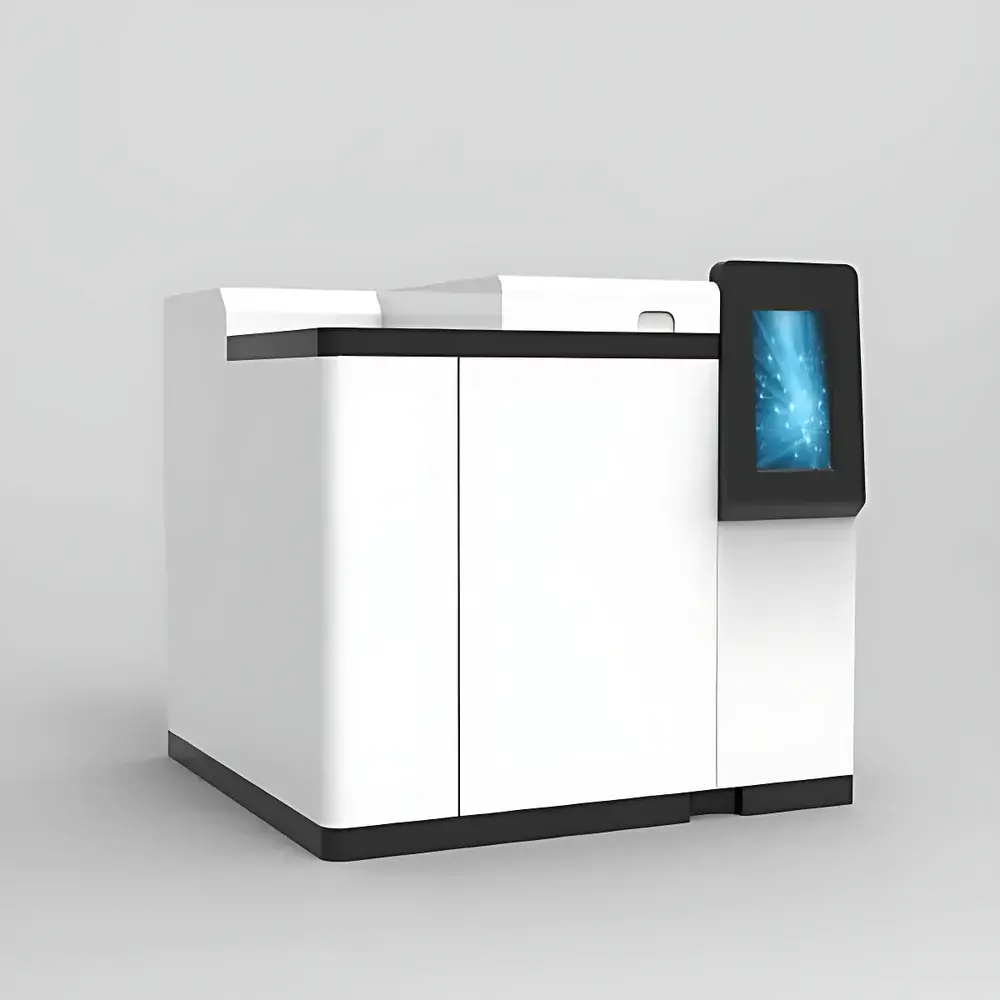
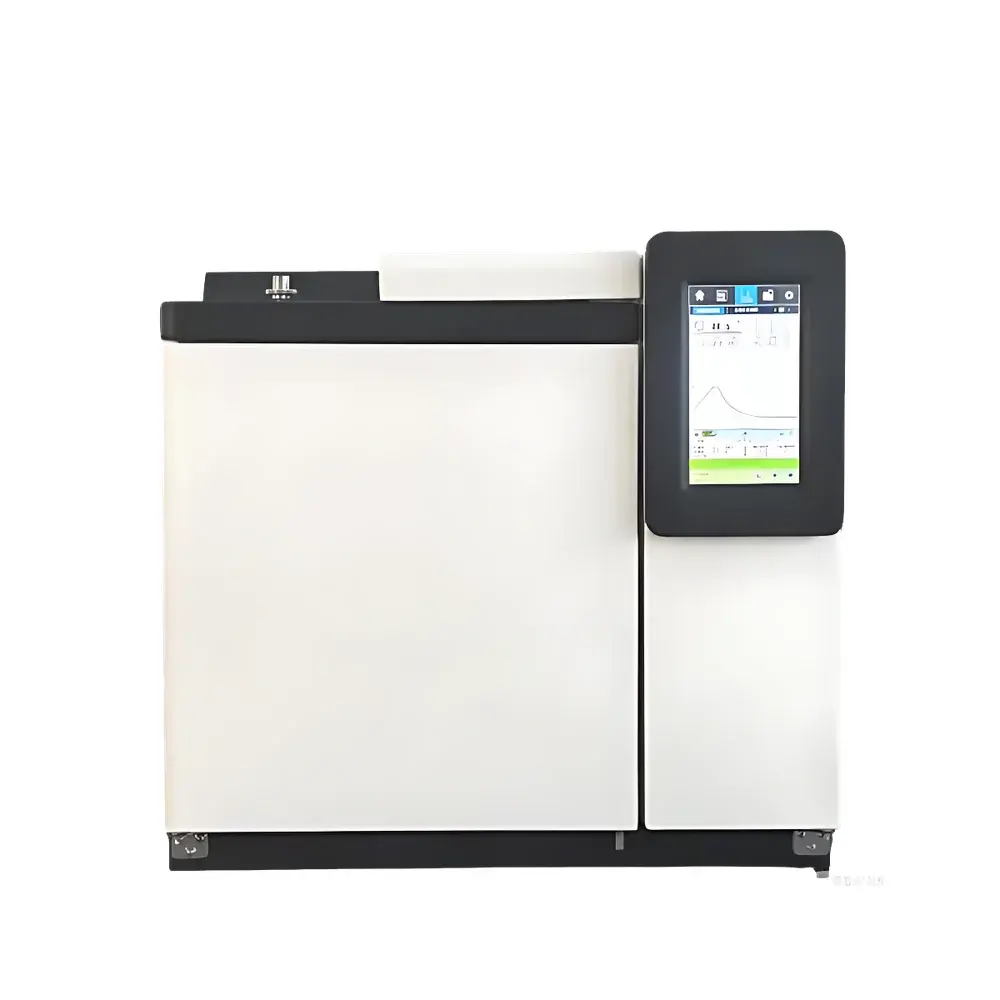
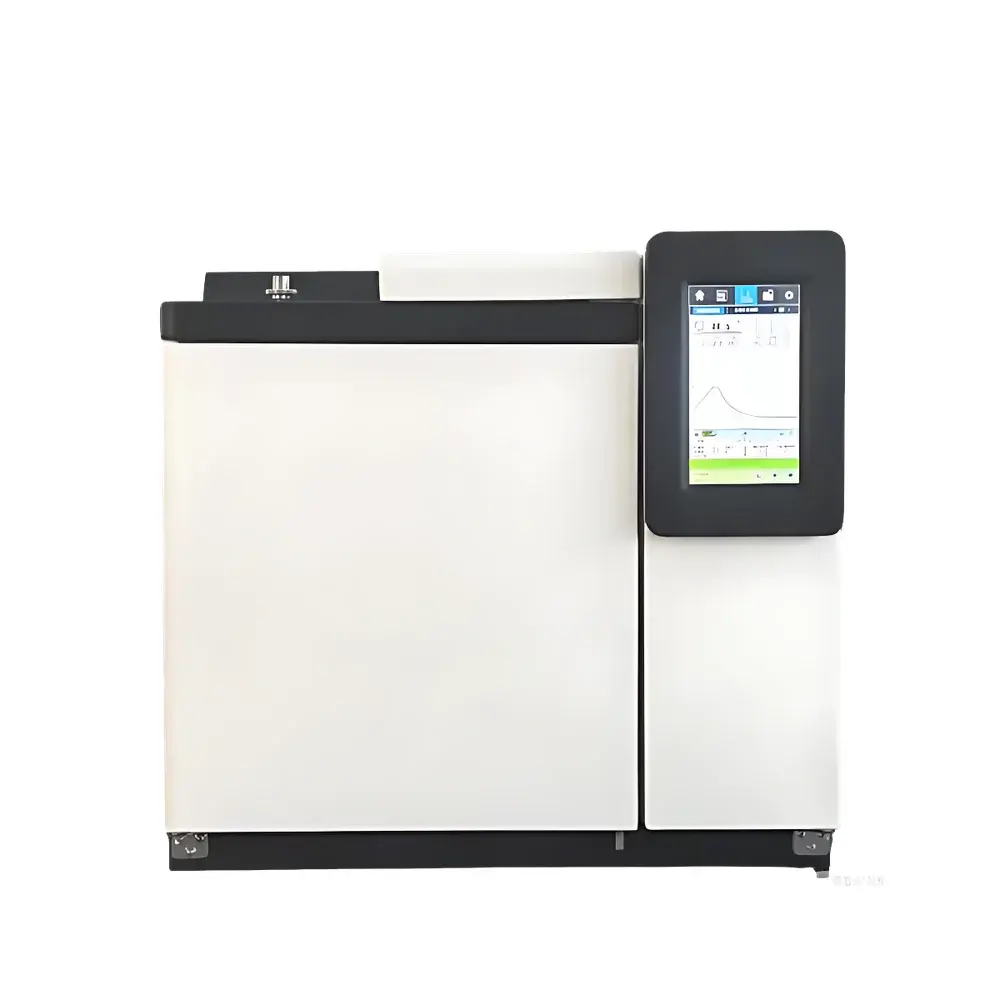
Shandong Luchuang GC-9860F Laboratory Gas Chromatograph
| Brand | Shandong Luchuang |
|---|---|
| Origin | Shandong, China |
| Manufacturer Type | Direct Manufacturer |
| Instrument Type | Benchtop Laboratory Gas Chromatograph |
| Application Field | Petrochemical Industry |
| Temperature Control Range | Ambient +8 °C to 450 °C |
| Maximum Ramp Rate | 65 °C/min |
| Cool-down Time | ≤3.5 min (300 °C → 100 °C at 25 °C ambient) |
| Temperature Stability | ±0.01 °C |
| Temperature Gradient Uniformity | ±1% (100–350 °C) |
| Programmable Temperature Steps | Up to 99 |
| Maximum Runtime per Method | 9999 min |
| Carrier Gas Flow Range | 0–1200 mL/min (electronic flow control) |
| Carrier Gas Pressure Range | 0–1000 kPa (electronic pressure control) |
| Injector Max Temp | 450 °C |
| Injector Pressure Set Range | 0–1000 kPa |
| Injector Total Flow Set Range | 0–1200 mL/min |
| Detector Options | FID, TCD, ECD, FPD, NPD (modular |
| FID Detection Limit | ≤2×10⁻¹² g/s (n-hexadecane) |
| FID Baseline Noise | ≤2×10⁻¹⁴ A |
| FID Drift | ≤1.5×10⁻¹³ A/30 min |
| FID Linear Range | ≥10⁷ |
| TCD Sensitivity | ≥10,000 mV·mL/mg (benzene) |
| TCD Noise | ≤20 µV |
| TCD Drift | ≤150 µV/30 min |
Overview
The Shandong Luchuang GC-9860F is a benchtop laboratory gas chromatograph engineered for high-precision, reproducible separation and quantification of volatile and semi-volatile organic compounds in complex petrochemical matrices. It operates on the fundamental principle of differential partitioning between a mobile phase (inert carrier gas, e.g., He, H₂, or N₂) and a stationary phase coated inside fused-silica capillary or packed columns. Sample components elute at characteristic retention times under precisely controlled thermal gradients, enabling identification and quantitation via calibrated detector response. Designed for routine QC/QA, refinery process monitoring, and hydrocarbon speciation, the GC-9860F integrates robust hardware architecture with embedded chromatographic data system (CDS) functionality—supporting GLP-compliant workflows, audit-trail-enabled method management, and remote instrument supervision via IoT-enabled connectivity.
Key Features
- 7-inch capacitive touchscreen interface with intuitive graphical user interface (GUI), enabling direct method creation, real-time parameter adjustment, and live chromatogram visualization without external PC dependency.
- Advanced dual-zone temperature control system featuring optimized thermal mass distribution and high-efficiency heat exchange design; achieves ±0.01 °C oven stability and uniformity across 100–350 °C range (±1% gradient).
- Programmable temperature ramping up to 99 steps with maximum heating rate of 65 °C/min and rapid cool-down (<3.5 min from 300 °C to 100 °C), significantly reducing cycle time for high-throughput analysis.
- Modular multi-injector configuration supporting simultaneous installation of up to three independent inlets—including split/splitless, PTV, and on-column options—with six interchangeable inlet modules for application-specific flexibility.
- Detector bay accommodating up to four independently operated, hot-swappable detectors: Flame Ionization Detector (FID), Thermal Conductivity Detector (TCD), Electron Capture Detector (ECD), Flame Photometric Detector (FPD), and Nitrogen-Phosphorus Detector (NPD).
- Electronic pneumatic control (EPC) for all gas streams—carrier, makeup, and fuel gases—with digital display of pressure (0–1000 kPa) and flow (0–1200 mL/min); eliminates analog gauges and improves long-term calibration stability.
Sample Compatibility & Compliance
The GC-9860F supports analysis of gaseous, liquid, and dissolved samples across ASTM D3606 (benzene/toluene in gasoline), ASTM D5186 (aromatics in diesel), ISO 6416 (hydrocarbon group types), and USP chromatographic procedures. Its TCD configuration permits single-column, dual-column, or capillary column operation with dual post-column makeup gas supply—ensuring compatibility with both packed and open-tubular columns. All temperature zones (oven, injectors, detectors) meet IEC 61010-1 safety requirements for laboratory equipment. Firmware and embedded CDS support 21 CFR Part 11-compliant electronic signatures, audit trails, and role-based access control—validated for GMP/GLP environments requiring traceable data integrity.
Software & Data Management
The integrated chromatography data system runs on a Linux-based IoT operating system with built-in web server capabilities. Users can configure methods, monitor real-time chromatograms, export raw data (.cdf), generate PDF reports, and perform quantitative calculations (external standard, internal standard, area normalization) directly on-device or remotely via browser-based interface. Data archiving complies with FAIR principles (Findable, Accessible, Interoperable, Reusable); raw files include metadata tags for instrument ID, method version, operator, date/time stamp, and environmental conditions. Software supports batch processing, peak integration optimization, spectral library search (when coupled with optional GC-MS module), and automated calibration curve generation with residual error reporting.
Applications
- Petrochemical QA/QC: Hydrocarbon type analysis (PIONA), sulfur compound profiling (mercaptans, sulfides), oxygenate determination (MTBE, ethanol) in gasoline and jet fuels.
- Refinery process stream monitoring: Continuous analysis of C₁–C₅ hydrocarbons, olefin/paraffin ratios, and light ends composition in FCC, hydrotreater, and reformer units.
- Environmental testing: VOC screening in soil extracts, wastewater, and ambient air samples per EPA Method 8260/8021.
- Chemical manufacturing: Residual solvent verification in APIs (ICH Q3C), monomer purity assessment, and catalyst deactivation studies.
- Research laboratories: Method development for novel stationary phases, kinetic studies of thermal degradation, and multi-dimensional GC (GC×GC) preparatory fractionation.
FAQ
What column types are compatible with the GC-9860F?
Standard fused-silica capillary columns (0.1–0.53 mm ID, up to 60 m length) and stainless-steel/packed columns (up to 4 mm ID, 6 m max) are supported. Column oven dimensions accommodate 1/8″ and 1/4″ fittings.
Does the instrument support compliance with 21 CFR Part 11?
Yes—the embedded CDS includes electronic signature capability, full audit trail logging, user authentication, and secure data encryption for raw and processed results.
Can I run multiple detectors simultaneously for parallel detection?
Up to four detectors may be installed and operated concurrently; common configurations include dual-FID for redundancy, FID+TCD for universal + selective detection, or FID+ECD for halogenated compound screening.
Is remote diagnostics and firmware update available?
Via Ethernet/Wi-Fi connection, users can initiate remote troubleshooting, push firmware updates, and retrieve system health logs without physical access to the instrument.
What maintenance intervals are recommended for optimal performance?
Carrier gas filters should be replaced every 6 months; injector liners and septa every 100–200 injections; detector components (e.g., FID jet, TCD filament) inspected quarterly and cleaned or replaced based on signal drift and noise baseline trends.





