
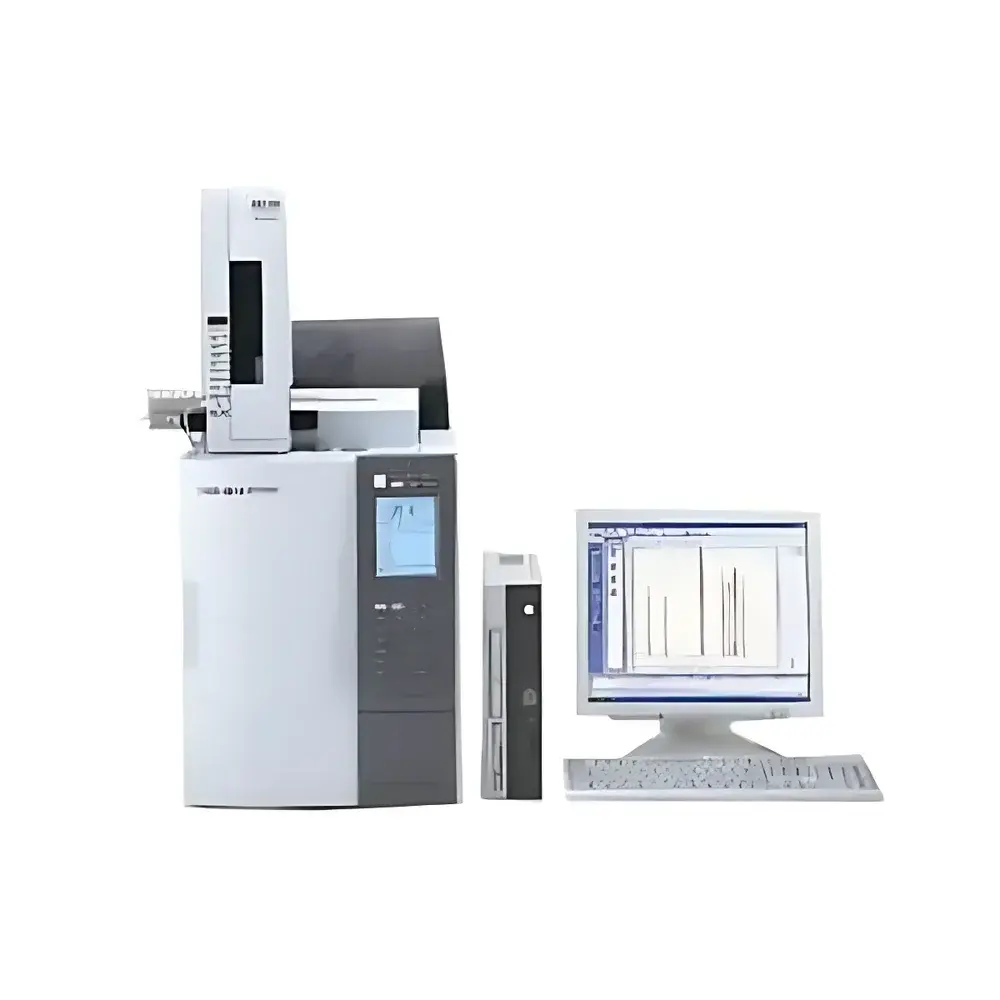


Shimadzu GC-2014 Advanced Laboratory Gas Chromatograph
| Brand | Shimadzu |
|---|---|
| Origin | Japan |
| Model | GC-2014 |
| Instrument Type | Benchtop Laboratory Gas Chromatograph |
| Temperature Control Range | Ambient +10 °C to 420 °C (–50 °C to 420 °C with liquid CO₂ cooling) |
| Maximum Ramp Rate | 250 °C/min |
| Cooling Rate | From 300 °C to 50 °C in <6 min |
| Carrier Gas Flow Range & Control | 0–1250 mL/min |
| Carrier Gas Pressure Range & Control | 0–1035 kPa |
| Injector Maximum Operating Temperature | 420 °C |
| Injector Pressure Setting Range | 0–1035 kPa |
| Injector Total Flow Setting Range | 0–1250 mL/min |
| Oven Volume | 15.8 L |
| Temperature Stability vs. Ambient Drift | ±0.01 °C/°C |
| Programmable Temperature Segments | 20 (including cooling ramps) |
| Programmed Ramp Rate Range | –250 to +250 °C/min |
| Injector Types Supported | Split/Splitless, Dual/Packed Column |
| Max Simultaneous Inlets | 3 |
| Max Simultaneous Detectors | 4 |
| Detector Temperature Range | Up to 420 °C (FID, TCD, FTD-S) |
| Display | 240 × 320-pixel graphical LCD (30 char × 60 line) |
| Dimensions (W×H×D) | 607 × 690 × 400 mm |
| Weight | 48 kg (GC-2014AF configuration) |
| Power Supply | AC 200 V, 1800 VA, 50/60 Hz |
Overview
The Shimadzu GC-2014 is a high-performance, modular laboratory gas chromatograph engineered for precision, reproducibility, and method robustness across diverse analytical workflows. Built upon the proven architecture of the GC-2010 platform, it employs advanced electronic pressure control (EPC) and electronic flow control (EFC) for both capillary and packed column configurations—ensuring consistent retention time alignment, peak shape fidelity, and quantitative accuracy under variable ambient conditions. Its thermally optimized oven design features active air circulation, low thermal mass construction, and real-time ambient compensation (±0.01 °C/°C drift), enabling highly repeatable temperature programming across 20 user-defined segments—including rapid cooling ramps. The system supports universal column compatibility, making it suitable for legacy packed-column methods as well as modern high-resolution capillary separations in regulated and research environments.
Key Features
- Ultra-fast thermal control: 250 °C/min heating ramp and sub-6-minute cooldown from 300 °C to 50 °C—enabling high-throughput screening without compromising resolution.
- Triple-inlet capability: Simultaneous installation of up to three independent injection units—including split/splitless, dual-packed, and dedicated capillary inlets—with fully independent pressure and flow programming per inlet.
- Quadruple-detector support: Accommodates up to four detectors concurrently (e.g., FID, TCD, ECD, FPD or FTD-S), each with individual temperature control (up to 420 °C for FID/TCD/FTD-S; 400 °C for ECD/FPD) and programmable ramp rates (–400 to +400 kPa/min).
- Integrated digital gas control: All carrier, make-up, and auxiliary gas flows and pressures are regulated via embedded EPC/EFC modules with 0.1 kPa and 0.1 mL/min resolution—eliminating mechanical flow meters and reducing calibration dependency.
- Intuitive 240 × 320-pixel graphical LCD interface with multilingual support, self-diagnostic routines, and real-time parameter monitoring—including leak detection alerts and pressure deviation logging.
- Modular expansion readiness: Designed to serve as a core module in automated GC systems, supporting optional valve switching units, autosampler integration (AOC-20i/s), and hyphenated interfaces (e.g., GC-MS coupling via transfer line kits).
Sample Compatibility & Compliance
The GC-2014 accommodates a broad range of sample matrices—including volatile organic compounds (VOCs), residual solvents, petrochemical fractions, environmental pollutants (e.g., PCBs, PAHs), and pharmaceutical impurities—when paired with appropriate column chemistries (e.g., polydimethylsiloxane, cyanopropylphenyl, or porous layer open tubular phases). Its hardware and firmware architecture align with internationally recognized quality frameworks: method parameters are stored with full audit trail metadata, and all detector signal acquisition complies with ASTM D3699 (gasoline analysis), ISO 11843 (detection capability), and USP (chromatography). When operated with Shimadzu LabSolutions software under validated configurations, the system meets data integrity requirements per FDA 21 CFR Part 11 and EU Annex 11 for electronic records and signatures—supporting GLP and GMP-compliant laboratories through secure user authentication, electronic signatures, and immutable raw data archiving.
Software & Data Management
Controlled via Shimadzu LabSolutions GC software (v5.9 or later), the GC-2014 delivers integrated instrument control, sequence management, peak integration, calibration curve generation, and report templating. The software implements role-based access control (RBAC), automatic backup of method files and audit logs, and timestamped event tracking for every parameter change. Raw data (.gcd files) are stored in a vendor-neutral format compatible with third-party reprocessing tools (e.g., OpenLab CDS, Chromeleon). Optional add-ons include AutoReport for automated PDF report generation, Peak Intelligence for deconvolution-assisted identification, and LabSolutions Direct for remote monitoring via web browser or mobile device. All software updates undergo rigorous regression testing to ensure backward compatibility with legacy methods and regulatory submissions.
Applications
- Pharmaceutical QC: Residual solvent analysis per ICH Q3C guidelines using headspace-GC/FID with certified reference standards.
- Environmental testing: EPA Method 8260D (VOCs in soil/water) and 8082A (PCBs) via ECD or μ-ECD detection with cold on-column injection.
- Petrochemical QA: Hydrocarbon type analysis (PIONA) using dual-column TCD/FID detection and backflush configurations.
- Food safety: Pesticide residue screening in fruits/vegetables per AOAC 2007.01 using GC-MS/MS interfacing and multi-residue extraction protocols.
- Academic research: Method development for chiral separations on cyclodextrin-based columns, leveraging precise inlet pressure ramping for optimal enantioselectivity.
FAQ
Does the GC-2014 support unattended overnight operation?
Yes—equipped with hardware-level watchdog timers, power-fail recovery, and sequence-based auto-shutdown, it maintains stable operation across multi-day runs when configured with inert carrier gases and properly maintained consumables.
Can I upgrade an existing GC-2010 to GC-2014 specifications?
No—the GC-2014 is a distinct platform with redesigned oven electronics, enhanced EPC firmware, and expanded detector bus architecture; however, many GC-2010 consumables (e.g., septa, liners, ferrules) remain mechanically compatible.
Is liquid CO₂ cooling required to achieve –50 °C oven temperatures?
Yes—sub-ambient operation requires external liquid CO₂ supply with compatible cryo-cooling kit (Shimadzu part no. 228-57214-91); standard operation uses ambient air convection only.
What validation documentation is provided with the instrument?
Each unit ships with Factory Acceptance Test (FAT) report, IQ/OQ protocol templates aligned with ASTM E2656 and ISO/IEC 17025, and a Certificate of Conformance traceable to NIST standards.
How does the GC-2014 handle column bleed correction during high-temperature runs?
The system supports baseline subtraction algorithms within LabSolutions, and its low-bleed oven insulation minimizes thermal background interference—further stabilized by real-time reference channel compensation in dual-detector configurations.




