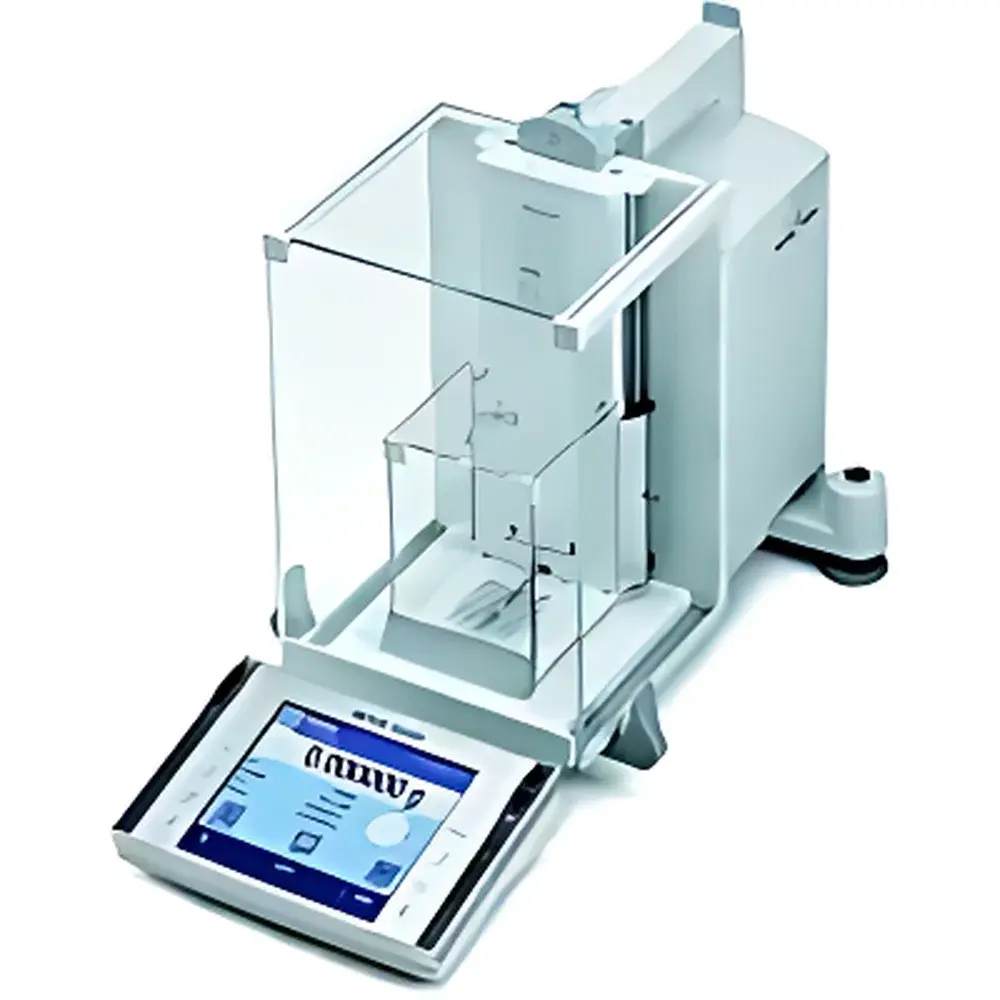
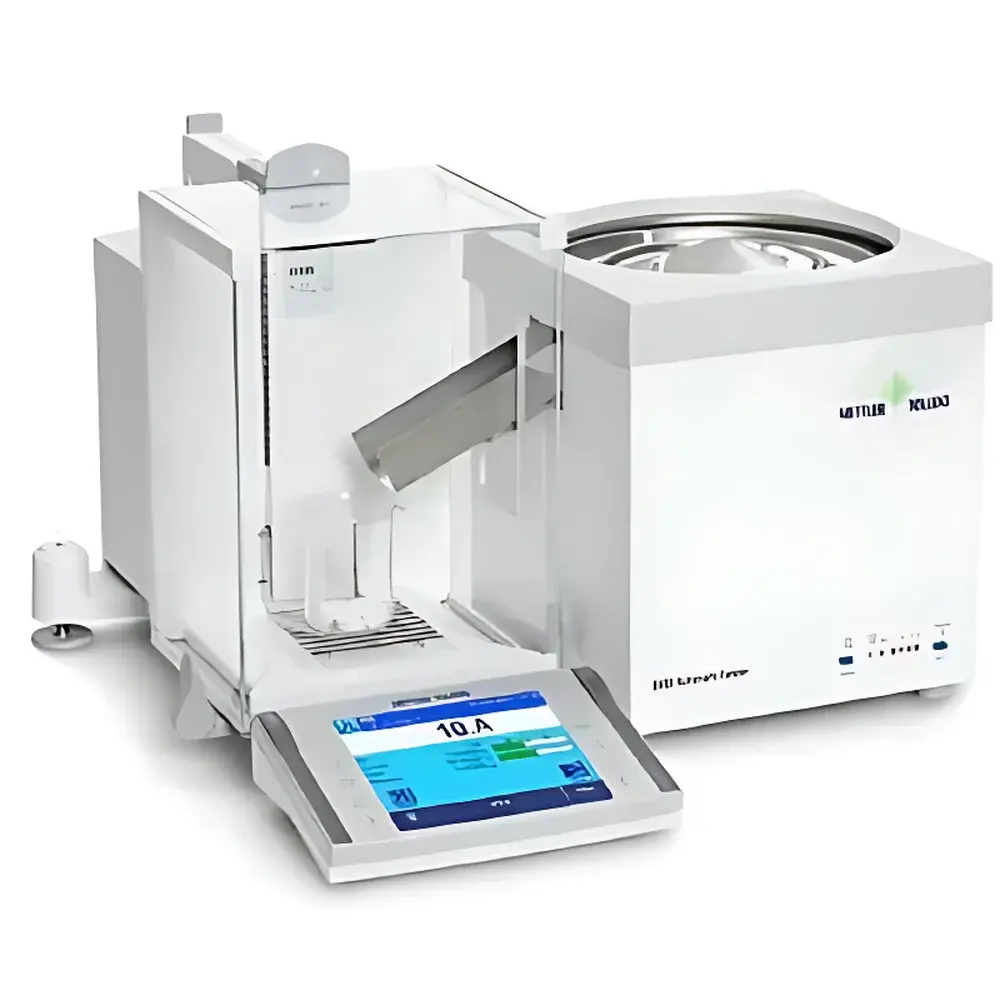
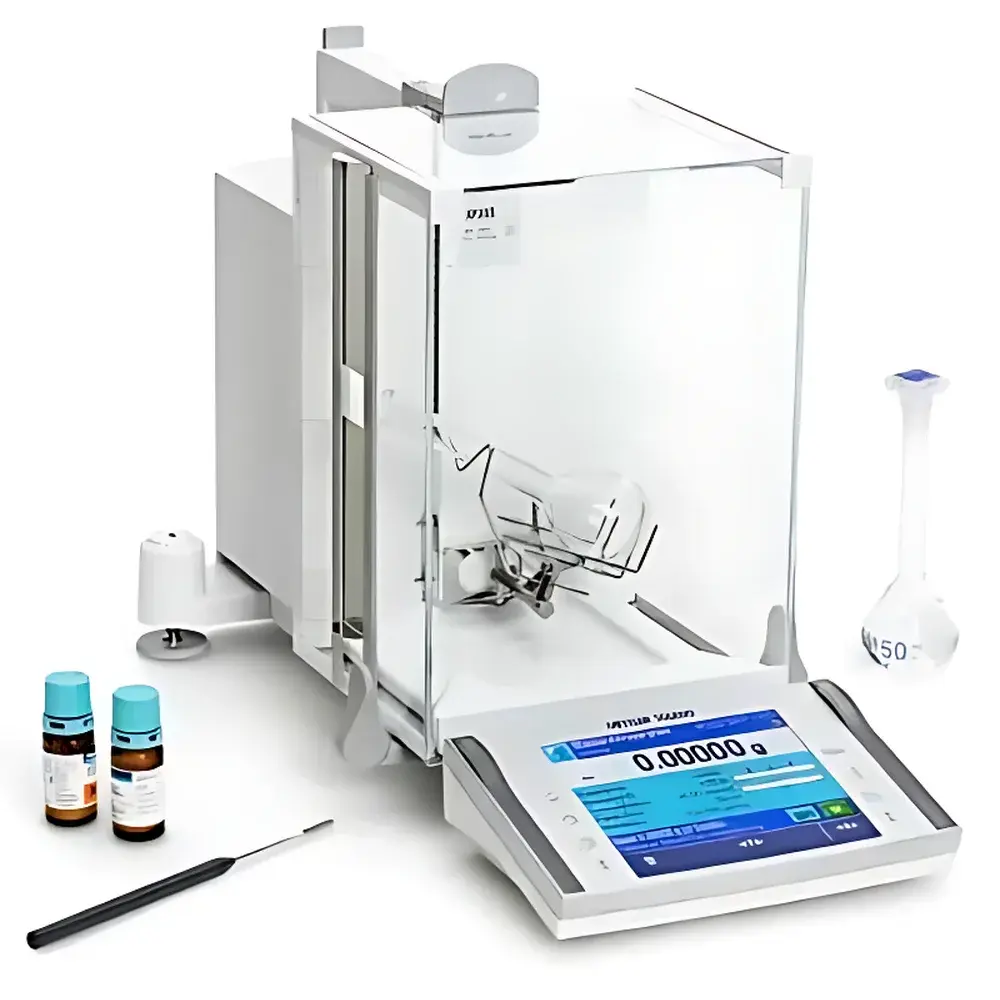
METTLER TOLEDO XP Series Ultra-Micro and Micro Balances
| Brand | METTLER TOLEDO |
|---|---|
| Origin | Switzerland |
| Model Variants | XP26 / XP56 / XP26DR / XP56DR / XP6 / XP2U / XP6U |
| Maximum Capacity | 2 g – 5 g |
| Readability | 0.000001 g (1 µg) |
| Repeatability | ≤ ±0.001 mg |
| Calibration | Fully Automatic proFACT Technology (Temperature- and Time-Triggered Internal Calibration) |
| Compliance | GxP, USP <41>, USP <1251>, ISO/IEC 17025, GLP/GMP Audit Trail Ready |
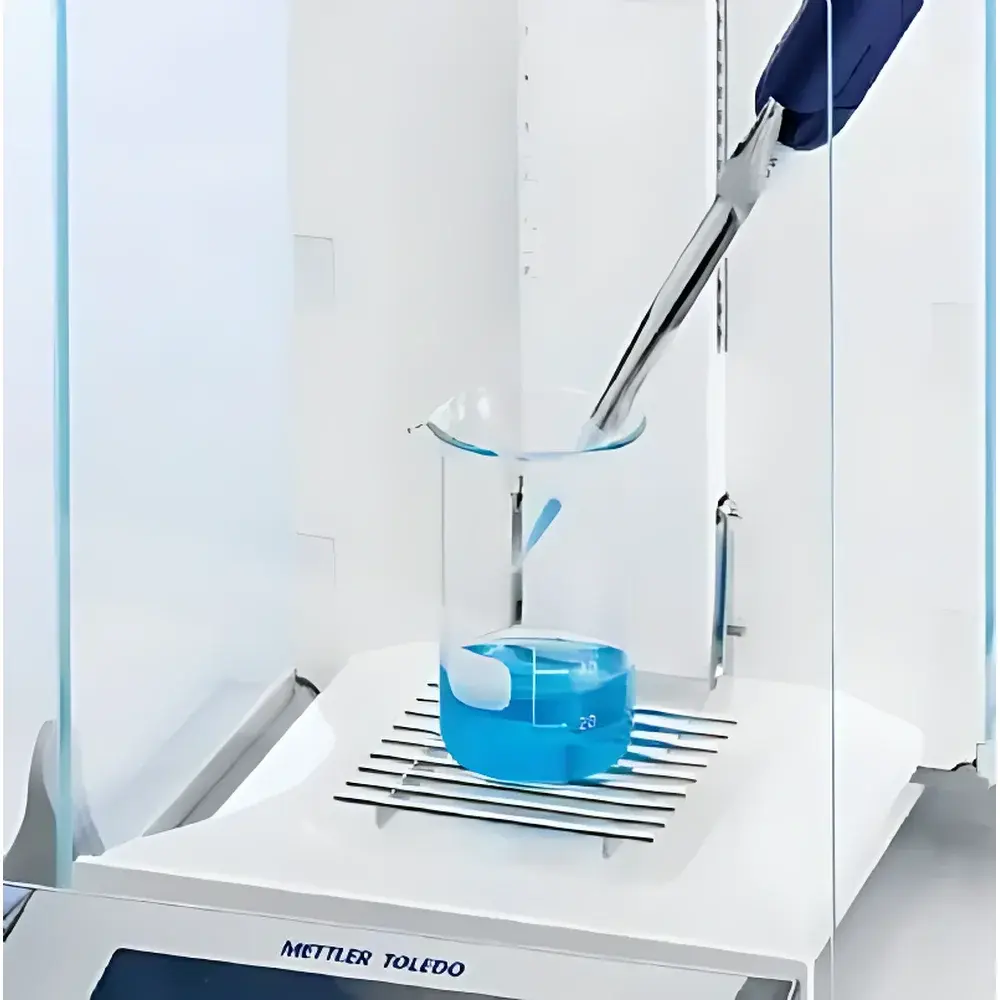
| Sample Pan | SmartGrid Mesh Pan (XP26/XP56 only) |
| Interface | RS232 Standard + Modular Communication Slot (Bluetooth / Ethernet / LocalCAN / PS/2 Optional) |
| Display | 4.3″ TFT Color Touchscreen with SmartScreen UI |
| Environmental Monitoring | LevelControl Auto-Leveling Alert System |
| Regulatory Features | MinWeigh Function (GWP® Verified), BalanceCheck Prompt, GWP® Excellence Integrated Risk Management |
Overview
The METTLER TOLEDO XP Series ultra-micro and micro balances represent the highest tier of precision mass measurement for laboratories where sample scarcity, cost sensitivity, and regulatory traceability are critical constraints. Engineered for metrological integrity under ISO/IEC 17025-accredited conditions, these balances operate on electromagnetic force compensation (EMFC) principle—delivering stable, drift-compensated readings even in thermally unstable or vibration-prone environments. With readability down to 1 µg (0.000001 g) and maximum capacities spanning 2 g to 5 g, the XP platform is purpose-built for applications requiring absolute minimal sample consumption: reference standard preparation in pharmaceutical QC, catalyst loading in catalysis research, nanomaterial dosing in advanced materials labs, and trace-level precious metal assay in metallurgical QA. Each unit is manufactured in Greifensee, Switzerland, and undergoes full factory calibration against NIST-traceable mass standards prior to shipment.
Key Features
- SmartScreen TFT Touch Interface: A 4.3-inch high-resolution color display with intuitive icon-based navigation, supporting multilingual operation—including English, German, French, Chinese, and Japanese—enabling seamless adoption across global R&D and production sites.
- SmartSens Infrared Sensors: Contactless activation of door control, tare, print, and zero functions eliminates mechanical wear and cross-contamination risks—critical when handling cytotoxic compounds or hygroscopic reference materials.
- SmartGrid Mesh Pan (XP26/XP56 models): A perforated stainless-steel weighing pan that accelerates air displacement and dampens convective currents, reducing stabilization time by up to 40% versus solid pans without compromising repeatability.
- proFACT Automatic Calibration: Dual-trigger internal calibration system activates either at user-defined time intervals or upon detection of ambient temperature change ≥1.5 °C—ensuring continuous compliance with USP repeatability and accuracy requirements.
- LevelControl Real-Time Tilt Detection: Integrated inclinometer continuously monitors leveling status and alerts operators before measurement initiation if deviation exceeds ±0.5°—preventing systematic error from non-vertical load application.
- GWP® Excellence Framework: Embedded risk-based performance assurance logic validates operational readiness via automated diagnostics, including draft shield integrity check, sensor stability assessment, and environmental drift modeling.
- MinWeigh Function (GWP® Verified): Dynamically calculates and enforces the smallest sample mass meeting USP uncertainty criteria—configurable per method and auditable via electronic log export.
Sample Compatibility & Compliance
The XP series accommodates diverse sample forms—including powders, crystalline solids, volatile organics, and viscous suspensions—within its hermetically sealed draft shield (standard on all models). The optional XP26DR/XP56DR dual-range variants provide extended dynamic range without sacrificing µg-level resolution at low loads. All units ship with full GxP documentation packages, including IQ/OQ protocols, electronic audit trail configuration (21 CFR Part 11 compliant with role-based access control), and raw data export in CSV/Excel formats with embedded metadata (operator ID, timestamp, environment log, calibration history). Validation support aligns with ICH Q7, FDA Guidance for Industry on Analytical Procedures, and EMA Annex 15 requirements.
Software & Data Management
Data integrity is enforced through METTLER TOLEDO LabX™ software integration (optional but recommended for regulated environments). LabX provides centralized instrument management, customizable SOP-driven workflows, automatic report generation with digital signatures, and secure cloud or on-premise data archiving. Raw balance data—including every intermediate reading during stabilization—is retained with full context (e.g., door open/close events, calibration triggers, environmental logs). All communication interfaces—RS232, Ethernet (TCP/IP), Bluetooth LE—are TLS 1.2 encrypted when paired with LabX, satisfying cybersecurity requirements outlined in ASTM E2500-13 and ISO/IEC 27001.
Applications
- Pharmaceutical: Weighing of certified reference substances (CRS) for HPLC/UPLC calibration; active pharmaceutical ingredient (API) formulation in early-stage development where material availability is limited to sub-milligram quantities.
- Materials Science: Precise dosing of dopants in semiconductor precursor synthesis; gravimetric analysis of MOF loading efficiency; catalyst mass normalization in kinetic studies.
- Environmental Testing: Filter paper weighing pre- and post-sampling for PM₂.₅ and PM₁₀ particulate matter quantification per EPA Method IO-3.2.
- Jewelry & Refining: Assay of gold, platinum, and palladium alloys using fire assay fusion techniques—where 0.1 mg error translates to >$500 valuation variance at current spot prices.
- Aerospace QA: Measurement of thermal barrier coating (TBC) mass gain during oxidation cycling tests—requiring long-term stability across 100+ hour exposures.
FAQ
What is the minimum weighable amount for an XP2U balance calibrated to USP ?
The MinWeigh function calculates this dynamically based on balance repeatability, required confidence level (typically 95%), and user-defined measurement uncertainty threshold (e.g., 0.1%). For XP2U (2.1 g / 1 µg), typical MinWeigh values range from 1.2 mg to 2.5 mg depending on environmental conditions.
Can the XP series be integrated into a LIMS or MES environment?
Yes—via RS232 ASCII protocol or Ethernet TCP/IP with configurable data packet structure. LabX acts as middleware for HL7/FHIR-compliant enterprise integration, supporting batch record linkage and electronic signature capture per 21 CFR Part 11.
Is external calibration required after installation?
No. Factory-performed calibration is NIST-traceable and verified. However, BalanceCheck prompts users to perform periodic external verification using Class E2 or better weights—documented in the electronic calibration log with pass/fail flagging.
How does SmartGrid improve weighing stability?
By minimizing boundary-layer airflow resistance around the sample, SmartGrid reduces buoyancy-induced drift and accelerates damping of mechanical oscillations—particularly beneficial for low-density, high-surface-area samples such as aerogels or lyophilized proteins.
Does the XP series support Good Manufacturing Practice (GMP) audit trails?
Yes—every action (tare, calibration, print, parameter change) is timestamped, operator-identified, and cryptographically signed in non-erasable memory. Exported audit logs include SHA-256 hash verification for forensic integrity validation.