
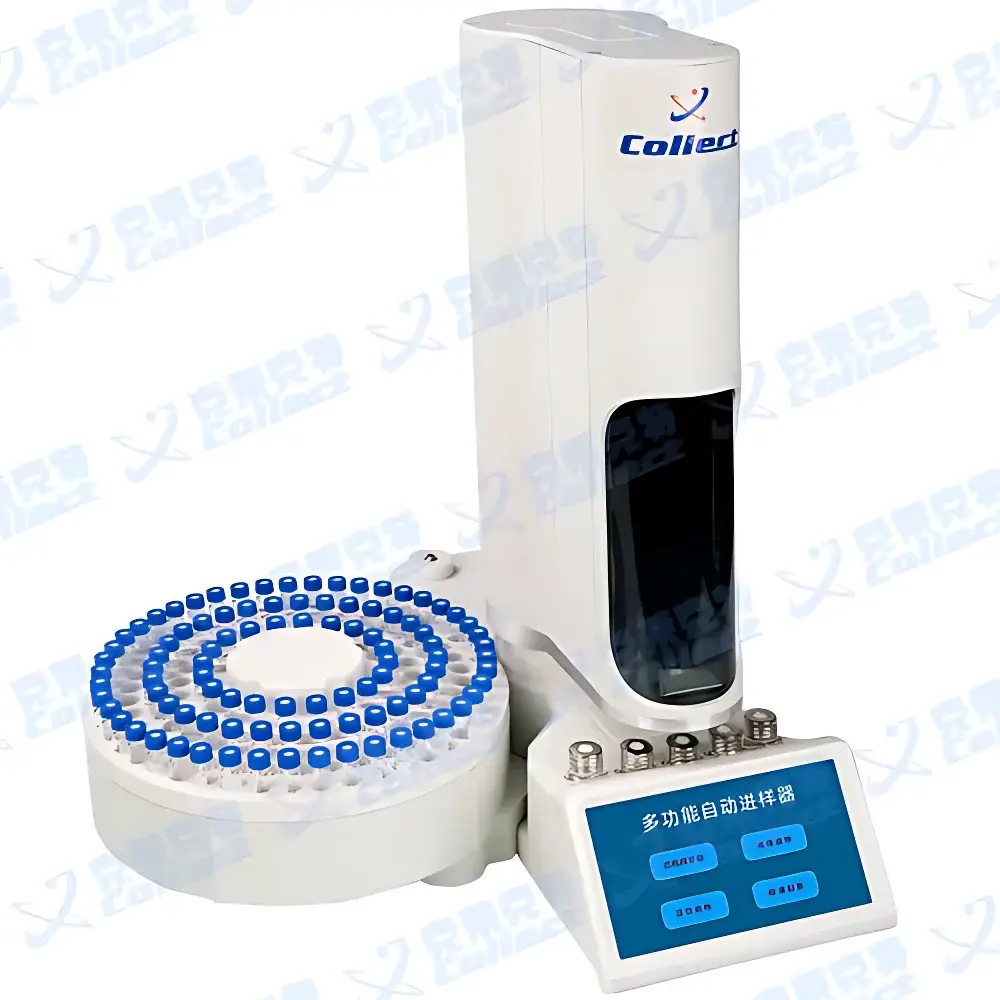
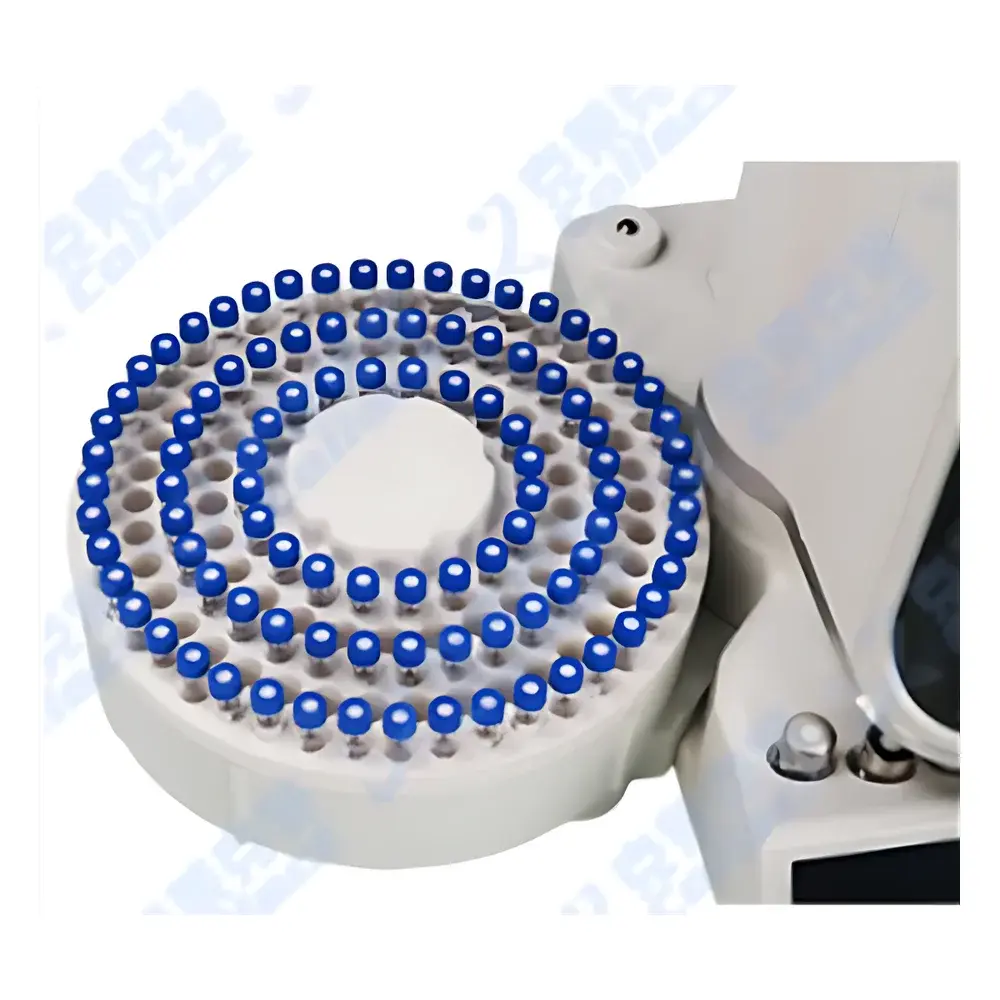
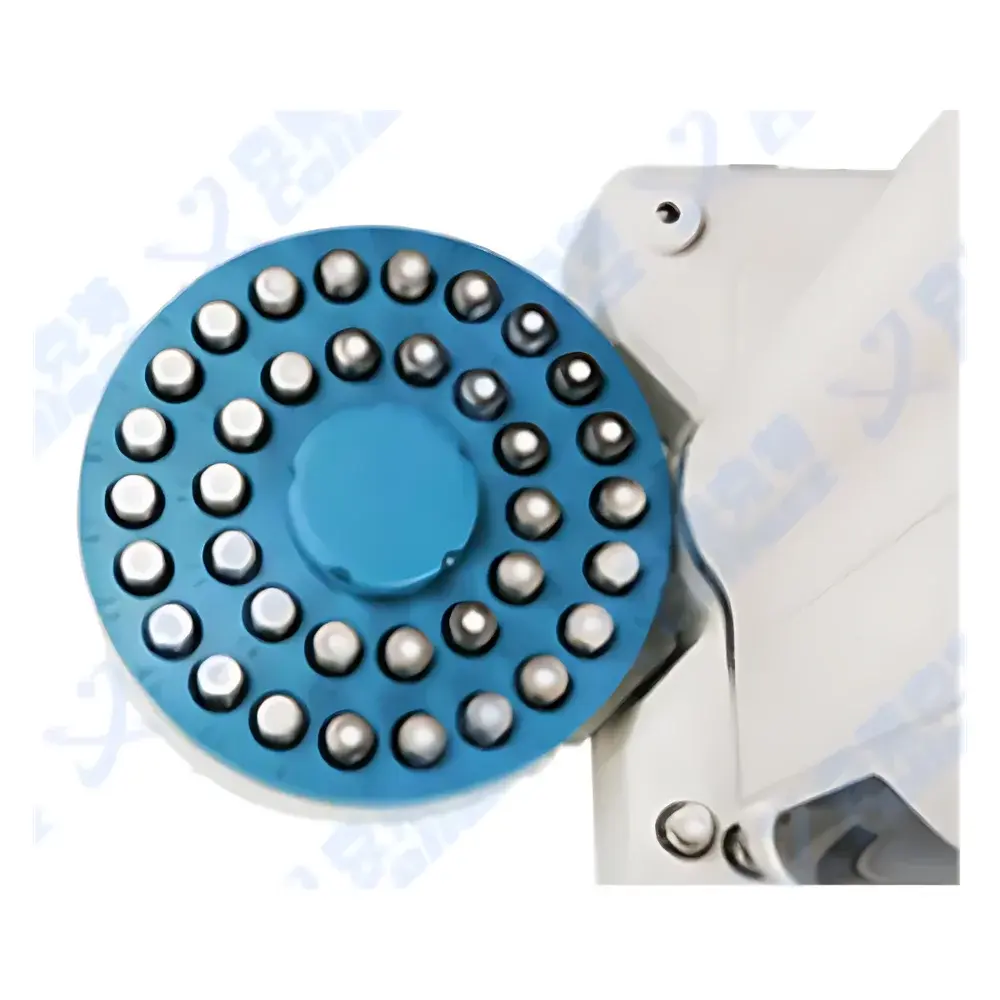
Clarete AS-3901AF Multifunctional Autosampler with Integrated Standard Solution Preparation System
| Brand | Clarete |
|---|---|
| Origin | Henan, China |
| Manufacturer Type | Original Equipment Manufacturer (OEM) |
| Product Category | Domestic |
| Model | AS-3901AF |
| Instrument Type | Gas Chromatography Autosampler |
| Maximum Injection Volume | 500 µL |
| Minimum Injection Volume | 0.1 µL |
| Optional Loop Volumes | 1, 5, 10, 25, 50, 100, 250, 500 µL |
| Positioning Accuracy | 0.1 mm |
| Motion Mechanism | Rotary Turret |
| Needle Wash | Internal & External Wall Cleaning, Unlimited Cycles |
| Repeat Injection Capability | Unlimited |
Overview
The Clarete AS-3901AF is a high-integration, laboratory-grade multifunctional autosampler engineered for gas chromatography (GC) and GC–MS workflows. Unlike conventional autosamplers limited to injection tasks, the AS-3901AF incorporates an embedded standard solution preparation module—enabling end-to-end automation of calibration standard generation, dilution series construction, and precise liquid sample introduction. Its core architecture employs a rotary turret motion system driven by high-resolution stepper motors, ensuring repeatable positioning accuracy of ±0.1 mm across the full operational envelope. This mechanical stability forms the foundation for sub-microliter volumetric precision and long-term reproducibility in both sampling and dilution steps. Designed as a modular platform, the AS-3901AF supports seamless integration with major GC and GC–MS systems—including Agilent, Thermo Fisher, Shimadzu, PerkinElmer, and Waters—without requiring hardware modification or vendor-specific firmware. It operates independently of GC inlet ports, enabling concurrent dual-inlet injection on compatible instruments—a capability critical for method development, validation, and high-throughput screening.
Key Features
- Integrated dual-functionality: simultaneous liquid injection and automated standard solution preparation in a single instrument chassis.
- 6.5-inch capacitive touchscreen interface with customizable workflow templates, user-defined parameter sets, and real-time status monitoring.
- Rotary turret motion architecture with closed-loop stepper motor control ensures low-vibration, high-stability positioning and extended mechanical lifetime.
- Modular needle assembly with adjustable penetration depth (2–40 mm), programmable aspiration/dispense speeds, and configurable pre-/post-injection dwell times.
- Comprehensive needle cleaning protocol: independent internal and external wall rinsing using selectable solvents, with unlimited cycles per injection event.
- Dual-inlet support: non-intrusive mounting allows concurrent operation at two GC inlets without physical port sharing or flow-path interference.
- Trace-level carryover mitigation: automated needle wash before and after each standard dilution step, validated per ASTM D7884 and ISO 17025 guidelines for calibration integrity.
Sample Compatibility & Compliance
The AS-3901AF accommodates standard 2 mL vials across a 160-position sample tray, compatible with ANSI/SLAS footprint specifications. Its liquid handling system supports aqueous, organic, and mixed-solvent matrices—including methanol, acetonitrile, hexane, and chloroform—with viscosity tolerance up to 20 cP. The standard solution preparation module enables automated generation of up to 10 individual stock standards or mixed standards, with up to 15-point concentration gradients and maximum dilution factors of 200× into final volumes up to 2 mL. All fluidic pathways are constructed from chemically inert materials (e.g., PTFE, fused silica, and stainless steel 316L), minimizing adsorption and degradation of volatile organic compounds (VOCs), pesticides, PAHs, and residual solvents. The system complies with GLP and GMP documentation requirements through audit-trail-enabled software logging, and supports 21 CFR Part 11-compliant electronic signatures when deployed with validated LIMS or CDS platforms.
Software & Data Management
Control and method management are executed via Clarete’s proprietary GC-Link software suite, available for Windows 10/11 (64-bit). The software provides full I/O mapping, sequence scheduling, error logging, and calibration traceability—including timestamped records of all dilution events, volume dispensed, wash cycles executed, and positional coordinates. Raw data export is supported in CSV, TXT, and XML formats; metadata fields include operator ID, method version, environmental temperature/humidity logs (when interfaced with optional sensors), and QC flag indicators. Software updates are delivered via secure HTTPS channel with SHA-256 signature verification. Remote diagnostics and firmware updates may be performed over LAN/WAN with TLS 1.2 encryption, meeting NIST SP 800-53 security controls for analytical instrumentation.
Applications
- Regulatory environmental testing: EPA Method 8260D/8270E compliance for VOC and SVOC analysis in water, soil, and air samples.
- Pharmaceutical impurity profiling: automated preparation of reference standards for ICH Q2(R2)-aligned method validation studies.
- Food safety laboratories: multi-residue pesticide screening with matrix-matched calibration curves generated in situ.
- Petrochemical QA/QC: hydrocarbon fingerprinting using calibrated n-alkane series and aromatic standards.
- Academic research: high-reproducibility method development for novel stationary phases or detector configurations.
- Contract testing labs: parallel processing of client samples with full chain-of-custody documentation and audit-ready reporting.
FAQ
Does the AS-3901AF require dedicated GC vendor software to operate?
No. It functions as a standalone peripheral with RS-232, USB, and Ethernet interfaces. GC vendor software (e.g., OpenLab CDS, Chromeleon, GCMSsolution) can trigger injections via TTL or ASCII command protocols.
Can the standard solution preparation module handle viscous or particulate-containing stock solutions?
Stock solutions must be filtered (≤0.45 µm) and have dynamic viscosity <20 cP at 25°C. Viscosity compensation algorithms are not implemented; manual viscosity adjustment is recommended for non-Newtonian standards.
Is the 0.1 µL minimum injection volume achievable across all loop sizes?
Yes, but optimal precision (RSD <0.5%) is verified only with loop volumes ≥1 µL. Sub-microliter injections utilize syringe-based dispensing mode with gravimetric validation per ISO 8655-6.
How is calibration traceability maintained for prepared standards?
Each dilution event logs gravimetric weight change (if integrated balance option installed), theoretical concentration, actual dispensed volume, and environmental conditions—exportable for metrological review per ISO/IEC 17025 Clause 7.7.
What maintenance intervals are recommended for the fluidic system?
Needle and loop replacement every 10,000 injections; rotor seal inspection every 6 months; full fluidic path flush with HPLC-grade solvent quarterly—documented in the included Preventive Maintenance Logbook.



