
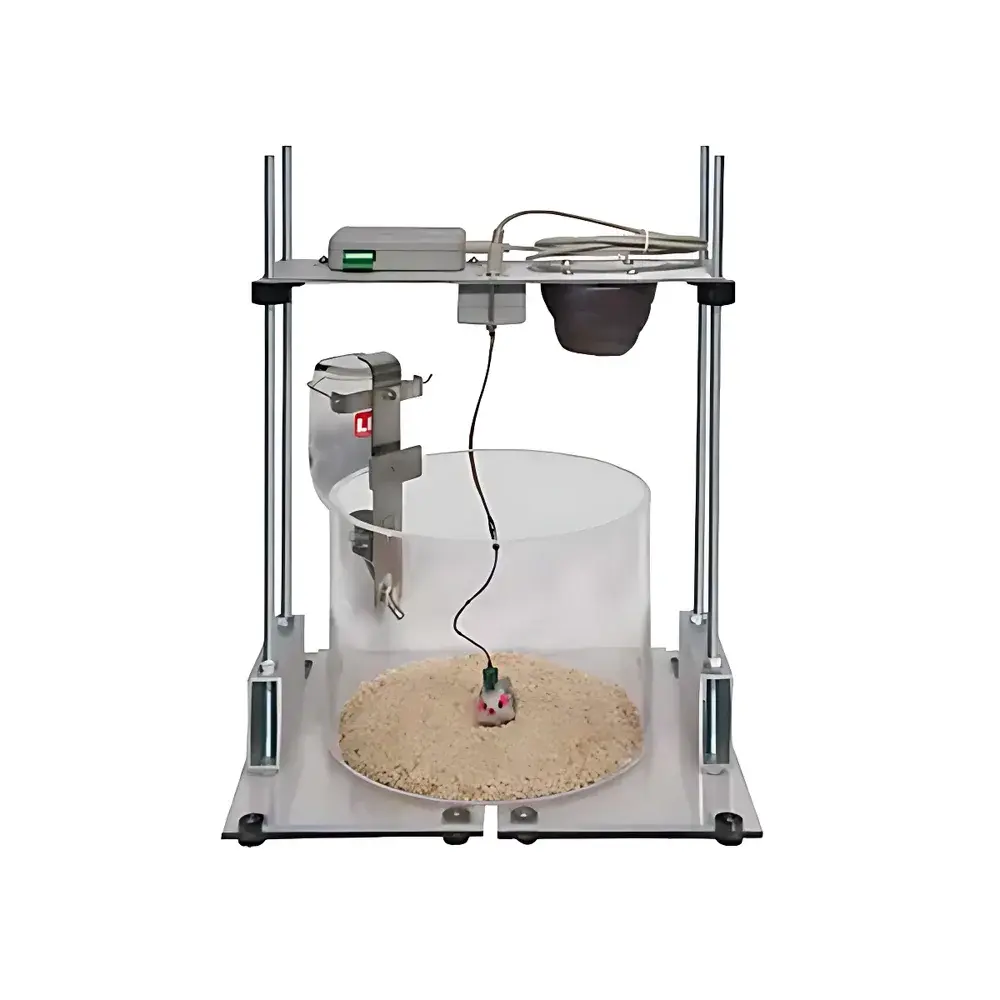
RWD Pinnacle Small-Animal EEG/EMG Recording System
| Brand | RWD |
|---|---|
| Origin | Shenzhen, China |
| Manufacturer Type | Original Equipment Manufacturer (OEM) |
| Product Origin | Domestic (China) |
| Model | Pinnacle Small-Animal EEG/EMG Recording System |
| Price | USD 1 (Base Configuration) |
Overview
The RWD Pinnacle Small-Animal EEG/EMG Recording System is a purpose-engineered neurophysiological data acquisition platform designed for chronic, in vivo electrophysiological monitoring in rodent models. Built upon a dual-stage analog signal conditioning architecture, the system captures high-fidelity cortical electroencephalographic (EEG) and electromyographic (EMG) signals using differential amplification, programmable gain stages, and hardware-based analog filtering prior to digitization. Its core measurement principle relies on low-noise, high-input-impedance preamplification at the animal’s skull/muscle interface—minimizing motion artifact and electrode impedance drift—followed by secondary amplification and bandpass filtering (e.g., 0.1–100 Hz for EEG; 10–500 Hz for EMG) within the Data Conditioning and Acquisition System (DCAS). The system supports both fixed-configuration (e.g., 2-EEG + 1-EMG or 3-EEG) and modular four-channel wired topologies, enabling longitudinal studies of sleep-wake architecture, seizure dynamics, motor activity, and neurobehavioral pharmacology under unrestrained or semi-restrained conditions.
Key Features
- Modular hardware architecture: Pre-amplifiers mounted directly on the animal’s headcap provide localized signal conditioning, reducing cable-induced noise and common-mode interference.
- Dual-stage analog signal processing: First-stage amplification and high-pass filtering occur at the implant site; second-stage gain adjustment, notch filtering (50/60 Hz), and low-pass filtering are implemented in the DCAS unit prior to 16-bit ADC conversion.
- Low-torque commutator: Enables unrestricted 360° rotation while maintaining stable, low-resistance electrical continuity—critical for long-duration recordings in freely moving subjects.
- Configurable channel topology: Standard configurations include 2-EEG + 1-EMG or 3-EEG; optional fourth channel supports integration of biopotential sensors (e.g., ECG, EOG), optogenetic stimulation triggers, or accelerometry inputs.
- USB 2.0 interface with real-time streaming: Synchronized acquisition at up to 1 kHz per channel with timestamped metadata embedding (e.g., session ID, animal ID, protocol version).
- GLP-compliant audit trail support: Sirenia® Acquisition software logs all user-initiated parameter changes, calibration events, and file export actions in tamper-evident format per FDA 21 CFR Part 11 requirements.
Sample Compatibility & Compliance
The Pinnacle system is validated for use in Sprague-Dawley and Wistar rats, C57BL/6 and BALB/c mice, and other small mammals weighing 15–500 g. Electrode compatibility includes stainless steel screws, tungsten microwires, and custom-designed screw-and-wire hybrids conforming to ISO 14155:2020 for biomedical research devices. All analog circuitry meets IEC 61000-4-2 (ESD immunity) and IEC 61000-4-3 (radiated RF immunity) standards. The system complies with electromagnetic compatibility (EMC) Class B limits per FCC Part 15 Subpart B and CE Directive 2014/30/EU. For regulated preclinical studies, hardware and firmware revision control, calibration certificate traceability (NIST-traceable reference sources), and software validation documentation (IQ/OQ/PQ protocols) are available upon request.
Software & Data Management
Sirenia® Acquisition serves as the primary acquisition and configuration interface, supporting real-time visualization, trigger-based recording, and multi-stream synchronization (EEG, EMG, video, TTL events). Data is stored in native .sirenia binary format with embedded header metadata, ensuring lossless fidelity and reproducible reprocessing. Export options include EDF+, MATLAB (.mat), CSV, and NeuroML 2.0. Sirenia® Sleep Basic and Sirenia® Seizure Basic modules provide validated algorithms for automated sleep staging (based on spectral power ratios and EMG tone thresholds) and spike-wave detection (using amplitude-thresholding and duration-gated clustering). Optional Sirenia® Sleep Pro adds spectral coherence analysis, hypnogram transition matrices, and non-parametric statistical comparison across cohorts. Sirenia® Seizure Pro enables manual annotation review, waveform averaging, interictal spike density mapping, and EDF import for cross-platform data harmonization—facilitating multisite collaboration and meta-analysis.
Applications
- Sleep architecture quantification: Discrimination of NREM, REM, and wake states via integrated spectral power analysis (delta, theta, sigma, beta bands) and EMG tonic/phasic activity metrics.
- Epilepsy model characterization: Detection and temporal profiling of electrographic seizures in genetic (e.g., GAERS) and chemically induced (e.g., pilocarpine, kainic acid) rodent models.
- Neuropsychopharmacology: Assessment of CNS drug effects on vigilance states, seizure susceptibility, and motor output following systemic or intracerebral administration.
- Circadian rhythm studies: Long-term (>7-day) continuous monitoring with automated light-dark cycle logging and phase-shift response analysis.
- Behavioral neuroscience: Time-locked correlation of neural dynamics with video-tracked locomotion, grooming, freezing, or feeding episodes.
- Translational biomarker development: Generation of quantitative EEG features (e.g., burst suppression ratio, connectivity indices) aligned with clinical EEG standards (ACNS guidelines).
FAQ
Is the Pinnacle system compatible with third-party electrodes or headstages?
Yes—the preamplifier input stage accepts standard 1.5 mm pin connectors (Omnetics A79030-001), and custom adapter boards can be supplied for integration with non-RWD implants.
Can Sirenia® software run on Linux or macOS?
Sirenia® Acquisition and analysis modules are Windows 10/11 (64-bit) applications only; however, exported data files (.sirenia, EDF+) are fully cross-platform and scriptable via Python (via open-source libraries such as MNE-Python or EDFlib).
What level of technical support and validation documentation is provided?
RWD provides installation qualification (IQ) templates, operational qualification (OQ) test protocols, and annual calibration services traceable to NIST standards. Remote troubleshooting and application-specific protocol development support are included for the first 12 months post-purchase.
Does the system meet FDA 21 CFR Part 11 requirements for electronic records?
Sirenia® Acquisition implements role-based user authentication, electronic signatures, audit trails with immutable timestamps, and secure data archiving—fully compliant when deployed in validated environments meeting organizational SOPs for electronic record retention.
How is motion artifact minimized during unrestrained recording?
Artifact suppression is achieved through a combination of differential recording topology, active shielding in the commutator and cabling, high common-mode rejection ratio (CMRR > 100 dB at 60 Hz), and adaptive digital post-processing filters available in Sirenia® Pro modules.





