
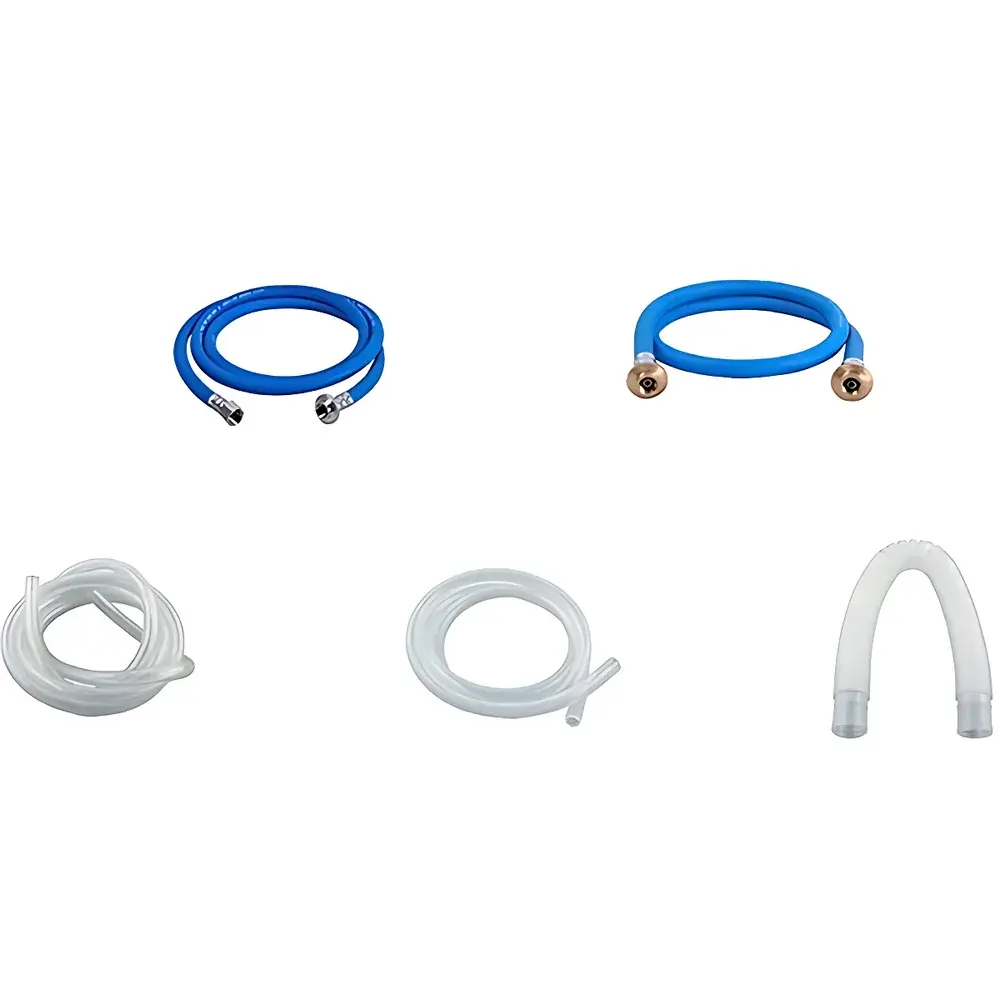
RWD R-PT-80 Fluid Transfer Tubing Assembly
| Brand | RWD |
|---|---|
| Origin | Guangdong, China |
| Manufacturer Type | OEM/ODM Producer |
| Country of Origin | China |
| Model | R-PT-80 |
| Material Options | PVC (R-PT-80), Silicone (R-ST-15, R-ST-30, R-ST-60, R-ST-60A), Corrugated Polymer (R-CT-18, R-CT-22-03), Oxygen-Compatible Polymer with Metric & Imperial Fittings (R-AH-80, R409-AH-80) |
| Inner Diameters | 1.5 mm to 22.0 mm |
| Outer Diameters | 4.5 mm to 10.0 mm |
| Lengths | 0.3 m to 1.2 m |
| Fitting Standards | M16×1.5 metric thread, 9/16″–27 UNF, 2×9/16″–27 UNF |
| Compliance | ISO 10993-5 (cytotoxicity), USP Class VI certified silicone variants available |
| Sterilization Compatibility | Autoclavable (silicone), Ethylene Oxide (PVC, corrugated), Gamma irradiation (select grades) |
Overview
RWD R-PT-80 is a modular fluid transfer tubing system engineered for precision-controlled conveyance of gases and liquids in laboratory, bioprocessing, analytical instrumentation, and medical device integration applications. Unlike generic hose assemblies, the R-PT-80 platform comprises rigorously characterized polymer tubing—each variant selected and validated for specific chemical compatibility, pressure tolerance, and regulatory traceability. The system operates on passive volumetric transport principles, relying on controlled internal geometry (ID/OD ratios), wall elasticity, and surface energy characteristics to maintain laminar flow integrity and minimize adsorption or leaching. It is not a standalone instrument but a critical infrastructure component—designed to interface seamlessly with peristaltic pumps, syringe drivers, gas regulators, mass flow controllers, and analytical sample introduction modules. Its primary function is to ensure consistent, contamination-free, and dimensionally stable fluid path continuity under dynamic operational conditions.
Key Features
- Multi-material architecture: Includes USP Class VI-certified platinum-cured silicone (R-ST series), rigid yet flexible PVC (R-PT-80), chemically inert corrugated polymer (R-CT series), and oxygen-rated polymer with dual-standard fittings (R-AH-80/R409-AH-80).
- Precision dimensional control: All tubing meets ±0.05 mm tolerance on inner diameter across batch production, ensuring reproducible flow rates when paired with calibrated pump heads or flow sensors.
- Fitting interoperability: Integrates both metric (M16×1.5) and imperial (9/16″–27 UNF) compression fittings—enabling direct connection to legacy and modern OEM equipment without adapters.
- Regulatory-ready documentation: Batch-specific CoA (Certificate of Analysis) available upon request; silicone variants comply with ISO 10993-5 cytotoxicity testing; oxygen-grade assemblies conform to ISO 8573-1:2010 Class 2 purity requirements for medical gas pathways.
- Thermal and mechanical stability: Silicone variants withstand repeated autoclaving (121 °C, 20 min, 15 cycles); PVC maintains dimensional integrity from −10 °C to +60 °C; corrugated tubing retains kink resistance up to 10 bar working pressure.
Sample Compatibility & Compliance
The R-PT-80 system supports a broad spectrum of process media—including aqueous buffers, organic solvents (e.g., ethanol, isopropanol, acetonitrile), compressed air, nitrogen, medical-grade oxygen, and low-concentration acid/base solutions. Material selection must align with chemical exposure profile: silicone offers superior resilience against ozone and UV degradation; PVC provides cost-effective resistance to aliphatic hydrocarbons; corrugated variants excel in vacuum and pulsatile flow environments. All tubing complies with RoHS 2015/863/EU and REACH SVHC screening. For GMP-regulated environments, silicone and oxygen-grade assemblies support full traceability via laser-etched batch codes and are compatible with FDA 21 CFR Part 11–compliant electronic batch records when integrated into validated instrument platforms.
Software & Data Management
As a passive hardware component, the R-PT-80 does not incorporate embedded electronics or firmware. However, it is fully compatible with digital asset management systems used in regulated laboratories. Each tubing variant carries a unique part number (e.g., R-ST-30, R-CT-22-03) that maps directly to LIMS (Laboratory Information Management Systems) and ERP databases. When deployed in automated workflows—such as liquid handling robots or chromatography autosamplers—the tubing’s dimensional consistency enables accurate calibration of volumetric delivery algorithms. Documentation packages include material declarations, extractables profiling reports (per USP ), and sterilization validation summaries—structured for inclusion in IQ/OQ/PQ protocols and audit-ready quality dossiers.
Applications
- Peristaltic pump fluid paths in cell culture bioreactors and fermentation monitoring systems.
- Gas supply lines for GC-FID, GC-MS, and ICP-MS instruments requiring low-particulate, non-reactive conduits.
- Medical device prototyping: oxygen delivery circuits for portable ventilators and anesthesia workstations.
- Microfluidic interconnects between syringe pump modules and PDMS-based lab-on-chip devices.
- Calibration standard transfer lines in metrology labs performing volumetric flow rate verification per ISO 4064-2.
FAQ
Is R-PT-80 suitable for sterile filtration applications?
No—R-PT-80 tubing is not a filter medium. It serves as a conduit upstream or downstream of sterile filters (e.g., 0.22 µm PES or PVDF membranes) and must be sterilized separately prior to aseptic use.
Can R-ST-60A be used with high-pressure HPLC systems?
R-ST-60A silicone tubing is rated for continuous operation up to 6 bar at 23 °C; it is not recommended for UHPLC (>600 bar) or high-pulsation applications without mechanical dampening.
Does RWD provide extractables data for R-PT-80 materials?
Yes—USP Class VI silicone variants include full extractables profiling per USP , including volatile organic analysis (GC-MS) and elemental impurity screening (ICP-MS).
Are custom lengths or fittings available?
Yes—RWD offers cut-to-length service and bespoke fitting configurations (e.g., barbed-to-UNF, swage-lock adapters) under OEM agreements with documented change control and requalification support.
How is lot-to-lot consistency ensured?
Each production lot undergoes ID/OD metrology verification using calibrated laser micrometers, tensile strength testing per ASTM D412, and visual inspection under ISO 14644-1 Class 7 cleanroom conditions.




