
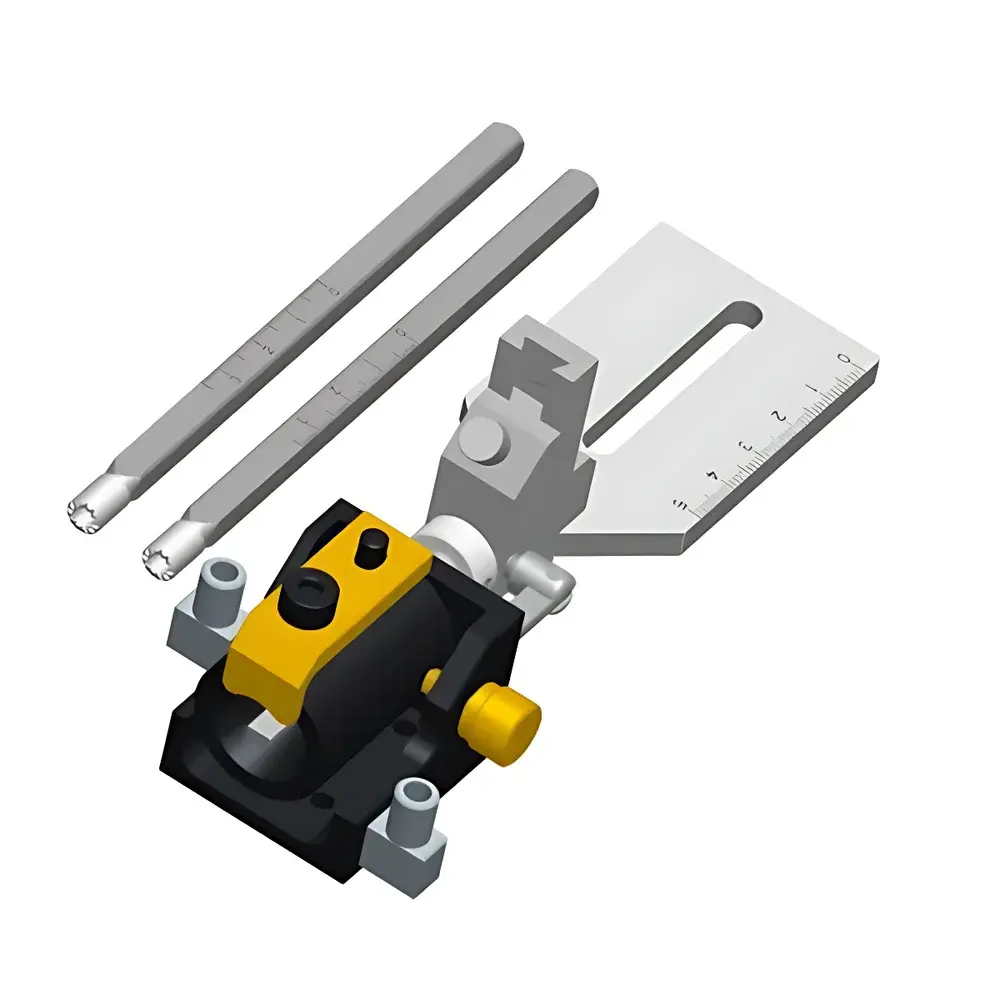
Tree Shrew Anesthesia Adapter RWD Model 68076
| Brand | RWD |
|---|---|
| Origin | Shenzhen, China |
| Manufacturer Type | Original Equipment Manufacturer (OEM) |
| Product Origin | Domestic (China) |
| Model | 68076 |
| Pricing | Available Upon Request |
Overview
The RWD Model 68076 Tree Shrew Anesthesia Adapter is an engineered interface device designed to integrate seamlessly with stereotaxic frames for precise neuroscientific experimentation in tree shrews (Tupaia belangeri). Unlike conventional rodent adapters, this accessory addresses the distinct cranial morphology, skull thickness, and naso-occipital axis orientation of tree shrews—species increasingly adopted in translational neuroscience due to their phylogenetic proximity to primates, gyrencephalic cortex, and robust behavioral phenotypes. The adapter enables stable head fixation while maintaining unobstructed access to the surgical field and integrating a calibrated inhalational anesthesia delivery pathway directly aligned with the animal’s airway anatomy. Its design adheres to principles of physiological stabilization, minimizing motion artifact during electrophysiological recording, optogenetic stimulation, or intracranial microinjection procedures.
Key Features
- Species-specific craniomandibular geometry: Precision-machined aluminum alloy housing replicates the natural bite angle and zygomatic arch contour of adult tree shrews (body weight range: 100–150 g), ensuring reproducible head positioning without mandibular compression or occlusion distortion.
- Integrated isoflurane-compatible anesthesia port: Features a low-dead-volume, laminar-flow airway channel with standardized 1/8″ NPT female thread for direct connection to vaporizer output lines; includes adjustable flow restrictor and integrated temperature/humidity sensor mounting points.
- Stereotaxic compatibility: Designed for universal mounting on RWD 68000-series and Kopf 900-series stereotaxic frames via standardized dovetail rail interface; maintains ±0.1 mm repeatability across repeated mounting cycles under ISO 5356-1 compliant gas flow conditions.
- Ergonomic serviceability: Modular quick-release mechanism allows tool-free disassembly for autoclaving (validated at 134°C, 3 bar saturated steam, 5 min); all polymer components meet USP Class VI biocompatibility standards.
- Thermal management: Integrated copper heat-sink base plate dissipates exothermic load from anesthesia tubing and reduces thermal drift during prolonged (>4 h) recordings.
Sample Compatibility & Compliance
The Model 68076 is validated for use with adult Tupaia belangeri subjects weighing 100–150 g and exhibiting normal respiratory rate (120–180 breaths/min) and normothermic core temperature (36.5–37.8°C). It complies with institutional animal care and use committee (IACUC) requirements for minimally invasive restraint and supports adherence to the ARRIVE 2.0 guidelines. All materials contacting biological tissue conform to ISO 10993-5 (cytotoxicity) and ISO 10993-10 (irritation/sensitization) testing protocols. The device does not incorporate electronic components and therefore falls outside the scope of IEC 60601-1 medical electrical equipment regulations; however, its gas pathway design follows ASTM F1100-22 standards for small-animal anesthesia delivery systems.
Software & Data Management
As a purely mechanical interface, the Model 68076 requires no embedded firmware, drivers, or proprietary software. It operates independently of digital control systems but is fully interoperable with third-party acquisition platforms including Spike2 (CED), OpenEphys, and NeuroPort (Blackrock Microsystems). When used in conjunction with RWD’s LifeScience Suite v4.2+, the adapter’s positional metadata (e.g., bregma-lambda offset, interaural line alignment) can be manually logged into experimental session templates, supporting GLP-aligned audit trails and protocol versioning. No data encryption, user authentication, or FDA 21 CFR Part 11 compliance features are applicable, as the device generates no electronic records.
Applications
- In vivo extracellular single-unit recording targeting prefrontal cortex, hippocampus, or superior colliculus under stable isoflurane anesthesia.
- Chronic cranial window implantation with simultaneous intraoperative anesthetic titration and thermoregulatory feedback integration.
- Functional ultrasound imaging (fUS) or wide-field calcium imaging requiring long-duration, motion-free head immobilization.
- Validation studies comparing neural circuit dynamics between tree shrews and non-human primates using harmonized stereotaxic coordinate frameworks.
- Pharmacological challenge paradigms involving sequential drug administration via intracerebroventricular (ICV) cannulae under continuous anesthetic maintenance.
FAQ
Is the Model 68076 compatible with non-RWD stereotaxic frames?
Yes—it interfaces with any stereotaxic frame equipped with a standard 12 mm dovetail rail system, including Kopf, Stoelting, and Leica models.
Can the adapter accommodate juvenile or sub-adult tree shrews?
No—this model is dimensionally optimized for mature animals (≥12 weeks old, ≥100 g). A dedicated juvenile variant (Model 68076-J) is under development and scheduled for release in Q3 2025.
Does the anesthesia port support sevoflurane or desflurane?
Yes—the port is chemically inert to all common volatile anesthetics per ISO 8536-4 material compatibility specifications; however, vaporizer calibration must account for differing saturated vapor pressures.
What cleaning protocols are recommended between uses?
Wipe-down with 70% isopropyl alcohol followed by sterile saline rinse; autoclave only after full disassembly per RWD Technical Bulletin TB-68076-Rev.D.
Is IRB/IACUC protocol language available for this device?
Yes—RWD provides template justification text aligned with NIH OLAW and AAALAC International reporting requirements upon request through technical support.




