
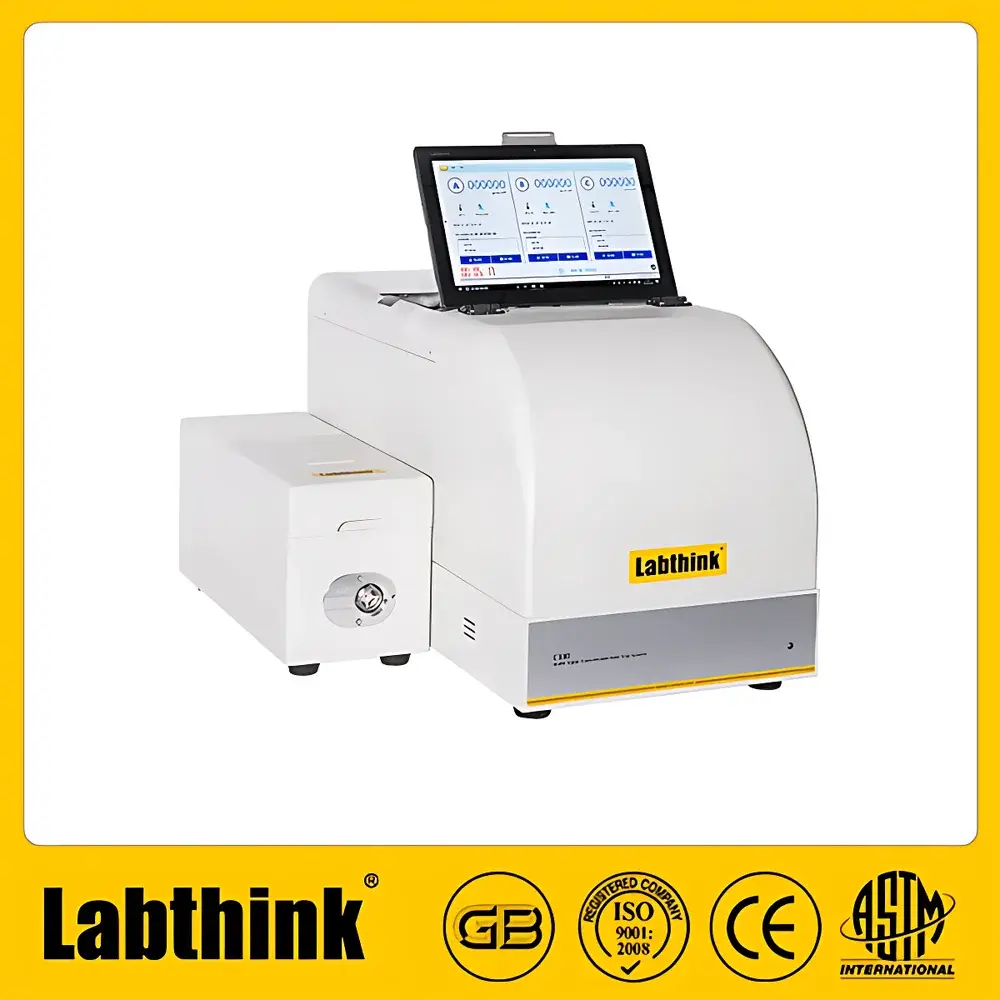
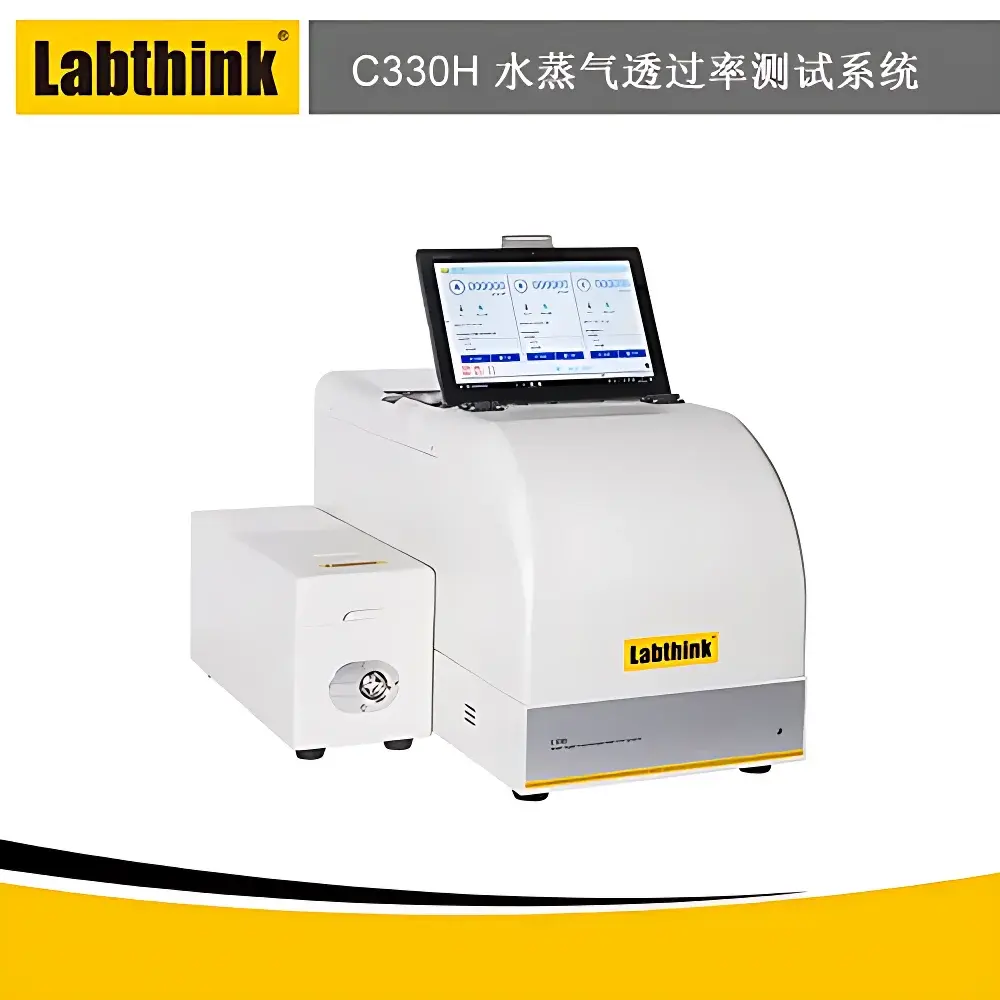
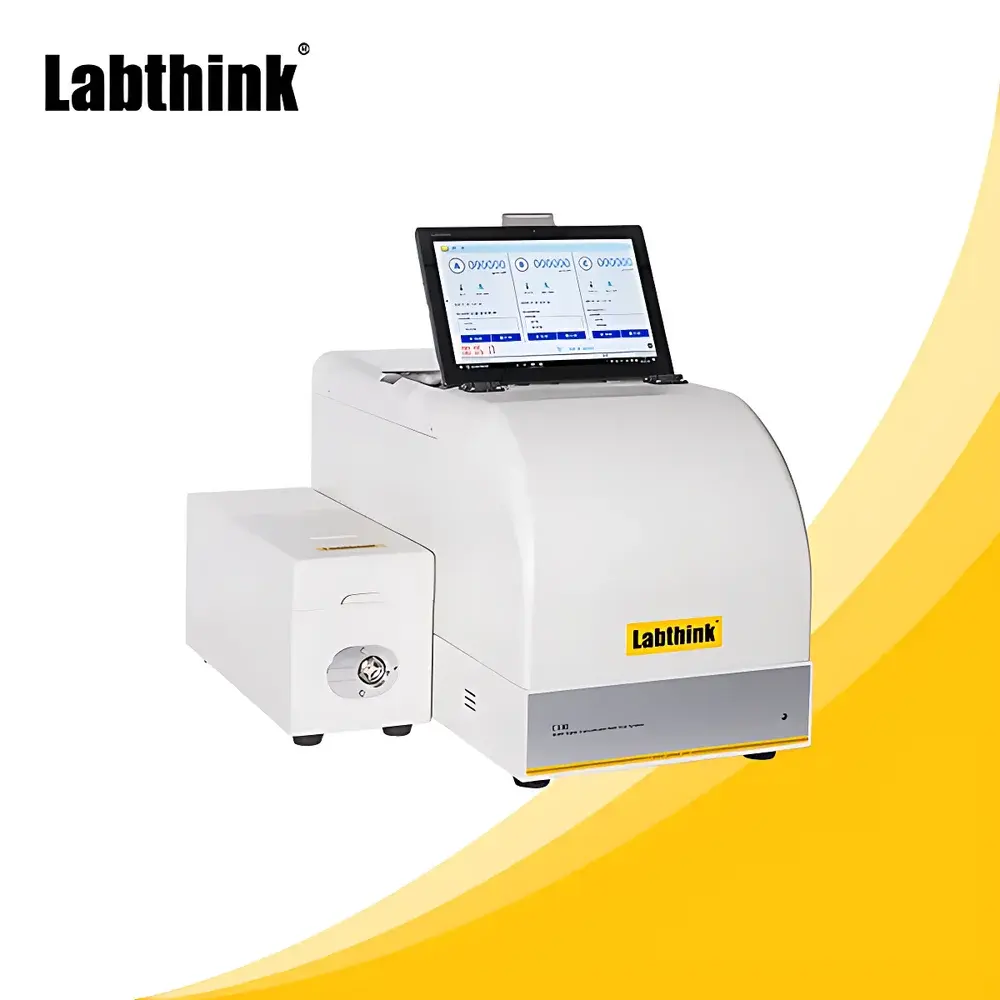
Labthink C330H Electrolytic Water Vapor Transmission Rate (WVTR) Tester
| Brand | Labthink |
|---|---|
| Model | C330H |
| Measurement Principle | Coulometric Electrolytic Sensor (ISO 15106-3) |
| Test Range | 0.005–50 g/(m²·day) |
| Resolution | 0.001 g/(m²·day) |
| Repeatability | ±0.005 g/(m²·day) or ±2%, whichever is greater |
| Temperature Control | 10–55 °C (±0.2 °C) |
| Humidity Control | 5–90 %RH (±1 %RH), optional 100 %RH |
| Test Chambers | 3 independent |
| Sample Area | 50 cm² (standard) |
| Max. Sample Size | 108 mm × 108 mm |
| Max. Sample Thickness | ≤3 mm |
| Packaging Test Capacity | up to 3 L |
| Carrier Gas | ≥99.999% N₂, inlet pressure ≥0.28 MPa (40.6 psi) |
| Gas Interface | 1/8″ stainless steel tubing |
| Optional Compliance Modules | DataShield™ Data Integrity System, 21 CFR Part 11 Audit Trail, GMP Computer System Validation Support |
Overview
The Labthink C330H Electrolytic Water Vapor Transmission Rate (WVTR) Tester is a precision-engineered instrument designed for quantitative determination of water vapor permeation through polymeric films, rigid sheets, laminates, and finished packaging—across pharmaceutical, food, medical device, electronics, and renewable energy sectors. It operates on the coulometric electrolytic detection principle defined in ISO 15106-3, where water vapor diffusing across a test specimen is carried by dry carrier nitrogen to a proprietary solid-polymer-electrolyte sensor. This sensor quantifies moisture content via Faraday’s law of electrolysis: each molecule of H₂O split at the electrode generates two electrons, enabling direct, linear, and absolute measurement of water vapor flux without calibration drift. Unlike gravimetric or infrared-based methods, the electrolytic approach delivers inherent stability, high signal-to-noise ratio, and immunity to interference from ambient CO₂ or volatile organics—critical for regulatory-grade testing of barrier materials used in sterile drug packaging or lithium-ion battery enclosures.
Key Features
- Triple-test-chamber architecture enables simultaneous evaluation of three identical specimens (for statistical validation per ASTM F3299 and pharmacopoeial parallel-testing requirements) or three distinct materials under identical environmental conditions.
- Proprietary Labthink electrolytic moisture sensor—developed in-house with optimized catalytic electrode geometry and polymer electrolyte membrane—ensures long-term signal stability (>12 months typical service life), repeatability ≤±0.005 g/(m²·day), and sub-ppm-level detection sensitivity.
- Thermally integrated test block engineered using computational fluid dynamics (CFD) and transient thermal modeling to eliminate thermal gradients across chambers; achieves ±0.2 °C temperature uniformity and ±1 %RH humidity control over full operating range (10–55 °C / 5–90 %RH).
- Independent Pt100 RTD and capacitive RH sensors in each chamber provide real-time, closed-loop monitoring and dynamic adjustment of temperature/humidity profiles—essential for method robustness during accelerated aging or low-permeability material characterization.
- Integrated 12-inch Windows 10 touchscreen interface with Intel Core i5 processor supports both automated routine testing (predefined SOPs) and advanced manual control (custom ramp profiles, multi-step humidity cycling, chamber-specific setpoints).
Sample Compatibility & Compliance
The C330H accommodates flat specimens up to 108 mm × 108 mm and 3 mm thick—including PVC rigid sheets, PVDC-coated films, aluminum-laminated pouches, siliconized release liners, and blister cavity foils—as well as 3-L volume packaging formats (e.g., HDPE bottles, vacuum-sealed trays, aluminum collapsible tubes). Its mechanical clamping system ensures leak-free sealing without edge compression artifacts. The system complies with ISO 15106-3, ASTM F3299, GB/T 21529, and YBB 00092003-2015. Optional qualification packages support IQ/OQ/PQ documentation, 21 CFR Part 11-compliant electronic signatures, and ALCOA+ data integrity principles—including immutable audit trails, role-based access control, and encrypted database backups. All firmware and software modules undergo annual cybersecurity review per IEC 62443-3-3.
Software & Data Management
DataShield™—a Labthink-developed data governance framework—embeds cryptographic hashing (SHA-256), time-stamped digital signatures, and tamper-evident log archiving directly into the instrument’s embedded OS. Raw sensor output, environmental logs, and user actions are stored in an ACID-compliant SQLite database with automatic daily export to CSV, PDF, or XML (ASTM E2500-22 compliant). The platform supports OPC UA connectivity for integration into MES/LIMS environments and includes configurable report templates aligned with USP , EP 2.6.12, and FDA guidance on analytical instrument qualification. Remote diagnostics and firmware updates are performed over TLS 1.3-secured LAN/Wi-Fi links.
Applications
Primary applications include WVTR verification of primary packaging for oral solids (PVC/PVDC blisters), parenteral vials (aluminum-laminated seals), transdermal patches (polyisobutylene-based adhesive layers), and photovoltaic backsheet films (fluoropolymer-coated PET). Extended use cases cover moisture ingress analysis in OLED encapsulation barriers, Li-ion battery cell housings, surgical drape laminates, and sterile barrier systems for Class III medical devices. The system supports method development for humidity-gradient-dependent permeation kinetics, dual-humidity asymmetric testing (e.g., 90%RH/0%RH), and accelerated shelf-life modeling per Arrhenius protocols.
FAQ
What standards does the C330H validate against?
ISO 15106-3, ASTM F3299, GB/T 21529, and YBB 00092003-2015.
Can the system test irregularly shaped packaging?
Yes—custom fixtures are available for non-standard containers; maximum internal volume is 3 L.
Is nitrogen gas supply included?
No—users must provide ≥99.999% purity nitrogen at ≥0.28 MPa inlet pressure.
How is data integrity ensured for regulated environments?
Through optional DataShield™ with 21 CFR Part 11 compliance, including electronic signatures, audit trails, and secure database encryption.
What maintenance intervals are recommended?
Sensor recalibration every 12 months; quarterly verification of temperature/humidity uniformity per ASTM E2216.






