
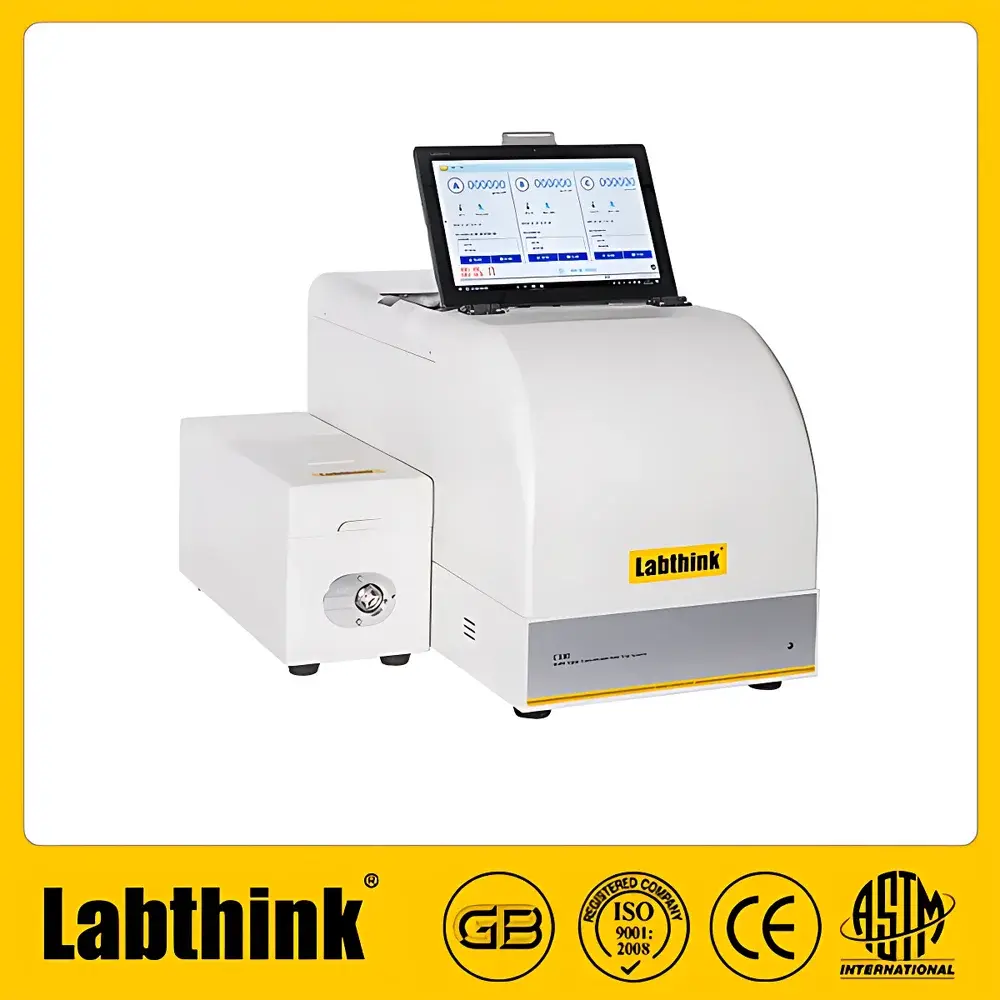
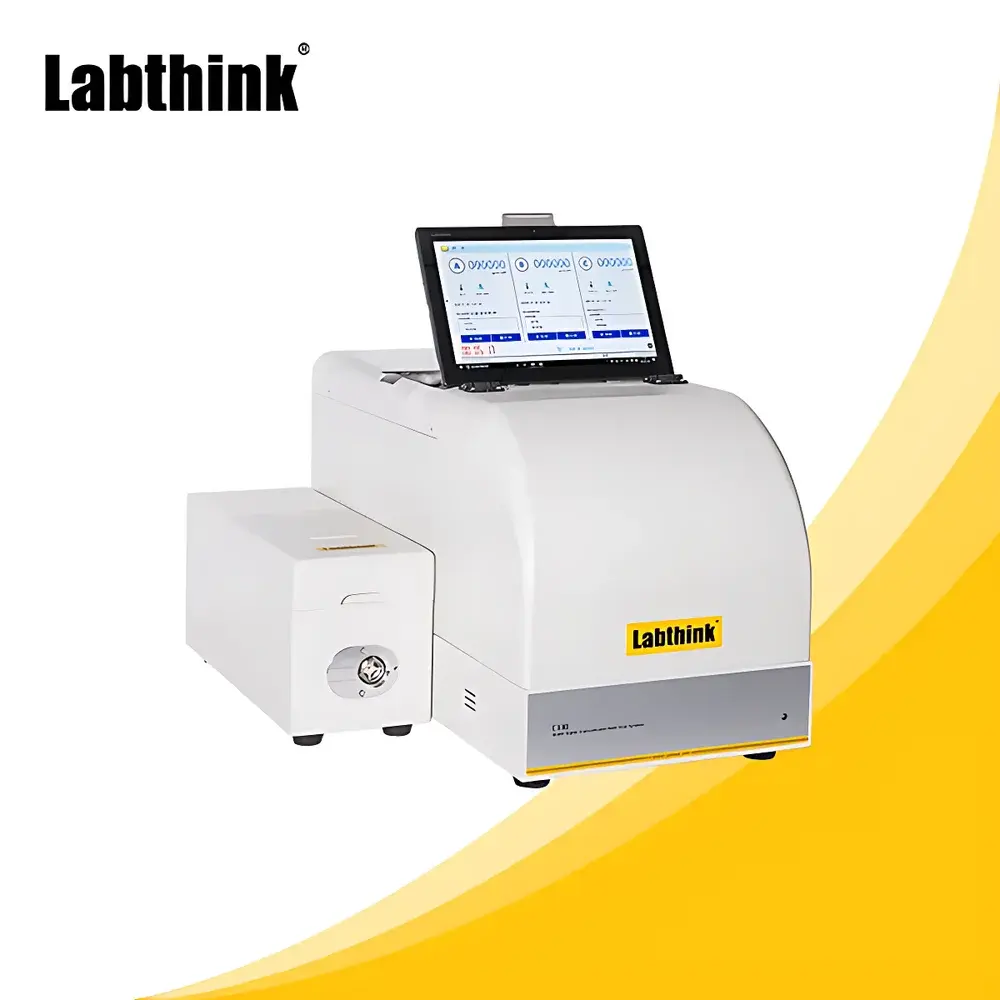
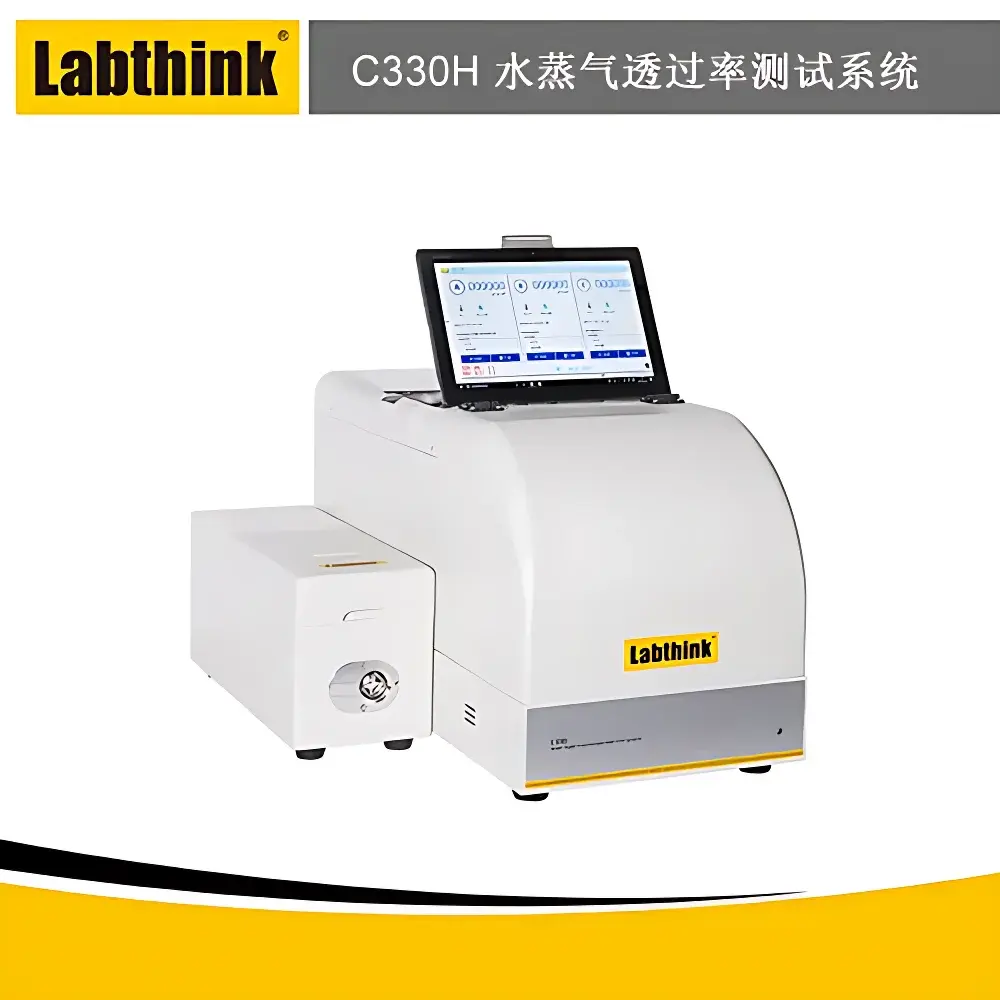
Labthink C330H Electrolytic Water Vapor Transmission Rate (WVTR) Tester
| Brand | Labthink |
|---|---|
| Model | C330H |
| Measurement Principle | Electrolytic (Coulometric) Sensor per ISO 15106-3 |
| Test Range | 0.005–50 g/(m²·day) |
| Resolution | 0.001 g/(m²·day) |
| Repeatability | ±0.005 g/(m²·day) or ±2%, whichever is greater |
| Temperature Control | 10–55 °C (±0.2 °C) |
| Humidity Control | 5–90 %RH (±1 %RH), optional 100 %RH |
| Test Chambers | 3 independent |
| Sample Area | 50 cm² |
| Max Sample Thickness | ≤3 mm |
| Sample Size | 108 mm × 108 mm |
| Packaging Test Capacity | up to 3 L (optional) |
| Carrier Gas | ≥99.999% N₂, inlet pressure ≥0.28 MPa |
| Gas Inlet Port | 1/8″ stainless steel tubing |
| Data Compliance | Optional CFR 21 Part 11, GMP-compliant audit trail, DataShield™ secure data management |
Overview
The Labthink C330H Electrolytic Water Vapor Transmission Rate (WVTR) Tester is a precision-engineered instrument designed for quantitative determination of water vapor permeation through polymeric films, laminates, foils, coated papers, and rigid or flexible packaging structures—including pouches, blister packs, and photovoltaic encapsulants. It operates on the coulometric electrolytic detection principle defined in ISO 15106-3, wherein water vapor permeating across a test specimen is carried by dry carrier gas (high-purity nitrogen) to an integrated electrolytic sensor. This sensor quantifies moisture content via Faraday’s law of electrolysis—converting water molecules into measurable electric current proportional to mass flux. The system delivers traceable, high-reproducibility WVTR values under rigorously controlled temperature and relative humidity gradients, making it suitable for R&D validation, quality control, regulatory submission, and accelerated aging correlation studies in photovoltaics, pharmaceuticals, medical devices, and food packaging.
Key Features
- Triple-chamber architecture enabling simultaneous testing of three identical specimens (for statistical validity per ASTM F3299 and ISO 15106-3) or three distinct materials under identical environmental conditions.
- Proprietary coulometric electrolytic moisture sensor developed in-house by Labthink—engineered for long-term stability, sub-microgram sensitivity, and minimal drift over extended operation cycles.
- Patented monolithic test block integrating thermal equilibrium channels and laminar flow manifolds, ensuring uniform humidity distribution and eliminating edge effects during measurement.
- Spatial 3D thermal regulation with individual Pt100 RTD sensors and PID-controlled heating/cooling elements in each chamber, maintaining ±0.2 °C temperature stability across the full 10–55 °C operating range.
- Dual-zone RH control: humidified N₂ (5–90 %RH ±1 %RH) on the upstream side; ultra-dry N₂ (<10 ppmv H₂O) downstream—fully programmable and independently monitored per chamber.
- 12-inch industrial-grade Windows 10 touch interface with real-time graphical display of sensor output, chamber conditions, and permeation kinetics curves.
Sample Compatibility & Compliance
The C330H accommodates flat sheet materials up to 3 mm thick and 108 mm × 108 mm in dimension, with standardized test area of 50 cm². Optional fixtures support irregular or pre-formed packaging (up to 3 L volume) using internal dry gas purge methodology per ASTM F1249 and YBB 00092003-2015. All hardware and firmware comply with ISO/IEC 17025 calibration traceability requirements. Optional CFR 21 Part 11 compliance package includes electronic signatures, role-based access control, immutable audit trails, and automated backup—validated for GLP and GMP environments. Test reports are exportable in PDF, CSV, XML, and Excel formats, supporting integration with LIMS and MES platforms.
Software & Data Management
Equipped with Labthink’s proprietary PermeData™ software suite, the C330H supports both automated routine testing and advanced method development workflows. The DataShield™ security module implements AES-256 encryption for stored datasets and enforces data integrity checks at acquisition, processing, and export stages. All raw sensor signals, environmental logs, and calculation parameters are time-stamped and archived with version-controlled metadata. Remote monitoring and configuration are supported via Ethernet (wired or optional Wi-Fi), enabling centralized fleet management across multi-site laboratories. Software updates follow ICH Q5A change control protocols and include full regression testing documentation.
Applications
- Photovoltaic encapsulation film qualification—critical for thin-film solar cell lifetime prediction (e.g., EVA, POE, PVF, and barrier-coated PET substrates).
- Pharmaceutical blister foil and cold-form foil WVTR verification per USP and EP 2.6.12.
- Medical device pouch seal integrity assessment under accelerated humidity stress conditions.
- Food packaging barrier performance mapping for shelf-life modeling (e.g., metallized CPP, SiOx-coated PET, AlOx barriers).
- Development and QC of high-barrier OLED encapsulation layers and flexible electronics substrates.
- Regulatory dossier preparation for FDA 510(k), CE MDR, and NMPA Class III device submissions.
FAQ
What standards does the C330H comply with?
ISO 15106-3, ASTM F3299, ASTM F1249, GB/T 21529, YBB 00092003-2015, and ISO 2528.
Can the instrument test 3 different materials simultaneously?
Yes—the triple-chamber design allows independent parameter assignment per chamber, supporting heterogeneous sample sets under identical T/RH conditions.
Is calibration traceable to national standards?
Yes—sensor calibration is performed using NIST-traceable permeation standards (e.g., certified Mylar® reference films), with full certificate of calibration provided.
Does the system support 100% RH testing?
An optional saturated salt or Peltier-based 100% RH generator module is available for extreme humidity applications.
What data security features are included?
DataShield™ provides end-to-end encryption, user authentication, activity logging, and CFR 21 Part 11-compliant electronic records when enabled.





